





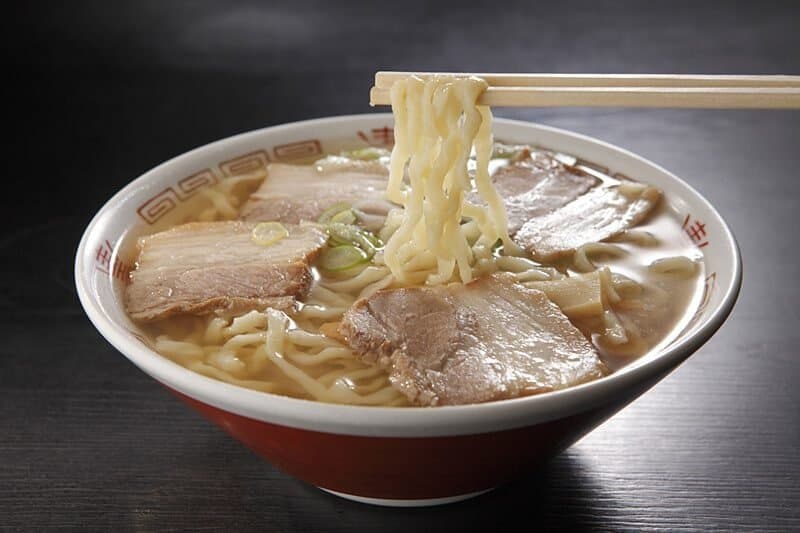
Kitakata ramen (喜多方ラーメン) is a regional ramen style from Fukushima Prefecture, known for flat wavy noodles, a clear soy sauce broth, and a breakfast ramen culture found nowhere else. The broth builds on pork bones, chicken, and dried sardines. Along with Sapporo and Hakata, Kitakata ranks among Japan’s three major ramen styles.
| Quick Facts | Kitakata Ramen |
|---|---|
| Origin | Kitakata City, Fukushima Prefecture (Aizu region) |
| First sold | Mid-1920s, from a street cart |
| Broth | Soy sauce tare with pork bones, chicken, and niboshi |
| Noodles | Flat, wavy, high-water-content, about 4mm wide |
| Famous for | Morning ramen (asa-ra), served from 7:00am |
| Typical price | 800 to 1,200 yen (Surveyed: July 2026) |
| Where to eat | Roughly 90 to 100 shops in Kitakata City |
What Is Kitakata Ramen?
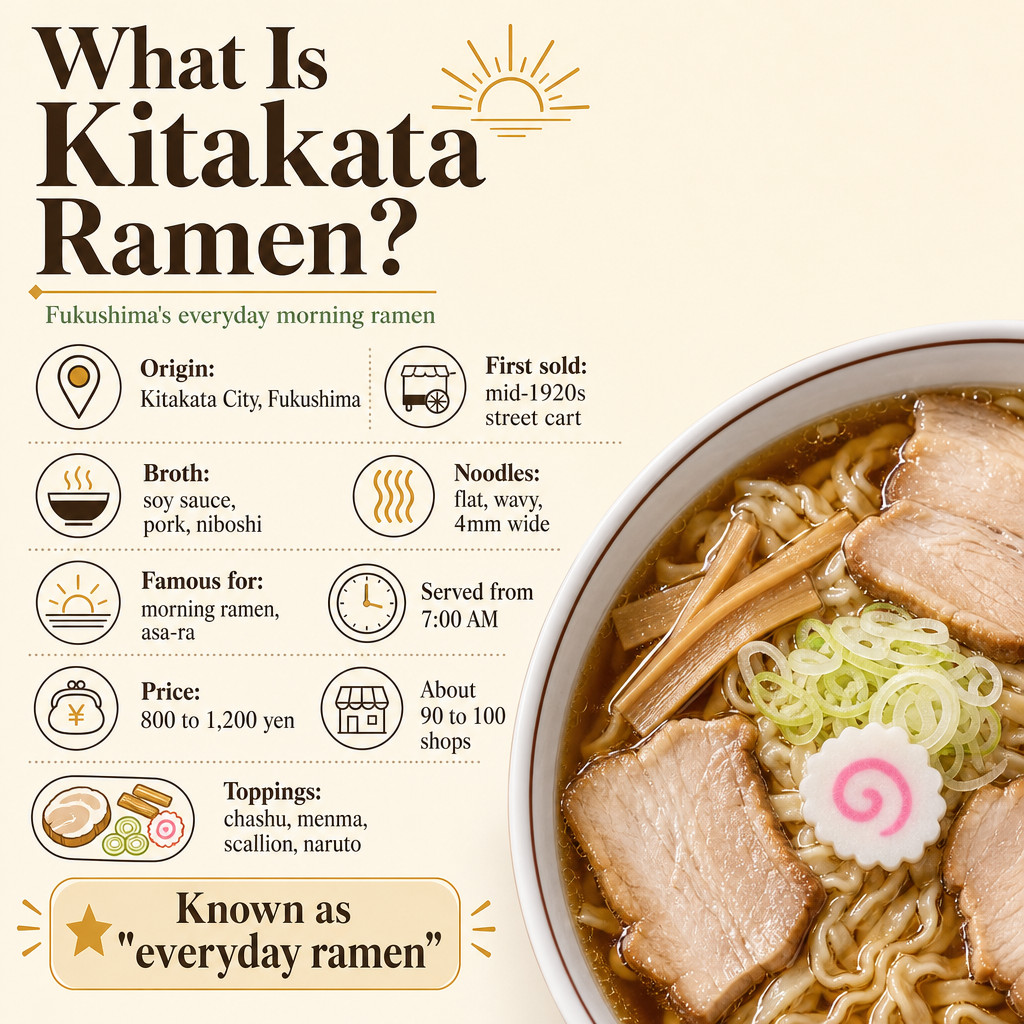
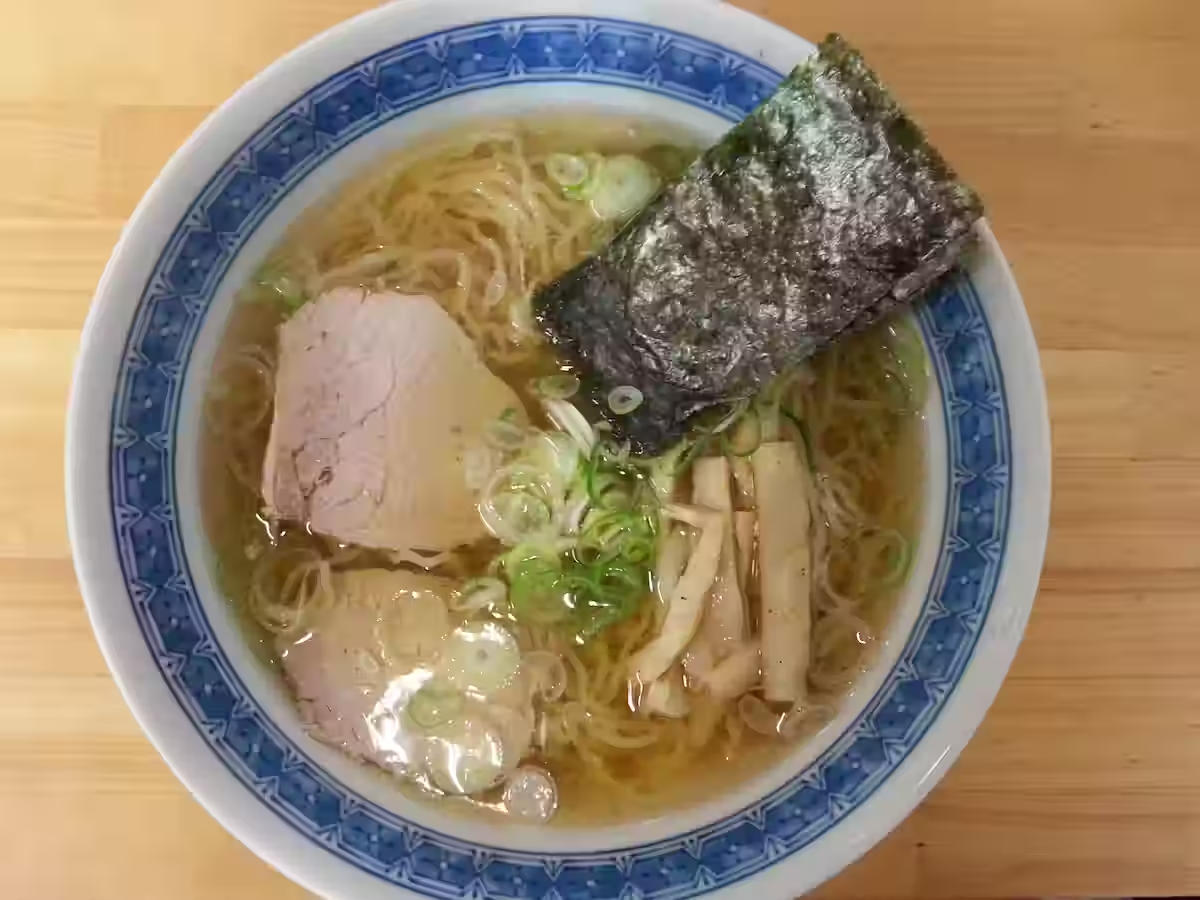
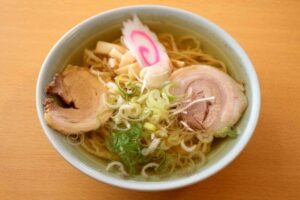
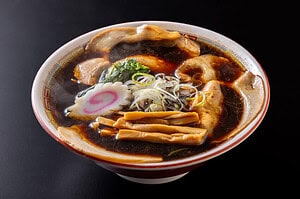
Kitakata ramen combines two defining elements: flat, wavy, high-hydration noodles and a relatively light soy sauce broth. The noodles measure roughly four millimeters wide. Their flat shape and firm bite hold the soup well without going soft. Toppings stay classic as well, usually chashu pork, menma bamboo shoots, green onions, and naruto fish cake.
Regulars describe it as “everyday ramen.” In short, the bowl satisfies without leaving you heavy. That matters when people eat it several times a week. The city’s morning ramen culture shaped the recipe as much as any single chef did.
Why Is Kitakata Ramen Famous?
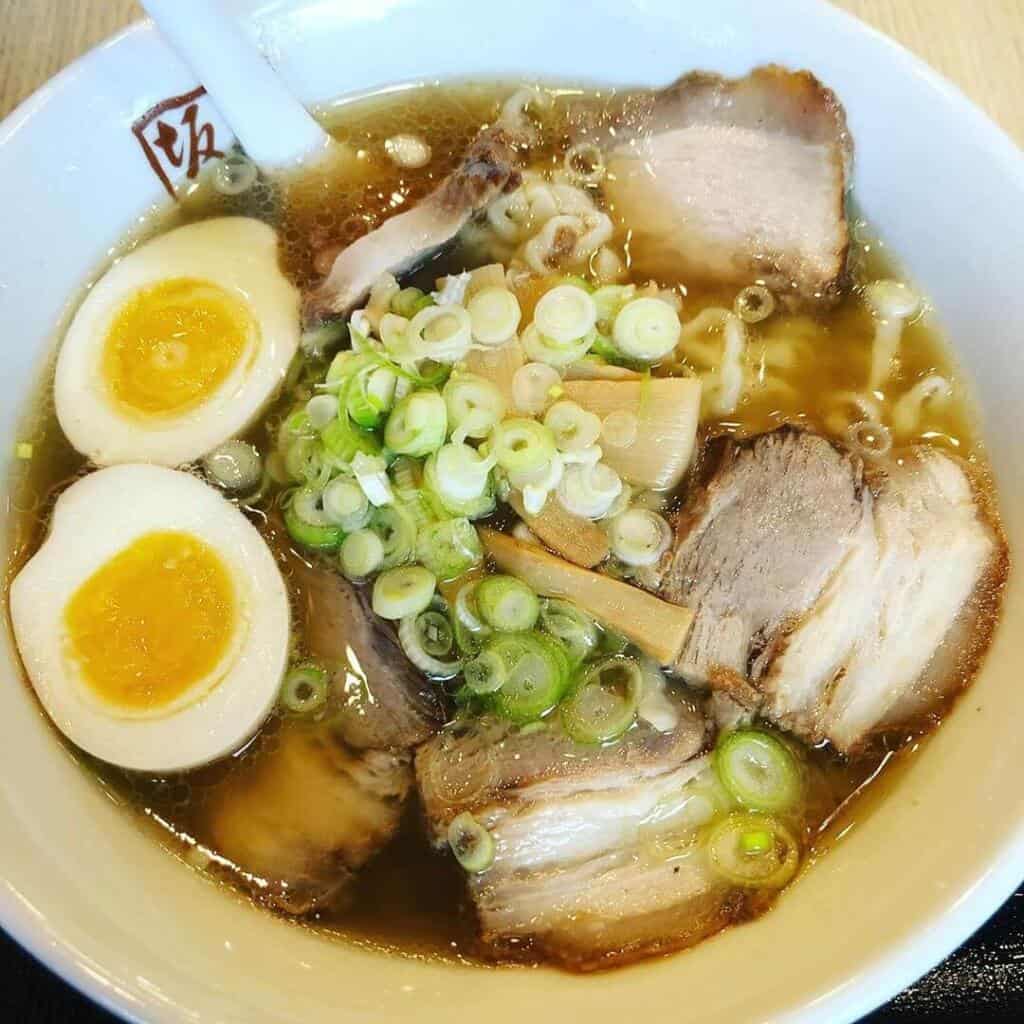
Kitakata ramen is famous because it combines Japan’s densest concentration of ramen shops, a unique morning ramen culture, and recognition as one of Japan’s three major ramen styles. Roughly 90 to 100 shops operate in this small city, which the local ramen association says gives it the highest number per resident in the country. Meanwhile, asa-ra turned an ordinary breakfast habit into a national curiosity. The Agency for Cultural Affairs also certified Kitakata ramen in the first round of its “100-Year Food” program in fiscal 2021.
What Does Kitakata Ramen Taste Like?
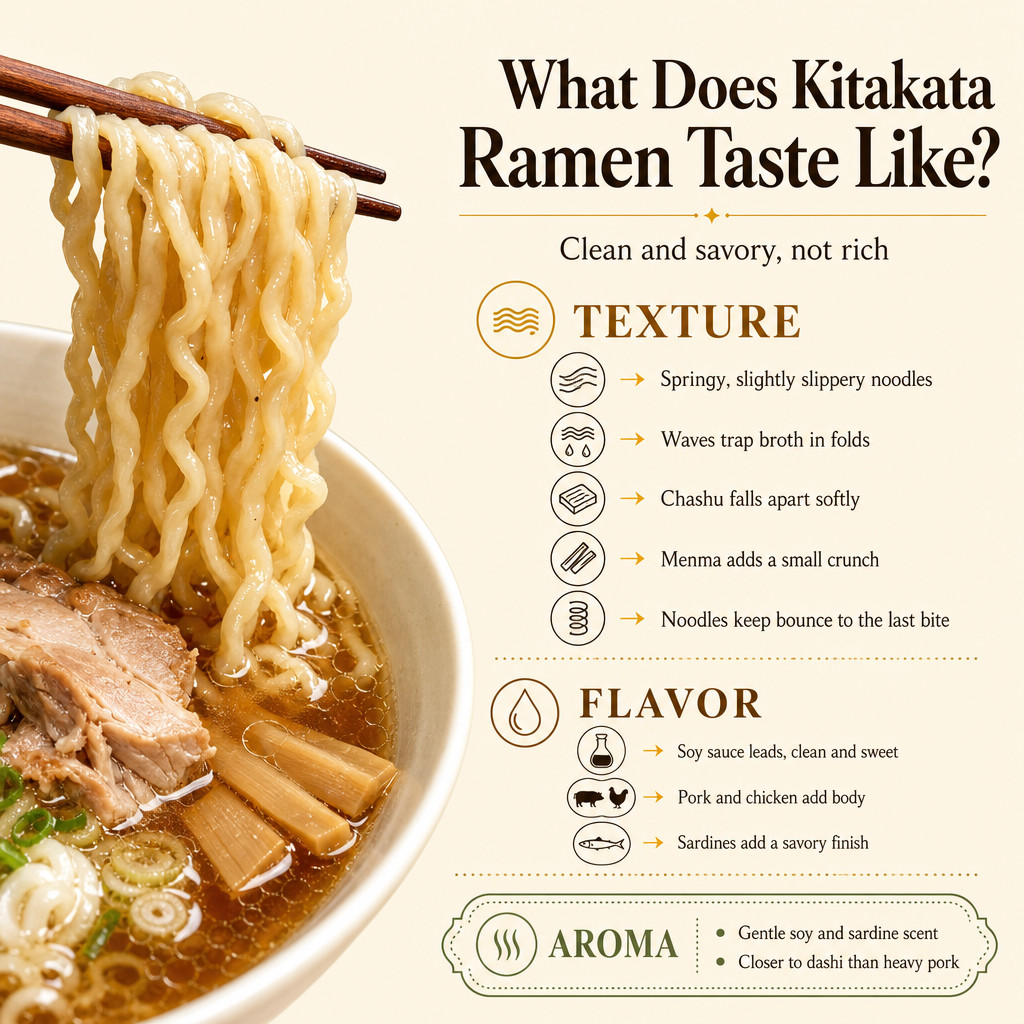
Kitakata ramen tastes clean and savory rather than rich, with chewy noodles carrying most of the character. The broth tastes light at first sip. Then its deeper flavors emerge.
Flavor
Soy sauce leads, clean and slightly sweet rather than sharp. Underneath, pork and chicken add body without heaviness. Dried sardines then push through with a savory, faintly oceanic finish. I expected something plainer, to be honest, and the depth caught me off guard.
Aroma
Steam carries a gentle soy and sardine scent, closer to a good dashi stock than to a heavy pork broth. That restraint is exactly why the bowl works at seven in the morning.
Texture
The noodles do the heavy lifting. Each strand feels springy and slightly slippery, with waves that trap broth in every fold. Chashu falls apart softly, while menma adds a small crunch in contrast. Because the noodles hold their firmness, the last bite still has bounce.
Ingredients of Kitakata Ramen
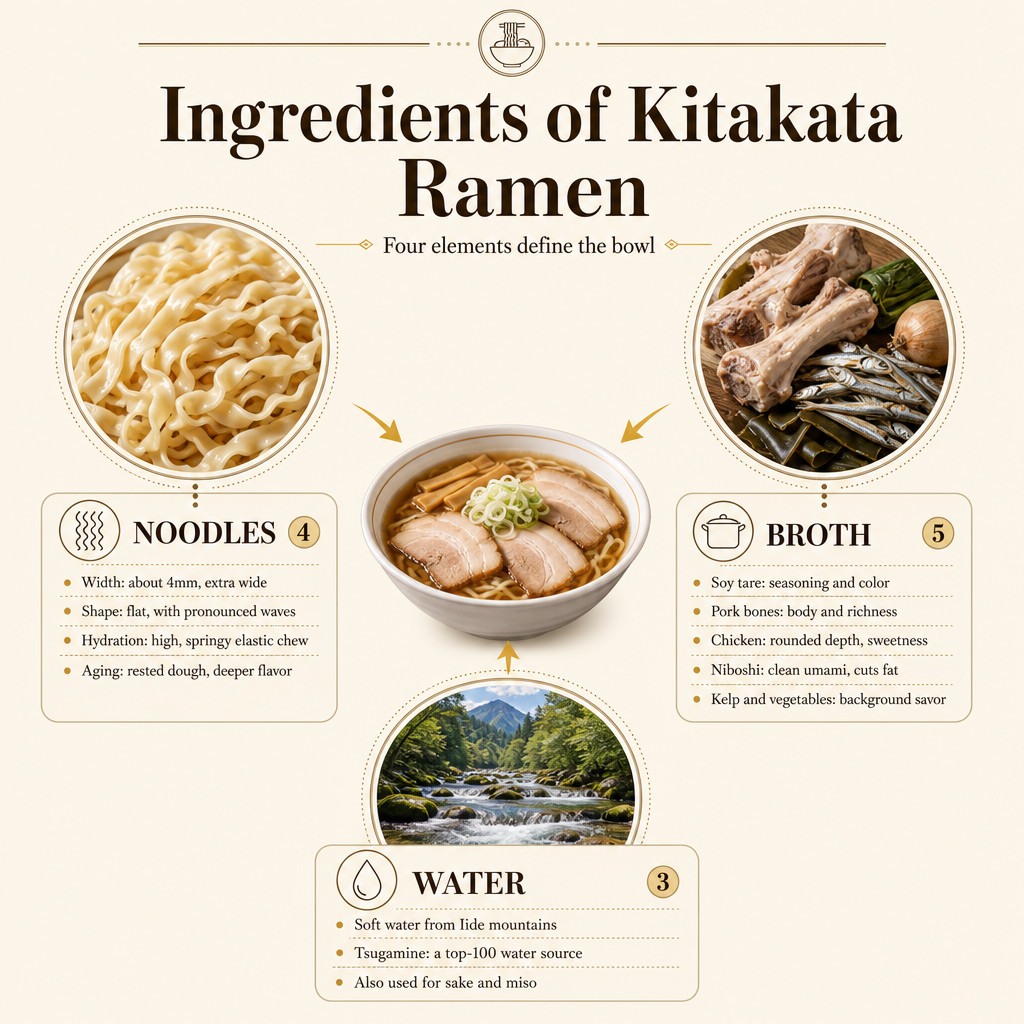
Four elements define the bowl: the noodles, the broth, the local water, and the toppings. Each one deserves a closer look.
What Noodles Does Kitakata Ramen Use?
Kitakata shops use flat, wavy, high-water-content noodles about 4mm wide. Japanese noodle makers call the style hirauchi jukusei takasui-men, meaning flat-rolled, aged, high-water-content noodles. The key features are simple to list.
- Width: roughly 4mm, noticeably wider than most ramen noodles.
- Shape: flat cross-section with pronounced waves that grip the broth.
- Hydration: high water content, which produces elasticity and a soft yet springy chew.
- Aging: makers rest the dough before service, deepening flavor and improving texture.
Furthermore, local noodle factories supply most Kitakata shops, and each guards its own blend. As a result, two Kitakata ramen bowls can taste noticeably different. That variation is exactly why shop-hopping became a local sport.
The broth
Pork bones give the broth richness. Chicken adds depth. Dried sardines create clean umami. The result tastes lighter than Hakata tonkotsu ramen, which uses a milky pork bone soup. Seasoning comes from tare, a concentrated soy sauce base that goes into the bowl before the broth.
| Component | What it contributes |
|---|---|
| Soy sauce tare | The seasoning backbone and amber color |
| Pork bones | Body and gentle richness |
| Chicken | Rounded depth and sweetness |
| Niboshi (dried sardines) | Clean marine umami that cuts the fat |
| Kelp and vegetables | Background savoriness, used by some shops |
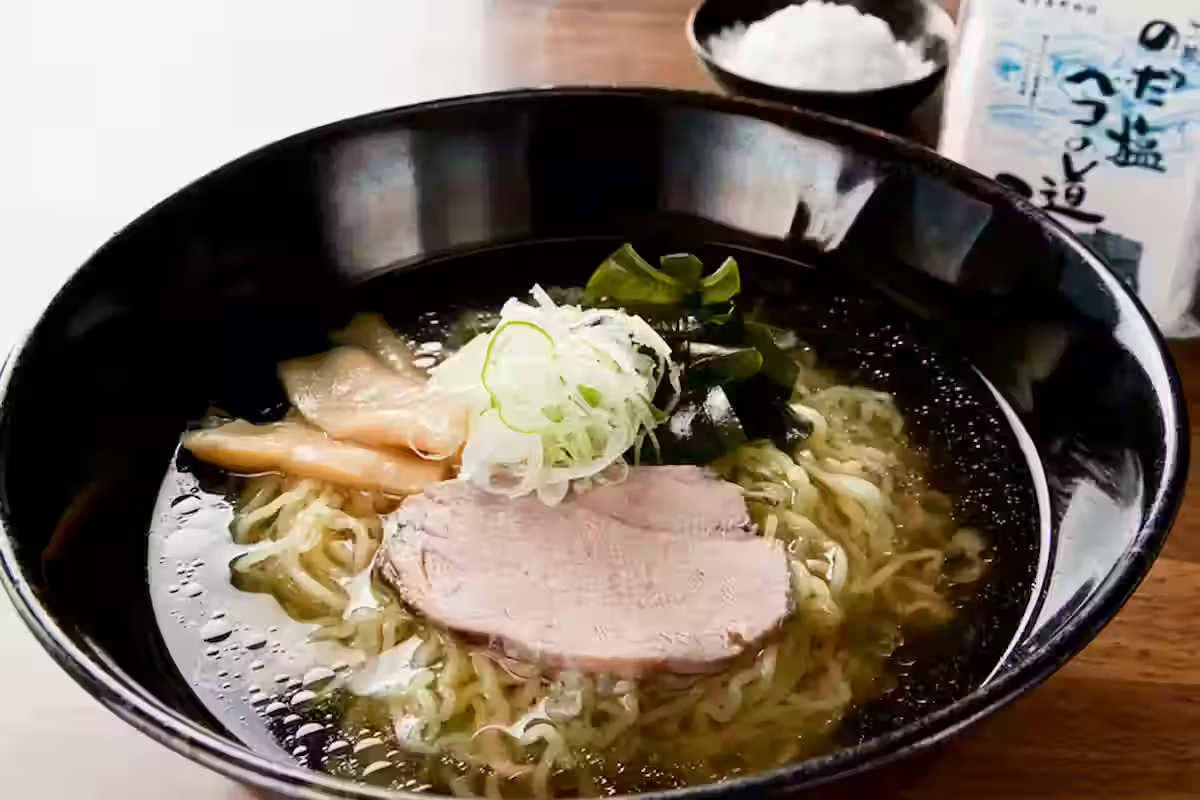
Some shops simmer the pork base and the sardine base separately, then blend them just before serving. Not every shop sticks to soy sauce either. Salt and miso versions appear on plenty of menus around town, and the salt bowls have their own devoted following.
The water
Kitakata draws soft water from the Iide mountain range. Experts at the Ministry of the Environment selected one local source, the Tsugamine mountain stream, for the Heisei 100 Best Waters list in 2008. Similarly, brewers use this water for sake, soy sauce, and miso. That shared foundation feeds straight into the ramen, giving the broth a rounded, clean finish.
Kitakata Ramen Toppings
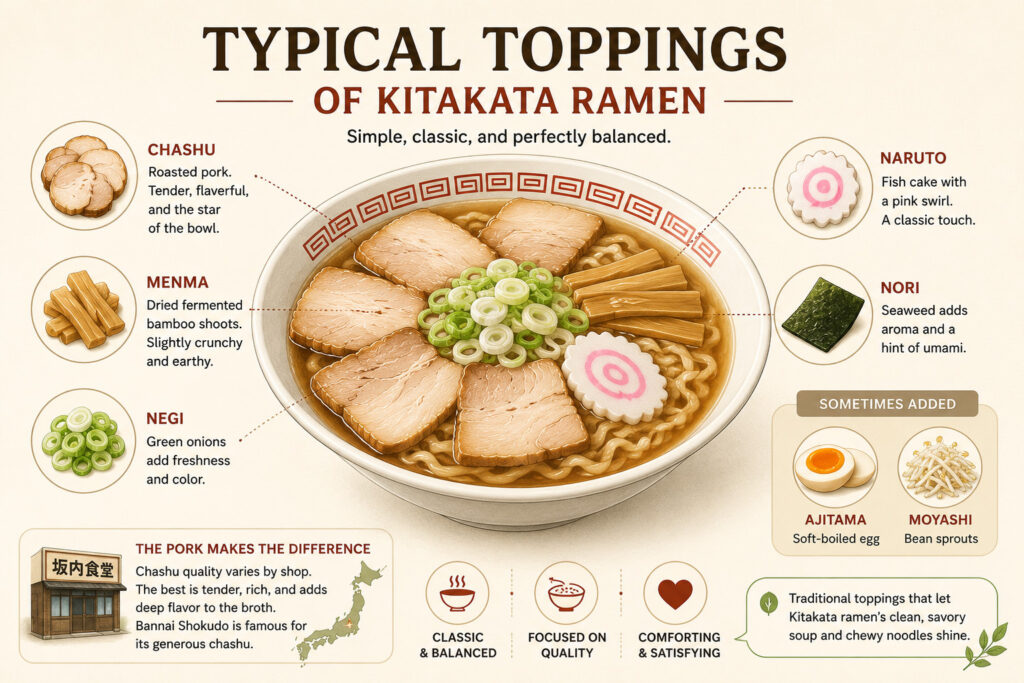
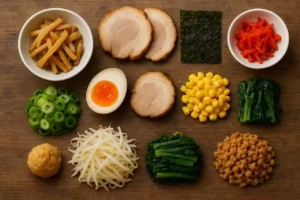
Kitakata keeps its toppings classic: chashu, menma, green onions, and naruto. You will not find elaborate garnishes here, and that restraint is deliberate.
- Chashu: roasted or braised pork, the main protein and often the shop’s signature.
- Menma: fermented bamboo shoots that add a slight crunch and earthy note.
- Negi: chopped green onions for freshness and color.
- Naruto: pink-swirled fish cake, a nostalgic touch found in older shops.
- Nori, egg, or bean sprouts: optional extras that vary by shop.
Pork matters more than anything else here. For instance, order a niku soba, the meat version, and the chashu can hide the noodles completely. Some shops use two kinds of pork in the same bowl, one lean and one fatty, so each slice eats differently.
Kitakata Ramen vs Sapporo and Hakata Ramen
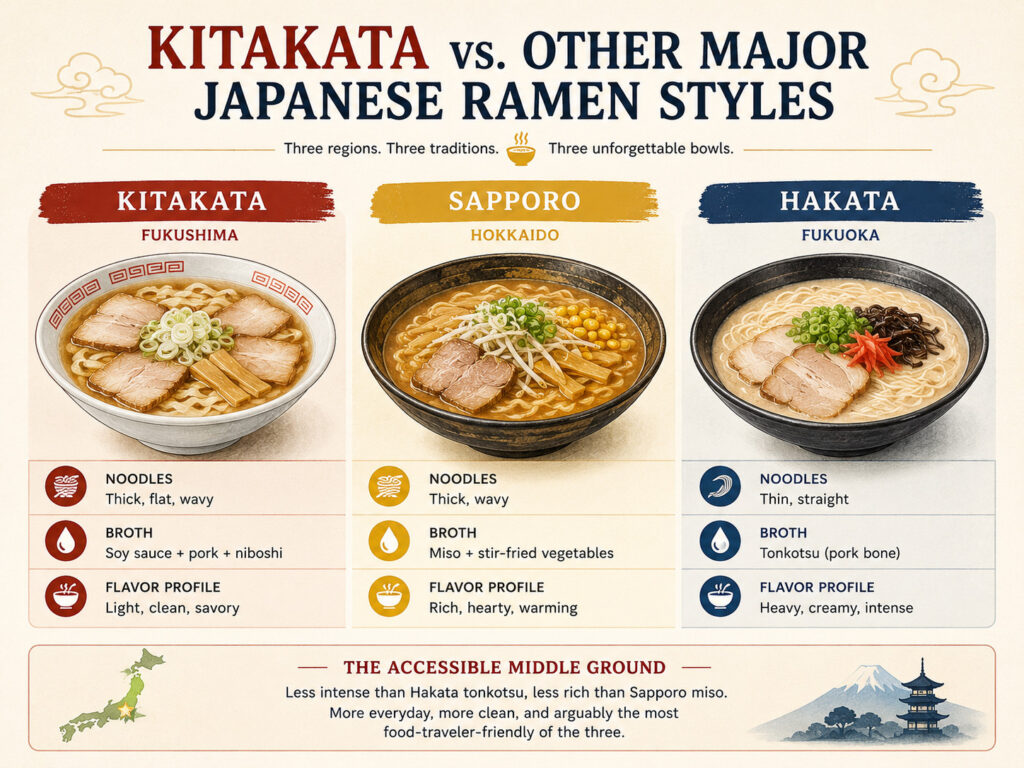
Kitakata is the lightest of Japan’s three major ramen styles, Sapporo the richest, and Hakata the most intense. All three began at humble street carts, yet they ended up completely different.
| Style | Region | Noodles | Broth | Flavor profile |
|---|---|---|---|---|
| Kitakata | Fukushima | Thick, flat, wavy | Soy sauce, pork, niboshi | Light, clean, savory |
| Sapporo | Hokkaido | Thick, curly | Miso with wok-fried vegetables | Rich, hearty, warming |
| Hakata | Fukuoka | Thin, straight | Tonkotsu pork bone | Heavy, creamy, intense |
Kitakata occupies the accessible middle ground. It is less intense than Hakata Ramen and less rich than Sapporo Ramen. For visitors easing into regional ramen, it is arguably the friendliest of the three.
Kitakata Ramen History
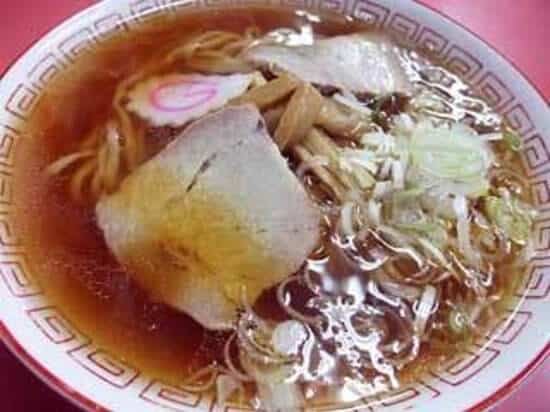
The dish takes its name from Kitakata City, where a Chinese immigrant began selling noodle soup from a cart in the mid-1920s. From there it grew into a town-wide industry over roughly a century.
A cart in the 1920s
Ban Kinsei came from Zhejiang Province in China and reached Japan at 19. After working in Nagasaki and Yokohama, he followed an uncle to Kitakata, built a cart from scrap timber, and sold hand-pulled Chinese-style soba. Kitakata City’s own account adds a nice detail: he announced his arrival by playing a charumera, the reed horn that noodle vendors used. Local records give the year as either 1924 or 1927.
His shop, Genraiken, became the origin point of the style, and he reportedly taught noodle-making to more than a hundred people. That lineage explains why so many Kitakata shops still use the humble word shokudo, meaning canteen, in their names.
Postwar growth and the Big Three
A local producer opened a noodle factory in 1947 and began mass-producing machine-cut wavy noodles, so supply finally matched demand. Bannai Shokudo followed in May 1958, when Shingo Bannai and his wife Hisa opened it beside the newly built city hall. Together with Genraiken and Makoto Shokudo, Bannai formed what locals called the Big Three.
Sadly, only Bannai still operates. Makoto Shokudo closed in September 2023, and Genraiken served its last bowl on 24 September 2025 after 101 years, with no successor found.
How the warehouse town made ramen famous
Kitakata is also the kura no machi, the town of storehouses, where thousands of clay-walled warehouses once held sake, soy sauce, and miso. A local photographer exhibited images of them in 1974, and NHK broadcast a documentary the year after. Tourists came for the architecture, then stayed for the ramen. By the early 1980s, magazine features had turned the noodles into the main attraction.
Kitakata today
The ramen town faces a real challenge now. Shop numbers fell from roughly 110 around 2010 to about 90 by 2024, mostly because owners aged out without successors. The local ramen association shrank from 45 member shops in 2005 to 32 by late 2025. In response, Kitakata City created a dedicated Ramen Division in April 2024 and registered 17 July as Kitakata Ramen Day. Visiting now feels less like ticking off a tourist list and more like supporting something worth keeping.
Morning Ramen Culture in Kitakata
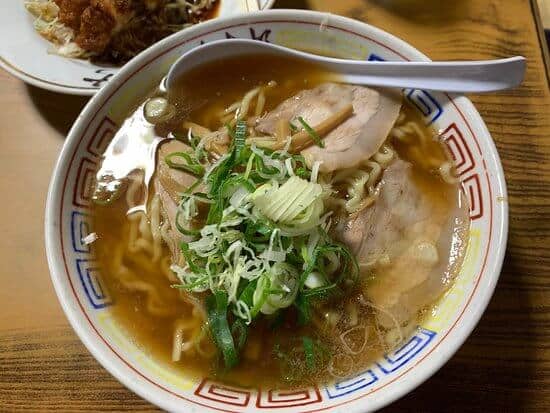
Morning ramen, known locally as asa-ra, means eating a bowl of Kitakata ramen for breakfast. Shops open as early as 7:00am, and farmers, factory workers, and retirees all turn up before the day starts. The word is simply short for asa-ramen. Locals use it casually, much the way other towns talk about morning coffee.
The habit grew out of the town’s working rhythm. Brewery and warehouse laborers started shifts early and wanted something warm and filling. A light soy sauce bowl suited that far better than a heavy one would. Sake brewers finishing overnight shifts reportedly ate ramen on the way home, which fits the same pattern.
Today asa-ra draws food travelers from across Japan. Popular shops fill by 8:00am on weekends, so arriving early genuinely matters. Sitting at a counter at dawn in a quiet Fukushima town, steam fogging the window, is a strange and lovely way to start a trip.
How Kitakata Ramen Is Made
Shops start work long before opening, often around 3:00am. The rhythm rarely changes, and watching it explains a lot about the flavor.
- Cooks simmer pork bones and chicken for hours, skimming carefully to keep the soup clear.
- They steep dried sardines separately, since long boiling turns niboshi bitter.
- Noodle makers mix flour with plenty of water, roll the dough flat, and let it age.
- Staff boil the noodles briefly, then drain them hard so the broth stays undiluted.
- Finally, soy sauce tare goes into the bowl, the broth follows, and toppings land on top.
Kitakata Ramen Recipe: A Simple Home Version
This recipe makes two bowls and takes about two hours, most of it hands-off. You cannot fully copy a shop that starts its broth before dawn. Even so, a convincing home version is achievable.
What you need
| Ingredients (serves 2) | Amount |
|---|---|
| Chicken stock | 600 ml |
| Niboshi (dried sardines) | 20 g |
| Kombu kelp | 5 g |
| Water for the dashi | 400 ml |
| Pork belly or shoulder | 300 g |
| Soy sauce, mirin, sake | 100 ml, 50 ml, 50 ml |
| Thick wavy ramen noodles | 2 portions |
| Menma, green onion, naruto | To taste |
Step by step
Soak 20 g of dried sardines and 5 g of kombu in 400 ml of cold water for at least two hours. Then heat gently to about 80C without boiling, and strain. Why this step matters: hard boiling makes niboshi bitter and cloudy.
Roll and tie 300 g of pork, then simmer it in 100 ml soy sauce, 50 ml mirin, 50 ml sake, and 100 ml water for about 90 minutes. Rest the meat before slicing. Why this step matters: the braising liquid doubles as your tare, so nothing goes to waste.
Combine 300 ml of the niboshi dashi with 600 ml of warm chicken stock, then season with roughly two tablespoons of the reserved tare per bowl. Taste and adjust. Why this step matters: blending separately keeps the soup clear and balanced.
Cook the noodles until just firm, shake the strainer hard, and place them in a warmed bowl. Pour the broth, then add chashu, menma, green onion, and naruto. Why this step matters: wet noodles thin the soup and dull the flavor immediately.
Frozen or fresh Kitakata-style noodles are worth seeking out. Thin straight ramen noodles simply will not deliver the same chew.
Best Kitakata Ramen Shops: Where to Eat
Bannai Shokudo is the most famous shop still operating in Kitakata, while three Tokyo options serve travelers who cannot reach Fukushima. The table sums up which one suits which visitor.
| Shop | Area | Why go | Budget |
|---|---|---|---|
| Bannai Shokudo | Kitakata, Fukushima | The most famous bowl, open from 7:00am | 850 to 1,150 yen |
| Kitakataya | Itabashi, Tokyo | Best faithful version in Tokyo | Around 1,000 yen |
| Menya Shichisai | Hatchobori, Tokyo | Handmade noodles you can watch | Around 1,000 yen |
| Kitakata Ramen Ban’nai | Nationwide chain | Easiest access, generous pork | Around 1,000 yen |
Getting to Kitakata
Kitakata Station sits on the JR Ban’etsu West Line, roughly 20 minutes from Aizu-Wakamatsu. From Tokyo, most travelers take the Tohoku Shinkansen to Koriyama, then transfer. Trains run infrequently, so check the timetable before you commit to a morning bowl. Many Japanese visitors simply drive, which makes the countryside shops far easier to reach.
Bannai Shokudo, Kitakata
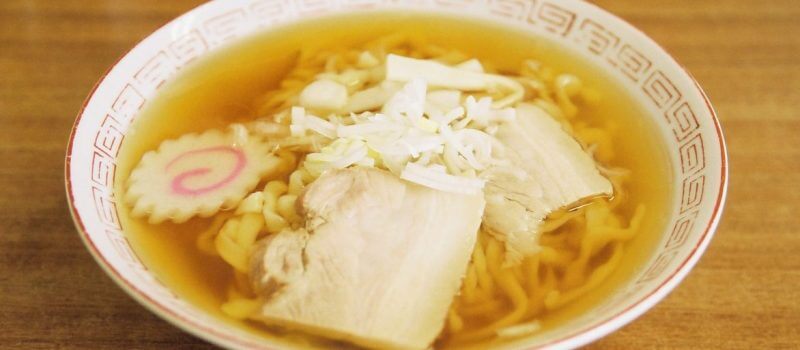
Bannai is now the last of the original Big Three still trading. The shina soba arrives with a clear, deeply savory broth, and the niku soba buries the noodles under pork. Doors open at 7:00am, so this is the classic asa-ra stop. Best for: morning ramen and serious chashu. Signature: shina soba, around 850 yen. Access: about 10 minutes on foot from Kitakata Station. Reservation: not accepted, and weekend queues form early.
Kitakataya, Itabashi, Tokyo
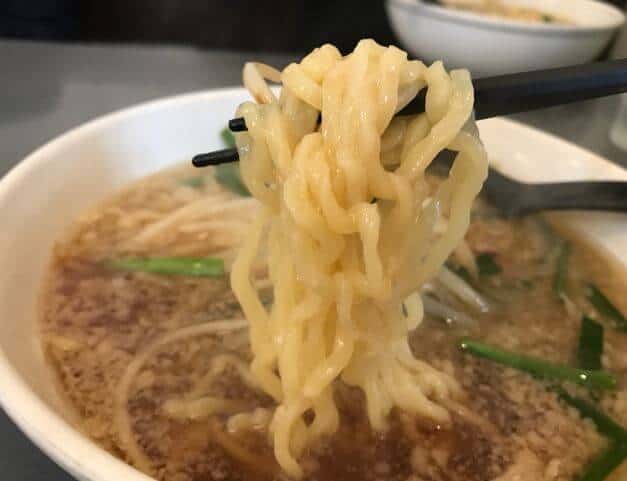
Kitakataya earned recognition as Tokyo’s first dedicated Kitakata ramen specialist. Bringing thick wavy noodles and soy broth to the capital helped build the style’s national profile. Best for: a faithful Tokyo version. Access: Itabashi ward, near Itabashi Station.
Menya Shichisai, Hatchobori, Tokyo
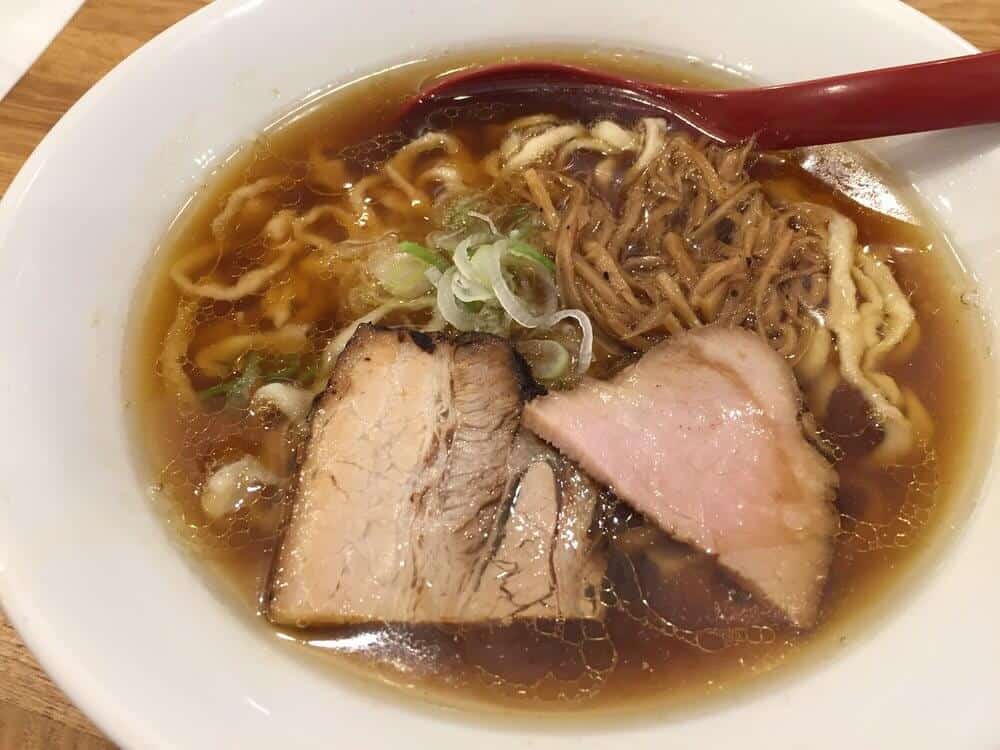
Menya Shichisai makes its noodles in-house and leans hard into niboshi. Watching the kitchen from the counter is half the appeal. Best for: seeing the noodle craft up close. Access: short walk from Hatchobori Station.
Kitakata Ramen Ban’nai, nationwide
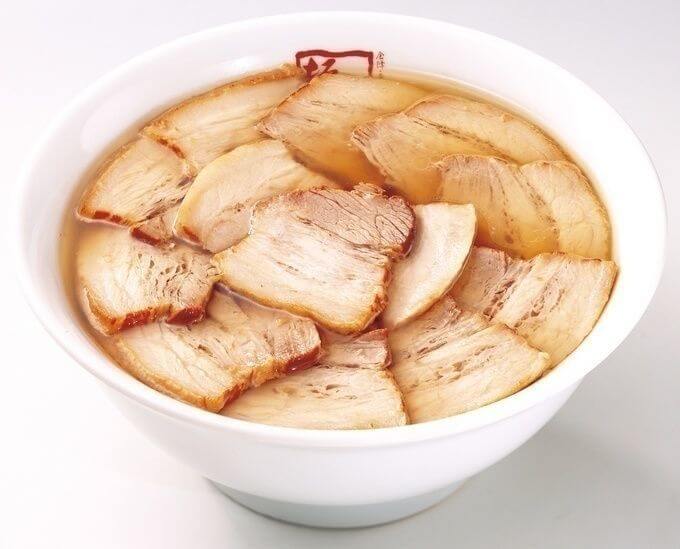
This chain runs branches across Japan and has expanded overseas, opening an Illinois location in 2026. Bowls arrive loaded with thick roast pork slices. Purists may still prefer the Kitakata originals. Even so, the chain shows how far the style has traveled. Best for: convenience and a generous portion.
How to Eat Kitakata Ramen
Sip the broth first, eat the noodles fast, and go early. Those three habits cover almost everything a first-time visitor needs.
- Sip the broth plain, before the noodles, to catch the sardine note.
- Eat the noodles fairly quickly, since even firm noodles soften eventually.
- Save some chashu for the second half, so the bowl keeps its balance.
- Skip extra condiments at first, because the broth arrives already seasoned to taste complete.
Two practical notes. Many shops still prefer cash, so carry some with you. Shops also close once the soup runs out, which often happens before the posted closing time.
Kitakata Ramen and Fukushima Food Culture
Fukushima is quietly one of Japan’s great ramen prefectures, with three distinct local styles. Kitakata sits in the Aizu region to the west. Shirakawa Ramen in the south uses hand-cut curly noodles in a clear soy broth, while Kooriyama Black Ramen goes dark and bold with heavy soy sauce.
The same conditions explain all three. Fukushima’s mountain water supports brewing, and Kitakata alone holds several sake breweries alongside soy sauce and miso makers. Naturally, good local soy sauce makes good ramen tare. For a wider view of the region, our Tohoku food guide covers the neighboring prefectures too.
Explore other Japanese ramen styles: Tokyo Ramen | Shirakawa Ramen | All ramen guides
Kitakata Ramen: Final Thoughts
Kitakata ramen earns its place among Japan’s three great styles through consistency rather than spectacle. Above all, thick wavy noodles, a clean soy broth, and a town that eats them at breakfast have carried this dish for a century. The recent closures make the remaining shops feel more precious, not less. Go early, order the soy sauce bowl first, and try a second shop before lunch. That is how Kitakata does it.
Save this article to your bookmarks if you plan a ramen trip to Fukushima. Feel free to share it on social media too!
Kitakata Ramen FAQ
What is Kitakata ramen?
Kitakata ramen is a soy sauce ramen from Kitakata City in Fukushima Prefecture. Thick, flat, wavy noodles sit in a light broth made from pork bones, chicken, and dried sardines. It ranks as one of Japan’s three major ramen styles alongside Sapporo and Hakata. The style is known for a clean everyday flavor and a breakfast ramen tradition called asa-ra.
Why is it called Kitakata ramen?
The dish takes its name from Kitakata City in Fukushima Prefecture, where it developed during the 1920s and 1930s. A cook from China first sold the noodles there from a street cart. Local diners then adapted his recipe, and the town’s version gradually became a distinct regional style. Japanese food writers began using the name widely in the 1980s.
What makes Kitakata ramen different from other ramen?
The noodles set it apart most clearly. They are flat, wide, wavy, and high in water content, unlike Hakata’s thin straight strands. The broth combines soy sauce with pork, chicken, and niboshi for a layered but light flavor. Morning ramen culture is also unique to Kitakata among the three major styles.
What is morning ramen (asa-ra)?
Asa-ra means eating ramen for breakfast, and Kitakata shops open as early as 7:00am to serve it. The custom grew from brewery and warehouse workers who needed an early, warm meal. Bannai Shokudo is the best-known morning stop, opening at 7:00am daily. Weekend queues form before 8:00am, so arrive early.
Can you really eat ramen for breakfast?
In Kitakata, yes, and plenty of locals do exactly that. The soy sauce broth stays light enough that it does not feel heavy first thing. Visitors often worry it will be too much, then finish the bowl easily. If you feel unsure, order a standard portion and skip the extra chashu.
How do I get to Kitakata City?
Kitakata Station lies on the JR Ban’etsu West Line, about 20 minutes from Aizu-Wakamatsu. Travelers from Tokyo usually ride the Tohoku Shinkansen to Koriyama and transfer there. Trains are infrequent, so check timetables before planning a morning bowl. Renting a car makes the countryside shops much easier to reach.
Where can I eat the best Kitakata ramen?
Kitakata City holds roughly 90 to 100 shops, the densest concentration anywhere. Bannai Shokudo near the city hall is the most famous survivor of the original Big Three. In Tokyo, Kitakataya in Itabashi was the first dedicated specialist, and Menya Shichisai in Hatchobori makes its noodles in-house. The Kitakata Ramen Ban’nai chain also operates nationwide.
How much does Kitakata ramen cost?
A standard bowl generally costs between 800 and 1,200 yen as of July 2026. Meat-heavy versions such as niku soba run higher, often above 1,100 yen. Many shops in Kitakata prefer cash, so bring some with you. Shops also close once the soup sells out, which can happen well before the posted closing time.
Is Kitakata ramen healthy?
It is lighter than tonkotsu styles, since the broth carries less fat. However, ramen broth is salty by nature, so it is not a low-sodium meal. Many diners leave some soup in the bowl, which cuts the salt considerably. Vegetables are minimal in a standard bowl, so add a side dish if you want more balance.
Is Kitakata ramen suitable for vegetarians?
Standard bowls are not, because the broth uses pork, chicken, and dried sardines. Removing the chashu does not solve the problem. A few shops in Fukushima now offer vegetable or soy milk broths, though they remain rare in Kitakata itself. Check menus in advance, and ask directly whether the broth contains fish or meat.
References
- Kitakata City, Introducing Kitakata’s 100-Year Food, https://www.city.kitakata.fukushima.jp/soshiki/syoukan/35388.html (Surveyed: July 2026)
- Kura no Machi Kitakata Ramenkai (Kitakata Ramen Association), About Kitakata Ramen, http://www.ramenkai.com/about/ (Surveyed: July 2026)
- Agency for Cultural Affairs, 100-Year Food Program, https://www.bunka.go.jp/seisaku/shokubunka/foodculture/hyakunenfood/ (Surveyed: July 2026)
- Ministry of the Environment, Heisei 100 Best Waters: Tsugamine Mountain Stream, Kitakata City, https://water-pub.env.go.jp/water-pub/mizu-site/newmeisui/list/index.html (Surveyed: July 2026)
- Bannai Shokudo, Official Website: Shop Information, https://www.bannaisyokudou.jp/ (Surveyed: July 2026)
- Shin-Yokohama Ramen Museum, Rapedia: Kitakata Ramen, https://www.raumen.co.jp/rapedia/study_japan/study_raumen_kitakata.html (Surveyed: July 2026)
- Solt, G. (2014). The Untold History of Ramen: How Political Crisis in Japan Spawned a Global Food Craze. Berkeley: University of California Press. (Surveyed: July 2026)
- Kushner, B. (2012). Slurp! A Social and Culinary History of Ramen, Japan’s Favorite Noodle Soup. Leiden: Global Oriental / Brill. (Surveyed: July 2026)
- Japan Society of Home Economics, Transition and Type Classification of Ramen in Japan, Proceedings of the Annual Meeting, Vol. 76 (2024), https://www.jstage.jst.go.jp/article/kasei/76/0/76_135/_article/-char/ja/ (Surveyed: July 2026)
Related Articles
- Sapporo Ramen (札幌ラーメン) (Surveyed: July 2026)
- Hakata Ramen (博多ラーメン) (Surveyed: July 2026)
- Shirakawa Ramen (白河ラーメン) (Surveyed: July 2026)
- Kooriyama Black Ramen (郡山ブラックラーメン) (Surveyed: July 2026)
- Tokyo Ramen (東京ラーメン) (Surveyed: July 2026)
- Fukushima Food Guide (Surveyed: July 2026)
- Tohoku Food Guide (Surveyed: July 2026)




Comments