







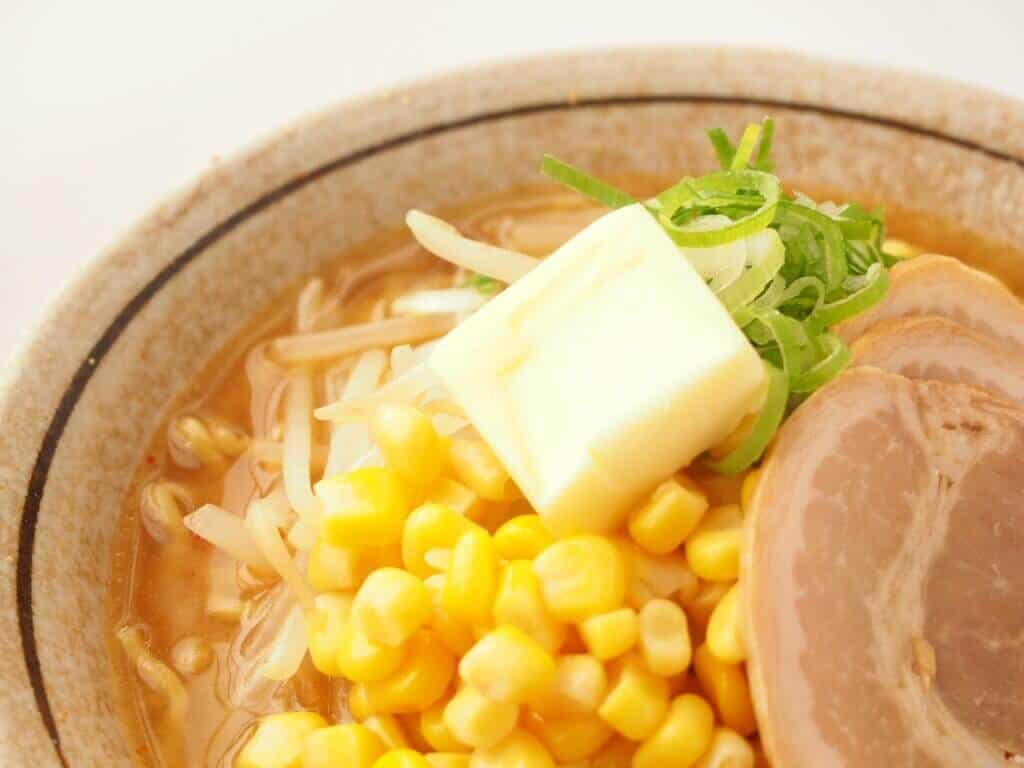
Sapporo ramen is Hokkaido’s signature noodle dish. It pairs a rich miso broth with thick curly noodles, wok-fried vegetables, and a thin layer of hot lard that keeps the bowl scalding. Miso ramen itself was created in Sapporo in the 1950s, and the style now ranks among Japan’s most famous regional ramen. This guide covers its taste, history, ingredients, recipe, and where to eat it.
- Sapporo ramen usually means miso ramen, cooked bowl by bowl in a blazing hot wok.
- Miso ramen was developed at the Sapporo shop Aji no Sanpei, which still operates today.
- Thick curly noodles, bean sprouts, corn, and butter define the classic Sapporo bowl.
What Is Sapporo Ramen?
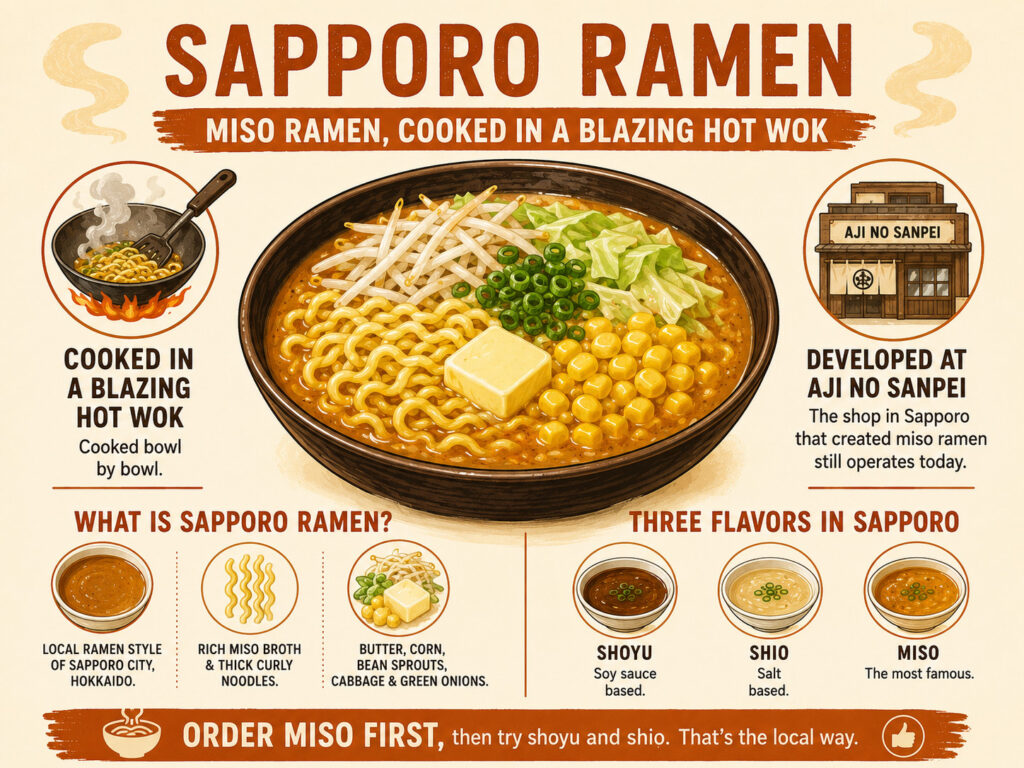
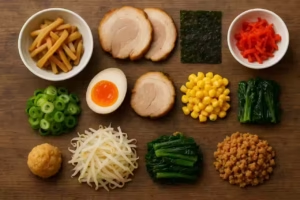
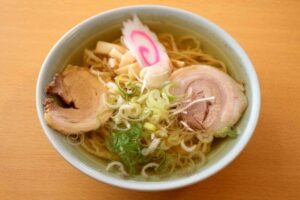
Sapporo ramen is the local ramen style of Sapporo City in Hokkaido, northern Japan. The classic version uses a rich miso-based broth. Thick curly noodles absorb the soup and create its signature texture. Common toppings include butter, corn, bean sprouts, cabbage, and green onions.
Strictly speaking, Sapporo shops serve three flavors: shoyu, shio, and miso. Miso made the city famous, however, so the two names now travel together. Order miso on a first visit, then branch out to the others. That is the local way, and plenty of respected shops build their reputation on shio or shoyu instead.
Why Is Sapporo Ramen So Special?
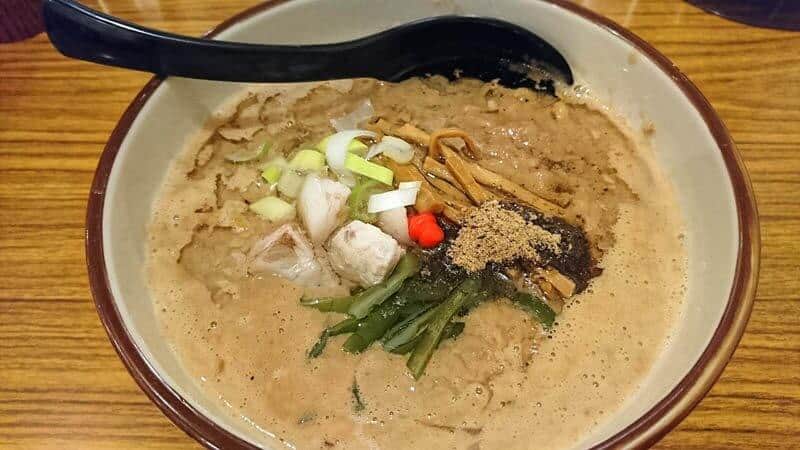
Three things set Sapporo ramen apart: the wok cooking method, the miso tare, and the sheer heat of the bowl. Together they produce a deeper, more aromatic flavor than most other ramen styles.
Cooked in a Wok, Bowl by Bowl
Chefs build each bowl of Sapporo ramen inside a wok. First they stir-fry onions, cabbage, bean sprouts, and pork before adding them to the bowl, creating a deeper flavor. Then they caramelize the tare with those vegetables and pour in the base broth. A wok holds much higher temperatures than a stockpot, so the soup picks up a smoky, roasted edge. Finally, a film of hot lard seals the surface and keeps the soup hot to the last sip.
Tare: The Flavor Anchor of Sapporo Ramen
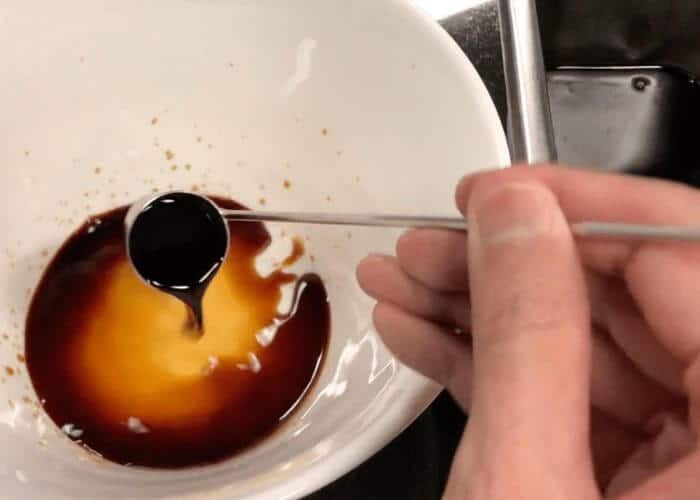
Tare, sometimes called kaeshi, is a concentrated seasoning sauce. Shops blend miso, shoyu, or shio with garlic, ginger, and other aromatics to define their house style. In Sapporo the miso tare carries the identity of the whole bowl. Skilled chefs hand-pick their miso, and many combine several types for balance.
Miso as Northern Fuel
Miso is a fermented soybean paste and a staple of Japanese cooking. One spoonful delivers salt, sweetness, and deep umami at the same time. That density matters in Hokkaido, where winters run long and bitterly cold. A miso-rich broth warms the body in a way a clear soup simply cannot match.
What Does Sapporo Ramen Taste Like?
Expect a bold, savory bowl that eats almost like a meal-sized stew. Here is how the taste, aroma, and texture break down.
Taste
The first spoonful hits with salty-sweet miso depth over a rich broth of pork bones and vegetables. Garlic and ginger add warmth underneath. Butter, if you add it, rounds the edges and makes the soup gently creamy. I will admit the intensity surprised me on my first bowl, yet I finished every drop.
Aroma
Steam carries a roasted, nutty scent from the wok-seared miso and vegetables. There is also a faint smokiness that clear ramen broths never have. On a freezing night, that smell alone pulls people in from the street.
Texture
The thick curly noodles stay firm and chewy, and each wave traps a ribbon of soup. Crunchy bean sprouts contrast with soft ground pork. Meanwhile the lard layer keeps everything piping hot, so the last bite feels as lively as the first.
Sapporo Ramen Ingredients and Toppings
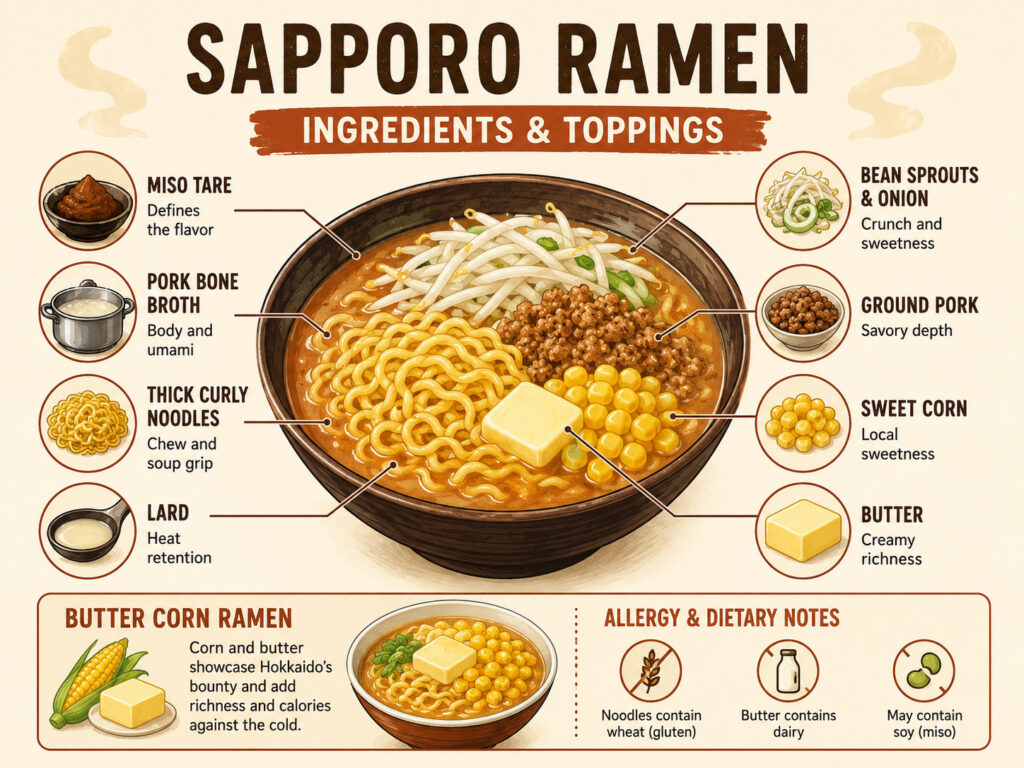
Every ingredient in Sapporo ramen has a clear job. The table below shows the core lineup and what each part contributes.
| Ingredient | Role in the bowl | Notes |
|---|---|---|
| Miso tare | Defines the flavor | Often a blend of several miso types |
| Pork bone broth | Body and umami | Simmered for hours until rich |
| Thick curly noodles | Chew and soup grip | Yellow and springy, made for miso soup |
| Lard | Heat retention | Seals the surface against the cold |
| Bean sprouts and onion | Crunch and sweetness | Stir-fried in the wok first |
| Ground pork | Savory depth | Browned with garlic and ginger |
| Sweet corn | Local sweetness | A signature Hokkaido topping |
| Butter | Creamy richness | Key to butter corn ramen |
Corn and butter deserve a special mention. Both showcase Hokkaido’s dairy farms and cornfields, and local guides often explain them as a way to add richness and calories against the cold. Together they created butter corn ramen, the sweet, glossy variation that travelers adore.
Allergies and Dietary Notes
A few ingredients matter if you have restrictions. The noodles contain wheat, the miso and tare contain soybeans, and the broth almost always contains pork. Butter adds dairy, while some shops finish bowls with sesame or seafood dashi. Small counter shops rarely keep full allergen lists, so ask before ordering when it matters. Larger chains and airport branches tend to provide clearer labeling.
Miso Ramen History: How Sapporo Ramen Was Born
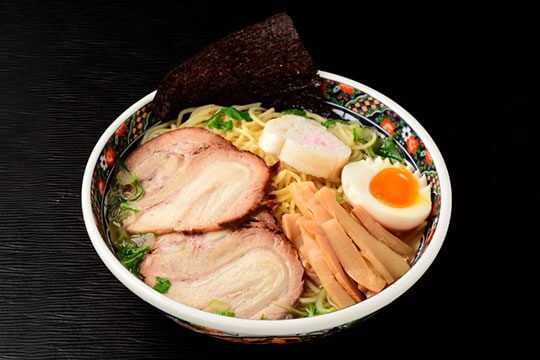
The story runs from a 1920s Chinese restaurant to postwar street stalls and, finally, to a miso breakthrough in the 1950s. Each stage left a mark on the bowl you eat today.
From Takeya Shokudo to the Word “Ramen”
In 1922, a Chinese cook named Wang Wencai began serving noodle soup at Takeya Shokudo, a restaurant near Hokkaido University. His salty chicken broth drew students and local residents alike. According to a widely repeated account, the owner’s wife, Tatsu Ohkubo, coined the word “ramen” for the dish.
That naming story carries real weight, since before the war most vendors simply called the dish “Shina soba,” meaning Chinese noodles. Historian Barak Kushner traces how a Chinese import gradually became something Japanese diners claimed as their own, and the shift in vocabulary was part of that change. Food historians still debate how much Takeya actually invented, though, and the Ministry of Agriculture, Forestry and Fisheries notes that Hokkaido’s ramen origins remain unclear. Treat the Takeya account as the leading theory rather than settled fact. Wartime rationing later closed the city’s noodle shops entirely.
Why Ramen Boomed in Postwar Sapporo
After the war, ramen returned through street stalls around Susukino and Nijo Market. Stalls such as Ryuho and Darumaken opened in roughly 1946 and 1947, serving shoyu bowls with hearty pork broth. By 1951 a cluster of shops had formed the first version of Ramen Yokocho.
Why did noodles specifically take off? Historian George Solt links the postwar ramen boom to American wheat imports during the Occupation, much of which moved through black markets. Cheap flour made noodles the practical choice, and a salty, fatty bowl fed hungry laborers for very little money. Meanwhile many Sapporo stall owners were repatriates from Manchuria, and local histories credit them with bringing Chinese cooking techniques north. Morito Omiya, who would soon change everything, had worked as an engineman on the South Manchuria Railway.
Aji no Sanpei and the Birth of Miso Ramen
Omiya opened Aji no Sanpei in Susukino in 1950. He believed strongly in miso as healthy, everyday food. After reading a magazine essay urging Japanese cooks to use miso more widely, he began years of trials, ordering miso from across the country and testing bowls on regulars. He also reached for garlic, an ingredient he had grown used to during his Manchuria years and one that Japanese noodle shops had largely ignored.
Sources differ on the exact birth year. The shop and most reference works place the completed miso ramen in the mid-1950s, around 1954 or 1955. The Sapporo Tourist Association instead dates the finished dish to 1958. That year, Takayuki Nishiyama of Nishiyama Seimen perfected a matured, high-hydration curly noodle built for that thick soup.Either way, one popular tale is wrong: the claim that a customer asked Omiya to drop noodles into pork miso soup is firmly denied by the Omiya family.
Omiya also loaded the bowl with stir-fried vegetables so that one serving carried real nutrition. That template, meaning miso tare plus wok-fried vegetables plus springy curly noodles, became the basic style of Sapporo ramen.
How Sapporo Ramen Spread Across Japan
A 1955 feature in the magazine Kurashi no Techo made Aji no Sanpei nationally famous. Department store fairs then brought miso ramen demonstrations to Tokyo and Osaka during the 1960s. Soon after, the Dosanko chain began franchising the style nationwide in 1967, and the instant classic Sapporo Ichiban Miso Ramen launched in 1968. Food historian Tetsu Okada frames this era as the moment cheap, filling, nutritious noodles spread explosively across Japan. Within roughly a decade, miso ramen meant Sapporo everywhere in the country.
Hokkaido Ramen Types: The Five Local Styles
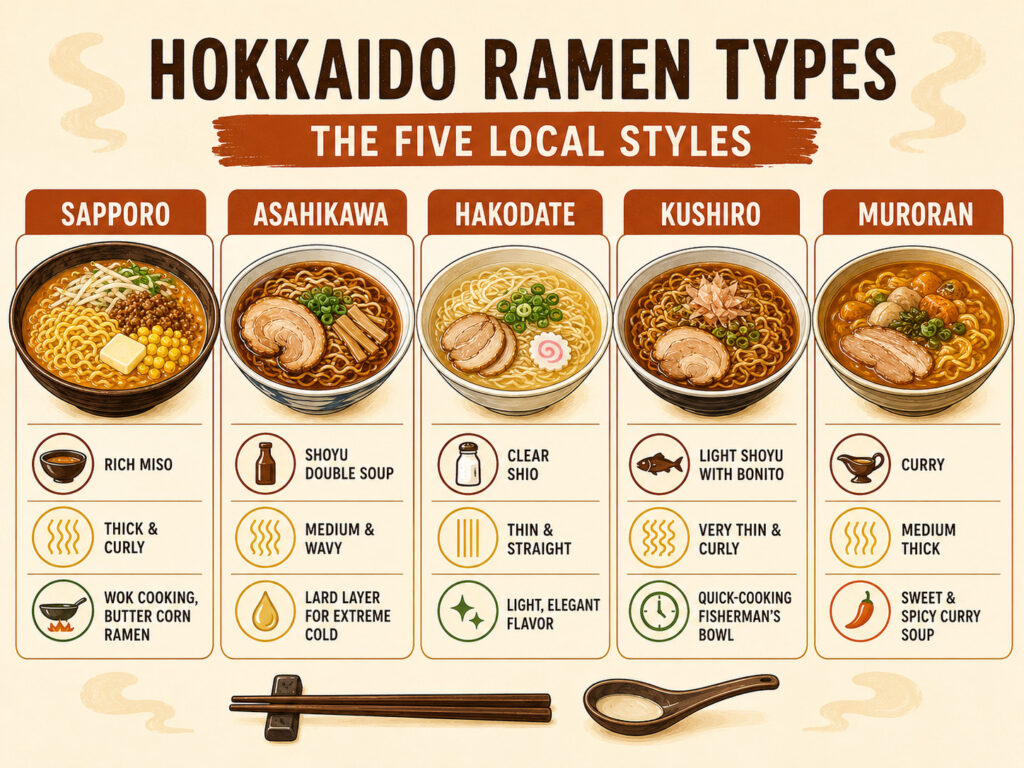
Sapporo ramen is the most famous of the Hokkaido ramen styles, but four others share the island. The table gives you the quick picture, and the short profiles below add local color.
| Style | Broth | Noodles | Known for |
|---|---|---|---|
| Sapporo | Rich miso | Thick and curly | Wok cooking, butter corn ramen |
| Asahikawa | Shoyu double soup | Medium and wavy | Lard layer for extreme cold |
| Hakodate | Clear shio | Thin and straight | Light, elegant flavor |
| Kushiro | Light shoyu with bonito | Very thin and curly | Quick-cooking fisherman’s bowl |
| Muroran | Curry | Medium thick | Sweet and spicy curry soup |
Asahikawa Ramen
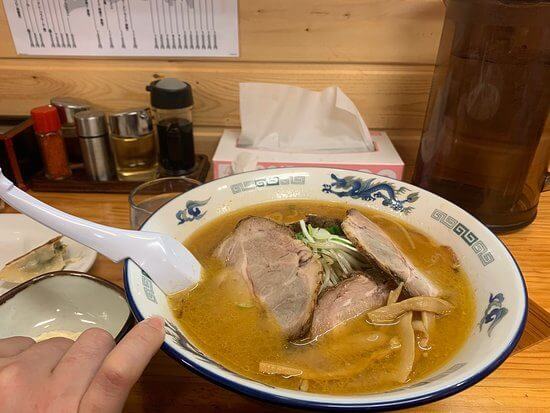
Asahikawa Ramen builds a shoyu-seasoned double soup from pork, chicken, and seafood. A generous lard layer keeps it hot through Asahikawa’s fierce winters.
Kushiro Ramen
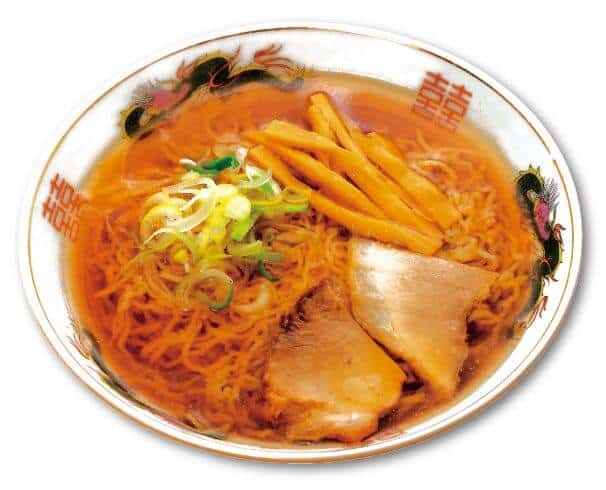
Kushiro ramen pairs a gentle shoyu broth with bonito and kelp dashi. Its ultra-thin curly noodles cook in seconds, a habit born from feeding busy fishermen fast.
Hakodate Ramen
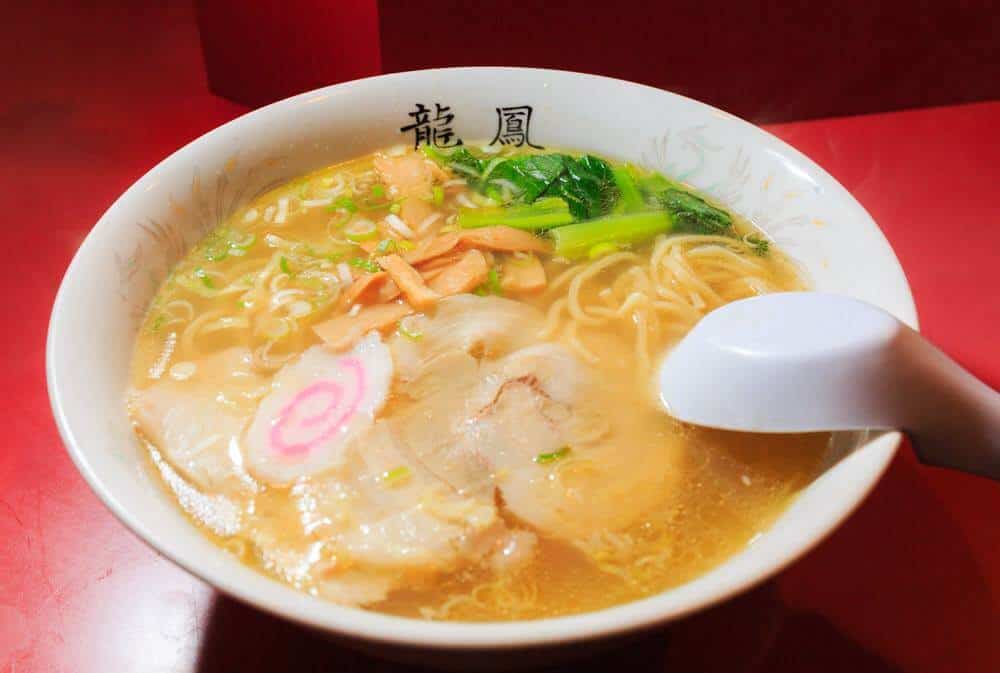
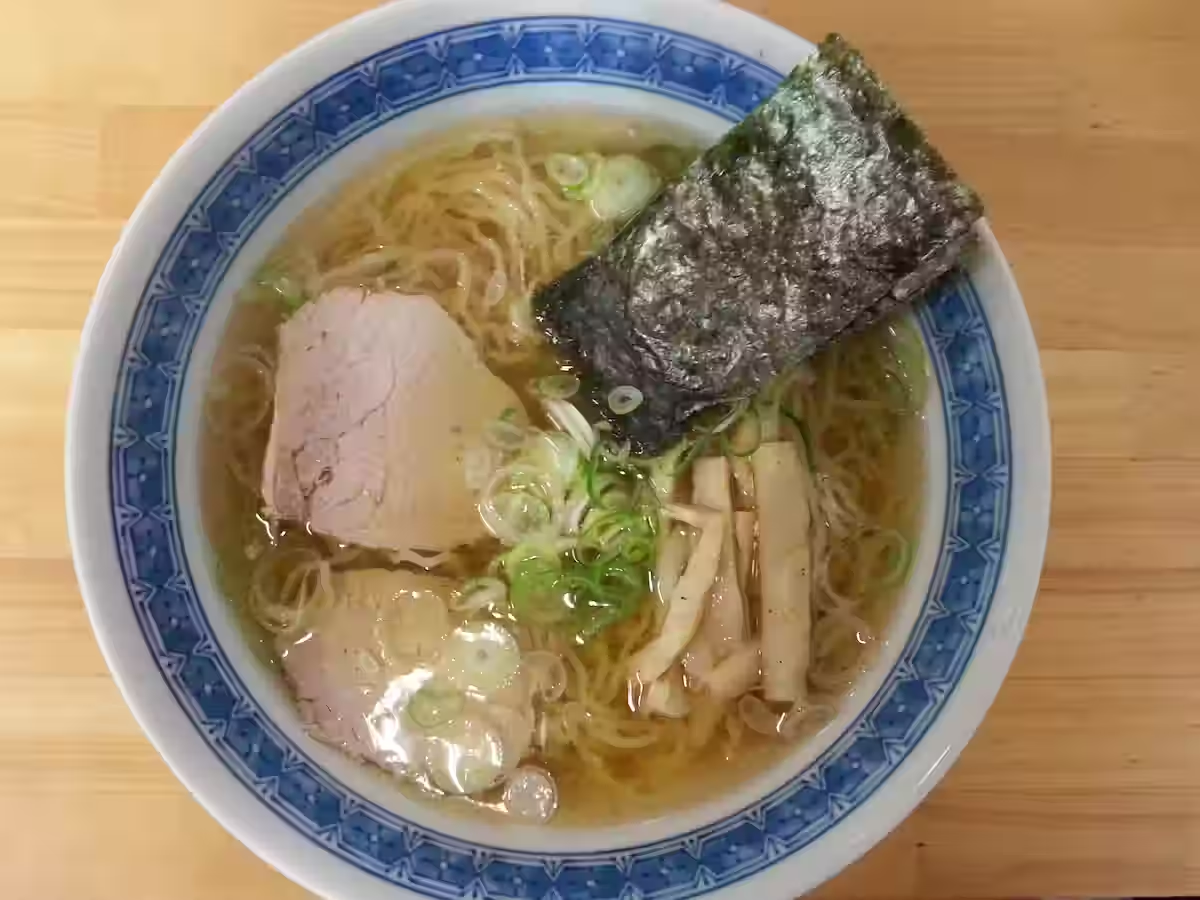
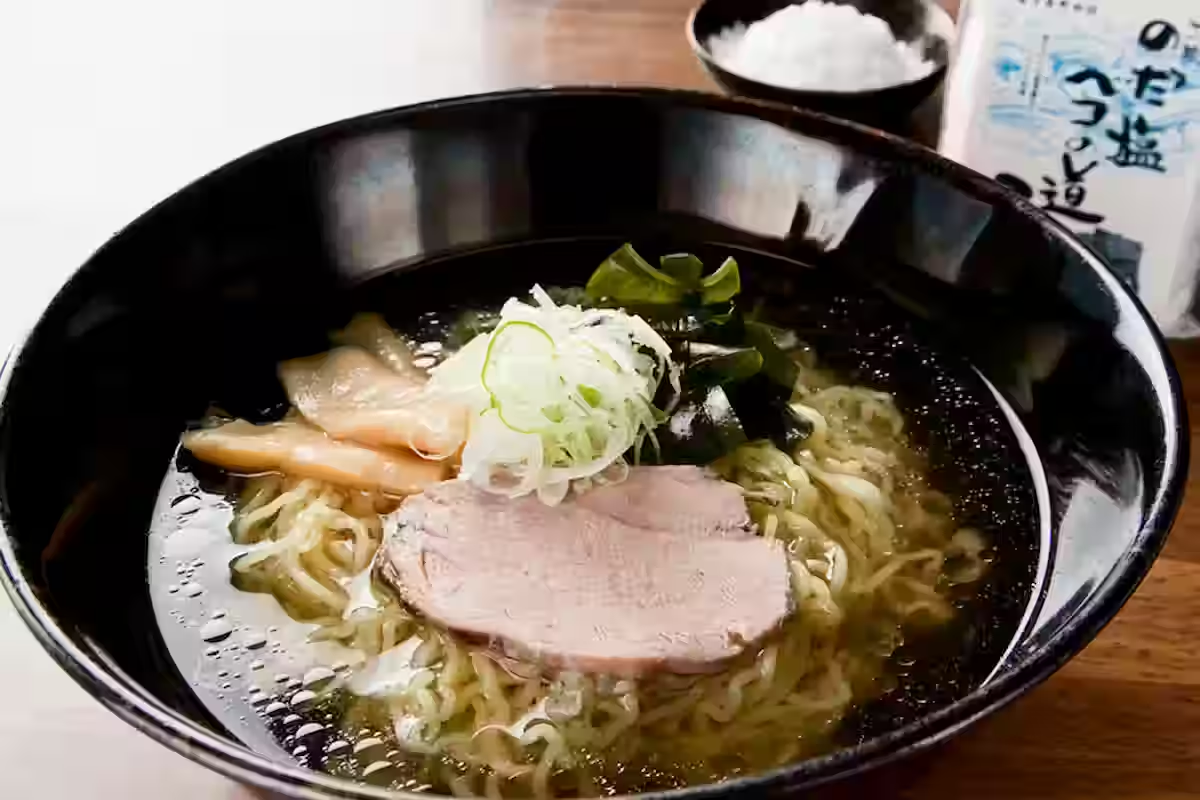
Hakodate Ramen takes the opposite path from Sapporo. Its clear shio broth and thin straight noodles deliver a light, clean bowl that suits the port city’s seafood culture.
Muroran Curry Ramen
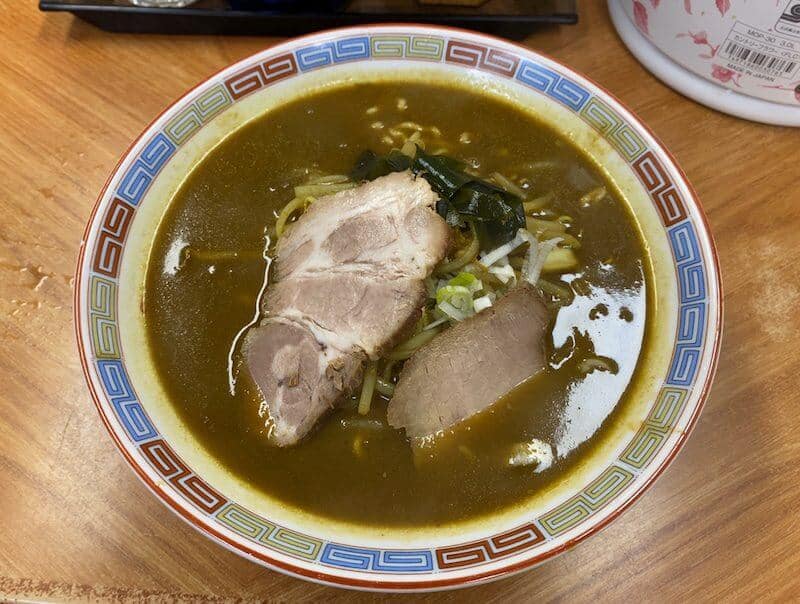
Muroran Curry Ramen covers its noodles in a thick, sweet-spicy curry soup. You can find it around Muroran City and the Noboribetsu Onsen area. For a wider look at the island’s dishes, see our Hokkaido food guide.
Sapporo Ramen vs Hakata Ramen
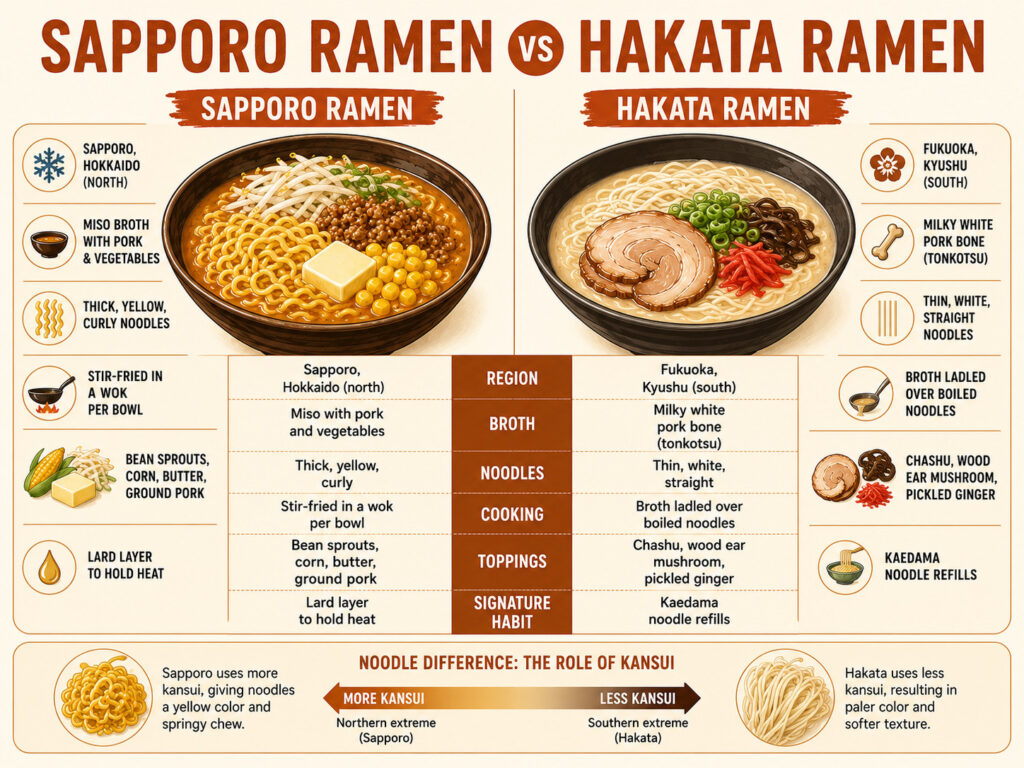
Hokkaido and Kyushu sit at opposite ends of Japan, and their signature bowls differ just as sharply. Sapporo leads with miso and thick curly noodles, while Hakata Ramen leads with milky tonkotsu broth and thin straight noodles.
| Feature | Sapporo ramen | Hakata ramen |
|---|---|---|
| Region | Sapporo, Hokkaido (north) | Fukuoka, Kyushu (south) |
| Broth | Miso with pork and vegetables | Milky white pork bone (tonkotsu) |
| Noodles | Thick, yellow, curly | Thin, white, straight |
| Cooking | Stir-fried in a wok per bowl | Broth ladled over boiled noodles |
| Toppings | Bean sprouts, corn, butter, ground pork | Chashu, wood ear mushroom, pickled ginger |
| Signature habit | Lard layer to hold heat | Kaedama noodle refills |
The noodle difference has a technical reason worth knowing. Ramen noodles get their yellow color and springy chew from kansui, an alkaline solution, and Solt observes that shops generally use less of it the farther south and west you travel. Sapporo sits at the northern extreme, which is exactly why its noodles look yellow and bite back. Hakata’s paler, softer strands sit at the other end of that spectrum.
Which one wins? Honestly, I go back and forth. Sapporo suits snowy nights, whereas Hakata suits a quick, punchy bowl after drinks.
Sapporo Ramen Recipe: How to Make It at Home
A homemade Sapporo ramen recipe is very doable, even without a professional wok burner. Gather miso paste, chicken or pork stock, ground pork, bean sprouts, onion, garlic, ginger, lard or oil, and fresh curly noodles. Then follow the steps below.
Heat about 400 ml of pork or chicken stock per serving and hold it near a simmer. Why this step matters: hot standby broth lets you finish the wok work without losing temperature.
Melt a spoonful of lard in a wok over high heat. Brown the ground pork, then add onion, bean sprouts, garlic, and ginger and sear them hard. Why this step matters: those charred edges give Sapporo ramen its smoky depth.
Push the vegetables aside, drop in two tablespoons of miso per bowl, and let it caramelize briefly. Next, pour in the hot broth and stir until the soup turns glossy. Why this step matters: toasting the miso unlocks its nutty aroma.
Cook thick curly noodles in a separate pot of boiling water until just firm. Drain them well, since extra water thins the soup. Why this step matters: watery noodles are the most common home-cooking mistake.
Place the noodles in a warmed bowl, then pour the soup and vegetables over them. Finish with corn, green onion, and a pat of butter. Why this step matters: a warmed bowl keeps the lard layer doing its job.
Japanese grocery stores overseas often stock miso, lard, and even Nishiyama-style curly noodles. If not, any fresh thick ramen noodle works as a stand-in.
How Locals Order and Eat Sapporo Ramen
Locals treat Sapporo ramen as fast, hot fuel, and they have a rhythm to it. Office workers slip into a counter shop at lunch, while night owls end a Susukino evening with a steaming bowl.
Which Bowl Should You Order?
- First visit to Sapporo: plain miso ramen, so you taste the style itself.
- Traveling with children or a sweet tooth: butter corn ramen.
- Worried the broth sounds too heavy: shio or shoyu at the same shop, or a Hakodate-style bowl.
- Late night after drinks: spicy miso, which most shops list as karami miso.
Ordering Tips for First-Time Visitors
Many shops use a ticket vending machine near the door. Buy your ticket first, hand it to the staff, and then take a seat. Machines usually place the house recommendation at the top left, and quite a few now offer English or picture menus. Counter seats rarely take reservations, so simply queue outside. Butter and corn normally cost extra, and larger portions carry a small surcharge.
Three Steps for the Best First Bowl
- Sip the soup first, before touching the noodles, to taste the pure miso and wok aroma.
- Eat the noodles quickly while they stay firm, lifting vegetables along with each bite.
- Stir in the butter halfway through, so the second half turns rounder and creamier.
One caution: the lard layer hides how hot the soup really is. Blow on that first spoonful. I learned this the hard way.
Why Sapporo Ramen Rules Hokkaido’s Winter
Sapporo winters are long and snowy, and cold snaps regularly push temperatures below minus ten degrees Celsius. The city’s ramen evolved as a direct answer to that climate. Rich broth and a lard cap hold heat far longer than clear soups do. Stir-fried vegetables, garlic, and miso pack nutrition into one affordable bowl. As a result, a bowl after shoveling snow, or after a walk through the Sapporo Snow Festival, feels less like a meal and more like a rescue. Winter is honestly the best season to taste it.
Where to Eat Sapporo Ramen: Best Shops in the City
The best Sapporo ramen in Hokkaido clusters around central Sapporo, especially the Susukino district and the famous Ramen Yokocho alley. New Chitose Airport also hosts branches for travelers in a hurry. Here is a quick overview, followed by shop details.
| Shop | Area | Known for | Budget |
|---|---|---|---|
| Aji no Sanpei | Odori, Chuo Ward | Birthplace of miso ramen | Around 1,000 yen |
| Higuma Yokocho Main Store | Ramen Yokocho, Susukino | Old-school alley atmosphere | Around 1,000 yen |
| Keyaki | Susukino | Refined miso, long queues | 1,000 to 1,500 yen |
| Ramen Sora | Susukino | Roasted miso, late-night bowls | 1,000 to 1,500 yen |
| Ramen Shin | Atsubetsu Ward | Limited daily servings | Around 1,000 yen |
| Sapporo Ramen Musashi | Shiroishi Ward | Three types of aged miso | Around 1,000 yen |
Aji no Sanpei
This is the shop where miso ramen began, and it still serves the same style today. You will find it on the fourth floor of the Daimaru Fujii Central building, tucked behind a stationery floor, which surprises almost every first-time visitor. The bowl tastes restrained rather than heavy, with a lighter miso profile than modern Susukino shops. Best for: tasting the origin of Sapporo ramen. Signature: miso ramen. Access: about 3 minutes from Odori Station. Reservation: not accepted.
Higuma Yokocho Main Store
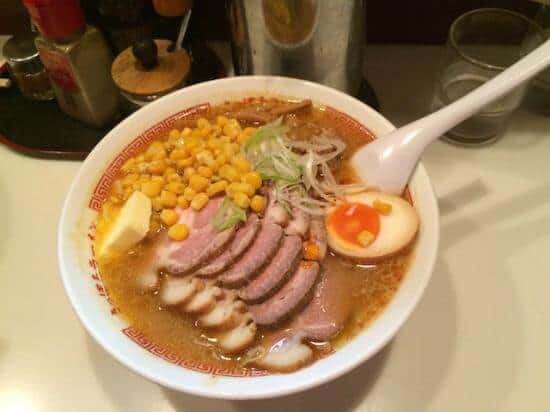
Higuma has served miso ramen inside Ramen Yokocho for decades. The narrow counter, the hiss of the wok, and the classic bean sprout bowl feel like a time capsule of Sapporo ramen culture. Best for: a first-timer’s classic bowl. Signature: miso ramen. Access: 3 minutes from Susukino Station. Reservation: not accepted, and lunch lines are common.
Keyaki
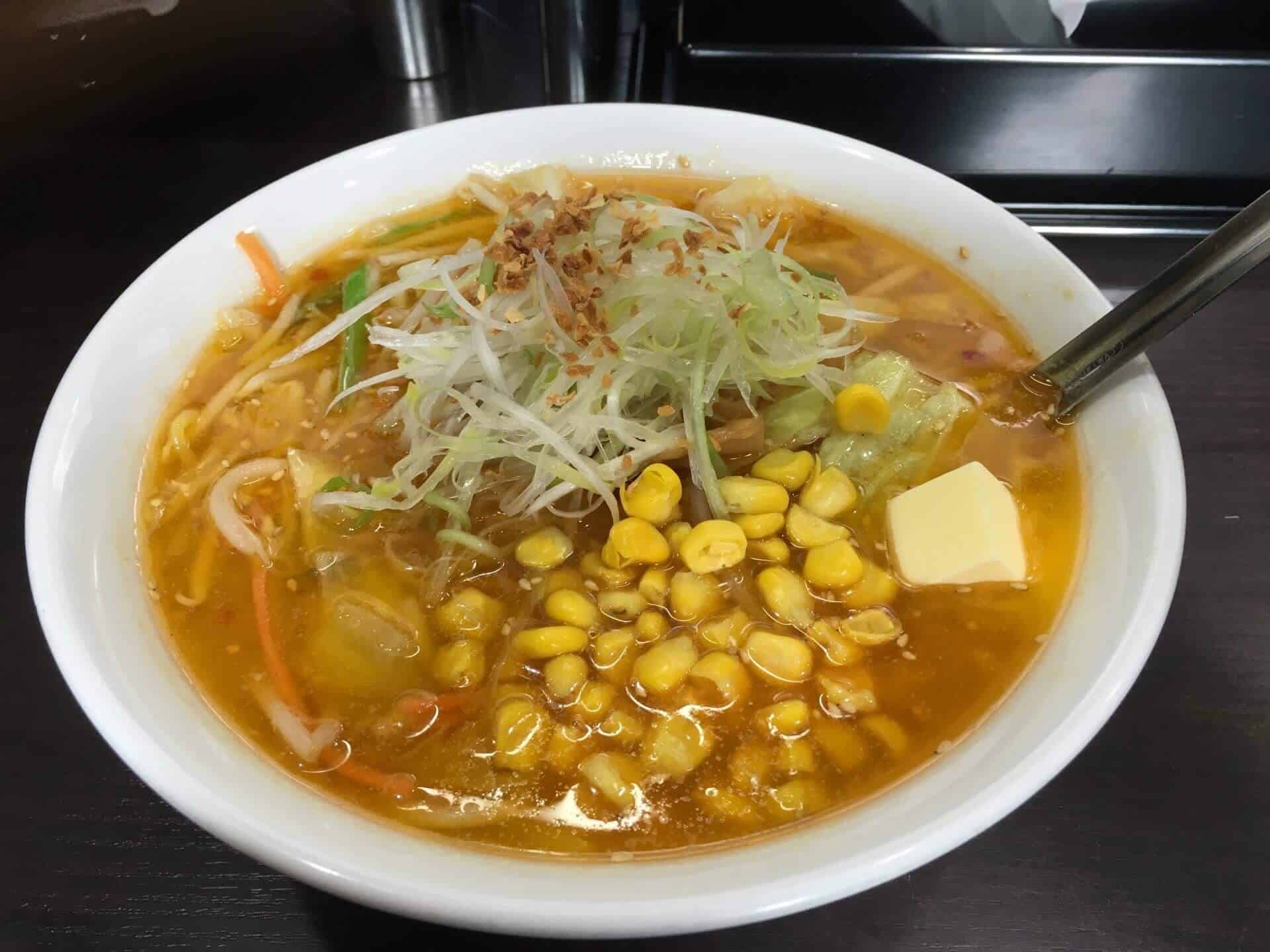
Keyaki has specialized in miso for more than 20 years in fiercely competitive Susukino. The soup simmers for hours, and the neatly arranged vegetables make it one of the prettiest bowls in town. Best for: a refined, photogenic miso bowl. Signature: miso ramen. Access: Susukino, near Minami 6 Nishi 3. Reservation: not accepted, though queues move fast.
Ramen Sora
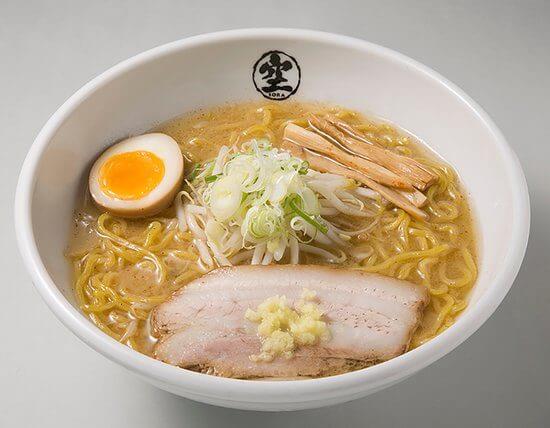
Sora belongs to the celebrated Sumire lineage of Sapporo miso shops. Its roasted miso soup carries a toasty aroma, and thick noodles arrive with a generous slab of chashu. The brand has also expanded overseas. Best for: rich, modern-style miso late at night. Signature: roasted miso ramen. Access: Susukino area, Chuo Ward. Reservation: not accepted, so join the line.
Ramen Shin
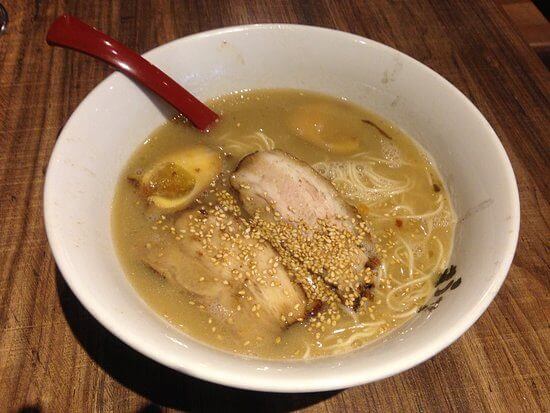
Shin sits away from the tourist core, which is exactly why local diners love it. Several menu items sell out daily, so an early visit pays off. The spicy miso ramen has a devoted following alongside the standard bowl. Best for: a local, no-frills experience. Signature: spicy miso ramen. Access: Atsubetsu Ward, eastern Sapporo. Reservation: not accepted.
Sapporo Ramen Musashi Main Store
Musashi draws steady lines to its small dining room in Shiroishi Ward. Minced meat and vegetables, seared hard in the wok, give the soup a deeply savory base. The shop also offers three miso styles: aged miso, aged white miso, and aged spicy miso. Best for: comparing miso variations in one sitting. Signature: aged miso ramen. Access: roughly 1 km from Heiwa Station. Reservation: not accepted.
Check the Sapporo Travel page for more restaurant information.
Sapporo Ramen: Final Thoughts
Sapporo ramen turned a cold northern city into one of Japan’s great ramen capitals. What began as cheap fuel for postwar laborers now draws travelers from around the world. If you can, taste it in winter at a wok-side counter in Susukino, then compare it with a lighter Hokkaido bowl the next day. For more regional styles, Okayama Ramen and Hachioji Ramen make good next stops.
Save this article to your bookmarks if you plan to taste Sapporo ramen soon. Feel free to share it on social media too!
Sapporo Ramen FAQ
What is Sapporo ramen?
Sapporo ramen is the local ramen style of Sapporo City in Hokkaido. Chefs cook each bowl in a wok, combining miso tare, rich pork broth, and stir-fried vegetables. Thick curly noodles and a heat-sealing layer of lard complete the dish. Corn, butter, and bean sprouts are the most familiar toppings.
Who invented miso ramen in Sapporo?
Morito Omiya, founder of the shop Aji no Sanpei, developed miso ramen after years of experiments. The shop and most reference works date the finished bowl to the mid-1950s. Sapporo’s tourist association instead cites 1958, when Nishiyama Seimen perfected the matching curly noodles. Both accounts credit Omiya with the original idea.
What does Sapporo ramen taste like?
Expect a deep, savory, umami-rich flavor with a smoky edge from the wok. The thick curly noodles stay firm and chewy, while bean sprouts add crunch. Garlic and ginger bring warmth, and optional butter makes the soup creamy. Many diners compare it to a rich winter stew.
Where can I eat the best Sapporo ramen in Hokkaido?
Central Sapporo offers the strongest concentration of famous shops. The Susukino district and Ramen Yokocho alley pack dozens of miso specialists into a few blocks. Aji no Sanpei, near Odori Station, serves the original style. New Chitose Airport also hosts branches of well-known names for travelers short on time.
How do I order at a Sapporo ramen shop?
Many shops use a ticket vending machine just inside the entrance. Buy a ticket first, hand it to the staff, and then sit down. Quite a few machines now include English labels or photographs. Butter and corn usually cost extra, so add them at the machine rather than at the counter.
How much does Sapporo ramen cost?
A standard bowl generally costs between 900 and 1,500 yen as of July 2026. Extra toppings such as butter, corn, or chashu raise the total slightly. Famous Susukino shops sit toward the higher end of that range. Even so, it remains one of the most affordable full meals in the city.
Is Sapporo ramen vegetarian or vegan friendly?
Traditional bowls are neither, because they contain pork broth, lard, and minced meat. Removing the chashu alone does not make the dish vegetarian. Some Sapporo shops now offer plant-based miso ramen built on kombu, shiitake, or soy milk broths with vegetable oil. Check menus online in advance, and look for shops that clearly label vegan options.
What is the difference between Sapporo ramen and Hakata ramen?
The soup and the noodles differ completely. Sapporo pairs a miso broth with thick curly noodles, cooked bowl by bowl in a wok. Hakata pairs a milky pork bone broth with thin straight noodles and offers kaedama noodle refills. Northern shops also use more kansui, which explains Sapporo’s yellow, springy strands.
Can I make Sapporo ramen at home?
Yes, and the wok method translates well to home kitchens. Stir-fry ground pork and vegetables, toast miso in the pan, add hot stock, then pour everything over boiled curly noodles. Japanese grocery stores stock miso paste, lard, and fresh noodles. With a little practice, a convincing bowl takes under 30 minutes.
References
- Ministry of Agriculture, Forestry and Fisheries (MAFF), Our Regional Cuisines: Ramen (Hokkaido), https://www.maff.go.jp/j/keikaku/syokubunka/k_ryouri/search_menu/menu/ramen_hokkaido.html (Surveyed: July 2026)
- Sapporo Tourist Association, Sapporo Ramen Feature, https://www.sapporo.travel/gourmet/feature/ramen/ (Surveyed: July 2026)
- Aji no Sanpei, Official Website: Shop Information, http://www.ajino-sanpei.com/?page_id=90 (Surveyed: July 2026)
- Shin-Yokohama Ramen Museum, Rapedia: Sapporo Ramen, https://www.raumen.co.jp/rapedia/study_japan/study_raumen_sapporo.html (Surveyed: July 2026)
- Solt, G. (2014). The Untold History of Ramen: How Political Crisis in Japan Spawned a Global Food Craze. Berkeley: University of California Press. (Surveyed: July 2026)
- Kushner, B. (2012). Slurp! A Social and Culinary History of Ramen, Japan’s Favorite Noodle Soup. Leiden: Global Oriental / Brill. (Surveyed: July 2026)
- Okada, T. (2002). Ramen no Tanjo (The Birth of Ramen). Tokyo: Chikuma Shobo. (Surveyed: July 2026)
- Tomioka, K. (1977). Sapporo Ramen Monogatari (The Sapporo Ramen Story). Sapporo: Manten-sha. (Surveyed: July 2026)
- Japan Society of Home Economics, Transition and Type Classification of Ramen in Japan, Proceedings of the Annual Meeting, Vol. 76 (2024), https://www.jstage.jst.go.jp/article/kasei/76/0/76_135/_article/-char/ja/ (Surveyed: July 2026)
Related Articles
- Asahikawa Ramen (旭川ラーメン) (Surveyed: July 2026)
- Hakodate Ramen (函館ラーメン) (Surveyed: July 2026)
- Kushiro Ramen (釧路ラーメン) (Surveyed: July 2026)
- Muroran Curry Ramen (室蘭カレーラーメン) (Surveyed: July 2026)
- Hakata Ramen (博多ラーメン) (Surveyed: July 2026)
- Complete Guide to Hokkaido Food (Surveyed: July 2026)
- What to Eat in Sapporo: 20 Must-Try Foods (Surveyed: July 2026)




Comments