




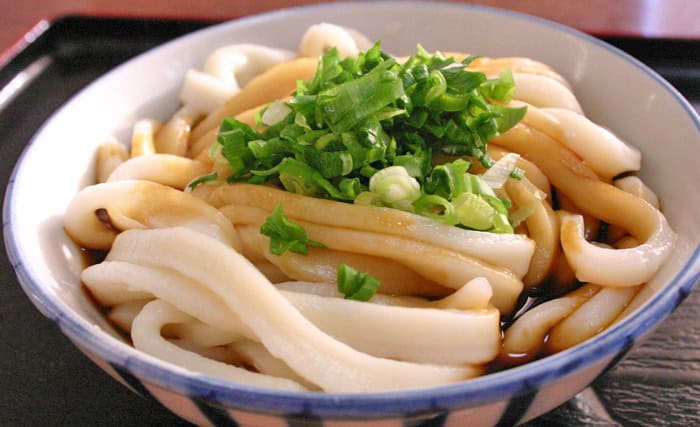
Ise Udon is a regional noodle dish from Mie Prefecture. It features extra-thick noodles cooked until deliberately soft, then served with a small amount of dark, sweet-savory sauce made with tamari soy sauce and dashi. Diners mix the sauce through the noodles before eating.
The first bowl can be a shock, honestly. That black pool at the bottom looks salty enough to sting your tongue. Stir it well, though, and the flavor turns mellow, round, and a little sweet. This guide walks through the taste, the history behind Ise Jingu, the shops worth a detour, and a home recipe you can actually manage.
What Is Ise Udon? Thick, Soft Noodles from Mie
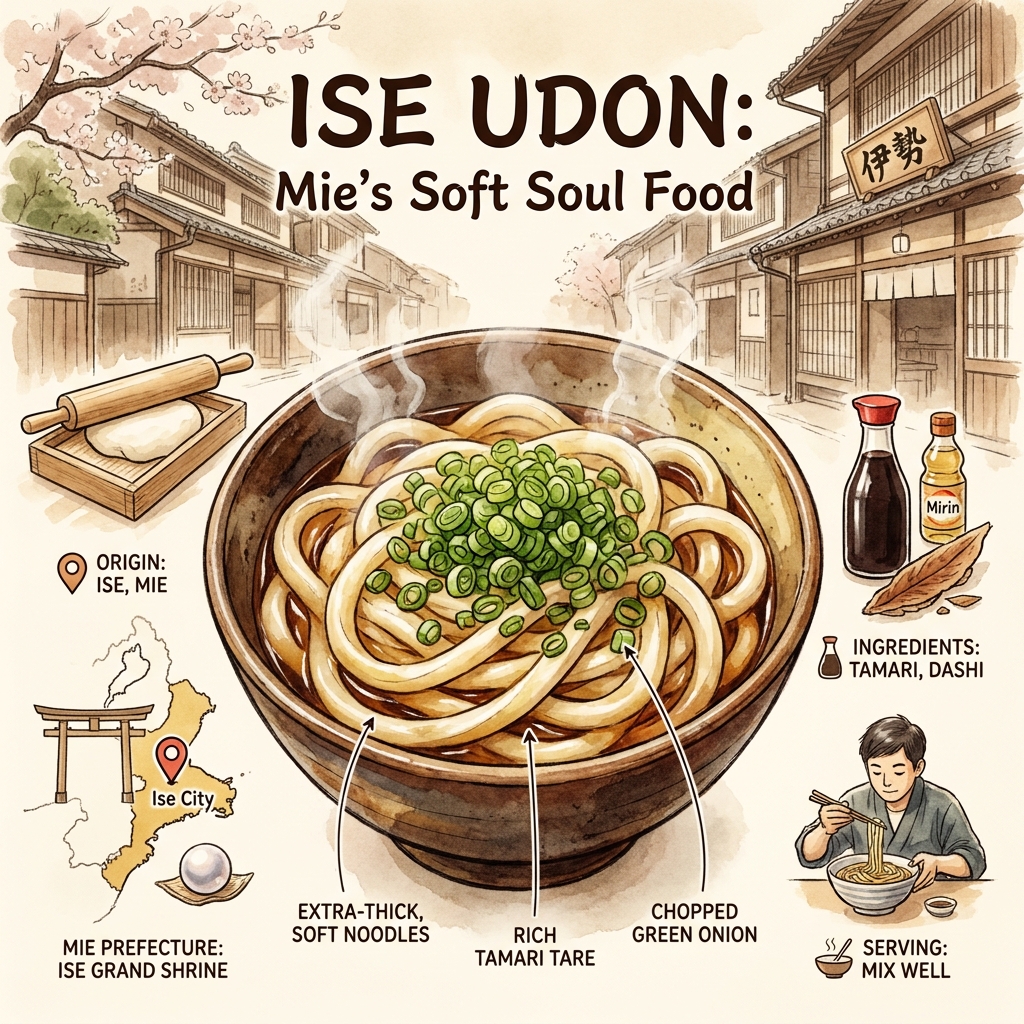
Among Japanese regional noodles, this one sits at the soft end of the scale. Cooks boil the thick soft udon noodles for a long time, so the strands lose their firm bite. A thick tare of tamari soy sauce and dashi then coats every strand. You will find it all over Mie food culture, but Ise City is its home.
- Origin
- Ise City, Mie Prefecture, in the Ise-Shima food culture area
- Noodles
- Extra-thick wheat noodles, boiled long and left soft
- Sauce
- Dark tamari soy sauce with dashi, mirin, and sugar
- Classic topping
- Chopped green onion, and nothing else
- Serving style
- A small pool of tare at the bottom, mixed by the diner
Although it is a type of udon, its soft texture, extra-thick noodles, and tamari-based sauce distinguish it from other regional styles. People in Ise treat it as everyday comfort food rather than a delicacy. Visitors usually need two or three bites before they come around.
What Does Ise Udon Taste Like?
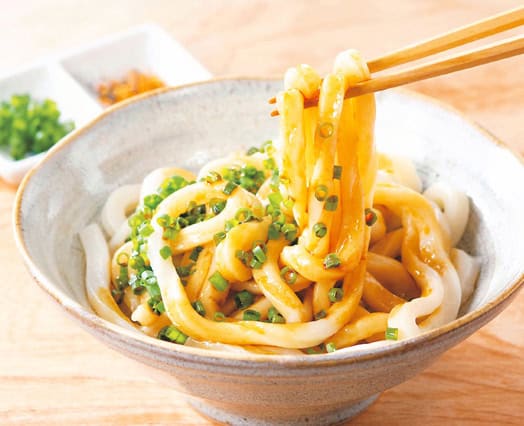
The noodles taste gently of wheat, with almost no salt of their own. Their texture is pillowy and tender, so they collapse easily between your teeth. Because there is no firm koshi, the sauce does all the talking. That sauce reads as sweet first, then savory, with a long dashi finish underneath.
The color still fools people. It looks like soy sauce straight from the bottle, yet the seasoning stays mild. Only about 40 to 50 milliliters sits in the bowl, so nothing feels heavy. I hesitated at my first bowl too, and then finished it faster than I expected.
Why Are Ise Udon Noodles So Soft?
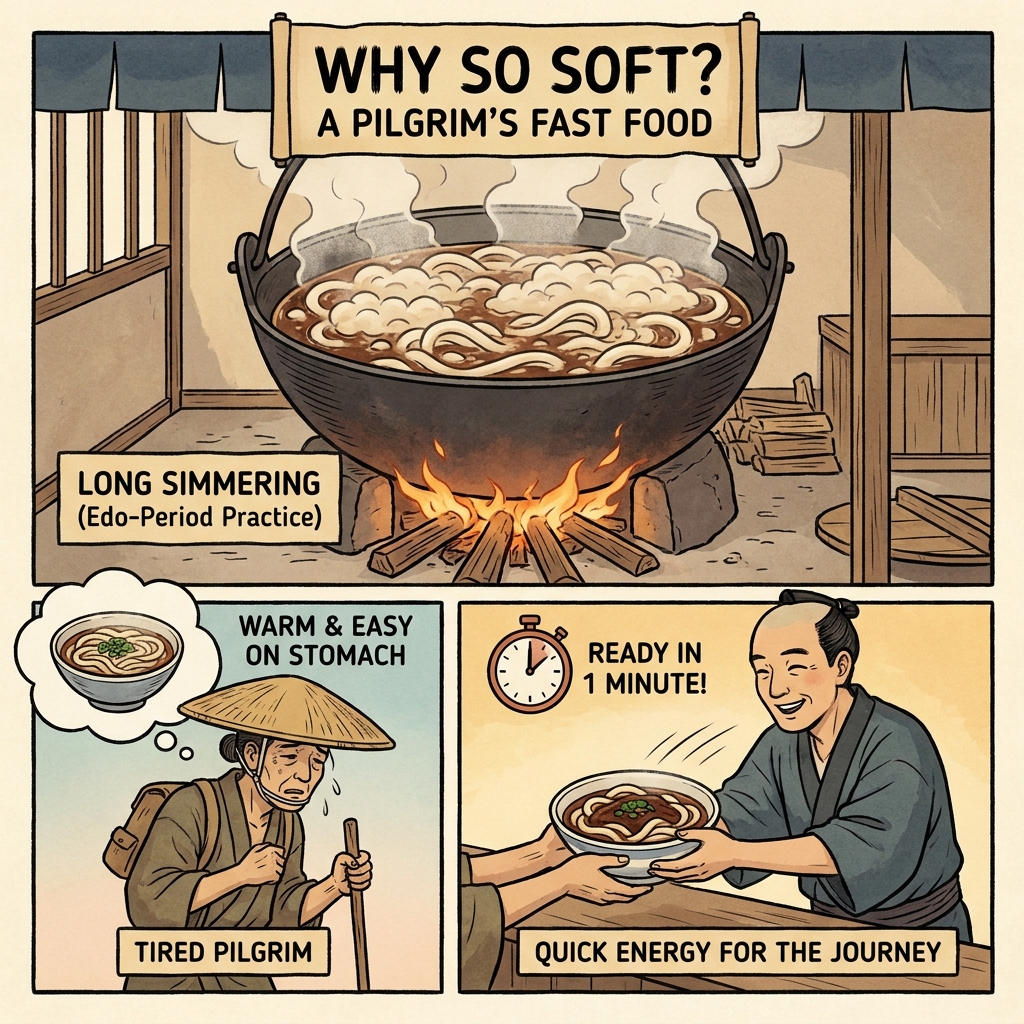
The softness is a design choice, not a mistake. Fresh noodles this thick need close to an hour in the pot, so shops kept a batch simmering all day. As a result, a bowl could reach a pilgrim within a minute of ordering. The Ministry of Agriculture, Forestry and Fisheries describes exactly this practice in Edo-period Ise.
Travelers benefited twice over. After days on foot, they wanted something warm, filling, and easy on a tired stomach. Soft noodles with a little salty-sweet tare fitted that need perfectly.
History of Ise Udon and the Ise Jingu Pilgrimage
Before the Edo Period
People in the Ise region traditionally made thick noodles without repeatedly stretching the dough. They ate them with tamari drawn from local miso, which explains the dark seasoning we still see. Nobody recorded a founding date, so the earliest chapter stays vague.
Pilgrims, Shops, and Fast Service
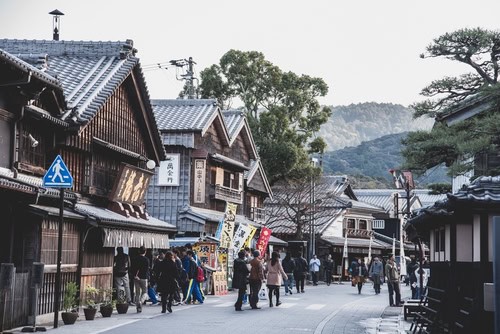
During the Edo period, pilgrimages to Ise Jingu became increasingly popular. Shops along the approach roads kept noodles in the pot and ladled tare over them on demand. Because service had to be quick, the bowl stayed simple: noodles, sauce, green onion. One detail I like comes from Mikimoto Kokichi, the pearl pioneer, whose family ran an udon shop and left behind small serving plates.
How the Dish Got Its Name
For centuries locals just said udon, su-udon, or nami udon. The name gained wider recognition in the mid-1960s, after a well-known lyricist referred to the dish as Ise Udon on the radio. In 1972, the local noodle and restaurant association adopted Ise Udon as the unified name and printed it on member menus. Earlier English articles often date that broadcast to 1965 exactly, though the ministry only places it in the early Showa 40s.
Home cooking changed a few years before that. In 1968, individually packed boiled noodles and sauce made the dish easier to prepare at home. Supermarkets picked it up quickly, and the shop-only era ended.
Ise Udon and Ise Jingu Pilgrimage Culture Today
The pilgrimage habit never really faded. Shops still cluster near both shrines, and packs sit in every supermarket in the city. School lunches in Ise serve the dish as local cuisine, which says a lot about its status. Meanwhile the Ise Chamber of Commerce and the Ise Udon Council certify shops that meet their standards for the real thing.
Recognition has grown beyond Mie as well. Ise City reports that the Agency for Cultural Affairs certified Ise Udon under its 100 Year Food program in fiscal 2024, in the category for dishes continuing since the Edo period.
How to Eat Ise Udon
Dig your chopsticks to the bottom and lift the tare through the whole bowl.
Take a small amount at a time, because the noodles break more easily than normal udon.
Taste it plain first, then add shichimi or the shop’s condiments if you want more edge.
Classic and Popular Toppings
The traditional bowl carries chopped green onion alone. Shops added the rest much later, mostly at the request of regulars. A raw or soft-cooked egg is the most common upgrade, and it softens the sauce nicely.
- Egg: raw, soft-boiled, or stirred through like kama-tama udon.
- Beef: niku Ise udon, a modern favorite that Chitose is credited with starting.
- Tenkasu: crisp tempura bits for texture against the soft strands.
- Tororo or mekabu: grated yam or seaweed, both light and slippery.
- Seasonal extras: shrimp tempura, curry, chashu, or local beef, depending on the shop.
Ise Udon vs Regular Udon
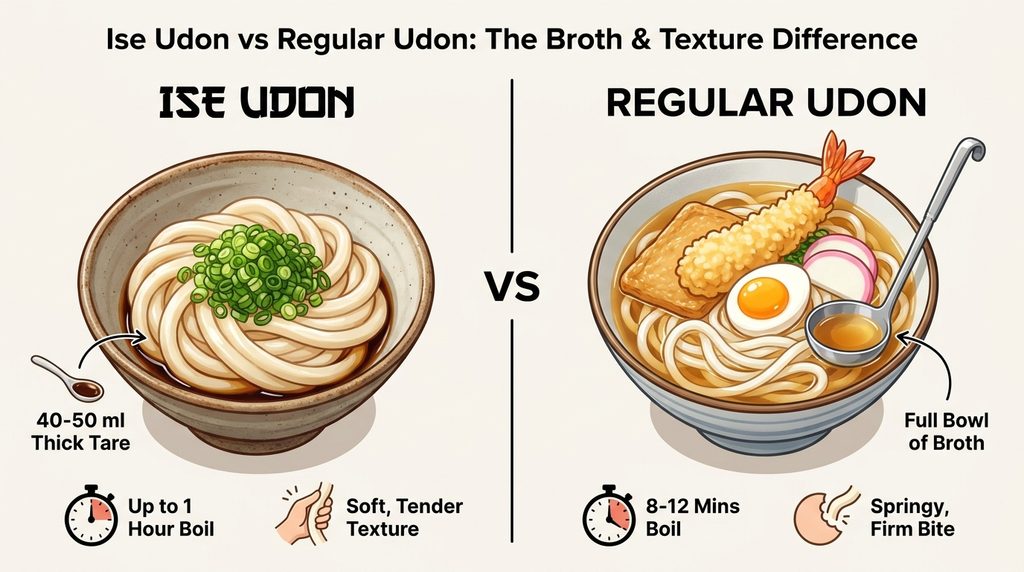
Most udon arrives swimming in clear dashi broth. This one does not, and that single difference changes everything about the meal.
| Point | Ise Udon | Regular udon |
|---|---|---|
| Noodle thickness | Two to three times thicker | Standard cut |
| Texture | Soft, tender, little koshi | Springy, firm bite |
| Boiling | Up to an hour for fresh noodles | Usually 8 to 12 minutes |
| Liquid | About 40 to 50 ml of thick tare | A full bowl of broth |
| Standard topping | Chopped green onion | Tempura, abura-age, egg, and more |
How It Compares With Other Regional Udon
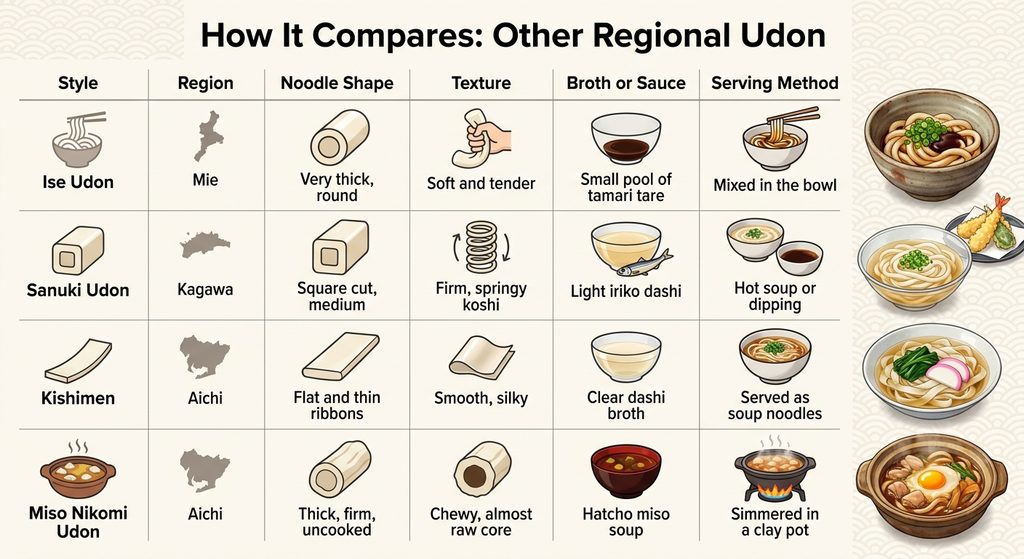
| Style | Region | Noodle shape | Texture | Broth or sauce | Serving method |
|---|---|---|---|---|---|
| Ise Udon | Mie | Very thick, round | Soft and tender | Small pool of tamari tare | Mixed in the bowl |
| Sanuki Udon | Kagawa | Square cut, medium | Firm, springy koshi | Light iriko dashi | Hot soup or dipping |
| Kishimen | Aichi | Flat and thin ribbons | Smooth, silky | Clear dashi broth | Served as soup noodles |
| Miso Nikomi Udon | Aichi | Thick, firm, uncooked | Chewy, almost raw core | Hatcho miso soup | Simmered in a clay pot |
The shape gap with Kishimen is the easiest one to see, since Nagoya’s ribbons are flat and thin. Miso Nikomi Udon differs in method instead, because the noodles simmer inside the miso broth in a clay pot.
Ise Udon Recipe: How to Make It at Home
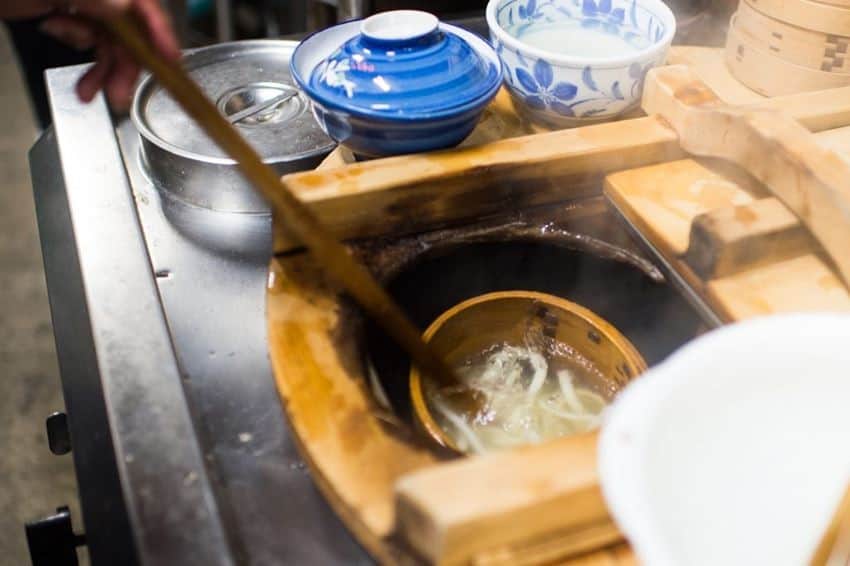
This version scales down the ministry’s published recipe. Packaged noodles keep it realistic on a weeknight, so start there rather than making dough.
Ingredients
| Sauce (tare) | |
| water | 120 ml |
| kombu | 1 g |
| mixed dried fish flakes (zatsubushi or katsuobushi) | 5 g |
| tamari soy sauce | 40 ml |
| mirin | 40 ml |
| sugar | 2 g (about 1/2 tsp) |
| Noodles | |
| pre-boiled Ise Udon noodles | 2 packs (1 portion each) |
| Garnish | |
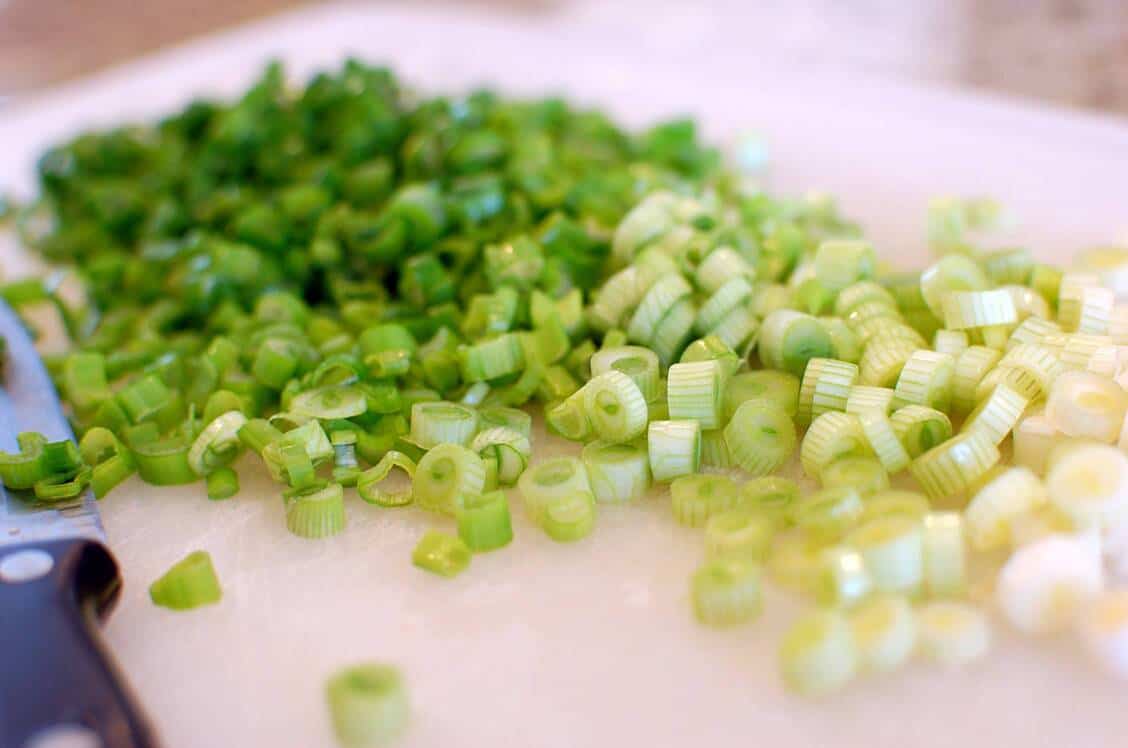
| green onion, finely chopped | 2 tbsp |
Process
Soak the kombu in the water for 30 minutes, then heat it. Remove the kombu before boiling, add the fish flakes, and strain after one minute.
Simmer the mirin briefly to cook off the alcohol. Add the tamari and sugar, reduce by about a third, then pour in the dashi and bring it back to a boil.
Follow the package directions and heat the pre-boiled noodles until they loosen and become hot. They are ready once the strands separate completely and steam right through.
Drain the noodles well, since leftover water thins the sauce and dulls the flavor.
Add one small ladle of tare per bowl, about 40 to 50 ml. Scatter the green onion, then mix everything from the bottom before you eat.
Leftover tare keeps in the fridge for a few days. Many households in Mie skip this step entirely and buy single-serving sauce packets instead.
Nutrition and How to Balance the Meal
A plain bowl is mostly carbohydrate, with very little protein and almost no vegetables. The tare adds most of the sodium, so people watching salt often leave a little in the bowl. Toppings change the picture quickly, though.
An egg, beef, or tororo adds protein for a small price. A side of pickles, a seaweed salad, or simply more green onion brings in some vegetables. Portions matter too, since a single serving of these noodles is heavier than it looks. Exact figures depend on your noodle brand and sauce, so check the product label if you count them.
Where to Eat Ise Udon in Ise
Ise City has dozens of shops, and each tare tastes slightly different. The list below groups well-known and conveniently placed options by area. Hours and prices change often, so treat the details as a starting point.
Near Ise-shi Station and the Outer Shrine
Naka-mura (伊勢うどん 中むら)
This is the closest specialist to Geku, the Outer Shrine, and a useful first stop. The family opened it in 1916 on a spot that had sold udon since the Edo period. Their tare uses niboshi, dried fish flakes, and kombu, and the egg bowl is the local favorite.
Mameya (伊勢うどんのまめや)
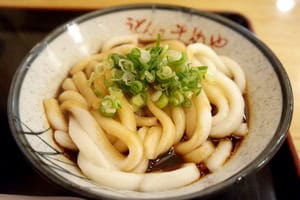
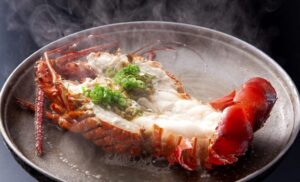
Mameya dates from 1923 and still makes its noodles in house every day. The kitchen uses Ayahikari, a wheat variety grown across Mie, and blends local tamari into the tare. Their Ise Ebi bowl puts a whole spiny lobster on top, which is either wonderful or excessive depending on your mood.
Yamaguchi-ya (山口屋)
Locals have eaten here since the early Showa era, and the shop still mills its daily batch on site. Staff adjust water and salt according to the weather, which sounds fussy until you taste the result. Order the gocha Ise udon if you want every topping at once.
Near Uji-Yamada Station
Chitose (ちとせ)
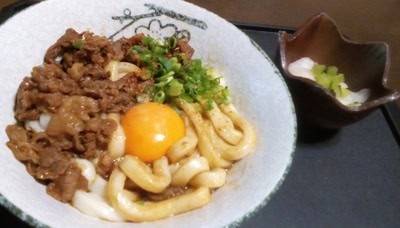
Chitose opened in 1917, and its name sits at the center of the naming story. The lyricist who praised Ise noodles on the radio ate here first, according to the Mie Tourism Federation. Their tare rests for three days after reduction, and it pours out almost black.
Kiya Shokudo (起矢食堂)
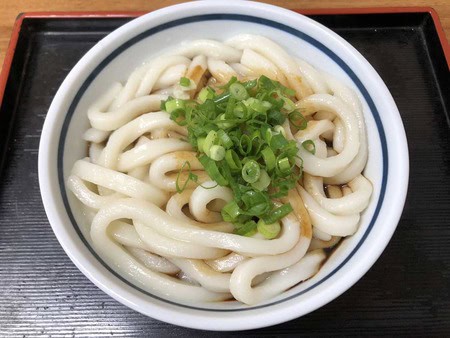
Kiya Shokudo sits in a quiet residential street, which makes it easy to walk past. The owner opened it in 1987 after eating his way around the city. Staff boil the extra-thick noodles for a full hour, so the texture turns properly fluffy.
Oharai-machi and Okage Yokocho
Fukusuke (ふくすけ)
Fukusuke sits inside Okage Yokocho, a short walk from the Inner Shrine. The building recreates Dobu-roku, a famous Edo-period udon shop on the pilgrimage road. Bench seating and a limited run of hand-cut noodles make it a natural stop after visiting Naiku.
Okada-ya (岡田屋)
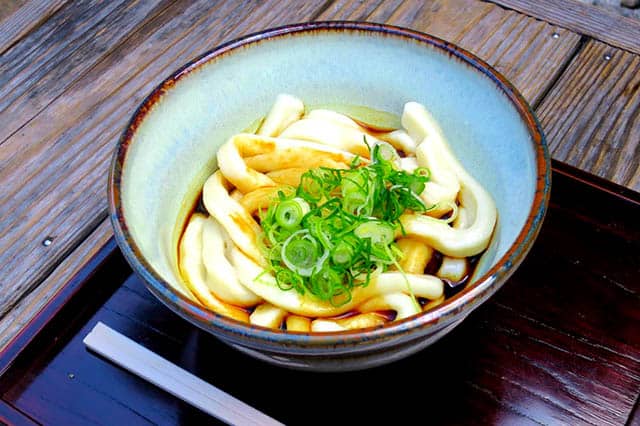
The founder opened Okada-ya in 1953, close to the Naiku approach. Their dashi combines Kochi katsuobushi with niboshi, and the tare rests overnight before service. Regulars order the egg bowl, though the curry version has its own following.
Is Ise Udon Vegetarian? Allergens and Dietary Notes
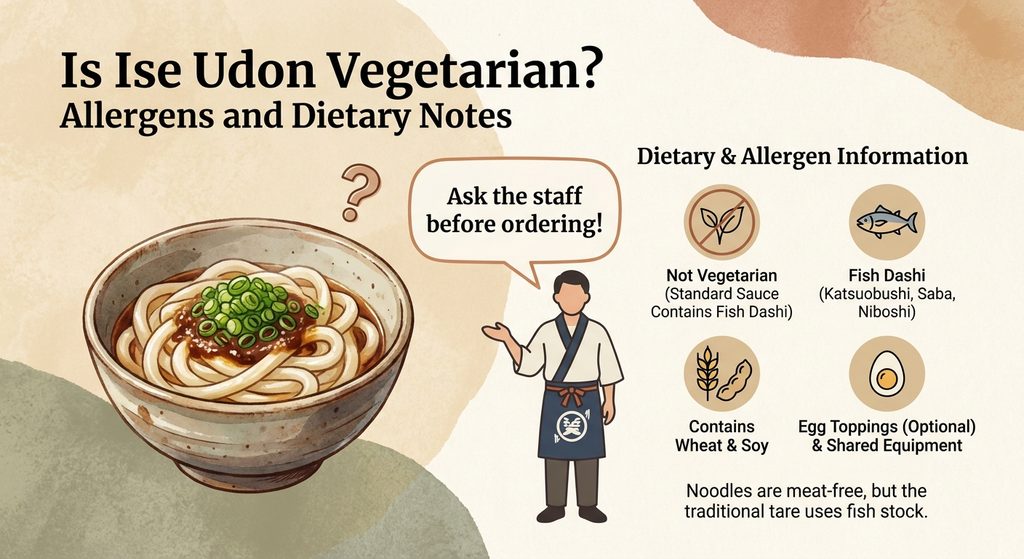
The noodles themselves contain no meat, yet the tare usually does contain fish. Shops build their dashi from katsuobushi, saba flakes, niboshi, or a blend of all three. So the standard bowl does not suit vegetarians or vegans without a change.
Ask the staff whether the sauce uses fish dashi before you order. Wheat and soy appear in every version, because of the noodles and the tamari. Egg toppings and shared kitchen equipment matter as well, especially for stricter allergies.
Buying Ise Udon as a Souvenir
Souvenir packs sell at stations, roadside stops, and shops around both shrines. Almost all of them hold pre-boiled noodles rather than fresh dough. That choice is practical, since fresh noodles this thick need nearly an hour of boiling.
Chilled packs taste closest to a restaurant bowl, but they only last a few days. Shelf-stable sets survive far longer and travel well in a suitcase. Both types usually include single-serving sauce packets, so check the label for the date and storage advice.
Reheating is simple. Loosen the noodles in hot water or the microwave, drain them properly, then stir the sauce through from the bottom.
Conclusion
Ise Udon rewards anyone willing to look past that dark, slightly forbidding bowl. Its softness carries four centuries of pilgrims, quick service, and local habit. Try it once near the shrines, then compare a second shop, because the tare really does vary.
More Foods from Mie
Mie rewards slow eating in general. After the noodles, you can explore more Mie food, or read about Ise Ebi, the prefecture’s celebrated spiny lobster. Noodle fans can also compare it with Kishimen from neighboring Aichi.
Have you tried Ise’s thick, soft noodles yet? Share this guide with a friend, and tell us which shop’s tare you liked best in the comments.
FAQ
What is Ise Udon?
Ise Udon is a noodle dish from Ise City in Mie Prefecture. Cooks boil extra-thick wheat noodles until soft, then add a small pool of dark tamari sauce. Chopped green onion completes the traditional bowl. Diners stir everything together before the first bite.
How is it different from regular udon?
Regular udon usually swims in clear broth, while this dish carries only 40 to 50 ml of thick tare. The noodles are two to three times thicker as well. Long boiling removes the springy koshi that most udon fans expect. So the whole eating experience feels closer to a mixed noodle bowl.
What does it taste like?
The dish tastes sweet and savory, with deep dashi umami and a soft wheat background. The noodles feel tender and pillowy rather than chewy. Most people expect something much saltier from the color. Shops vary their dashi, so two bowls rarely taste identical.
Where can I eat it?
Ise City holds the highest concentration of shops, especially around both shrines. Naka-mura sits closest to the Outer Shrine, and Fukusuke serves visitors inside Okage Yokocho. Chitose and Kiya Shokudo suit anyone starting from Uji-Yamada Station. Highway rest stops in Mie also serve a decent bowl.
Is Ise Udon vegetarian?
Usually not, because most shops build the tare on fish dashi. Katsuobushi, saba flakes, and niboshi all appear in traditional recipes. The noodles themselves contain only wheat, salt, and water. Ask the staff directly if you avoid fish products.
How do you eat it?
Mix the sauce up from the bottom of the bowl first. Then lift small amounts, because the soft strands break easily. Taste the noodles plain before reaching for shichimi or other condiments. Locals finish quickly, since the noodles soften further as they sit.
Can I buy it as a souvenir?
Yes, and packs appear in station shops, souvenir stores, and supermarkets across Mie. Most sets contain pre-boiled noodles plus single-serving sauce packets. Chilled versions taste better but expire within days. Shelf-stable sets travel far more comfortably.
Is the black sauce very salty?
It tastes milder than it looks, thanks to mirin, sugar, and plenty of dashi. Tamari soy sauce gives depth and color without a sharp edge. The portion stays small, so the seasoning never floods the bowl. Anyone watching sodium can simply leave some sauce behind.
Why are the noodles so soft?
Shops boil these thick noodles for up to an hour on purpose. Edo-period pilgrims needed food immediately, so kitchens kept a pot going constantly. The resulting texture also suited tired stomachs after long journeys. That practical habit became the defining feature.
How much does a bowl usually cost?
Listings surveyed in 2025 put a plain bowl at roughly 600 to 800 yen. Egg, beef, or chashu versions run closer to 900 or 1,000 yen. Prices shift with the shop, the toppings, and the season. Check the official menu before you plan a budget.
Can I make it without fish dashi?
Yes, a kombu and dried shiitake stock replaces the fish base reasonably well. Combine it with tamari soy sauce, mirin, and a little sugar as usual. The result tastes cleaner and slightly less rounded. It differs from a traditional shop bowl, so treat it as a home adaptation.
References
- Ministry of Agriculture, Forestry and Fisheries, Ise Udon, Mie Prefecture (Uchi no Kyodo Ryori), https://www.maff.go.jp/j/keikaku/syokubunka/k_ryouri/search_menu/menu/iseudon_mie.html (Surveyed: August 2026)
- Ministry of Agriculture, Forestry and Fisheries, Ise Udon (Nippon Traditional Food Encyclopedia), https://www.maff.go.jp/j/keikaku/syokubunka/traditional-foods/menu/ise_udon.html (Surveyed: August 2026)
- Ministry of Agriculture, Forestry and Fisheries, Ise Udon, Mie Prefecture (Shokuiku pages for children), https://www.maff.go.jp/j/syokuiku/kodomo_navi/cuisine/cuisine4_1.html (Surveyed: August 2026)
- Ise City, Ise Udon (cultural properties and 100 Year Food certification), https://www.city.ise.mie.jp/cul_spo_edu/culture/bunkazai_shiseki/iseudon.html (Surveyed: August 2026)
- Mie Prefecture Tourism Federation (Kanko Mie), Ise Udon feature: ten recommended shops, https://www.kankomie.or.jp/season/article/176 (Surveyed: August 2026)
- Okage Yokocho, Fukusuke shop page, https://okageyokocho.com/main/tenpo/fukusuke/ (Surveyed: August 2026)
- J-STAGE (Japan Society of Cookery Science), Survey of Local Cuisine in Mie Prefecture, https://www.jstage.jst.go.jp/article/ajscs/20/0/20_0_113/_article/-char/ja/ (Surveyed: August 2026)
- National School Nutritionists’ Association, Mie Prefecture local cuisine pages, https://www.zengakuei.or.jp/kyodosyoku/pref/mie_1.html (Surveyed: August 2026)
Related Articles
- Mie Food (Surveyed: August 2026)
- Ise Ebi (伊勢海老) (Surveyed: August 2026)
- Kishimen (きしめん) (Surveyed: August 2026)
- Miso Nikomi Udon (味噌煮込みうどん) (Surveyed: August 2026)
- Sanuki Udon (讃岐うどん) (Surveyed: August 2026)
- Japanese Noodles (Surveyed: August 2026)



Comments