





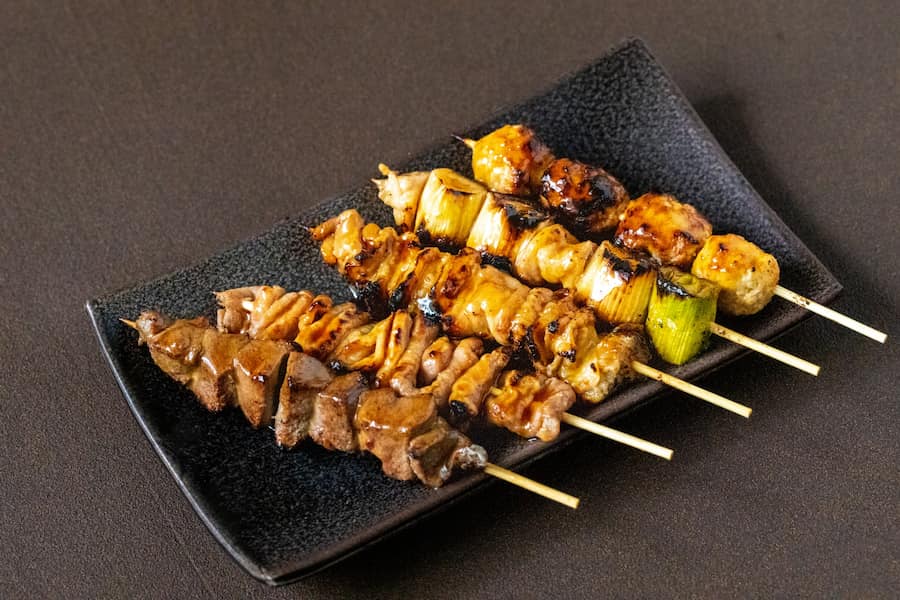
Yakitori (やきとり) is Japan‘s iconic grilled chicken skewer dish. Small pieces of chicken — threaded onto bamboo sticks and charcoal-grilled to juicy perfection — are a staple of Japanese street food and izakaya culture. Think of it as small skewers of chicken grilled over charcoal, perfect for sharing over cold beer or sake. The name says “chicken,” but here’s the thing: depending on the region, yakitori menus can also include pork belly, vegetables, and offal. It’s one of those dishes that’s simple on the surface, yet surprisingly deep once you start exploring.
What Is Yakitori? The Quick Answer
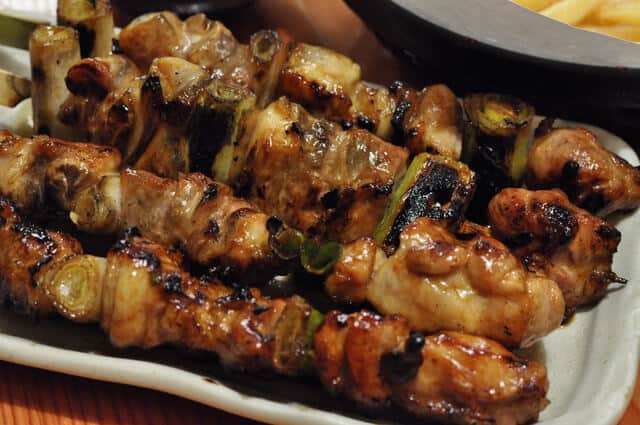
At its core, yakitori is bite-sized chicken pieces skewered and grilled — usually over binchotan (white charcoal). Each skewer is seasoned one of two ways: tare (a sweet-savory glaze) or shio (simple salt). That choice defines the entire eating experience. Most restaurants only offer these two options, and regulars often have strong opinions about which is better.
Technically, “yakitori” means “grilled bird” in Japanese. In practice, the menu often goes beyond chicken. Pork skewers are common in Hokkaido and Saitama. Vegetable options like shiitake, shishito peppers, and ginkgo appear at many restaurants. Some regions use the term “yakitori” for almost any grilled skewer — regardless of the protein. So don’t be surprised if your order looks a little different than expected.
This is exactly what makes it different from basic barbecue chicken. Yakitori is about precision over parts — each cut of the bird has its own flavor profile, texture, and ideal seasoning. More on that below.
Etymology: What Does Yakitori Mean?
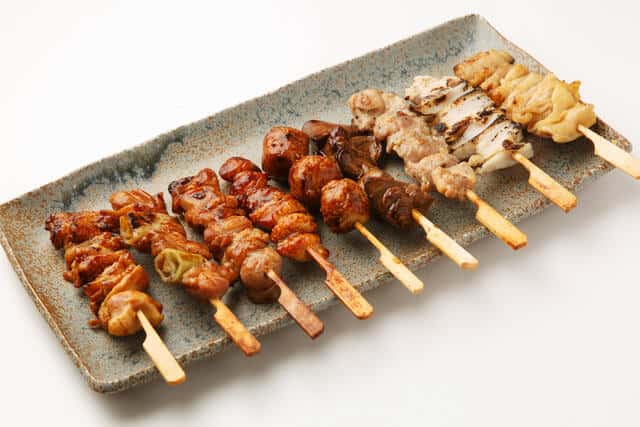
The word breaks down simply. “Yaki (焼き)” means grilled or toasted. “Tori (鳥)” means bird. Together, yakitori (焼き鳥) literally translates as “grilled bird.” The kanji paints the picture well — fire meeting feather. In modern usage, the word almost always implies chicken, even when the skewer contains something else entirely.
Tare vs. Shio: The Most Important Choice on the Menu
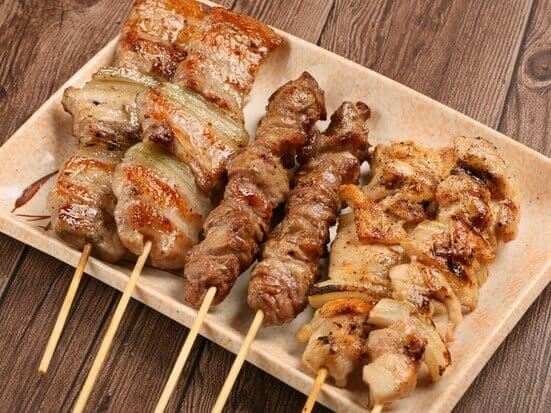
Walk into any yakitori restaurant and this question comes first: tare or shio? It sounds simple. It changes everything.
Tare (タレ) — The Sweet-Savory Glaze
Tare sauce is a thick, glossy glaze made from soy sauce, mirin, sake, and sugar. The sauce gets brushed onto the skewer multiple times during grilling. Each coat adds a layer of caramelized depth — sweet, salty, and slightly smoky from the charcoal. Fatty cuts like chicken skin (kawa) and meatballs (tsukune) work particularly well with tare. The richness of the fat pairs naturally with the sweetness of the glaze.
Many restaurants maintain their own tare recipe, passed down over generations. Some yakitori chefs have kept the same tare pot going for decades, replenishing it slowly rather than starting fresh. That accumulated depth of flavor is part of what makes each restaurant unique.
Shio (塩) — Clean, Pure Salt
Shio means salt — and that’s essentially it. The chicken is seasoned lightly with salt before grilling. Nothing masks the natural flavor of the meat. This is the better choice for high-quality cuts where the taste of the chicken itself deserves attention. Seseri (neck meat), chicken fillet, and cartilage are almost always served shio-style. A squeeze of lemon is a common addition.
If you’re unsure which to choose, a helpful rule: go with tare for organ meats and fatty cuts, and shio for lean, premium cuts. Both styles are equally legitimate — it’s really a matter of personal taste.
Yakitori Menu: The Main Cuts to Know
This is where yakitori separates itself from ordinary grilled chicken. The menu celebrates the whole bird — not just breast and thigh. Here is a quick reference guide to the most common skewer types.
Popular Tare-Style Skewers
Negima (ねぎま) — Chicken and Scallion
The most classic yakitori skewer. Bite-sized chicken thigh alternates with segments of green onion (negi). The scallion softens and sweetens on the grill, balancing the savory chicken beautifully. Negima is often the first skewer beginners try — and many never look back. Negi also appears in hot pot form as Negima Nabe.
Kawa (皮) — Chicken Skin
Crispy outside, fatty inside. Chicken skin — especially from the thicker neck area — renders beautifully over charcoal. Hot fat drips and sizzles on the coals. The result is crackling, savory, irresistible. This one is for anyone who loves bold, fatty flavor.
Tsukune (つくね) — Chicken Meatball
Finely minced chicken is mixed with egg and potato starch, shaped into balls, and grilled. The texture is tender and slightly bouncy. Many restaurants add finely chopped cartilage for a pleasant crunch inside the meatball. Tsukune is often finished with a raw egg yolk for dipping. It’s a crowd favorite — even for people who are usually cautious about trying unfamiliar cuts.
Reba (レバー) — Chicken Liver
Smooth, rich, and mildly mineral in flavor. Chicken liver is packed with vitamins A, C, E, B2, and the antioxidant glutathione. A well-prepared liver skewer has a supple, melt-in-the-mouth texture. At a good yakitori restaurant, the odor people sometimes fear is essentially nonexistent. Worth trying even if liver isn’t your usual choice.
Hatsu (ハツ) — Chicken Heart
Firm, slightly chewy, with a clean meaty flavor. Hearts require skill to prepare well. When grilled correctly, they have a pleasant elastic texture that’s distinct from any other cut on the menu.
Saygimo (砂肝) — Chicken Gizzard
Locals sometimes call these “azuki beans” because of their shape. Gizzard has a denser, grainier texture than liver, with a slightly stronger bite. Low in fat and high in zinc, it’s also one of the healthier items on the menu.
Popular Shio-Style Skewers
Momo (もも) — Chicken Thigh
The standard, foundational yakitori. Thigh meat is juicy, fatty enough to stay moist over the fire, and forgiving for beginners. It works with both tare and shio, though shio lets the natural flavor shine.
Sasami (ささみ) — Chicken Fillet
The lean inner breast fillet. Delicate, protein-rich, and mild in flavor. Sasami dries out quickly if overcooked, so experienced chefs keep it slightly pink in the center. Often served with wasabi or shiso (perilla) as a condiment.
Tebasaki (手羽先) — Chicken Wings
All three sections of the wing can be grilled. Wings are collagen-rich, with a satisfying sticky quality when cooked well. Popular across Japan — especially in Nagoya, where spiced versions are a regional specialty.
Seseri (せせり) — Neck Meat
Seseri is the small strip of meat around the neck bone. Because the neck moves constantly, the muscle is firm but very flavorful — with just the right balance of fat and chew. It’s a rare cut (only a small amount per bird), which makes it a treat worth ordering when available.
Nankotsu (なんこつ) — Chest Cartilage
Crunchy, light, and almost always served with salt. Cartilage from the breastbone (“Kappa”) or knee joint (“Genkotsu”) has a satisfying crunch that’s entirely different from any other skewer on the menu. A good palate-cleanser between richer cuts.
Sunagimo (砂肝) / Bonjiri (ぼんじり) — Gizzard and Tail
Bonjiri is the tail piece — fatty, rich, and incredibly flavorful. Gizzard (sunagimo) is the firm, odorless stomach muscle — lean, high in protein, and satisfyingly chewy. Both are regulars on serious yakitori menus.
The Art of Charcoal Grilling: Why Binchotan Matters
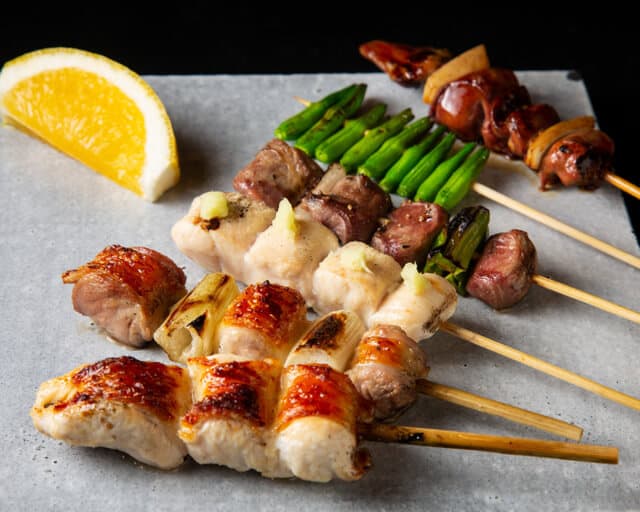
Most yakitori restaurants use binchotan — a dense white charcoal made from Japanese oak. It burns cleaner, longer, and hotter than regular charcoal. The high, steady heat sears the outside of the chicken quickly, sealing in the juices. Far-infrared radiation from the coals heats the meat from within as well. The result is crispy on the outside and moist inside — without the acrid smoke of lower-quality charcoal.
As fat drips onto the hot coals, it vaporizes and rises back up, coating the meat with that characteristic smoky aroma. That’s the smell of a good yakitori-ya (yakitori restaurant). It hits you before you even sit down. The grill master manages each skewer individually, rotating them by hand over different heat zones. It looks simple. It really isn’t.
Yakitori and Izakaya Culture: More Than Just Food
In Japan, yakitori is inseparable from izakaya culture — the casual pub dining that defines after-work socializing. You order a few skewers at a time, share them with friends, and pair each round with beer, cold sake, or a highball. The experience is less about eating a full meal and more about grazing, talking, and enjoying the evening. Perfect for happy hour, casual group dinners, or a solo seat at the bar watching the chef work.
The single-skewer format is part of the appeal. Each one costs only a few hundred yen. You can try five different cuts for the price of one entrée elsewhere. This makes yakitori one of the most accessible and social foods in Japan — you explore a little at a time, ordering what looks good and slowing down over drinks.
A Brief History of Yakitori in Japan
The roots of yakitori stretch back centuries. During the Heian period, eating chicken was actually restricted by law. Wild birds like pheasants were consumed instead. Skewered bird recipes began appearing during the Muromachi period, as hunting culture evolved.
By the Edo period, chicken on skewers had taken something close to its modern form. Street stalls selling grilled skewers multiplied in the Meiji era, bringing yakitori to ordinary people for the first time. After World War II, chicken became much more affordable when broiler farming was introduced from the United States. Yakitori shops spread across cities, embedding themselves in neighborhood izakaya culture. Today, premium regional breeds (jidori) are sought out by high-end restaurants — bringing the cycle from street stall to fine dining full circle.
Yakitori Across Japan: Regional Styles
The dish varies significantly by region. What gets called “yakitori” in one city might surprise visitors expecting the Tokyo standard.
Bibai City, Hokkaido
Chicken skewers include all the offal — hearts, liver, and skin — seasoned generously with salt and pepper. The whole bird philosophy is taken seriously here.
Muroran City, Hokkaido
When locals say “yakitori” in Muroran, they mean pork. Specifically, pork and onion skewers served with mustard. A common point of confusion for first-time visitors.
Higashimatsuyama City, Saitama
Pork head meat (“Kashira”) with miso sauce blended with chili peppers is the local specialty. The tongue and hearts are also skewered with green onion. Bold, spicy, and very different from the Tokyo style.
Imabari City, Ehime
Here, yakitori is cooked flat on an iron plate rather than over a flame. The skewers still exist, but the cooking method is closer to teppanyaki. Locals call it “Imabari yakitori” to distinguish it from the skewered style.
Nagato City, Yamaguchi
Fresh chicken processed in the morning is the foundation here. Salt is the primary seasoning, letting the quality of the bird speak for itself. Onion, cabbage, and condiments like ichimi and shichimi pepper are served alongside.
Kurume City, Fukuoka
The most diverse range of skewers in Japan. Pork, beef, chicken, offal, vegetables, and even seafood (squid, scallops) are all on the grill. Most famously, pig trotters are skewered here — a unique delicacy worth seeking out.
Fukushima City, Fukushima
Local chicken varieties are celebrated here. In 2007, Fukushima hosted the first “World Yakitori Party and Olympic Games” — a festival designed to put local yakitori culture on the global map.
The Seven Great Yakitori Towns in Japan
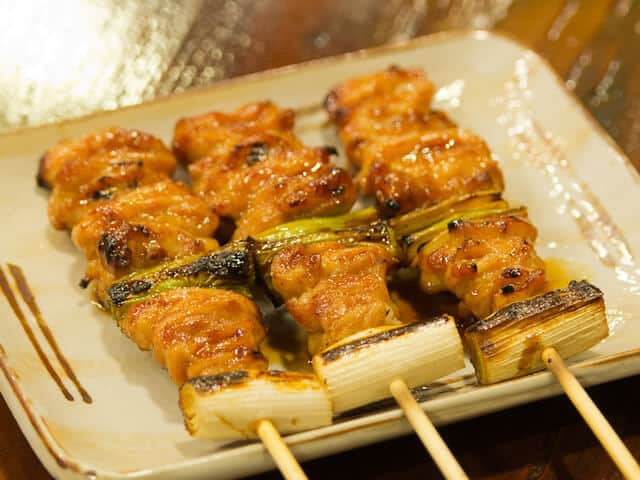
Japan formally recognizes seven cities as its top yakitori towns. Each has developed its own distinctive skewer culture over decades. The official seven are Bibai (Hokkaido), Muroran (Hokkaido), Fukushima City (Fukushima), Higashimatsuyama (Saitama), Imabari (Ehime), Nagato (Yamaguchi), and Kurume (Fukuoka). Visiting even one of these towns during a Japan trip gives a very different yakitori experience from what you’d find in Tokyo.
Health Benefits: Nutrition by Cut
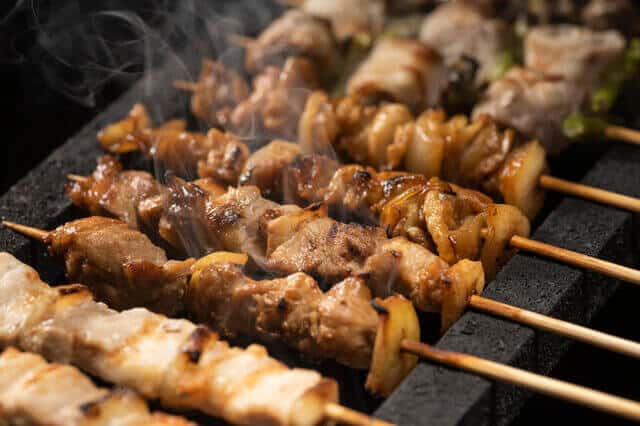
Yakitori’s nose-to-tail approach isn’t just culinary philosophy — different cuts offer genuinely different nutritional profiles. Breast meat (sasami) is very low in fat and rich in imidazole dipeptide, which may help reduce fatigue. Chicken skin contains unsaturated fatty acids and vitamin K, supporting bone density. Liver delivers iron, folic acid, and B vitamins in high concentrations — useful for preventing anemia, though it should not be eaten in excess. Gizzard is lean, high in protein, and rich in zinc, making it a good option for anyone watching their calorie intake.
How to Make Yakitori at Home
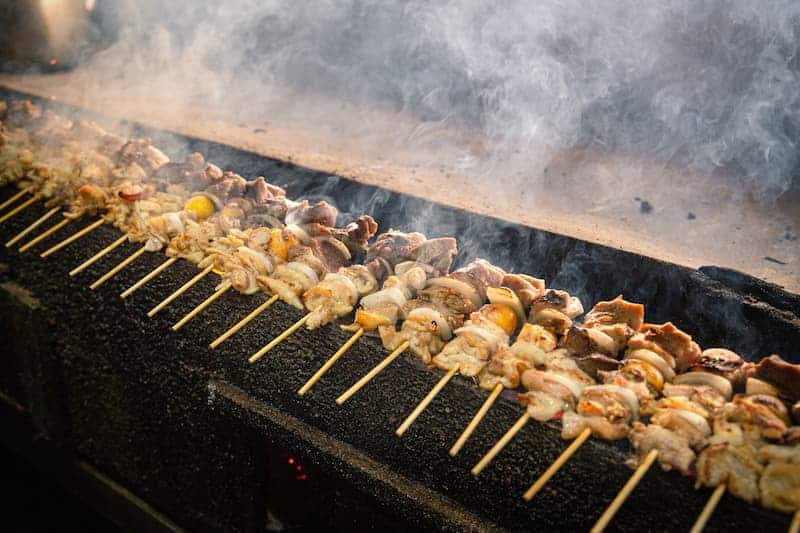
You don’t need a binchotan grill to make yakitori at home. A broiler or a countertop charcoal grill both work reasonably well. You’ll need chicken thigh, green onion, salt, soy sauce, mirin, sugar, and a little oil. The tare sauce comes together quickly and keeps in the fridge for weeks.
Combine soy sauce, mirin, sake, and sugar in a small pan. Simmer over low heat, stirring, until the sauce thickens to a glaze. Set aside to cool.
Cut chicken thigh into roughly 2–3 cm bite-sized pieces. Lightly season with salt and a small amount of oil.
Cut green onions (negi) into 2 cm segments. Lightly coat with vegetable oil so they don’t dry out on the grill.
Alternate chicken and green onion pieces on soaked bamboo skewers. Start and end with chicken for even cooking.
Grill over medium-high heat. When one side browns, turn. Brush tare sauce over the skewers 2–3 times during the final minute of cooking. Serve immediately.
How to Eat Yakitori: Tips for First-Timers
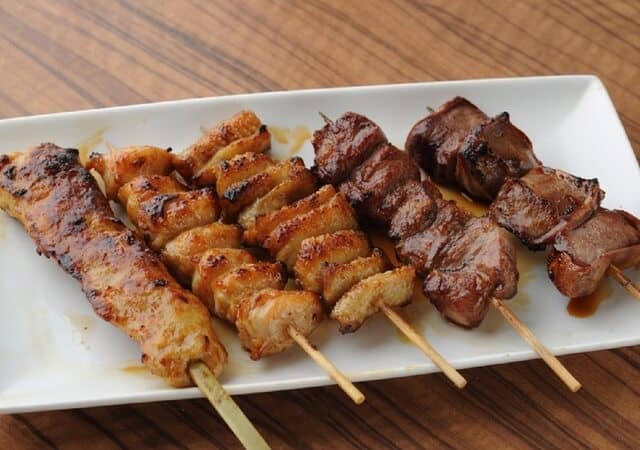
The classic debate: eat off the skewer or slide the pieces off first? Most Japanese eat yakitori directly from the stick — it stays hotter that way, and the juices don’t run off. Sliding it all off at once is the Western approach. Both are fine. Nobody will judge you either way.
Order skewers a few at a time rather than all at once. This keeps each round arriving hot from the grill. Pair with cold beer, Japanese sake, or a shochu highball. At most restaurants, you write your order on a slip of paper — noting the cut and your seasoning choice (tare or shio) for each. Some places offer tableside grilling. Either way, the atmosphere is relaxed and informal.
Yakitori vs. Teriyaki: What’s the Difference?
Americans often ask about this. Both involve chicken and a sweet soy-based glaze. The differences are significant, though. Teriyaki is typically a single larger piece of chicken — marinated and cooked flat in a pan. Yakitori is always skewered and always charcoal-grilled. The skewer format, the variety of cuts, and the charcoal smoke are what define yakitori. Teriyaki chicken in the United States has also drifted quite far from its Japanese origin, often becoming much sweeter. Authentic yakitori tare has more balance — savory and umami-forward, with sweetness in the background.
Where to Eat Yakitori in Japan: Restaurant Types
Specialty Yakitori Restaurants (焼き鳥専門店)
These are dedicated yakitori-ya where the menu focuses entirely on skewers. Quality and variety are at their highest here. A counter seat facing the grill is always the best option — you can watch the chef work and ask questions.
Izakaya (居酒屋)
Most izakaya carry a yakitori section on their menu. The selection is smaller, but the casual atmosphere makes it ideal for first-timers. Great for sampling a few skewers alongside other izakaya classics.
Street Stalls and Festivals (屋台)
Yakitori has deep roots in Japan’s street food culture. Festival stalls (yatai) sell simple negima and tsukune skewers. The quality varies, but the experience is quintessentially Japanese. Busy train station areas often have small yakitori stands with smoke pouring out onto the street.
High-End Yakitori (高級焼き鳥)
A growing number of premium yakitori restaurants use heritage-breed chicken, aged tare, and omakase-style menus. These establishments treat yakitori the way a sushi restaurant treats fish. The experience is quieter, more deliberate, and significantly more expensive — but entirely different from the izakaya version.
Recommended Yakitori Restaurants
Yakitori Taro — Hakodate, Hokkaido
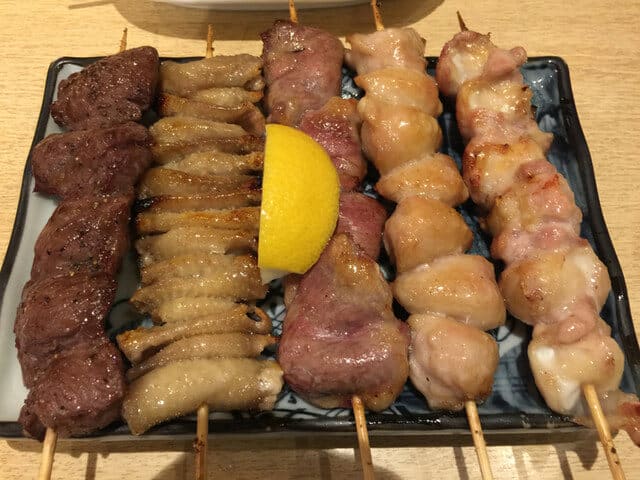
A long-established spot open since the Showa period. True to the Hokkaido tradition, pork skewers share the menu alongside chicken skin and meatballs. Both sauce and salt are available. A reliable example of regional yakitori culture in the north.
Ippei Yakitori — Muroran, Hokkaido
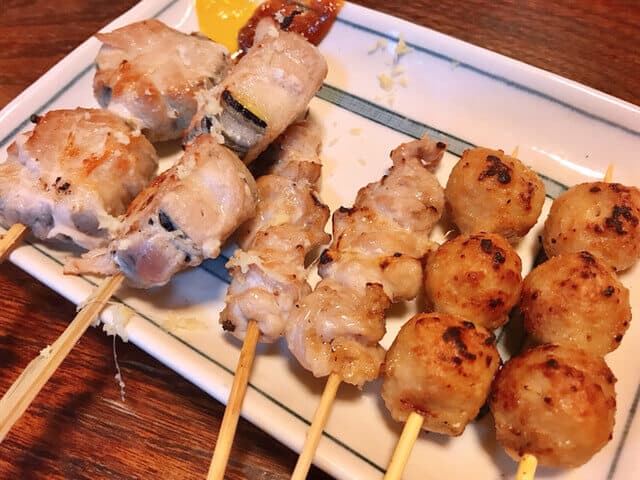
The definitive Muroran-style yakitori experience. Pork with onion instead of green onion, served with mustard, and mainly sauce-based. A traditional restaurant that has preserved the original Muroran recipe for decades.
Anki — Osaka
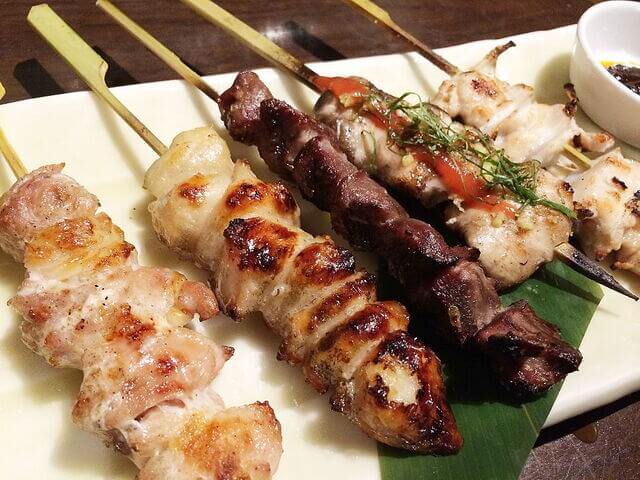
Charcoal Yakitori Anki sits in front of Abiko Subway Station in Osaka. It draws a steady crowd — not just for the food, but for the atmosphere. Choose your skewer, mark tare or shio on the slip, and let the kitchen do the rest. A solid sake selection makes it a genuine izakaya experience. Arrive early or expect to wait.
Yakitori Cocco — Toyooka, Hyogo
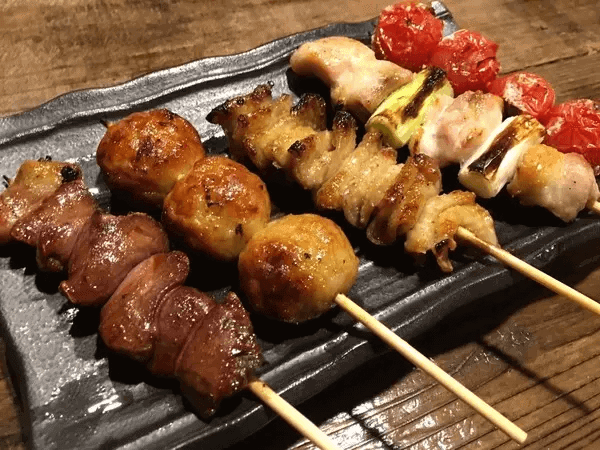
A five-minute walk from JR Toyooka Station, this restaurant specializes in Nagoya Cochin — a premium heritage breed with richer, more complex flavor than standard chicken. The tsukune is served with Nagoya Cochin eggs. Every skewer reflects the quality of the bird. An experience worth making a detour for.
Final Thoughts
Yakitori is one of Japan’s most democratic foods. You can find it at a street stall for a few hundred yen, or at a counter-seat restaurant charging ten times that for a single skewer of heritage breed chicken. Both are valid. Both are part of the same tradition. The best entry point is usually a neighborhood izakaya — order a mix of negima, tsukune, and one cut you’ve never tried before. Then see where that takes you.
If you enjoyed reading about yakitori, you might want to explore these related dishes from Japan next.
If you like yakitori, you might also like these related dishes in Japan
FAQ
What is yakitori?
Yakitori is a Japanese dish of small chicken pieces skewered on bamboo sticks and grilled over charcoal. It is a classic izakaya food, typically seasoned with either tare (sweet soy glaze) or shio (salt). The charcoal heat gives the chicken a distinctive smoky, juicy quality unlike pan-cooked chicken.
Is yakitori always chicken?
Not always. In several Japanese regions, “yakitori” refers to pork skewers rather than chicken. In Muroran (Hokkaido) and Higashimatsuyama (Saitama), pork is standard. Vegetable skewers also appear on many menus under the yakitori category.
What is the difference between tare and salt (shio) yakitori?
Tare is a sweet-savory glaze made from soy sauce, mirin, sake, and sugar. It is brushed on during grilling and adds caramelized depth to fatty cuts. Shio means seasoned only with salt, letting the natural flavor of the meat come through. Shio works best for delicate, premium cuts like sasami or seseri.
What parts of chicken are used in yakitori?
The full range includes thigh (momo), breast fillet (sasami), skin (kawa), neck meat (seseri), chicken meatballs (tsukune), liver (reba), heart (hatsu), gizzard (sunagimo), cartilage (nankotsu), and tail (bonjiri). Each cut has a different texture and is best suited to either tare or shio seasoning.
What is yakitori and how is it different from barbecue chicken?
Yakitori is specifically skewered chicken grilled over charcoal, served as individual small pieces on bamboo sticks. Barbecue chicken typically refers to larger pieces cooked over fire and often heavily sauced. Yakitori emphasizes the individual cut and its natural flavor, with seasoning kept minimal.
Where can I eat yakitori in Japan?
Dedicated yakitori restaurants (yakitori-ya) offer the widest selection and highest quality. Most izakaya also carry yakitori on their menus. Street stalls at festivals and busy station areas serve casual versions. For premium yakitori, look for counter-seat restaurants specializing in regional or heritage-breed chicken.
What is negima yakitori?
Negima is the most classic yakitori skewer, alternating pieces of chicken thigh with segments of green onion (negi). The onion softens and sweetens during grilling, complementing the savory chicken. It is usually seasoned with tare and is a good starting point for anyone new to yakitori.
What is tsukune?
Tsukune are seasoned ground-chicken meatballs skewered and grilled, often finished with tare and served with a raw egg yolk for dipping. Some versions include finely chopped cartilage for added texture. It is one of the most popular yakitori items among both beginners and regulars.
What to order at a yakitori restaurant for the first time?
Start with negima (chicken and scallion), tsukune (meatball), and momo (thigh). These three give a good introduction to the range of textures and flavors. Then try one cut you don’t recognize — kawa (skin) or seseri (neck meat) are both good choices. Order a few at a time and keep adding as you go.
How is yakitori traditionally cooked?
Traditionally, yakitori is grilled over binchotan — a dense white charcoal made from Japanese oak. Binchotan burns at high, steady heat without much visible smoke. The far-infrared heat cooks the meat from the inside out, producing the juicy interior and lightly charred exterior that defines great yakitori.
Is it safe to eat liver and offal at a yakitori restaurant?
Yes, when prepared by a trained chef at a reputable restaurant. Japanese yakitori chefs clean and handle offal with care. The odor that many people associate with liver is almost entirely absent when it is prepared correctly. Choose a busy, established restaurant for the best experience with offal cuts.
How much does yakitori cost in Japan?
Prices range widely. Street stalls and casual spots charge roughly ¥100–¥200 per skewer. Standard izakaya and mid-range yakitori restaurants run ¥150–¥400 per skewer. High-end restaurants using premium breeds can charge ¥500 or more per skewer, sometimes on an omakase basis.
References
- Japan National Tourism Organization (JNTO) — Japanese Grilled Foods (2024): https://www.japan.travel/en/
- Tabelog Japan — Restaurant Reviews and Listings (2024): https://tabelog.com/
- Binchotan Charcoal — Traditional Japanese White Charcoal Overview (2023): https://www.binchotan.jp/



Comments
List of comments (1)
very good post, i definitely love this website, keep on it