'/%3E%3Cpath%20fill='%23b2b2b2'%20d='M241%20382q0%2016%2017%2026%2017%2011%2042%2011t42-11q16-11%2017-26V269H241'/%3E%3Cpath%20fill='%239f7e00'%20d='M241%20379q0%2014%208%2023%209%209%2021%209%2014%200%2021-9%209-9%209-23V269h-59'/%3E%3Cpath%20d='M241%20339v-70h59v110q0%2014-9%2023l-6%205v-68h-15v72q-8%200-14-4v-68zm59%2040c0%2022%2015%2032%2029%2032%2021%200%2030-18%2030-32v-40h-59'/%3E%3Cpath%20fill='%239f7e00'%20d='M266%20277v5h2v12h-3v-5h2v-5h-9v5h2v5h-4v9h3v18h-5v10h34v-10h-5v-18h3v-9h-4v-5h2v-5h-9v5h2v5h-3v-12h2v-5zm42%20101q0%2010%206%2017%206%206%2015%207%2010-1%2016-7%206-7%206-17v-29h-43'/%3E%3Ccircle%20fill='%230044ad'%20cx='329.5'%20cy='372'%20r='6'/%3E%3Cellipse%20fill='%230044ad'%20cx='300'%20cy='340'%20rx='16'%20ry='21'/%3E%3C/svg%3E)


'%3E%3Cpath%20stroke='%23000'%20stroke-width='4'%20d='m-35-37-13%2020m5%203%2013-20m5%203-13%2020m63%2042%206-9m1-2%206-9m5%203-6%209m-1%202-6%209m5%203%206-9m1-2%206-9m-96%200%2013%2020m5-3-6-9m-1-2-6-9m5-3%2013%2020m63-42-6-9m-1-2-6-9m5-3%2013%2020m5-3-6-9m-1-2-6-9'/%3E%3Ccircle%20r='24'%20fill='%23cd2e3a'/%3E%3Cpath%20fill='%230047a0'%20d='M0%200a12%2012%200%201%201%2020%2013%2024%2024%200%201%201-40-26A12%2012%200%201%200%200%200'/%3E%3C/g%3E%3C/svg%3E)




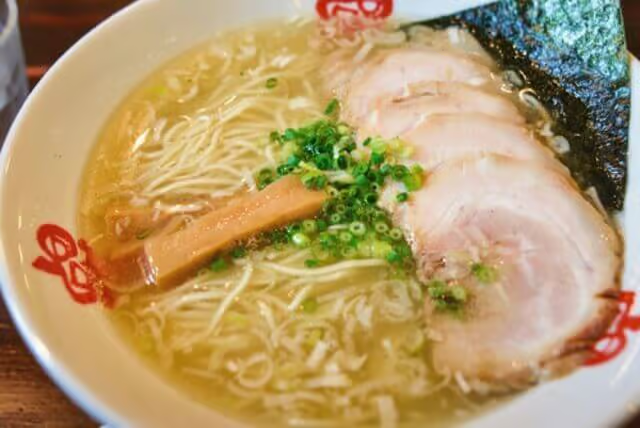
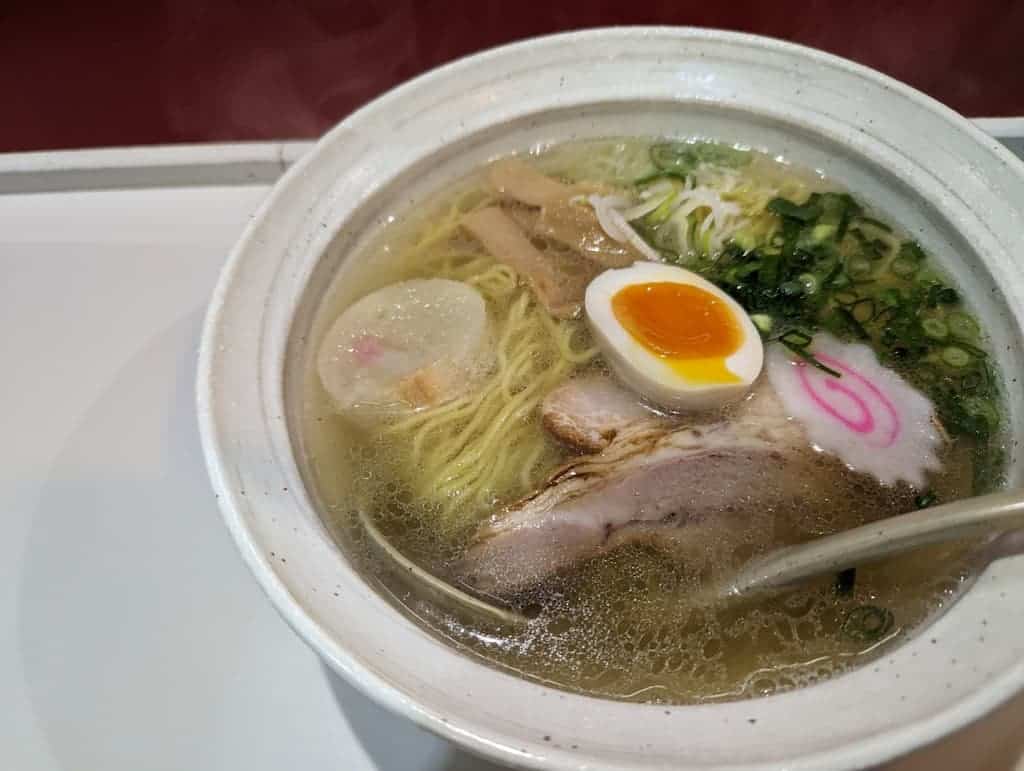
The bowl looks almost too plain at first. A pale, see-through broth, a tangle of fine noodles, a few slices of pork. Then you taste it, and the savory depth catches you off guard. That is Hakodate ramen, the clear salt-broth ramen of a historic port city in Hokkaido.
This guide explains what makes Hakodate shio ramen different, from its broth and noodles to its taste and history. It also compares it with other Hokkaido bowls and shows where to eat it, near the station and beyond. For the bigger picture, see our guide to Japanese ramen styles.
What Is Hakodate Ramen?
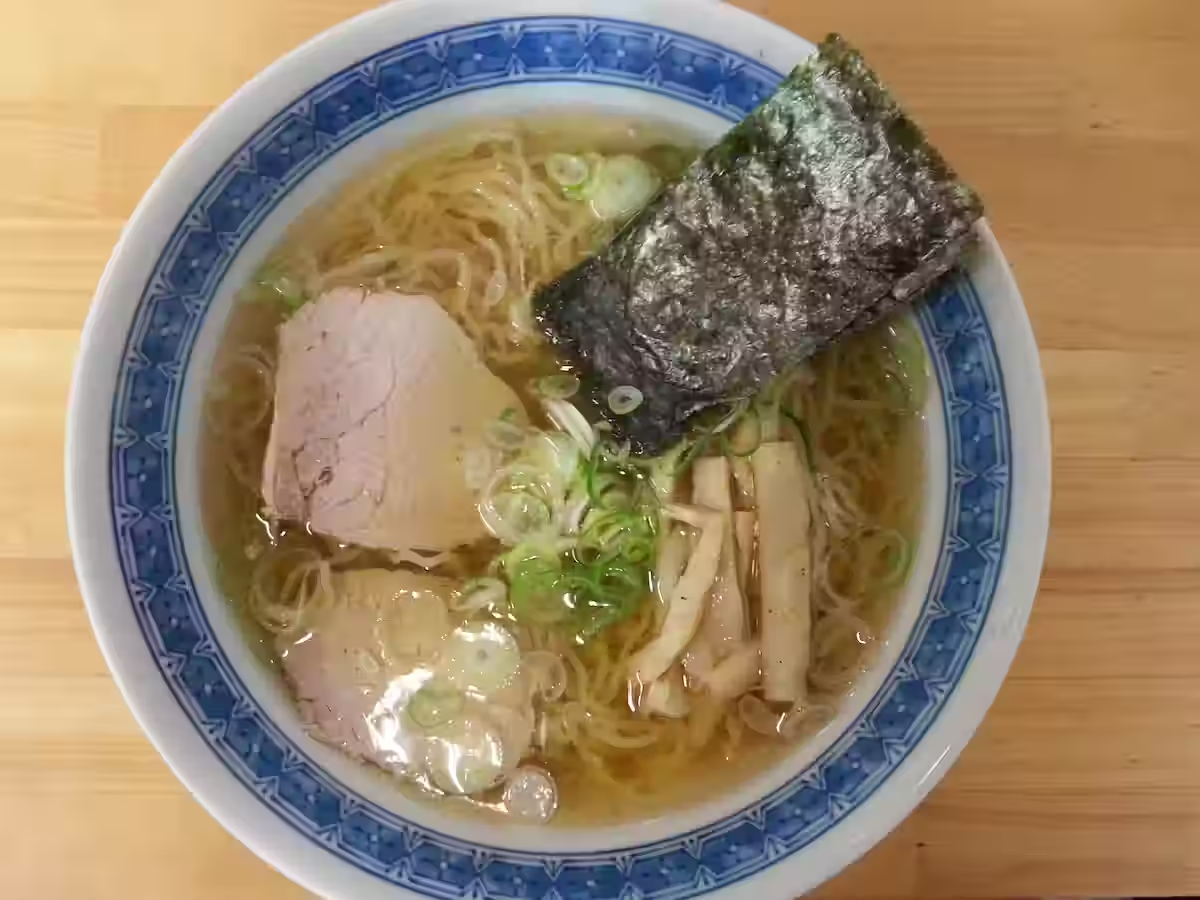
Hakodate ramen is a regional shio ramen from Hakodate City, southern Hokkaido, Japan. It is recognized by its clear, light broth and fine, mostly straight noodles. Simple toppings such as chashu pork, menma and green onion keep the focus on the soup. Compared with Sapporo’s miso ramen and Asahikawa’s soy sauce ramen, it looks and feels much lighter.
Hakodate Ramen at a Glance
- Japanese name
- 函館ラーメン (Hakodate ramen)
- Region
- Hakodate City, southern Hokkaido
- Seasoning
- Shio (salt-based tare)
- Broth
- Clear, low-fat stock; pork, chicken or kombu, depending on the shop
- Noodles
- Usually fine and straight; varies by shop
- Toppings
- Chashu pork, menma, green onion; sometimes naruto, spinach or fu
- Example prices
- ¥680–¥770 for a standard bowl, as seen in October 2026
- Where to try it
- JR Hakodate Station area, Goryokaku, Yunokawa Onsen
What Does “Shio” Mean?
Shio means salt, but shio ramen is not salt water with noodles. The word describes the tare, the concentrated seasoning that goes into the bowl before the stock. A shio tare is salt-based, so it barely darkens the soup. Miso and soy sauce tare, by contrast, give Sapporo and Asahikawa bowls their deeper color.
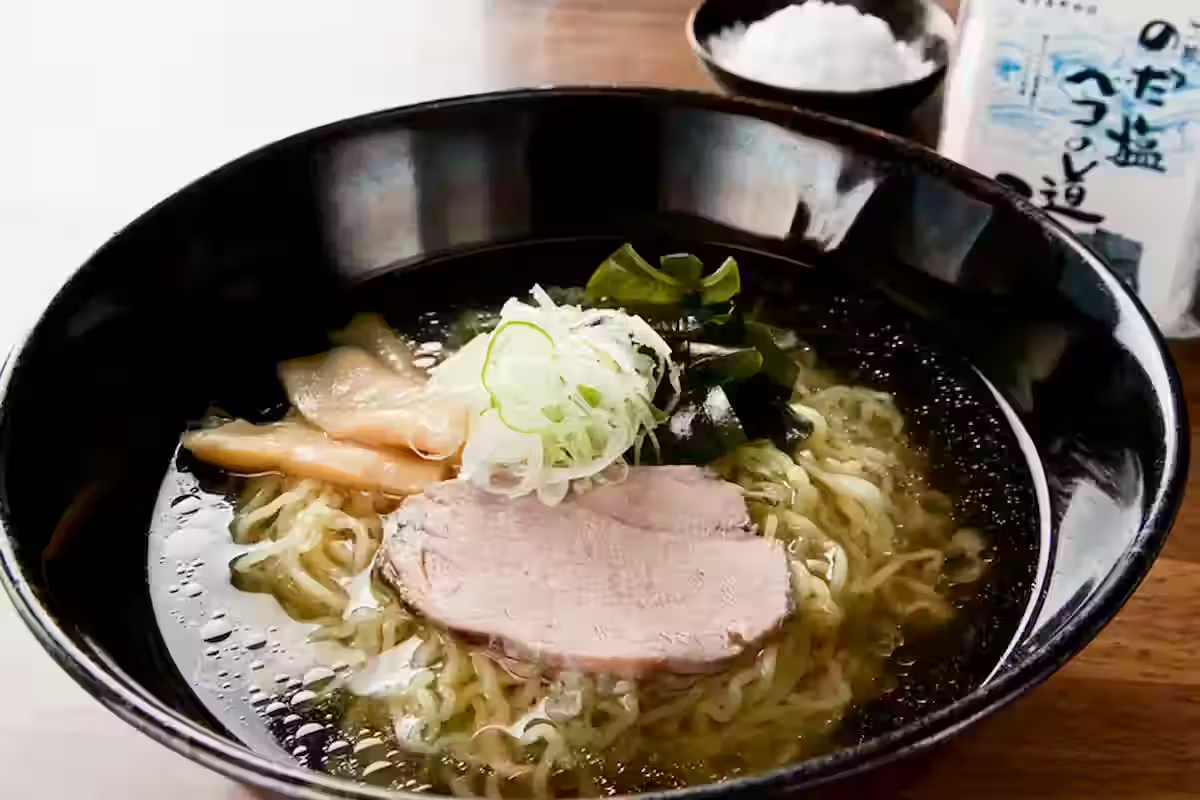
People often call Hakodate, Sapporo and Asahikawa the three big Hokkaido ramen styles. That is a widely used tourism and media label, though, not an official classification. Kushiro ramen, for instance, is sometimes called Hokkaido’s fourth style. For another regional salt style, see Noda shio ramen from Iwate.
Inside a Bowl: Broth, Noodles and Toppings
Hakodate ramen looks simple, yet each part plays a clear role. Here is how a typical bowl comes together, with the caveat that every shop has its own recipe.
Broth
Japan’s Ministry of Agriculture describes traditional Hakodate ramen as using a clear, low-fat pork-bone stock with a light, refreshing taste. In practice, however, shops vary a lot. Some lean on pork bones, some mix pork and chicken, and others build the soup around chicken and kombu. So the broth tastes clean in most shops, but never identical.
A Kombu Town
Hakodate is also a major kombu (kelp) producer. According to the city, Hokkaido grows more than 90% of Japan’s kombu, and Hakodate supplies about 30% of Hokkaido’s harvest. The Minamikayabe area produces roughly 70% of the city’s total. Some ramen shops name this local kombu in their stock, but not every bowl uses it.
Noodles
Many traditional shops serve fine, fairly straight noodles. Because they are thin, they pick up the light broth without overpowering it. Still, thickness, softness and curl differ from shop to shop. Ajisai, for example, says it uses custom-made straight noodles.
Typical Hakodate Ramen Toppings
- Chashu pork: sliced pork, braised or roasted depending on the shop
- Menma: seasoned bamboo shoots with a gentle crunch
- Green onion: fresh, sharp contrast to the mild broth
- Naruto: a white fish cake with a pink spiral
- Spinach or nori: a common extra at some shops
- Fu: light wheat gluten, sometimes floated on top
What Does Hakodate Ramen Taste Like?
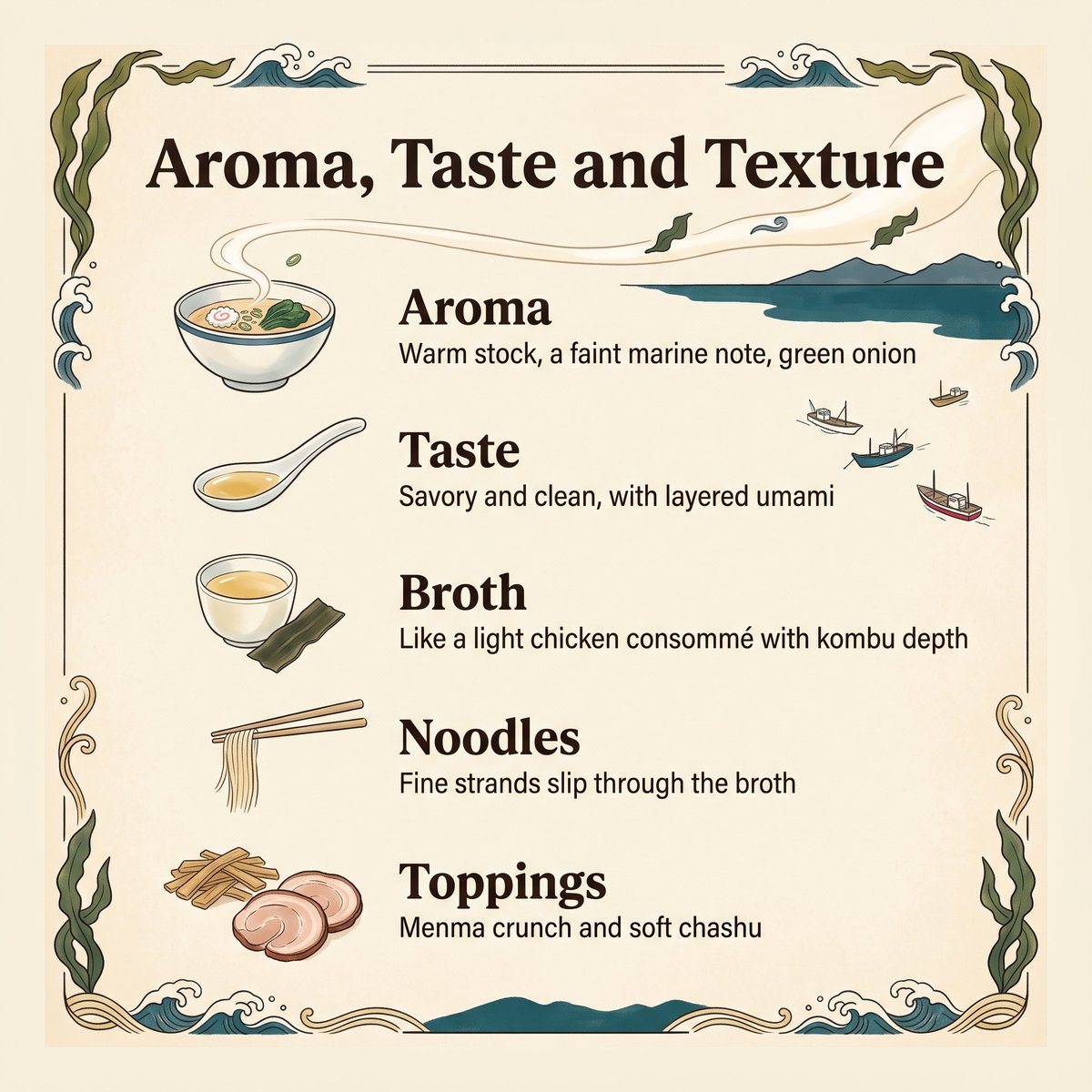
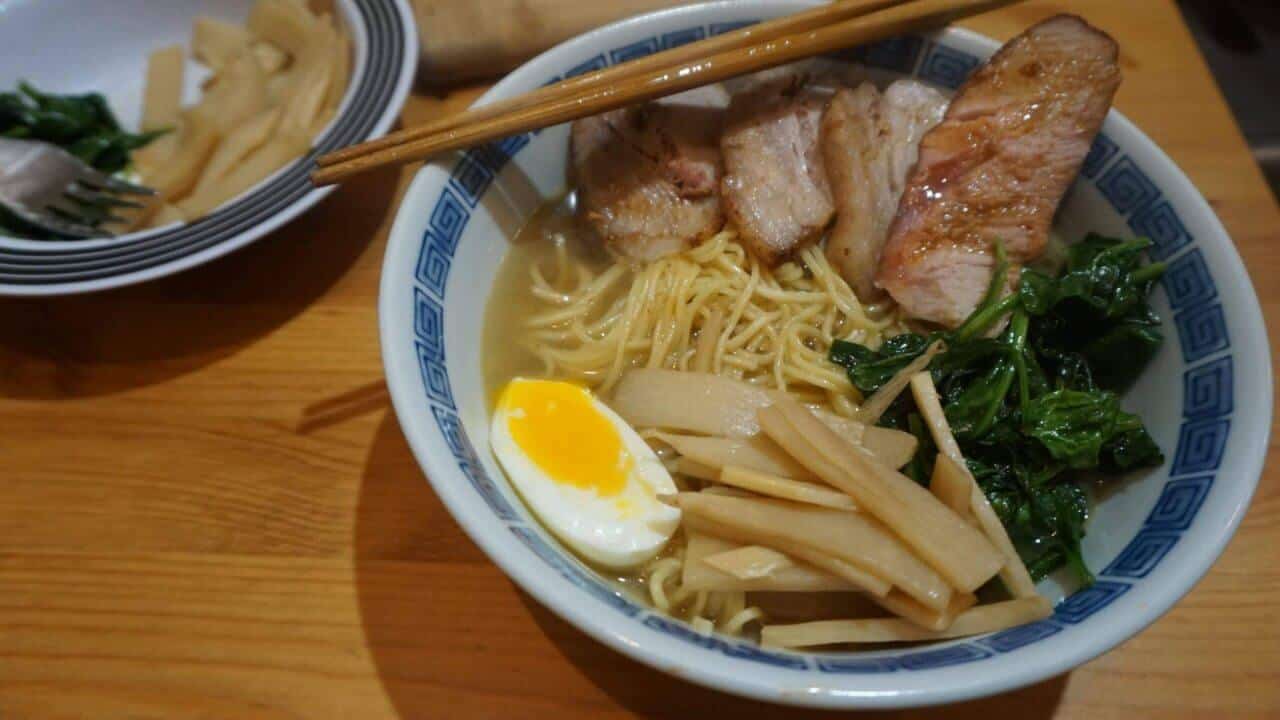
First comes the aroma, and it is subtle. You’ll notice warm chicken or pork stock, a faint marine note in kombu-based bowls, and a little green onion. Nothing smells heavy or oily.
The taste is savory and clean-tasting rather than bold. Animal stock and kombu, where a shop uses it, create layered umami. The salt tare then sharpens those flavors without hiding them. If you need a reference point, think of a light chicken consommé with a gentle kombu depth. Honestly, it can seem mild at the first sip, and that restraint is the point. By the bottom of the bowl, many people realize they’ve finished the soup.
Meanwhile, texture keeps the bowl interesting. Fine noodles slip easily through the delicate broth, while menma adds crunch and the chashu gives a soft, meaty bite. Compared with miso ramen, it feels light. Even so, a full bowl still makes a satisfying meal.
Why Is Hakodate Ramen Clear?
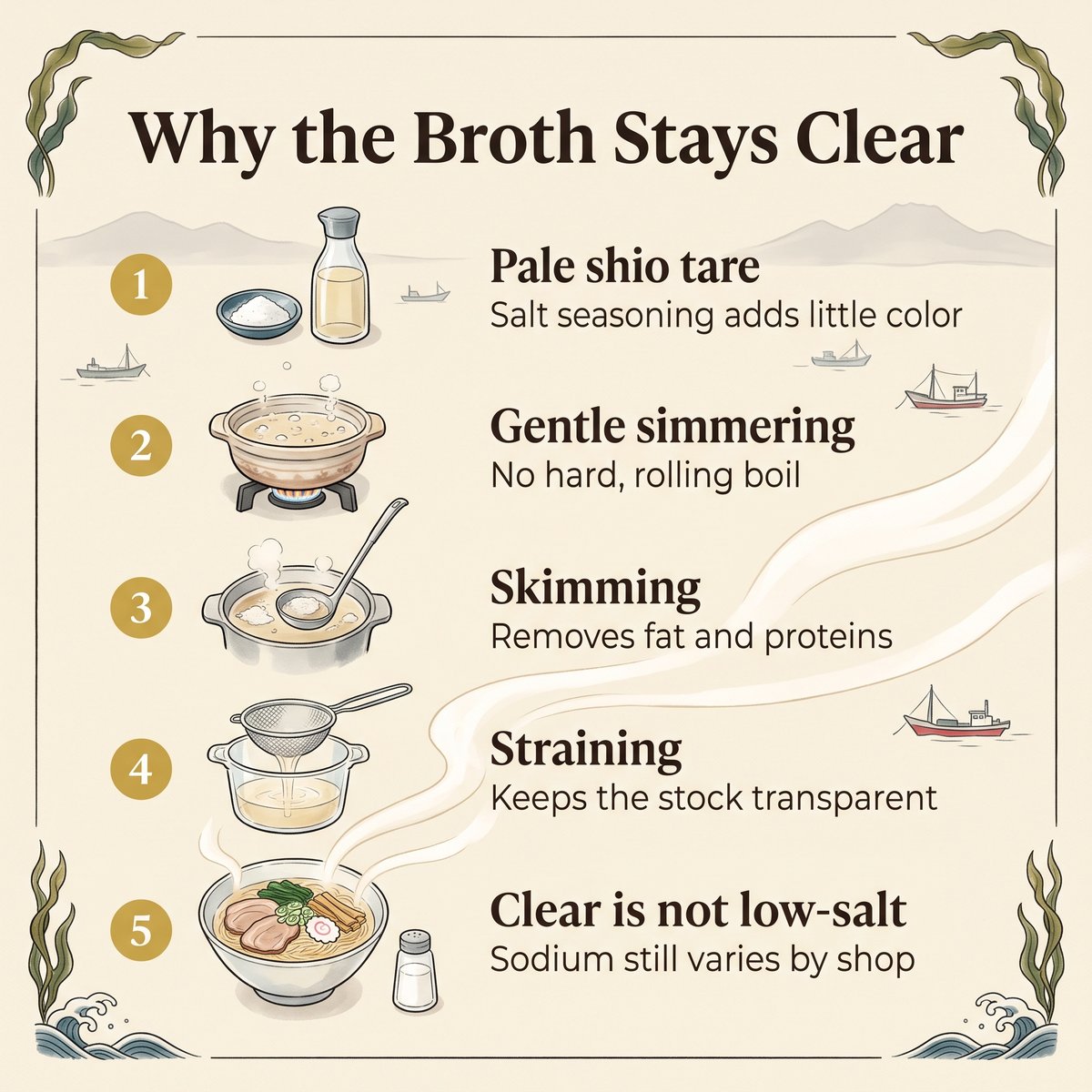
Hakodate ramen is clear because shops pair a transparent stock with a pale salt seasoning called shio tare. Careful simmering, skimming and straining keep fat and proteins from clouding the stock. The tare, unlike miso or soy sauce, adds little color. Salt alone, however, does not make a soup clear.
Food science explains the clouding part. For example, a 1977 study on chicken-bone soup linked clarity to ingredients, heating and filtration. Suspended protein particles caused much of the cloudiness. Later research on dashi linked cloudiness to dispersed fat and longer extraction. A 2016 study on chicken soup also found that the type of heat source affected clarity.
In practice, then, gentle heat and good technique matter more than the seasoning. A hard, rolling boil, on the other hand, can emulsify fat and turn the stock cloudy. Hakodate shops rarely publish their exact temperatures or times, so methods differ from kitchen to kitchen.
One caution: a clear broth looks lighter, but it is not automatically low in calories or salt. Fat, sodium and portion size still vary by shop.
History and Origins of Hakodate Ramen
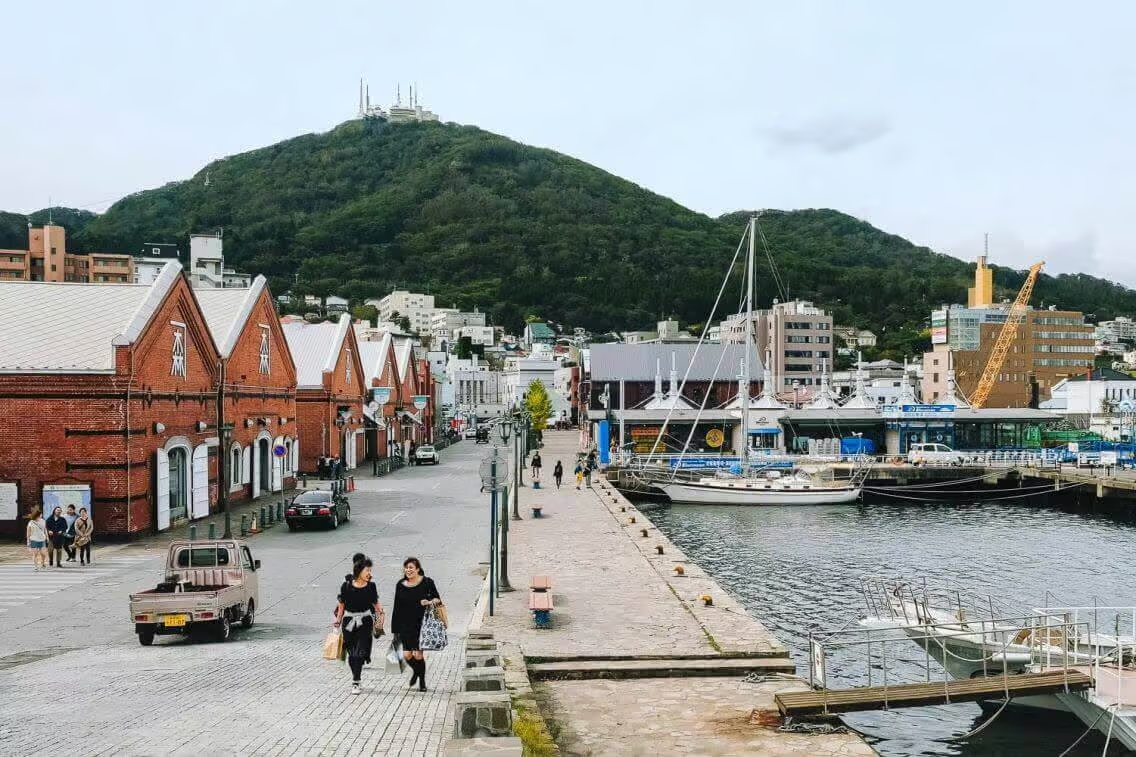
Hakodate is known for shio ramen, and the city’s port history is part of that story. In 1859, Hakodate became one of Japan’s first international trade ports, which brought foreign residents and new foods. Exactly why salt seasoning took hold here, however, is not well documented. Later, an 1884 newspaper ad for Nankin soba became an often-cited early ramen record.
- 1854
Treaties with the United States and other powers designate Hakodate (then written 箱館) as a port to be opened.
- 1855
The port begins supplying foreign ships with water, firewood and food.
- 1859
Hakodate opens as an international trade port, alongside Yokohama and Nagasaki.
- 1884
A Hakodate newspaper ad reportedly uses the name Nankin soba, a Chinese-style noodle dish.
- Today
Clear shio ramen is the city’s signature local bowl, served from the station area to Yunokawa Onsen.
Opening of Hakodate Port
In fact, Hakodate’s opening came in stages, which many guides blur together. The 1854 treaties designated the port, and in 1855 it began supplying foreign ships. Then, in 1859, it formally opened to international trade. According to Hakodate City, foreign residents, consulates, imported foods and new cooking methods soon reshaped local dining.
Chinese Noodle Influence
Chinese food culture also arrived as part of that wider exchange. Hakodate City credits the Western-style restaurant Yowaken, run by an owner from Guangdong, with the Nankin soba ad. Still, no surviving source describes that dish’s broth, noodles or toppings. So it’s fair to say Chinese cooking influenced Hakodate. Early Chinese-style noodle soups in Japan were later called shina soba. Still, their path to modern shio ramen is not well documented.
Is Hakodate Ramen the Oldest Ramen in Japan?
Not provably. Hakodate is linked to one of Japan’s earliest reported records of a Chinese-style noodle dish. That record, however, does not prove Hakodate served the first ramen. Hakodate City and the regional tourism association both point to an 1884 ad in the Hakodate Shimbun newspaper. The tourism association says it offered Nankin soba for 15 sen. Hakodate City notes that some call it the birthplace of ramen in Japan. Japan’s Ministry of Agriculture is more cautious, stating that detailed records do not survive.
The National Diet Library holds issues of the Hakodate Shimbun from this period. Until someone documents the ad itself, the safest description is an early reference cited by Hakodate City and the ministry. It is not proven to be Japan’s first ramen.
Hakodate Ramen vs Sapporo and Asahikawa Ramen
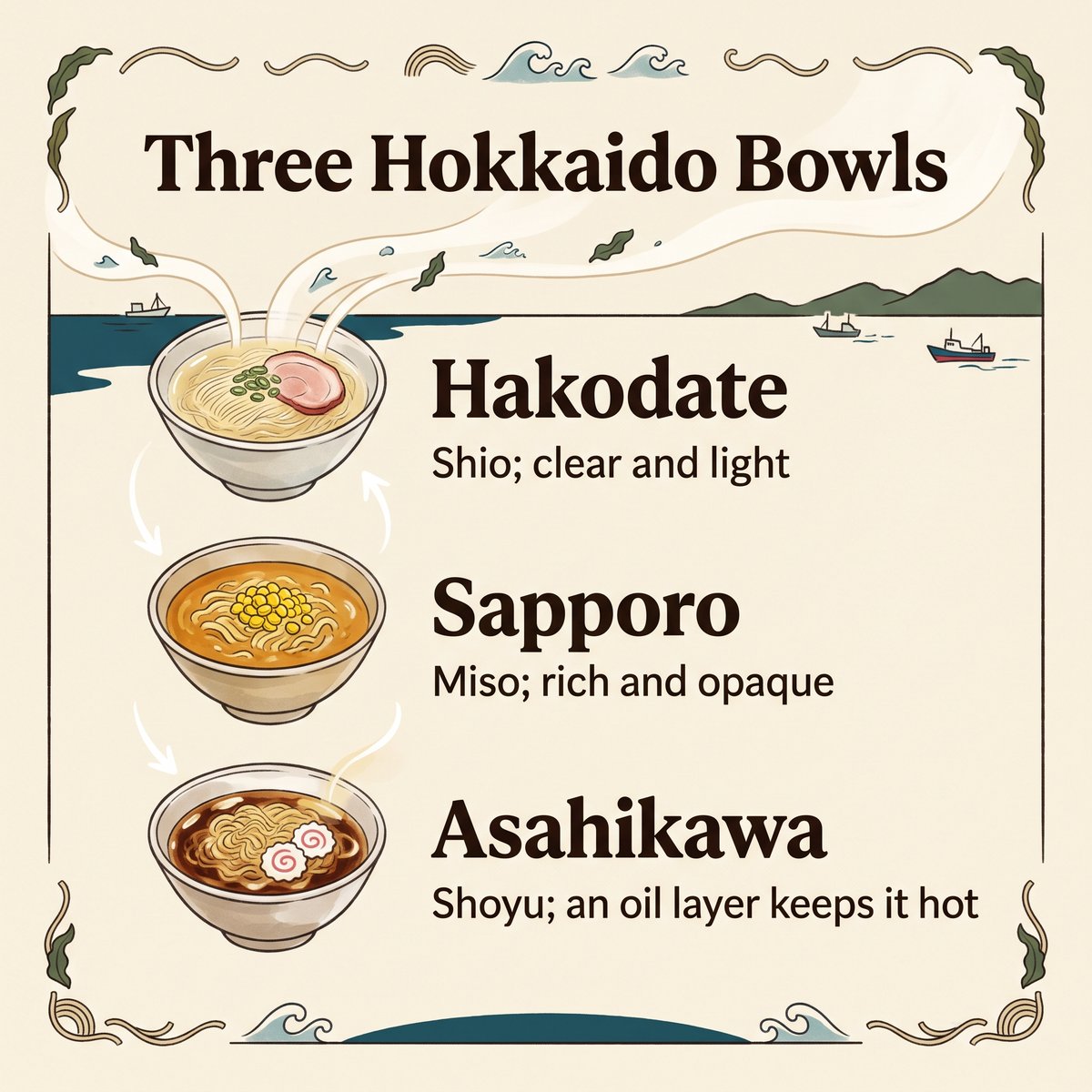
The main difference is the seasoning. Hakodate uses salt, Sapporo is known for miso, and Asahikawa for soy sauce. Broth, noodles and oil also differ, as the table shows. These are typical patterns, and individual shops break the rules all the time.
| Style | Seasoning | Broth | Noodles | Oil and feel |
|---|---|---|---|---|
| Hakodate | Shio (salt) | Clear, low-fat; pork, chicken or kombu | Fine, mostly straight | Light, clean-tasting |
| Sapporo | Miso | Rich and opaque | Thicker, wavy | Heavier, warming |
| Asahikawa | Shoyu (soy sauce) | Seafood and pork-bone blend | Medium-fine, curly | Oil layer keeps it hot |
| Kushiro | Shoyu (soy sauce) | Light, with bonito and kombu | Very fine, curly | Light, quick to eat |
Typical patterns only; recipes vary by shop.
So, prefer a delicate bowl? Start with Hakodate. If you want something richer, Asahikawa ramen offers an oil-coated broth for diners who like a heavier bowl. Sapporo’s miso ramen sits at the hearty end. For more on soy-based bowls, see our shoyu ramen guide.
Where to Eat Hakodate Ramen
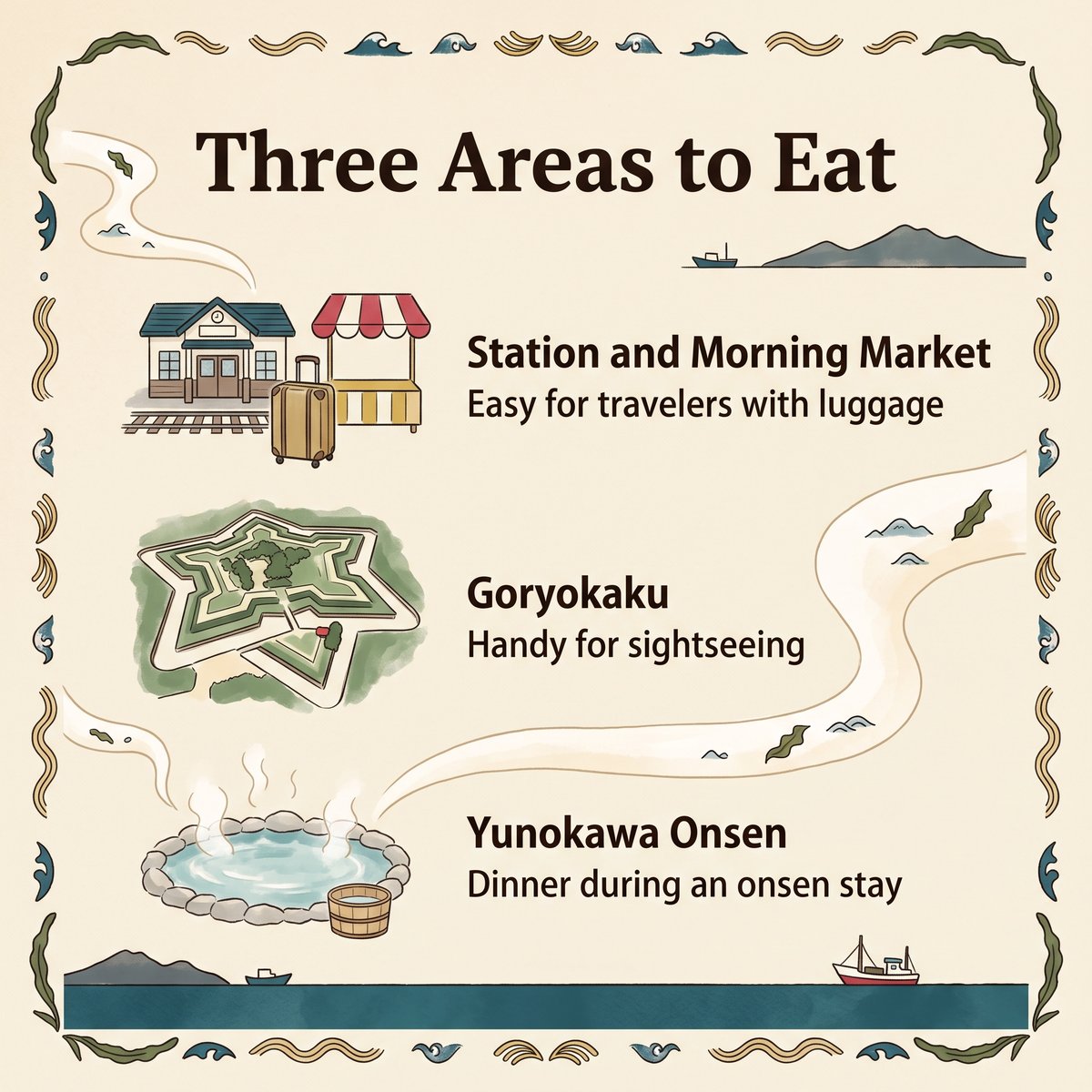
The easiest areas are around JR Hakodate Station and the nearby Hakodate Morning Market, Goryokaku, and Yunokawa Onsen. Station-area shops suit travelers with luggage, while Goryokaku and Yunokawa fit sightseeing or an onsen stay. The morning market sits about a one-minute walk from the station, so ramen and market browsing pair easily. Our Hakodate Morning Market seafood guide covers what to eat there.
Choosing a Shop for Your First Visit
First pick by location, then by style. The table summarizes the three shops below.
| Shop | Area | Best for | Hours | Shio ramen |
|---|---|---|---|---|
| Horan | Matsukaze-cho, near the station | Old-school bowl near JR Hakodate Station | 11:00–20:00; closed Tue | ¥680 |
| Ajisai | Goryokaku; JR Hakodate Station | Goryokaku sightseeing or a quick station meal | Main shop 11:00–20:30; station branch from 10:00 | Check in store |
| Ichimonji | Yunokawa Onsen | Dinner during an onsen stay | 11:00–23:00; closed Wed and 2 other days a month | ¥770 (website) |
Checked in October 2026 against each shop’s official website and menu. Hours, prices and closing days may change. Please check each shop’s official website or social media before visiting. Kamome, a shop near the morning market featured in earlier versions of this guide, has closed.
Horan (鳳蘭)
Horan has served ramen near JR Hakodate Station since 1950, and its salt ramen is the house recommendation. According to the shop, the soup uses only pork and chicken bones, with no vegetables. That makes it a good first stop for a classic station-area bowl. It’s about a five-minute walk from the station, and staff take orders at the table.
- Address
- 5-13 Matsukaze-cho, Hakodate, Hokkaido
- Access
- About 5 minutes on foot from JR Hakodate Station
- Hours
- 11:00–20:00, closing early if the soup runs out (other listings show later hours)
- Closed
- Tuesdays and irregular days
- Payment
- Cash; PayPay accepted, per the city tourism site
- Shio ramen
- ¥680, tax included (official menu, October 2026)
- Phone
- 0138-22-8086 (+81-138-22-8086)
- Website
- Horan official site
Hakodate Noodle Kitchen Ajisai (函館麺厨房あじさい)
Ajisai’s main shop stands in the Goryokaku area, handy before or after visiting the star-shaped fort. The shop describes its signature salt ramen as a remarkably transparent broth paired with custom-made straight noodles. Hakodate’s official tourism site describes the main shop as long popular with both locals and visitors, and lists an English menu. Ajisai also runs a branch on the second floor of JR Hakodate Station, open every day from 10:00. According to the tourism site, that branch has a ticket machine with foreign-language labels and accepts transit IC cards such as Suica and Kitaca. Note that Ajisai does not offer kaedama, or noodle refills.
- Hours
- 11:00–20:30 (last order 20:25); opening time has changed seasonally in 2026
- Closed
- 4th Wednesday (next weekday if a holiday)
- Station branch
- JR Hakodate Station 2F; 10:00–19:30 (last order); open daily; 0138-84-6377
- Shio ramen
- Price not listed online; varies by branch
- Phone
- 0138-51-8373 (+81-138-51-8373)
- Website
- Ajisai official site
Hakodate Menya Ichimonji (函館麺や 一文字)
Ichimonji’s main shop sits in Yunokawa, Hakodate’s hot spring district, so it works well for dinner during an onsen stay. According to its menu, the regular shio ramen uses whole chicken, chicken bones and kombu from Minamikayabe. For a richer bowl, the separate tonshio ramen has a pork-bone base. The city tourism site mentions a sea-view counter, free parking for 10 cars and a mix of local and tourist diners. Card payment may not be accepted, so bring cash.
- Hours
- 11:00–23:00 (last order 22:30)
- Closed
- Wednesdays, plus 2 irregular days a month
- Parking
- Free, 10 cars
- Ramen
- Shio ¥770, tonshio ¥810 (listed on the official website; page date and tax not stated)
- Phone
- 0138-57-8934 (+81-138-57-8934)
- Website
- Ichimonji official site
Hakodate Station and Morning Market Ramen
Short on time? Ajisai’s station branch is inside the building and opens at 10:00, earlier than the other shops here. So after a morning at the market, it works for a late breakfast or early lunch. Horan, meanwhile, is about five minutes away on foot and opens at 11:00. For a later meal, Yowaken Plus near Matsukaze-cho tram stop lists hours until midnight. It closes early, however, if the soup runs out. The morning market is right next to the station, too.
How to Order and Eat Hakodate Ramen
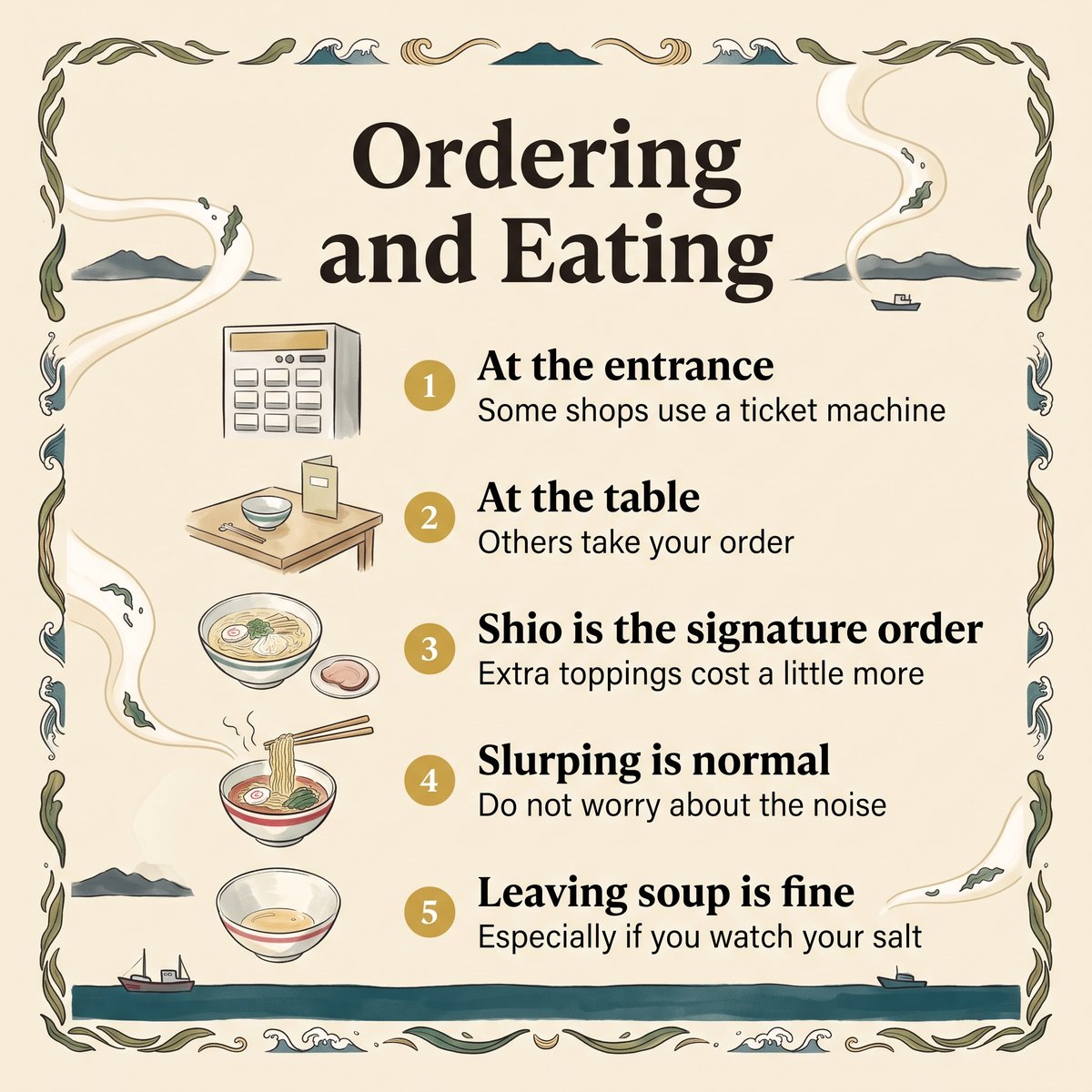
Ordering is usually simple, even without Japanese. Some shops, such as Ajisai’s station branch, use a ticket machine at the entrance, while others, such as Horan, take your order at the table. Payment options vary, so carry some cash. At shops known for Hakodate ramen, shio is the signature order. Extra toppings, such as more chashu, usually cost a little more. Slurping is normal, so don’t worry about the noise. You also don’t need to finish the soup; many people leave some, especially if they watch their salt.
Timing, meanwhile, depends on your plans. None of the shops in this guide opens before 10:00, so ramen is not an early breakfast option here. Station-area shops fit a late morning or a stop before a train. After the Mount Hakodate night view, Ichimonji in Yunokawa is the only shop here open past 21:00.
Allergens and Vegetarian Notes
Unfortunately, most Hakodate ramen is not vegetarian or vegan. Even a transparent broth may contain pork, chicken, fish or shellfish, so removing the chashu does not make it meat-free. Noodles usually contain wheat, and some contain egg. Ask the shop about both the stock and the tare.
Ajisai keeps an allergen chart at its shops and asks diners with allergies to speak to staff before ordering. It also says egg-free noodles are available on request at three Hakodate branches. That does not rule out cross-contact, though, so always check in person.
Conclusion: Why Hakodate Ramen Is Worth Trying
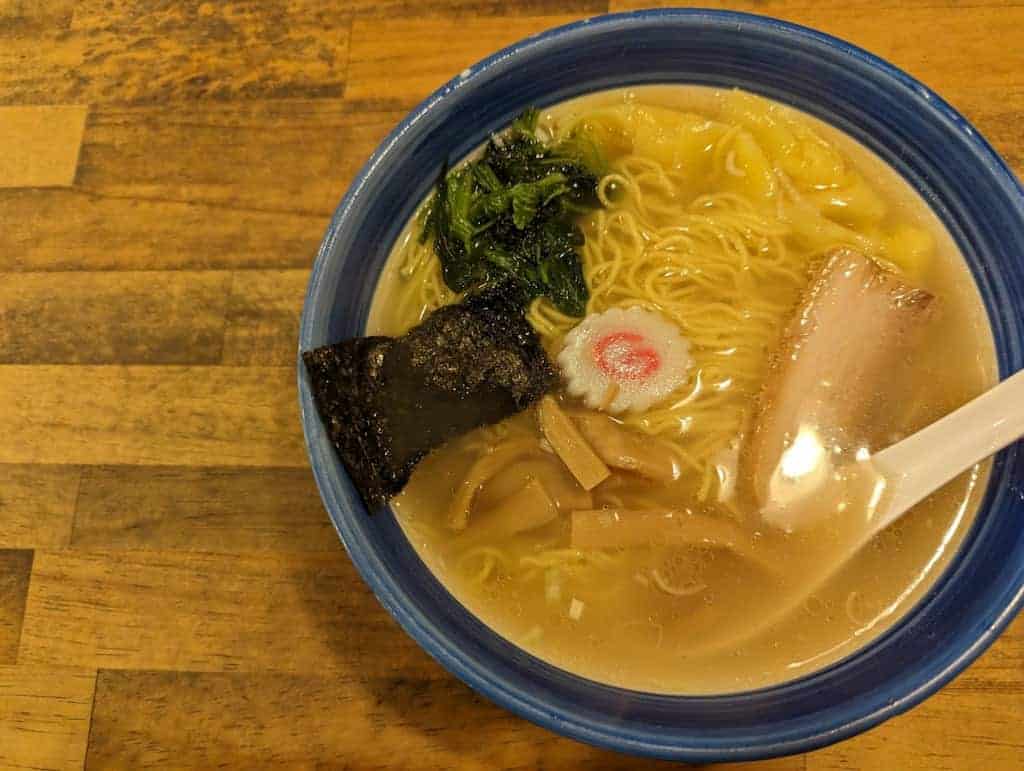
Hakodate ramen shows how much flavor a clear, salt-seasoned bowl can hold. Its light body is an intentional part of the style. Careful stock-making, in a city with a long port history, shaped it. If richer Hokkaido bowls feel like a lot, this one is a welcome contrast.
To try it, pick an area first: the station and morning market, Goryokaku, or Yunokawa Onsen. Then, if you’re touring Hokkaido, the Hokkaido food guide will help you plan your next stop.
Hakodate Ramen FAQ
About the Dish
- What is Hakodate ramen?
-
Hakodate ramen is the local shio ramen of Hakodate City in southern Hokkaido. It pairs a clear, light stock with a salt-based tare and usually fine, straight noodles. Toppings stay simple, often chashu, menma and green onion. Stock recipes vary by shop, from pork-bone to chicken and kombu.
- Is Hakodate ramen salty?
-
It is salt-seasoned, but it does not usually taste harsh. Animal stock and kombu make the flavor feel rounded. Still, a clear-looking bowl can contain plenty of salt, and the amount varies by shop. If you limit sodium, leave some of the soup.
- What is the difference between Hakodate and Sapporo ramen?
-
Hakodate ramen uses a clear salt broth with fine, mostly straight noodles. Sapporo ramen is best known for a rich, opaque miso broth with thicker, wavy noodles. As a result, the Sapporo bowl feels heavier and more filling. Hakodate, by contrast, leaves a lighter finish.
- What noodles are used in Hakodate ramen?
-
Most traditional shops use fine, fairly straight noodles that suit the delicate broth. They cook quickly and pick up the soup without overpowering it. Thickness, softness and curl still vary by shop, so no single noodle defines the style.
- Is shio ramen healthier than miso ramen?
-
Not necessarily. Shio ramen often feels lighter because the broth is clear and low in fat. However, sodium and calories depend on the recipe, the amount of soup you drink and the toppings. A clear bowl can still be quite salty.
- Does Hakodate ramen contain pork?
-
Usually, yes. Many shops use pork bones in the stock, and most bowls come with chashu pork. Some shops build their broth mainly on chicken and kombu, but chashu may still be pork. Ask the staff if you avoid pork.
Visiting and Ordering
- Where can I eat Hakodate ramen near JR Hakodate Station?
-
Ajisai has a branch on the second floor of JR Hakodate Station, open daily. Horan is about a five-minute walk away and is listed as open 11:00–20:00, except Tuesdays. Both are close to the morning market. Check hours before you go, since they can change.
- How much does a bowl of Hakodate ramen cost?
-
A standard bowl of shio ramen costs about ¥680–¥770 at the shops in this guide, as of October 2026. Horan lists ¥680 including tax, and Ichimonji’s website lists ¥770. Extra toppings or larger servings cost more. Prices change, so check the official menu.
- Is Hakodate ramen halal?
-
Generally no. None of the shops in this guide shows halal certification, and all of them use pork, either in the stock or as chashu. Even Ichimonji’s chicken-based shio ramen comes with pork chashu and shares a kitchen with pork-bone soups. Muslim travelers should look for restaurants with halal certification instead.
- Is Hakodate ramen vegetarian?
-
Usually not. A clear broth can still contain pork, chicken, fish or shellfish, and the tare may include animal ingredients too. Removing the chashu does not change the stock. Ask the shop about both the stock and the tare before ordering.
References
- Ministry of Agriculture, Forestry and Fisheries – Our Regional Cuisines: Ramen, Hokkaido (ラーメン 北海道) (Accessed October 2026)
- Hakodate Development and Construction Department, MLIT – Hakodate Port History (函館港全体 過去) (Accessed October 2026)
- Oishii Hakodate (Hakodate City) – Western Food Culture (洋食文化) (Accessed October 2026)
- Hakobura (Hakodate International Tourism and Convention Association) – Hakodate Shio Ramen (函館の塩ラーメン) (Accessed October 2026)
- Hakobura (Hakodate International Tourism and Convention Association) – Yowaken Plus (養和軒ぷらす) (Accessed October 2026)
- HOKKAIDO LOVE! (Hokkaido Tourism Organization) – Hakodate Ramen (Accessed October 2026)
- HOKKAIDO LOVE! (Hokkaido Tourism Organization) – Asahikawa Ramen Village (あさひかわラーメン村) (Accessed October 2026)
- HOKKAIDO LOVE! (Hokkaido Tourism Organization) – Kushiro Ramen (釧路ラーメン) (Accessed October 2026)
- Hakodate City – Hakodate Leads Japan in Kombu Production (函館は昆布生産量日本一) (Accessed October 2026)
- Hakodate City – The Home of Kombu (昆布の里) (Accessed October 2026)
- National Diet Library Search – Hakodate Shimbun (函館新聞), 1878–1898 (Accessed October 2026)
- J-STAGE – Kawamura, F., & Inomata, M. (1977). On the effect of vegetables on the taste and clarity of soup. Journal of Home Economics of Japan, 28(8), 572–576 (Accessed October 2026)
- J-STAGE – Yamazawa, M., & Omura, Y. (2012). Turbidity of dashi made from fushi and its suppression. Nippon Shokuhin Kagaku Kogaku Kaishi, 59(7), 331–337 (Accessed October 2026)
- J-STAGE – Minari, Y., et al. (2016). Effect of the heating method on the taste components of chicken soup. Journal of Cookery Science of Japan, 49(2), 154–160 (Accessed October 2026)
- Hakodate Morning Market – Access (朝市までのアクセス) (Accessed October 2026)
- Horan – Official Website, Shop Information and Menu (Accessed October 2026)
- Hakodate Noodle Kitchen Ajisai – Shop Information, Menu, FAQ and Egg-Free Noodles Notice (Accessed October 2026)
- Hakodate Menya Ichimonji – Shop Information and Menu (おしながき) (Accessed October 2026)
- Hakobura (Hakodate International Tourism and Convention Association) – Horan (鳳蘭) (Accessed October 2026)
- Hakobura (Hakodate International Tourism and Convention Association) – Hakodate Noodle Kitchen Ajisai Main Shop (函館麺厨房あじさい 本店) (Accessed October 2026)
- Hakobura (Hakodate International Tourism and Convention Association) – Hakodate Menya Ichimonji Main Shop (函館麺や一文字 総本店) (Accessed October 2026)
Related Articles
- Sapporo Ramen (Surveyed: October 2026)
- Asahikawa Ramen (Surveyed: October 2026)
- Kushiro Ramen (Surveyed: October 2026)
- Hakodate Asaichi Seafood Morning Market (Surveyed: October 2026)
- Complete Guide to Hokkaido Food (Surveyed: October 2026)
- Shoyu Ramen (醤油ラーメン) (Surveyed: October 2026)
- Noda Shio Ramen (野田塩ラーメン) (Surveyed: October 2026)
- Japanese Ramen (Surveyed: October 2026)




Comments