




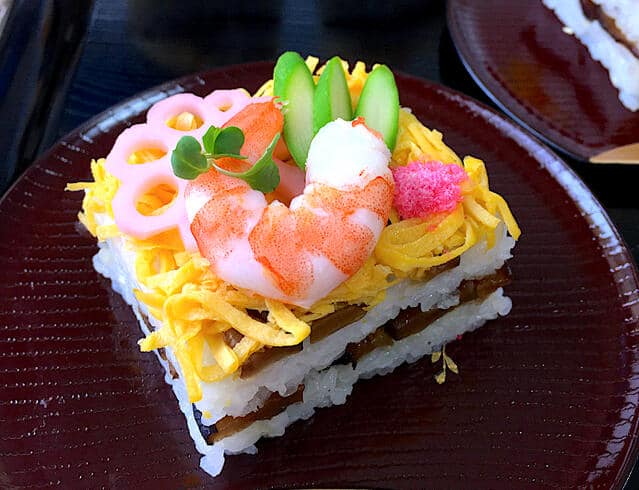
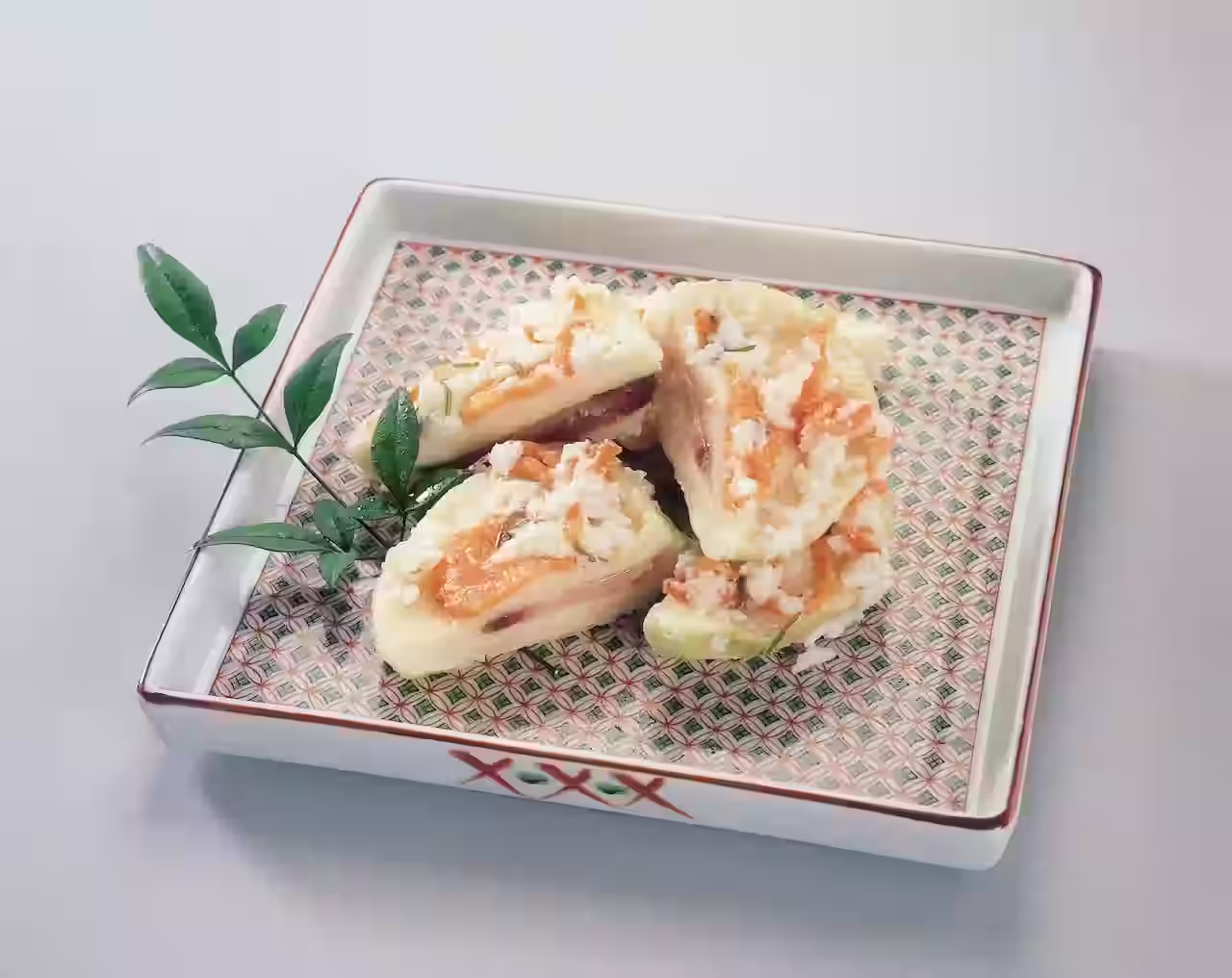
Iwakuni sushi is one of those dishes that rewrites your expectations of sushi. The first thing you notice is the scale. This isn’t a single piece balanced on vinegared rice. It arrives as a thick, square slice from a large pressed block, layered with colorful toppings and cut clean through. That cross-section of yellow, pink, green, and brown tells you immediately: this is something built with real intention.
This guide explains what Iwakuni sushi is and why locals call it the lord’s sushi. You’ll also learn how it became one of Yamaguchi Prefecture’s most celebrated regional dishes, what makes its ingredients distinctive, and where to find it near Kintai Bridge.
What Is Iwakuni Sushi?
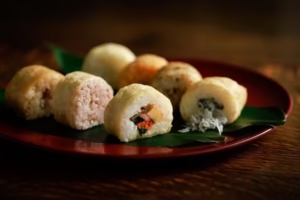
Iwakuni sushi (岩国寿司) is a traditional pressed sushi from Iwakuni City, Yamaguchi Prefecture. Unlike nigiri or maki, which you eat piece by piece, this sushi builds in layers inside a large wooden mold. Cooks alternate vinegared rice with seasonal toppings, press the whole block under weight, then slice it into square portions for serving. The final piece looks more like a layered terrine than anything you’d find at a typical sushi counter.
The structure allows a maximum of five layers. Beyond that, the block loses its shape when sliced. Each layer alternates between seasoned rice and a set of traditional toppings. Typical additions include thin egg strips, simmered shiitake mushrooms, pickled lotus root, chisha leaf, and sakura denbu. The seasoning leans toward chirashizushi-style richness rather than plain sushi vinegar. This gives the rice a more layered, complex flavor than standard pressed sushi.
Why Is Iwakuni Sushi Called “Lord’s Sushi”?
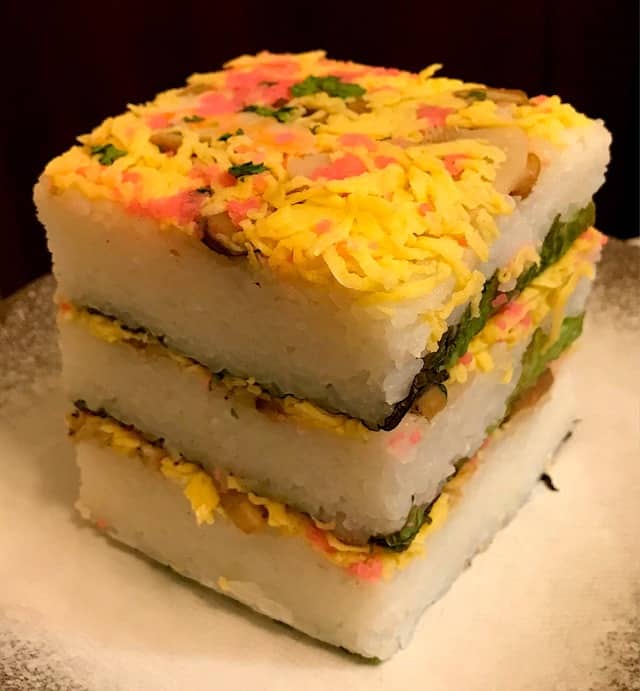
Iwakuni sushi carries a second name: Tonosama Zushi. Tonosama means “lord” or “master” in Japanese. The name traces back to the Edo period, when Iwakuni flourished as a castle town under the Kikkawa clan. This was never everyday food for commoners. The dish held a place at the lord’s table, and that connection shaped its identity for centuries.
Two origin stories have survived for generations. One says castle workers prepared it as preserved food to carry up to Iwakuni Castle. Pressed sushi travels well; the firm texture and vinegared rice kept it edible on the journey. The other story frames it as a tribute dish for the lord on formal occasions. Both accounts agree on one point: this sushi was ceremonial long before it was popular.
After the Meiji era began, class restrictions eased across Japan. Commoners gained access to Tonosama Sushi, and Iwakuni locals quickly adopted it as a community celebration dish. That shift from samurai exclusivity to shared tradition is part of what makes Iwakuni sushi culturally interesting. The dish crossed social lines and became something everyone could claim as their own.
How Iwakuni Sushi Differs from Other Sushi
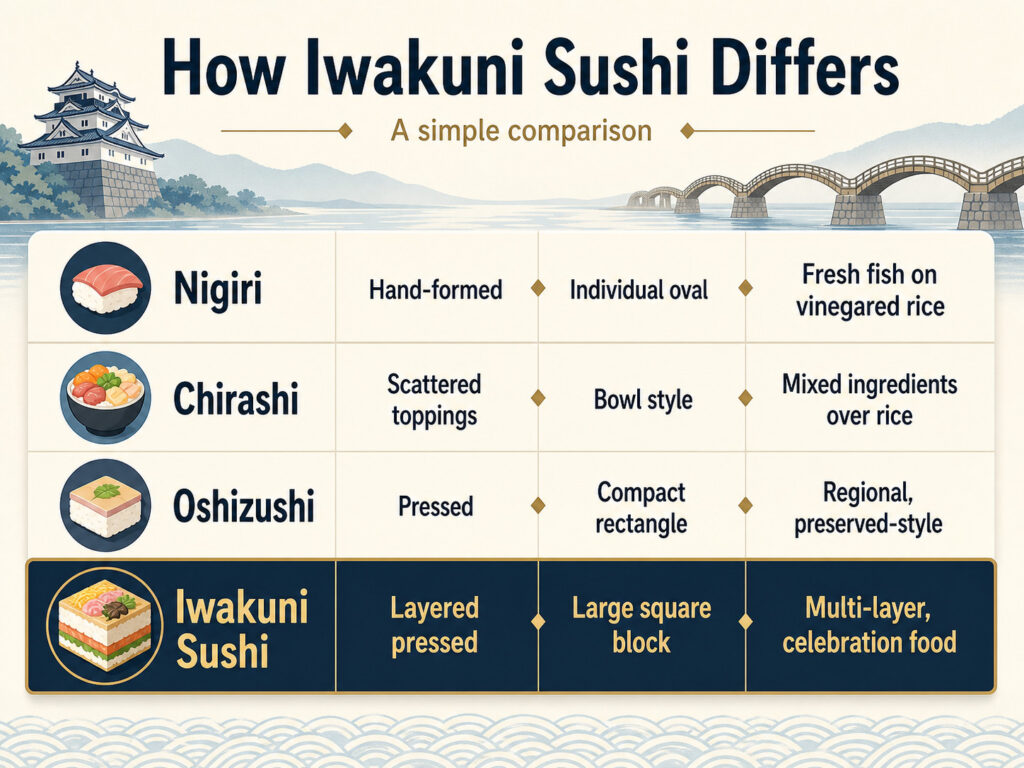
Visitors sometimes ask whether Iwakuni sushi is just oshizushi with extra toppings. It’s a fair question. The answer involves scale, layering, and cultural intent. A simple comparison helps clarify things.
| Sushi Type | Style | Shape | Key Feature |
|---|---|---|---|
| Nigiri | Hand-formed | Individual oval | Fresh fish on vinegared rice |
| Chirashi | Scattered toppings | Bowl style | Mixed ingredients over rice |
| Oshizushi | Pressed | Compact rectangle | Regional, preserved-style |
| Iwakuni Sushi | Layered pressed | Large square block | Multi-layer, celebration food |
Nigiri and maki are single-serving formats, built around individual experience. Iwakuni sushi operates at a different scale entirely. A single wooden mold produces enough sushi for 20 to 30 people at once. That community-scale approach shaped both its cultural role and its visual identity over several centuries.
The Ingredients That Define Iwakuni Sushi
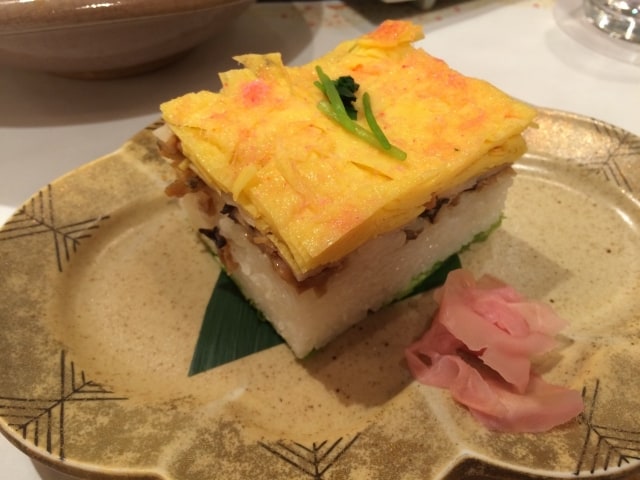
The ingredients in Iwakuni sushi aren’t arbitrary choices. Each one reflects the local resources of the Setouchi region and the seasonal traditions of Yamaguchi Prefecture. Getting them right matters more here than in most sushi styles, because the layered structure makes every element fully visible in each slice.
Why Does Iwakuni Lotus Root Have Nine Holes?
Iwakuni lotus root is a local variety with an unusual feature. Most lotus roots show eight holes in cross-section. Iwakuni lotus root typically shows nine. Locals interpret that extra hole as a symbol of “seeing clearly ahead,” which turned it into a traditional good-luck emblem. For this reason, the lotus root appears at wedding feasts, New Year’s tables, and local festival menus throughout Yamaguchi Prefecture.
In Iwakuni sushi, the lotus root undergoes brief pickling in sweet vinegar before layering. That process produces a clean, crisp texture with mild tartness. The contrast with savory simmered shiitake and rich rice makes it a key element in the dish’s overall balance. It’s also one of the ingredients that signals this is a celebratory dish, not everyday cooking.
The Other Key Toppings
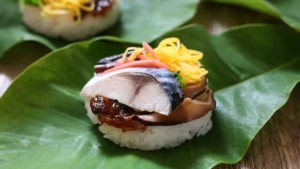
Kinshi tamago, thin strips of egg crepe, add bright yellow and mild sweetness to each layer. Sakura denbu brings soft pink color and a gentle, sweet flavor made from sea bream flakes. Dried shiitake mushrooms simmer in soy sauce and mirin until deeply savory. Chisha leaf, a regional lettuce variety native to Yamaguchi, adds fresh green color and slight bitterness to each layer.
Conger eel appears in traditional recipes, which reflects the coastal seafood character of the Setouchi area. Pickled mackerel and shrimp are common in other versions. Together, these layers create a visual display that is distinctly festive. Slicing through a finished block reveals five different colors stacked in clean horizontal bands, and that cross-section is one of Iwakuni sushi’s most recognizable qualities.
Why Is Iwakuni Sushi a Celebration Food?
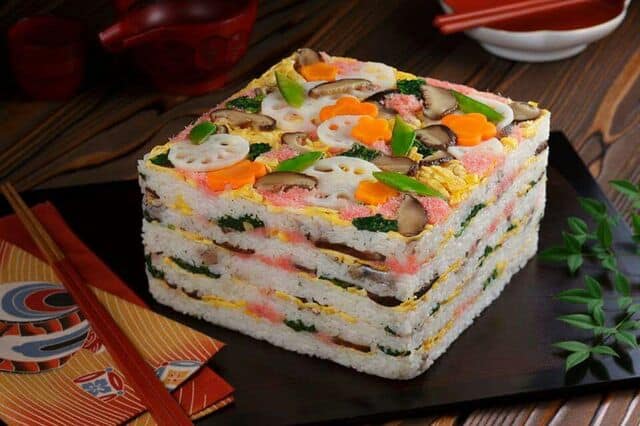
Iwakuni sushi has a long history as a festive dish. New Year’s gatherings, wedding banquets, and regional festivals have all traditionally featured it. The size makes daily serving impractical for most households. But for a community event or a large family gathering, producing one enormous block of sushi makes perfect sense.
A standard wooden mold can measure up to 60 centimeters in length. That scale feeds 20 to 30 people from a single preparation. The labor involved contributed to its ceremonial status too. Preparing Iwakuni sushi properly takes hours, good ingredients, and careful layering. Families and community groups traditionally made it together. The preparation itself became a social ritual, not just a cooking task.
Iwakuni sushi often pairs with Ohira, a local home-cooked dish served in a large bowl called an ohirawan. The bowl contains chicken and vegetable soup stock with stewed chicken, taro root, konjac, shiitake, and burdock. This pairing of Iwakuni sushi and Ohira is the traditional festive meal of the region. Japan’s Ministry of Agriculture, Forestry and Fisheries recognizes Iwakuni sushi as a traditional regional food, which reflects how deeply embedded it is in local culture.
How to Make Iwakuni Sushi
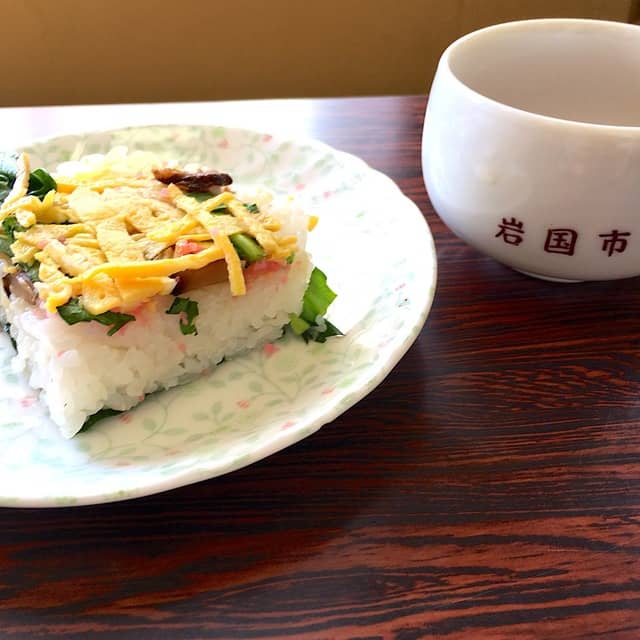
Iwakuni Sushi Ingredients
| Ingredients of Iwakuni sushi for 4 persons | |
| Dashi kelp | 50g |
| Rice | 300g |
| Lotus root | 150g |
| Dried shiitake mushrooms | 60g |
| Egg | 55g |
| Chrysanthemum greens (or spinach, trefoil) | 40g |
| Sakura denbu (or carrots and pickled ginger) | 15g |
| Sushi vinegar | 70g |
| Sugar | 10g |
| Salt | 5g |
How to Make Iwakuni Sushi: Step by Step
Slice the lotus root thinly and soak in cold water to prevent browning. Boil for a few minutes until just tender. Drain immediately and transfer to a bowl of sweet vinegar (a mix of vinegar, salt, and sugar). Let it soak while still warm.
Pour 200ml of shiitake soaking liquid into a pan and bring to a simmer. Season with soy sauce, mirin, and a pinch of salt. Add the rehydrated mushrooms and cook over medium heat until the liquid is nearly absorbed.
Beat the eggs well with sugar and a small amount of salt. Lightly oil a flat pan and pour in a thin layer. Cook until the surface is just set, flip briefly, then transfer to a board to cool. Slice or shred finely once cooled.
Blanch chrysanthemum greens, spinach, or trefoil in boiling water for about 30 seconds. Refresh immediately in cold water, squeeze out excess moisture, and cut into bite-sized pieces.
Use slightly less water than usual when cooking the rice. Place a piece of kombu in the pot before starting. While the rice is still hot, sprinkle two-thirds of the sushi vinegar over it. Fold gently to combine; don’t stir or the rice will become mushy.
Line the mold with plastic wrap. Pack half the vinegared rice in and flatten evenly. Arrange half the toppings on top: shiitake, lotus root, greens, egg crepe, and sakura denbu. Add the remaining rice and flatten again. Cover with plastic wrap, place a weight on top, and press for at least 30 minutes. Slice before serving.
Is Iwakuni Sushi Still Popular Today?
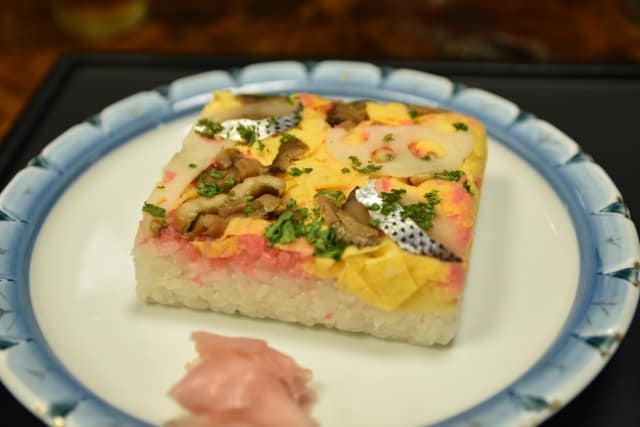
Iwakuni sushi hasn’t faded into museum-level nostalgia. Local families still make it for major celebrations, though home-kitchen versions tend to be smaller than the traditional 60-centimeter mold. Restaurant versions near Kintai Bridge serve it year-round as part of set menus, usually alongside local soup or freshly fried tempura.
Station souvenir shops in Iwakuni sell vacuum-packed versions for travelers to take home. Regional food festivals sometimes feature live demonstrations of the traditional large-scale pressing technique. Watching a craftsperson work with a full-size wooden mold is surprisingly compelling. It makes the scale of the original recipe feel very real.
For visitors to Yamaguchi Prefecture, Iwakuni sushi offers something many Japanese regional specialties don’t: a clear, traceable story. You can taste the castle-town history in every bite. Combining Kintaikyo with a plate of Tonosama Sushi makes one of western Japan’s most satisfying travel experiences.
Where to Try Iwakuni Sushi Near Kintai Bridge
Most visitors encounter Iwakuni sushi near Kintaikyo, the famous five-arched wooden bridge that draws tourists from across Japan. Restaurants in the surrounding area serve it as a standard menu item. Below are four places worth knowing before your visit.
Sasakiya Kojiro Shoten (佐々木屋小次郎商店)
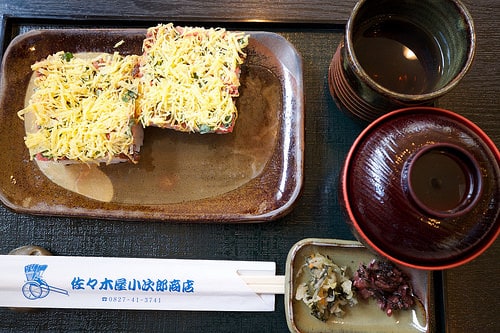
This shop near Kintaikyo is popular with both locals and tourists. The second floor has table seating with views and offers set meals centered on rice balls and Iwakuni sushi. A single portion costs 800 yen, and the full Iwakuni sushi set meal is 1,350 yen. Desserts including anmitsu and parfait are available after the meal. The price is reasonable for the tourist area, and the setting is pleasant.
Hangetsuan (半月庵)
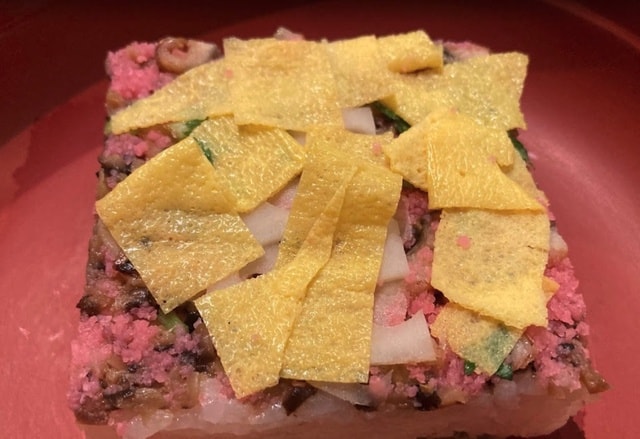
Hangetsuan is a long-established inn with a strong reputation for handmade cooking. Chemical seasonings and ready-made sauces don’t appear in this kitchen. The Iwakuni sushi here features lotus root and conger eel, both local specialties, alongside freshly fried tempura. Portion sizes are generous, and the depth of flavor reflects years of craft rather than shortcuts.
Yoshida (よ志多)
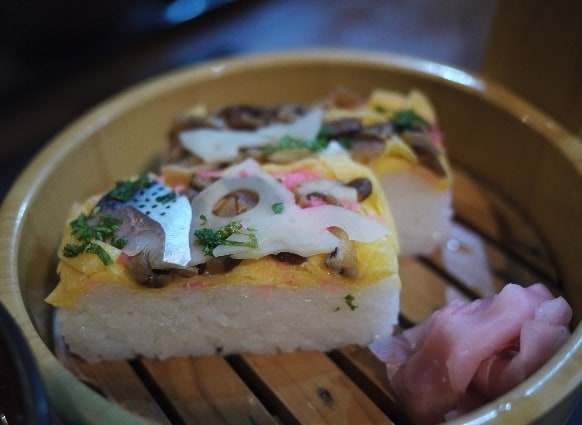
Yoshida serves the classic Iwakuni regional pairing: Iwakuni sushi, Ohira soup, and seasonal fruit in one set meal. The Ohira makes excellent use of wild plants, chicken, and local vegetables. Its earthy, savory depth complements the sweet vinegar rice particularly well. The balance of color and flavor across the full set feels almost like a carefully composed picture.
Midori No Sato (緑の里)
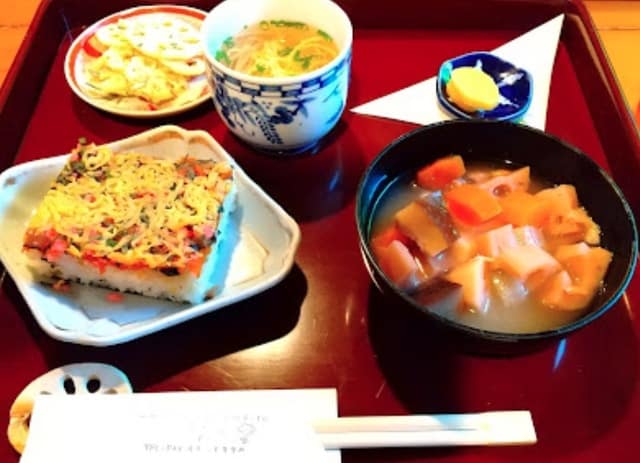
Midori No Sato sits near Kintaikyo Bridge and offers homemade dishes at accessible prices. Priced at 1,080 yen, the Iwakuni sushi set is one of the more affordable options in the tourist area. The setting is pleasant, with views toward a nearby shrine. Worth visiting for a no-fuss, authentic local meal after exploring the bridge.
Final Thoughts
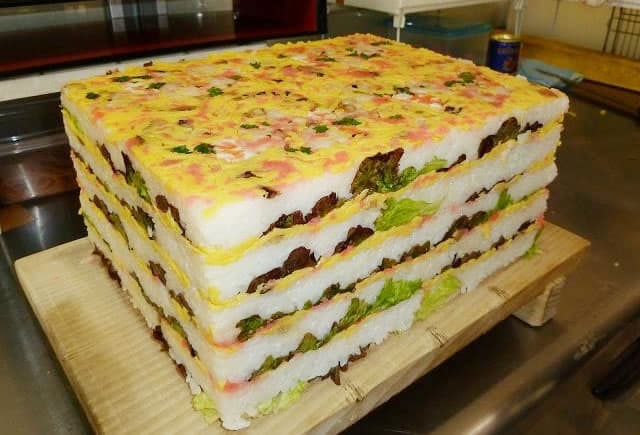
Iwakuni sushi is a colorful pressed sushi from Yamaguchi, but calling it just “pressed sushi” undersells what it actually is. The layering, the scale, the specific regional ingredients, and the centuries of castle-town history all set it apart from anything else you’ll find in Japan. Tonosama Sushi earned its name honestly. This is a dish with real depth behind it, and the story is half the experience.
If you visit Iwakuni City, don’t leave without trying it near Kintaikyo Bridge. And if you want to make it at home, the recipe above is a good starting point. The result might genuinely surprise you.
Interested in other regional pressed sushi? Try Chirashizushi, Masu Zushi, and Sasa Zushi. For more Yamaguchi specialties, see Kawara Soba and Fuku (Fugu).
Iwakuni Sushi FAQ
Why is Iwakuni sushi called Tonosama Sushi?
Tonosama means “lord” in Japanese. During the Edo period, this sushi connected closely with the lord of the Iwakuni domain. Castle workers either made it as preserved food for the castle journey or prepared it as a formal tribute for special occasions. Both stories place this dish firmly in samurai culture, and the name has stayed with it ever since.
Why is Iwakuni sushi layered?
The layered structure reflects the community scale of production. A single mold holds enough rice and toppings to feed 20 or more people. Layering multiple sets of ingredients creates that capacity while also producing the distinctive colorful cross-section. The visual impact of each slice is part of what makes this dish suitable for celebrations and festive occasions.
What fish is used in Iwakuni sushi?
Traditional versions most commonly include conger eel or pickled mackerel. Shrimp appears in some regional recipes. Sakura denbu, the sweet pink fish flake made from sea bream, also features in most versions. The exact fish varies by season and restaurant, making different versions interesting to compare when you visit the area.
Is Iwakuni sushi the same as oshizushi?
Iwakuni sushi is a type of oshizushi, but it differs in scale and structure. Standard oshizushi is compact and serves one or two people. Iwakuni sushi uses a large wooden mold and layers ingredients up to five times. The wider range of seasonal toppings and the community-scale preparation give it a more festive character than typical oshizushi.
Can travelers find Iwakuni sushi outside Yamaguchi?
Some specialty Japanese food shops carry packaged versions, and online retailers occasionally stock them. Fresh, handmade Iwakuni sushi outside Yamaguchi is rare, though. The best version is always the one made locally near Kintaikyo. If you’re visiting Yamaguchi Prefecture, eating it in Iwakuni City is strongly worth prioritizing.
What makes Iwakuni lotus root special?
Most lotus roots have eight holes in cross-section. Iwakuni lotus root typically has nine. Locals interpret this as a symbol of “seeing clearly ahead,” which made it a traditional good-luck ingredient at celebration meals. Its crisp texture after sweet vinegar pickling also balances the richness of the sushi rice particularly well.
References
- Ministry of Agriculture, Forestry and Fisheries of Japan (MAFF). “Traditional Cuisines of Japan — Iwakuni Sushi, Yamaguchi Prefecture” (2007 designation, accessed 2024). https://www.maff.go.jp/j/keikaku/syokubunka/k_ryouri/
- Iwakuni City Tourism. “Kintaikyo and Local Food Culture” (accessed 2024). https://kintaikyo.iwakuni-city.net/en/
- Japan National Tourism Organization (JNTO). “Regional Food Experiences in Western Japan” (accessed 2024). https://www.japan.travel/en/guide/food-drink/



Comments