




出雲そば Izumo soba is one of Japan’s three most celebrated regional soba noodles, originating from Shimane Prefecture’s Izumo region. It is darker than most soba, has a stronger buckwheat aroma, and is served in a way unlike any other noodle dish in Japan. If you have eaten regular soba before and thought it felt a little mild, Izumo soba will give you a very different impression. The color, the texture, and the way you eat it are all part of what makes this 島根の郷土料理 Shimane specialty worth understanding on its own terms.
What is Izumo Soba?
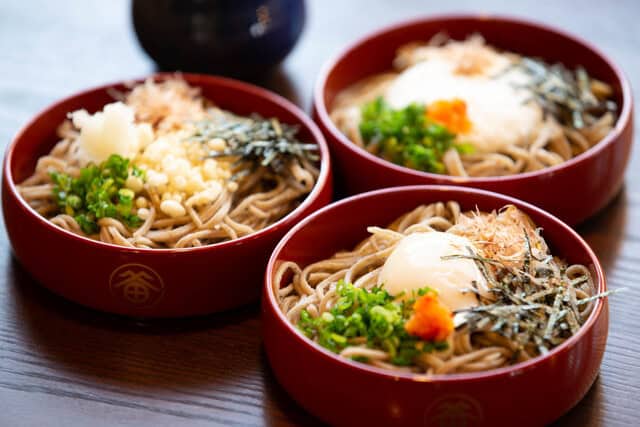
Izumo soba (出雲そば) is a traditional buckwheat noodle dish from Izumo City in Shimane Prefecture. Along with Wanko soba from Iwate and Togakushi soba from Nagano, it is counted as one of Japan’s three great soba traditions. What distinguishes it from ordinary soba is a milling method called hikigurumi, which grinds the buckwheat together with its outer husk rather than removing the husk first.
The result is a noodle that is noticeably darker, more strongly scented, and slightly coarser in texture than the pale soba served in most Japanese cities. The husk contains a high concentration of flavor compounds, so leaving it intact transfers that intensity directly into the noodle. This is a deliberate choice, not a limitation of the production process. The darkness and the aroma are the product.
Why is Izumo Soba Darker Than Other Soba?
Most soba noodles are made from sarashina flour, which comes from the inner white core of the buckwheat grain after the outer husk is removed. This produces a pale, mildly flavored noodle.
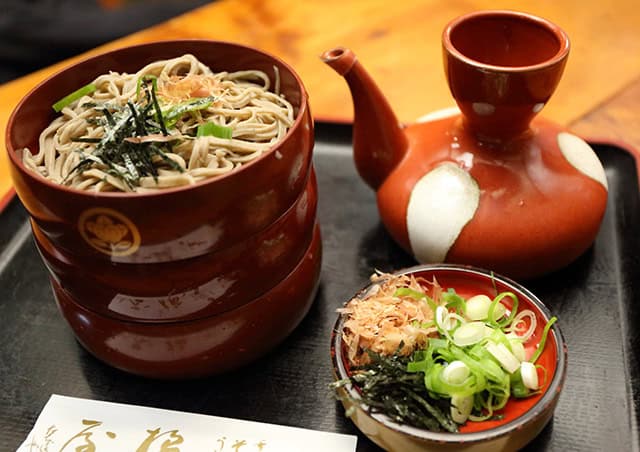
Izumo soba uses hikigurumi milling: the entire buckwheat fruit, husk and all, is ground together. The buckwheat grain has four layers of flour. Moving from the center outward, the color goes from pale white to increasingly dark. By grinding all four layers together, Izumo soba flour is a blend of the whole spectrum. The outer layers, which are richest in rutin, dietary fiber, and volatile aroma compounds, are included rather than discarded.
The noodles are also typically 100 percent buckwheat, which is unusual. Standard soba is usually a ratio of 80 percent buckwheat and 20 percent wheat flour (つなぎ) as a binding agent. Izumo soba’s 100 percent buckwheat composition produces a firmer, more distinctly earthy result.
What Does Izumo Soba Taste Like?
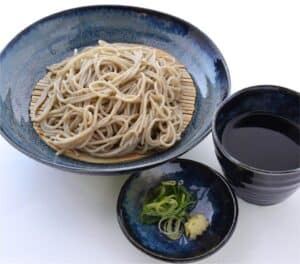
The buckwheat flavor is noticeably stronger and earthier than what you might expect from city soba restaurants. There is a slightly nutty, almost smoky quality to the aroma. The texture is firm and slightly rough on the tongue, which is a feature of the whole-grain milling rather than a defect. The noodle has good chew but does not feel rubbery.
The broth (tsuyu) for Izumo soba is poured directly onto the noodles in small amounts rather than served in a separate bowl for dipping. This means the seasoning integrates with the noodle rather than sitting apart from it. The flavor builds from bite to bite rather than being consistent from start to finish. That gradual shift is considered part of the experience.
How to Eat Izumo Soba: Warigo and Kamaage
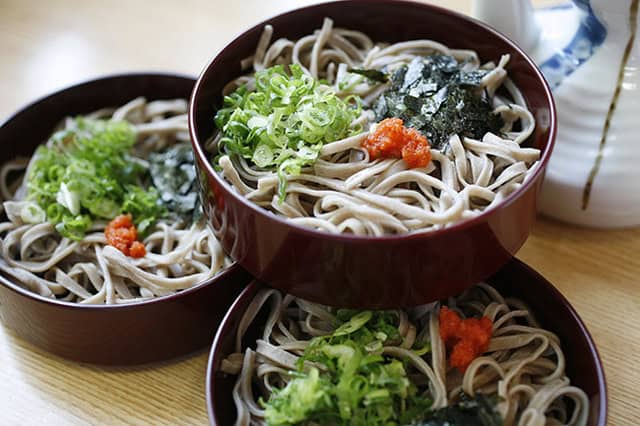
Izumo soba is served in two distinct ways. Both are different from the standard method of dipping cold soba into broth. Understanding which style you are eating matters for getting the most out of the experience.
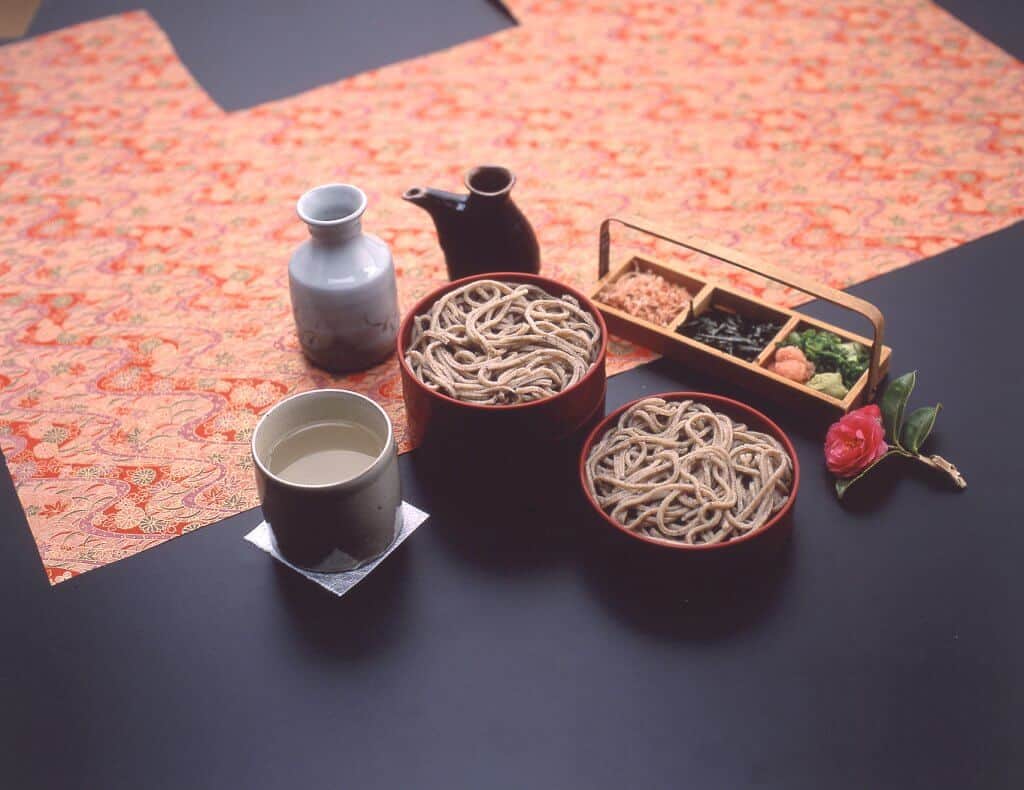
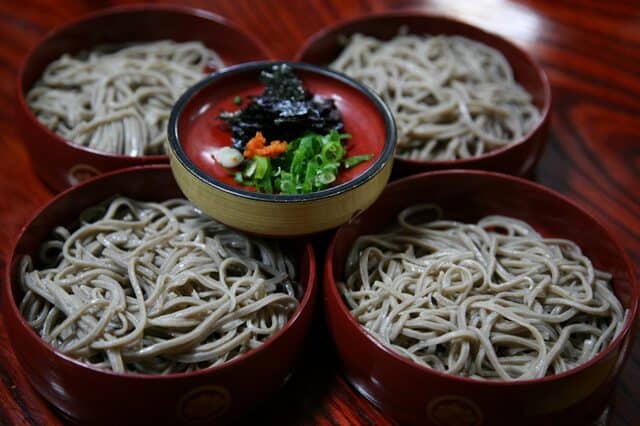
割子そば Warigo Soba — the stacked bowl method
Warigo soba is the style most closely associated with Izumo soba. The noodles are served in small round lacquerware bowls, stacked in tiers, typically three high. Each bowl contains a single portion of cold soba. You add condiments, usually green onion, grated daikon, nori seaweed, and perhaps raw egg or tororo grated yam, then pour a small amount of tsuyu directly onto the noodles in the bowl. You eat that tier, then stack the empty bowl to one side and move to the next. The remaining tsuyu from each bowl can be poured down into the bowl below, carrying the flavors of each tier with it.
The warigo container has a specific origin. In the Edo period, groups of people from various social classes would bring soba outdoors for excursions and picnics. The portable, stackable lacquer boxes were practical lunch containers for eating outside. The original shape was rectangular. It shifted to oval in the Meiji and Taisho eras, and became the current round form after 1945. The name warigo comes from these traditional portable containers.
Kamaage Soba — the hot water method
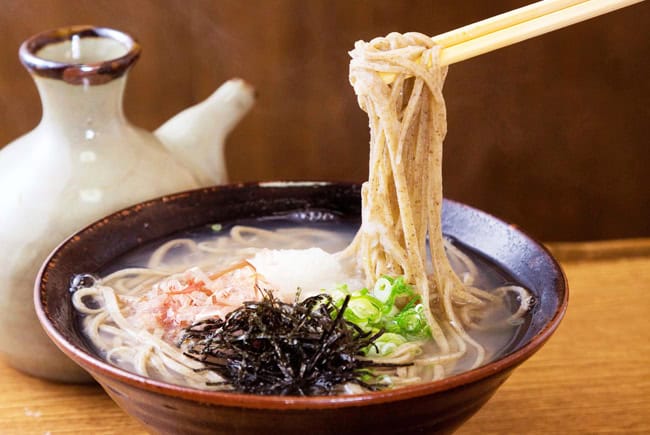
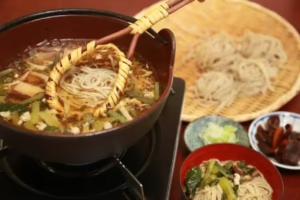
Kamaage soba is the hot version. Freshly boiled soba is transferred directly into a bowl without rinsing with cold water. Hot soba-yu (the water in which the noodles were cooked) is added along with tsuyu and condiments. The noodles arrive warm and slightly soft from the cooking liquid, which is very different in character from the cold, tightened noodles of warigo style.
At first glance it resembles kake soba, where noodles sit in hot broth. The key difference is that kamaage soba noodles are not rinsed or chilled before serving. They retain the cooking starch on their surface, which gives them a different mouthfeel and allows the hot soba water to carry the buckwheat flavor throughout the bowl. This is considered the most direct way to taste the noodle itself.
Why Did Soba Culture Develop in Izumo?
The geography of Shimane Prefecture provides a clear explanation. The inner Izumo region, particularly the Oku Izumo area around what is now Unnan City, has a climate and soil type that historically made rice cultivation difficult. Buckwheat, however, grows well in dry, nutrient-poor soil and has a short growing cycle. It could produce a harvest even in years when other crops failed. This made it a practical and reliable food crop for mountain farmers in the region.
Buckwheat also suited the short highland summers of the San-in region. The cooler temperatures and lower humidity are ideal for producing buckwheat with a concentrated flavor profile. The locally grown buckwheat, ground fresh each day, developed a reputation for quality that spread beyond the region.
A Brief History of Izumo Soba
The story of Izumo soba follows three connected stages.
Arrival from Shinshu (Nagano)
The first lord of the Matsue domain, Naomasa Matsudaira, came from Matsumoto in Shinshu Province (present-day Nagano), which had an established soba culture. When he relocated to Izumo in the early Edo period, buckwheat craftsmen from Shinshu accompanied the domain and brought their techniques with them. The Oku Izumo region’s natural conditions proved excellent for buckwheat cultivation, and the ingredient became embedded in local food culture relatively quickly.
Spread to ordinary people
Through the late Edo period, soba spread from the upper samurai class to ordinary townspeople. The hikigurumi method, which maximized the flavor and nutrition of the locally grown buckwheat, became standard practice. The warigo container emerged as a way for people of different social backgrounds to enjoy soba together at outdoor gatherings and festivals around Izumo Taisha Grand Shrine.
Cultural recognition
Fumai, the seventh lord of the Matsue domain, was an influential tea ceremony master who promoted local food culture. Despite officially dismissing soba as unsuitable for noble people, he reportedly ate soba at street stalls and incorporated it into tea kaiseki meals. This kind of informal patronage helped elevate soba’s cultural status in the region. Izumo soba became associated with both everyday life and special occasions around the shrine town of Izumo, a reputation it maintains today.
Nutrition: What’s Actually in Izumo Soba
Because Izumo soba uses whole-grain buckwheat including the husk, it retains more of the plant’s nutritional content than standard soba. Buckwheat contains rutin, a flavonoid compound, along with dietary fiber, lysine (an amino acid uncommon in grains), and B vitamins. The 100 percent buckwheat composition means there is no wheat filler diluting the nutritional profile.
That said, Izumo soba is a noodle dish, not a health product. The nutritional advantages over refined soba are real but modest. Enjoy it for the flavor and the cultural experience. The fact that it is made from whole-grain buckwheat is an additional point in its favor, not the main reason to eat it.
Where to Eat Izumo Soba: Top Restaurants
The best Izumo soba restaurants are concentrated in Izumo City, particularly in the area surrounding Izumo Taisha Grand Shrine. These five shops represent different axes of the local tradition.
Near Izumo Taisha Grand Shrine
Soba Tanakaya — Open Interior, Right at the Main Gate
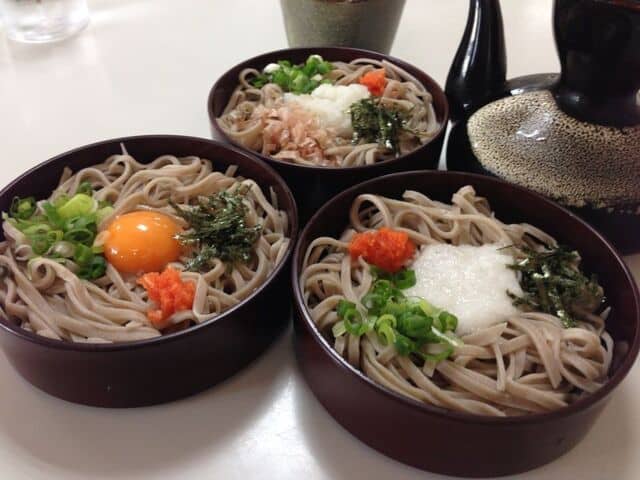
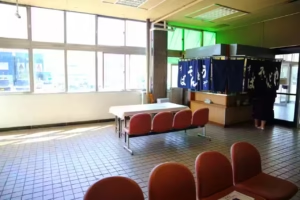
Tanakaya sits directly in front of the main gate of Izumo Taisha Grand Shrine. The building was formerly a candy shop and converted to soba in 1997, then renovated in 2013 to coincide with the Heisei sengu ceremony at the shrine. The high-ceilinged, open interior gives it a light atmosphere unusual for a traditional soba shop. The soba itself is locally sourced and prepared daily. It often sells out early, so arriving before noon is advisable.
Kaneya Restaurant — Three-Colored Warigo and Good Soba-yu
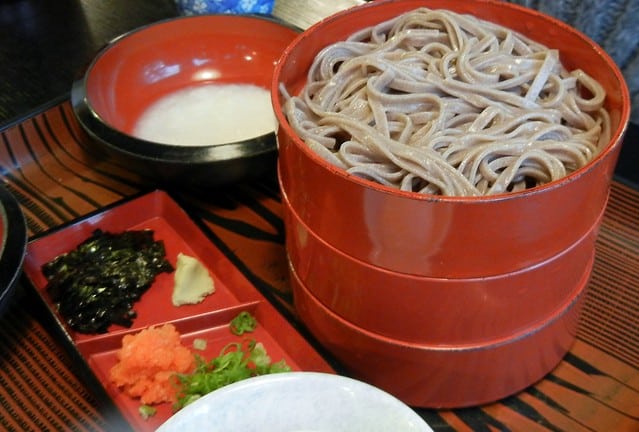
Kaneya is a long-established shop recognizable by its green noren curtain. The three-colored warigo here offers a different topping in each tier: raw egg in the first, tororo grated yam in the second, and seaweed with green onions in the third. Each tier delivers a distinct flavor combination using the same noodle. The shop also takes particular care with its soba-yu, which can be poured over the remaining condiments at the end of the meal. Both table and tatami seating is available.
Arakiya — 200+ Years and Warigo Under 1,000 Yen
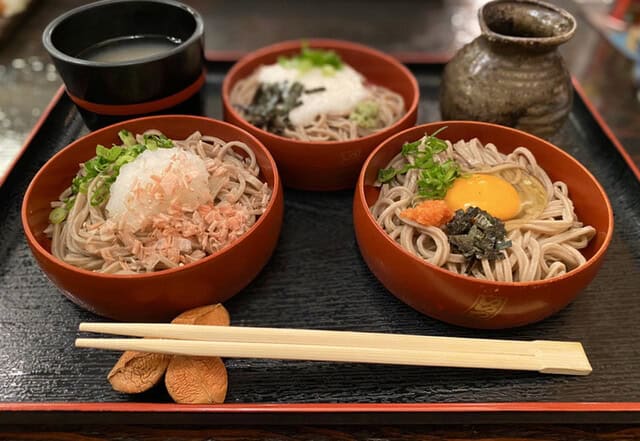
Arakiya is commonly cited as the oldest operating Izumo soba shop, with a history spanning over 200 years since the late Edo period. The three-tier warigo soba costs under 1,000 yen, which is genuinely reasonable for a dish of this heritage. A set called the “Matching Set” combines soba with zenzai sweet bean soup and a fortune draw, which has become particularly popular with visitors returning from the shrine. Both tatami and table seating available.
Yakumo Main Store — Sanshoku Warigo and Retro Interior
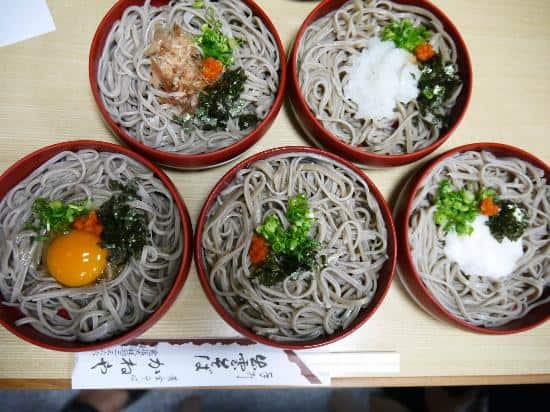
Yakumo has a compact interior with a slightly retro atmosphere and generous table seating. The signature menu is the Sanshoku Wariko, offering three tiers with fried egg, raw egg, and grated yam as distinct toppings. The expanded Goshiki Wariko adds radish and bonito to the lineup for a five-tier version. A branch called Yakumo East is located nearby for overflow. A reliable choice if you want to try multiple topping combinations in one visit.
Near Izumo Station
Haneya Main Store — Imperial Table Soba Since the Edo Period
Haneya has been operating since the end of the Edo period and carries the designation of Kenjo Soba, meaning it has historically served soba to the imperial family. That history is reflected in its reputation more than its prices: despite the long lineage, the restaurant offers meals at relatively accessible prices. About a five-minute walk from Izumo Station, it is a practical option for those arriving by train rather than heading directly to the shrine area.
Final Thoughts
割子そば warigo soba and its Izumo counterpart kamaage are two of the most distinctive soba experiences in Japan. The hikigurumi milling method, the 100 percent buckwheat composition, and the tsuyu-on-top serving style all distinguish Izumo soba from anything you will find in a standard Tokyo soba shop. For first-timers, the intensity of the buckwheat flavor genuinely surprises people expecting something mild.
If you want to compare Izumo soba against Japan’s other great regional soba traditions, Wanko soba from Iwate takes an entirely different approach to the eating experience, serving noodles in rapid-fire small portions. And for more on what makes Shimane’s food culture worth exploring, the Shimane food guide covers the wider regional picture.
Browse more regional Japanese noodles and soba traditions on the soba collection page.
Izumo Soba FAQ
What is Izumo soba?
Izumo soba (出雲そば) is a traditional buckwheat noodle from Shimane Prefecture and one of Japan’s three most celebrated regional soba varieties. It is made using a whole-grain milling method called hikigurumi that grinds the buckwheat husk together with the grain, producing darker, more aromatic noodles than standard soba. It is typically served either as cold warigo soba in stacked lacquer bowls or as hot kamaage soba with the cooking water included.
Why is Izumo soba darker than regular soba?
Standard soba uses sarashina flour made from the inner white core of the buckwheat grain after the husk is removed. Izumo soba uses hikigurumi milling, which grinds the whole buckwheat including the outer husk. The husk contains dark pigments, flavor compounds, rutin, and dietary fiber. Including it in the milling process makes the flour darker, more strongly scented, and more nutritionally complete.
How do you eat warigo soba?
Warigo soba is served in small round lacquer bowls stacked in tiers, usually three. You add condiments such as green onion, grated daikon, and nori to the top bowl, then pour a small amount of tsuyu directly onto the noodles. Eat the noodles in that bowl, then pour any remaining tsuyu into the next bowl below before eating that tier. The sauce accumulates flavor as you work through the tiers.
What makes Izumo soba different from other soba?
Three things set it apart. First, the hikigurumi whole-grain milling produces a darker, more aromatic noodle. Second, Izumo soba is typically 100 percent buckwheat with no wheat binder, making it firmer and more distinctly flavored. Third, the eating method is unique: tsuyu is poured onto the noodles rather than serving as a separate dip, and the warigo stacked bowl format is specific to this regional tradition.
What does Izumo soba taste like?
The buckwheat flavor is noticeably stronger and earthier than standard soba. There is a nutty, slightly smoky aroma from the husk being included in the milling. The texture is firm and slightly rough, with good chew. The broth poured on top integrates with the noodle rather than sitting separately, so the flavor builds through the meal.
Why did soba culture develop in Izumo?
Buckwheat grows well in dry, nutrient-poor soil and has a short growing cycle, making it practical for the cool highland areas of Shimane where rice cultivation was difficult. The inner Izumo region’s climate also produces buckwheat with concentrated flavor. When the first lord of the Matsue domain brought soba craftsmen from Shinshu (Nagano) in the early Edo period, they found the local conditions well-suited to the crop, and soba culture became embedded in the region.
What is the difference between warigo soba and kamaage soba?
Warigo soba is served cold in stacked lacquer bowls, with tsuyu poured over each tier. Kamaage soba is the hot version: freshly boiled noodles are transferred to a bowl without rinsing, and hot soba-yu (cooking water) is added along with tsuyu and condiments. The two styles offer very different eating experiences from the same noodle. Warigo is more precise and layered in flavor; kamaage is warmer and more rustic in character.
How much does Izumo soba cost?
A standard warigo soba set typically costs between 800 and 1,500 yen depending on the number of tiers and toppings. At Arakiya, one of the oldest shops near Izumo Taisha, three-tier warigo is available for under 1,000 yen. Restaurant courses with additional dishes will be higher.
Can I make Izumo soba at home?
Yes, with some effort. Dried Izumo soba noodles are sold at specialty Japanese grocery stores and online. The closest home experience comes from finding 100 percent buckwheat dark soba noodles, boiling them and serving with tsuyu poured directly over the noodles in a small bowl rather than serving as a separate dip. The warigo lacquer bowls can also be purchased online for the full visual experience.
References
- Soba Tanakaya — 364 Kizukihigashi, Taishacho, Izumo City
- Kaneya Restaurant — 659 East Yotsukado, Taishacho Kizukihi, Izumo City
- Arakiya — 409-2 Kizukihigashi, Taishacho, Izumo City
- Yakumo Main Store — 276-1 Kizukihigashi, Taishacho, Izumo City
- Haneya Main Store — 549 Honcho, Imaichi, Izumo City



Comments