




Introduction to Zunda Mochi
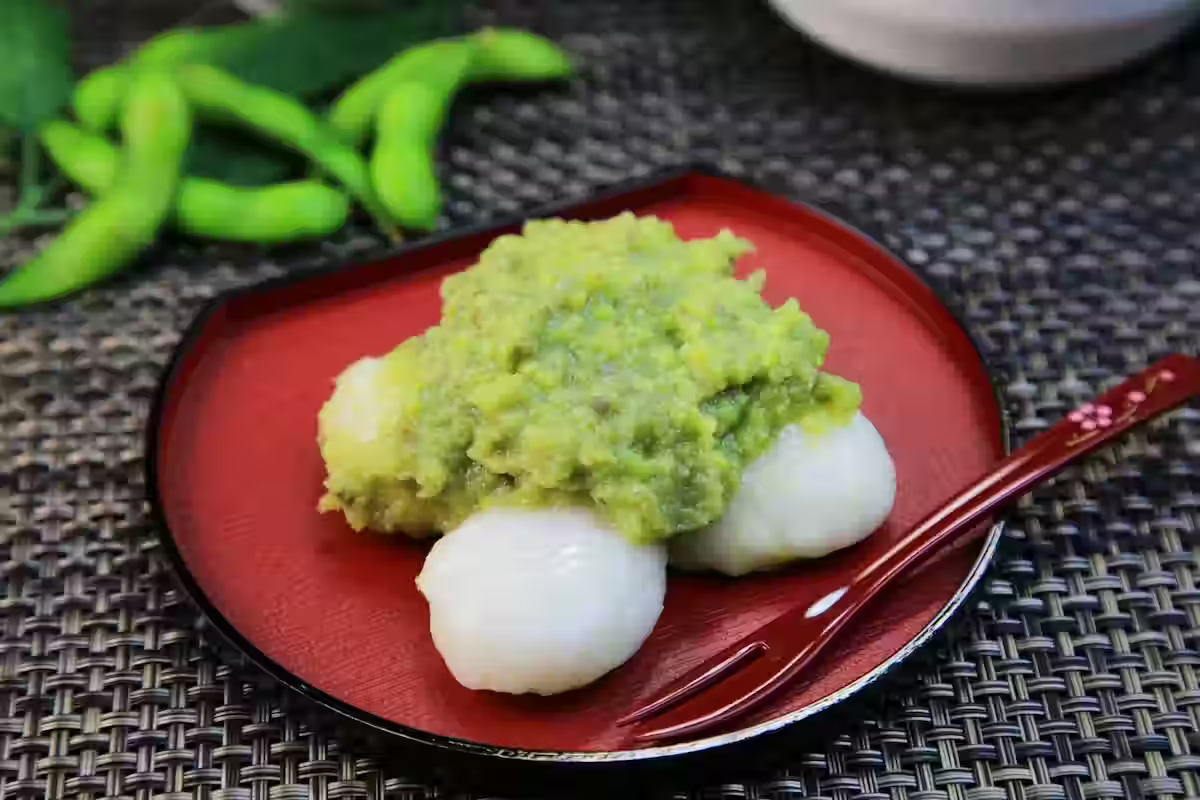
Zunda mochi is a Sendai specialty from Miyagi. It pairs soft Japanese rice cake with sweetened edamame paste. The taste is gently sweet, fresh, and a little nutty.
If you are building a Miyagi food guide, this dessert deserves a place near the top. I first notice the color, then the aroma, and finally the chew. That order matters. The bright green topping is not matcha. It is a sweet green soybean paste made from edamame, sugar, and salt. If you want more context on Mochi (Japanese rice cake), or the wider world of Japanese mochi, those guides help too.
What Is Zunda Mochi?
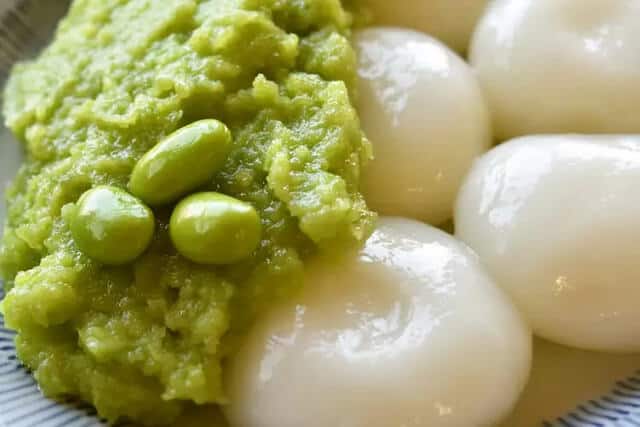
What is zunda mochi, exactly? It is a traditional Miyagi dessert made by topping or coating mochi with zunda. Zunda is an edamame paste, but not a plain one. Cooks mash young soybeans, then add sugar and a pinch of salt. The result tastes cleaner than red bean paste. It also feels lighter, though still satisfying.
You will often see it described as one of the best known Tohoku sweets. That feels fair. In Sendai, people treat it as both an everyday snack and a local gift. It appears at tea time, station shops, cafes, and holiday tables. Some shops serve it fresh and warm. Others chill it, which changes the mood quite a bit.
Taste & Texture
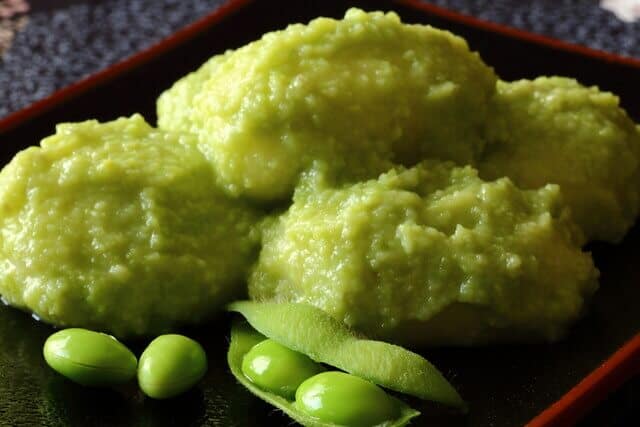
The first bite can surprise people. The mochi is soft, stretchy, and slightly sticky. The paste feels thicker than cream, yet looser than bean jam. You still catch some grain from the beans, which is important. A fully smooth paste can taste flat. A little texture makes the edamame flavor feel alive.
The sweetness is usually mild. Good shops do not bury the bean flavor. They let the natural green aroma lead. Salt tightens the finish, so the dessert never feels dull. If you usually prefer anko, give this one a chance. It is gentler, fresher, and a bit more summery.
Key Ingredients & Ratios
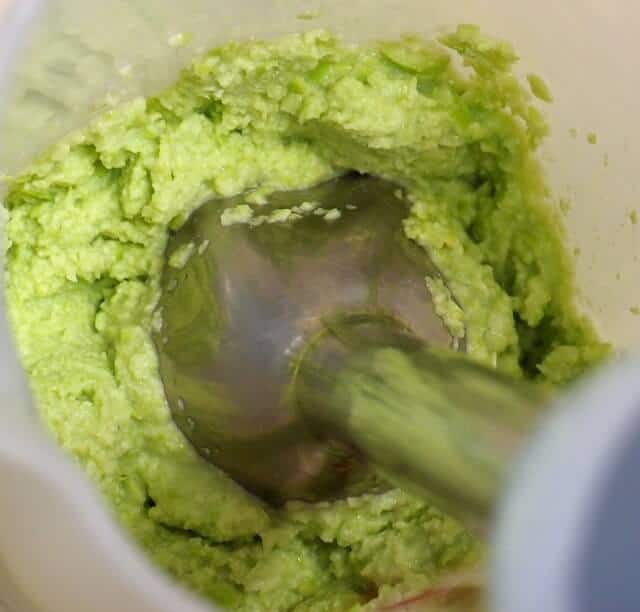
The ingredient list looks simple, but the balance matters. For how to make zunda paste at home, start with shelled edamame, sugar, salt, and a splash of water. A useful base ratio is 100 grams of shelled edamame, 15 to 25 grams of sugar, and one small pinch of salt. Use less sugar if the beans are sweet. Use more if the mochi is plain and firm.
- Edamame: 100 g shelled beans
- Sugar: 15 to 25 g
- Salt: one pinch
- Water: 1 to 2 teaspoons, only if needed
- Mochi: 4 to 6 small pieces
Fresh summer edamame gives the best aroma. Still, frozen beans work well, and many home cooks use them. Boil them until quite tender, then remove the thin skins. That step takes time. I almost skip it sometimes, but the paste becomes much smoother when you do it well. Mash the beans lightly, not completely. Leaving a little grain makes the sweet green soybean paste more fragrant and more natural.
History and Origin
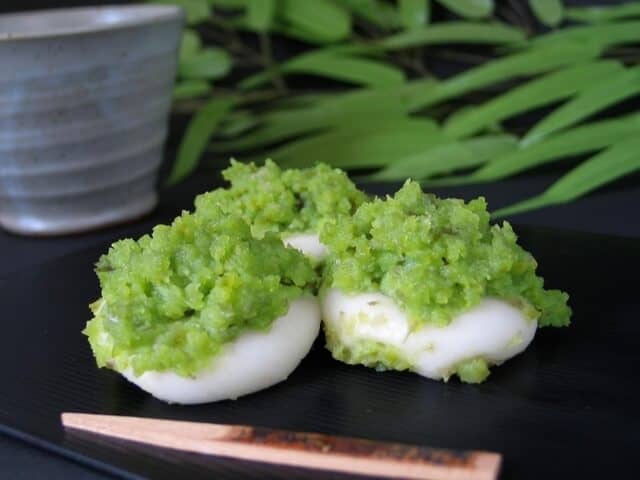
Zunda mochi has deep roots in Miyagi. Several stories explain the name, and none fully settle the question. One theory links it to bean mashing. Another ties it to Date Masamune, the famous ruler of Sendai. In that version, he crushed edamame with the hilt of his sword during a campaign. It is a dramatic story, maybe too neat, but people still love it.
Whatever the exact origin, the dish fits local life. Miyagi has a strong mochi culture, and people serve many rice cakes for seasonal events. Zunda mochi became especially tied to summer and early autumn, when edamame tastes best. It also worked as a nourishing snack during hot weather. That practical side explains a lot. Good local food often begins that way.
Where to Eat Zunda Mochi in Sendai
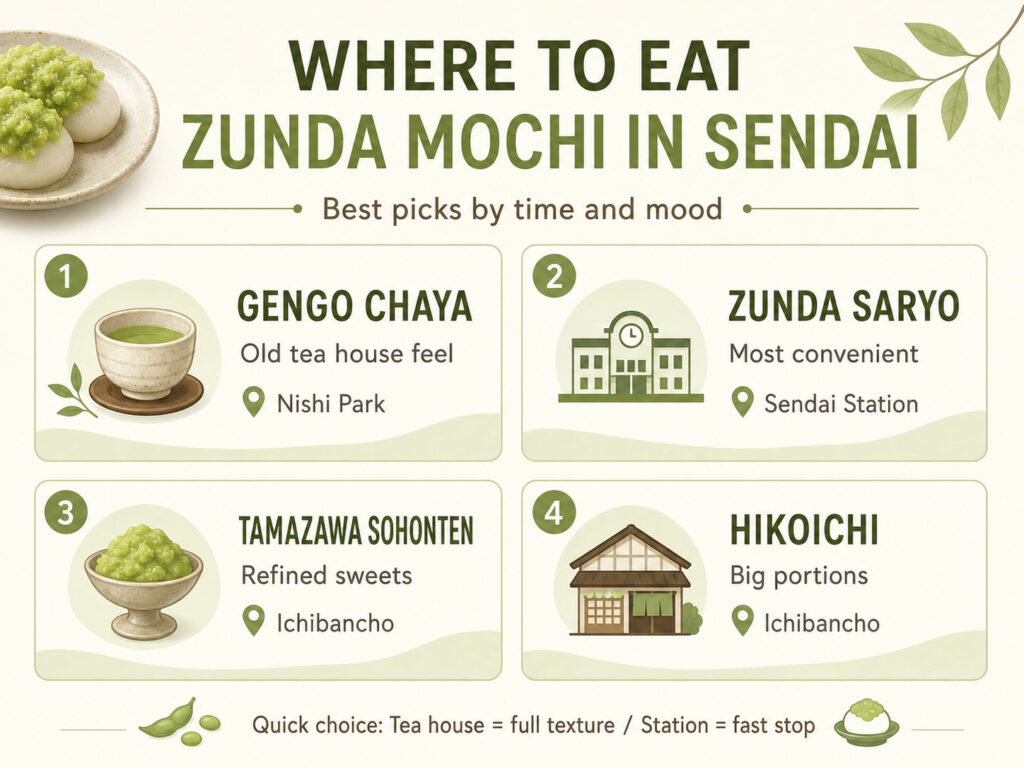
If you are wondering where to eat zunda mochi, Sendai gives you several good options. Some shops lean traditional. Others feel easier for first time visitors. I would choose by timing. Sit down at a tea shop if you want the full texture. Buy it at the station if you only have minutes.
| Shop | Why go | Area | Price guide | Hours guide |
|---|---|---|---|---|
| Gengo Chaya | Old tea house feel, spring walks, classic mochi texture | Nishi Park | Low to mid | Late morning to afternoon |
| Zunda Saryo | Most convenient, inside Sendai Station, easy for trains | Sendai Station | Low to mid | Morning to evening |
| Tamazawa Sohonten | Refined sweets, calm cafe mood, good souvenir stop | Ichibancho | Mid | Daytime to early evening |
| Hikoichi | Large portions, relaxed house setting, strong local following | Ichibancho | Low to mid | Late morning to early evening |
Hours and menu details can change, so check before you visit. Gengo Chaya feels old Sendai in the best way. Zunda Saryo is the easiest answer near the station. Tamazawa Sohonten works well if you want a polished cafe stop. Hikoichi is great when you want dessert and a short break from shopping.
Where to Buy Zunda Mochi in Sendai
Where to buy zunda mochi in Sendai depends on your plan. If you need something fast, start at Sendai Station. If you want a nicer box, go to a long running confectionery shop. If you want a cold dessert right away, pick a cafe counter.
- Sendai Station: The easiest place for same day snacks and boxed souvenirs.
- Souvenir shops: Look for chilled or boxed packs that travel better than fresh mochi.
- Cafes: Best if you want to eat it right away with tea or coffee.
- Department stores and specialty shops: Good for gift boxes and seasonal packaging.
- Frozen options: Handy if you want to take some home and thaw later.
Fresh pieces taste best on the day you buy them. Boxed products travel better, but the mochi can firm up. That is normal. If you are carrying gifts on a long trip, chilled or frozen packs are the safer choice.
Zunda Mochi Calories and Nutrition
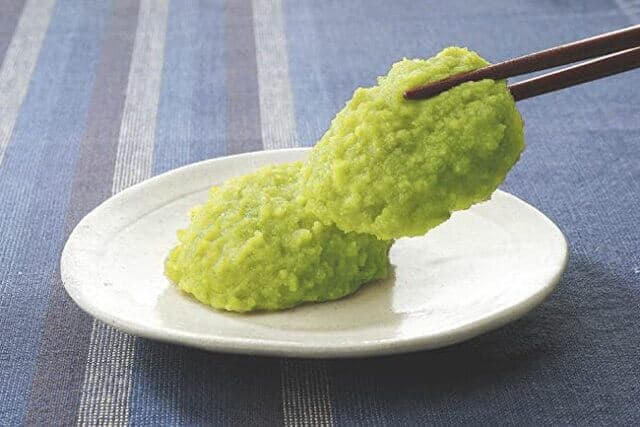
Zunda mochi looks rich, but it is lighter than many desserts. A small piece often lands around 40 to 45 calories. That means six pieces can reach roughly 240 calories, depending on size and sugar. So, zunda mochi calories are moderate, not tiny. The edamame adds some protein, fiber, and a little freshness. Still, it is a sweet, so portion size matters.
I like that it does not taste overly sugary. Even so, it is easy to eat more than planned. The chewy texture slows you down, which helps. If you want a balanced snack, pair it with unsweetened tea. That keeps the sweetness in check.
Simple Zunda Mochi Recipe
This zunda mochi recipe is short and realistic. You can finish it in about 25 to 35 minutes. The key is not speed. It is texture.
- Ingredients: 200 g shelled edamame, 30 to 40 g sugar, pinch of salt, 1 to 2 tsp water, 4 to 6 mochi pieces
- Prep: Boil the edamame until tender, then remove the pods and thin skins
- Paste: Mash the beans with sugar and salt, leaving a little texture
- Mochi: Warm the mochi in hot water until soft and stretchy
- Finish: Drain the mochi, then top or coat it with the zunda paste
Cook the beans until fully tender. Then remove both the pods and the thin skins. This part feels slow, but it improves the paste a lot.
Mash the beans with sugar and salt. Add a teaspoon of water only if the paste feels too thick. Keep some grain for a natural finish.
Heat the mochi in hot water for 3 to 5 minutes. Do not let the pieces overlap. Once they soften, lift them out carefully.
Blot the mochi lightly so the paste will cling. Stretch each piece gently with chopsticks or wet fingers. Work while it is still warm.
Spoon the sweetened edamame paste over the mochi. Serve right away, or chill briefly for a cooler summer style.
Three small tips help a lot. First, skin the beans while they are still warm. Second, adjust the sugar after the first mash, not before. Third, chill the paste, not the mochi, if you want a cold finish.
Zunda Mochi vs Daifuku vs Anko Mochi
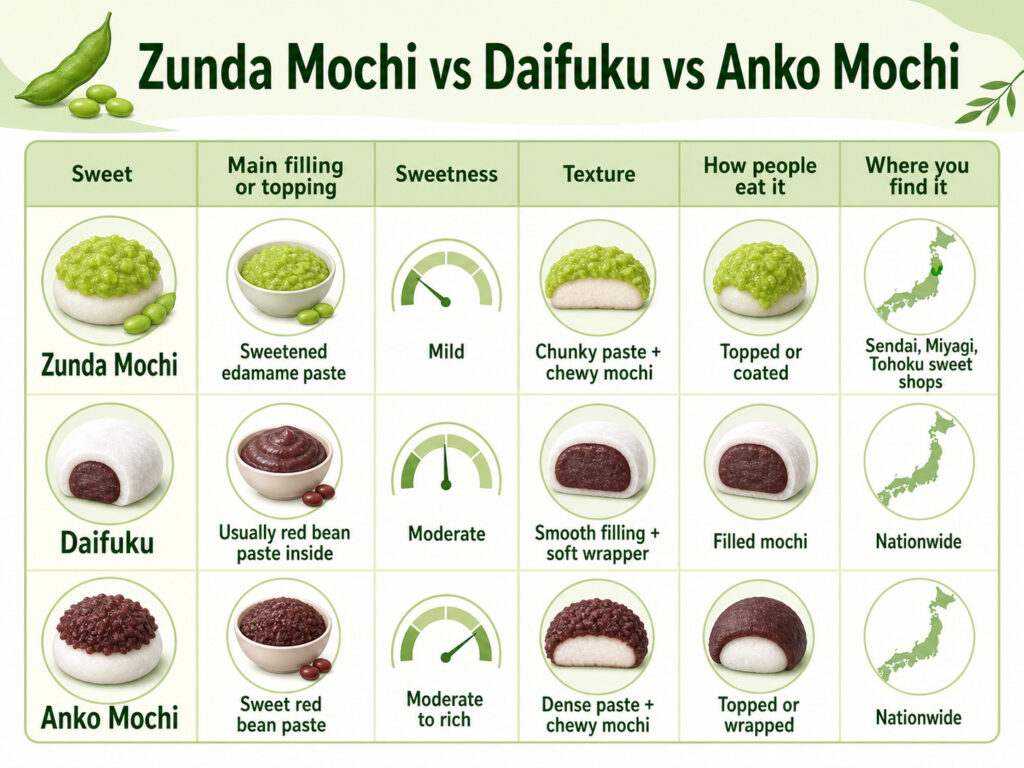
People often compare this sweet with Daifuku or Anko Mochi. That makes sense. All three use mochi, but they feel quite different.
| Sweet | Main filling or topping | Sweetness | Texture | How people eat it | Where you find it |
|---|---|---|---|---|---|
| Zunda mochi | Sweetened edamame paste | Mild | Chunky paste and chewy mochi | Topped or coated | Sendai, Miyagi, Tohoku sweets shops |
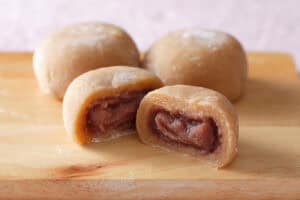
| Daifuku | Usually red bean paste inside | Moderate | Smooth filling and soft wrapper | Filled mochi | Nationwide |
| Anko mochi | Sweet red bean paste | Moderate to rich | Dense paste and chewy mochi | Topped or wrapped | Nationwide |
If you enjoy a fresher bean flavor, choose zunda mochi. If you want a sweeter, fuller profile, anko usually wins. Daifuku sits in the middle and feels the easiest for beginners.
Final Thoughts
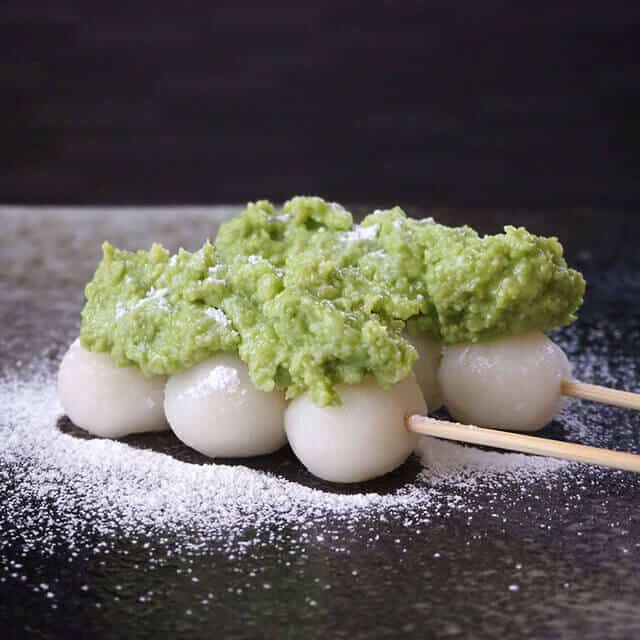
Zunda mochi is not just a pretty green dessert. It is one of the most approachable Sendai specialties, and one of the easiest to crave again. The mochi gives warmth and chew. The edamame paste brings a clean sweetness that feels distinctly local. If you visit Miyagi, try it fresh at least once. If you cannot, make a small batch at home. It may look humble, but the flavor stays with you.
FAQ
Is zunda mochi sweet?
Yes, but the sweetness is gentle. Most shops season the edamame paste with sugar and salt, not just sugar. That keeps the bean flavor clear and fresh.
Can I freeze it?
You can freeze the paste and the mochi. I prefer freezing them separately. That way, the texture stays more pleasant after thawing.
What can I use if I cannot find fresh edamame?
Frozen shelled edamame works very well. Boil it until tender, then remove the thin skins. The flavor will still be bright and clean.
How long does it stay fresh?
Fresh pieces are best on the same day. Refrigeration helps for a short time, but the mochi firms up quickly. Boxed products last longer because they are made for travel.
Does it contain common allergens?
It usually contains soy because of the edamame. Some shop made versions may also include additives or shared equipment risks. Check the label if you have allergies.
Is it vegan?
Many versions are vegan because they use mochi, edamame, sugar, and salt. Still, packaged products can vary. Read the ingredient list before buying.
References
- MAFF Traditional Foods in Japan [2026-07]
- VISIT MIYAGI [2026-08]
- Japan National Tourism Organization [2026-09]
- Tamazawa Sohonten [2026-10]
- Japan Shopping Now [2026-11]






Comments