




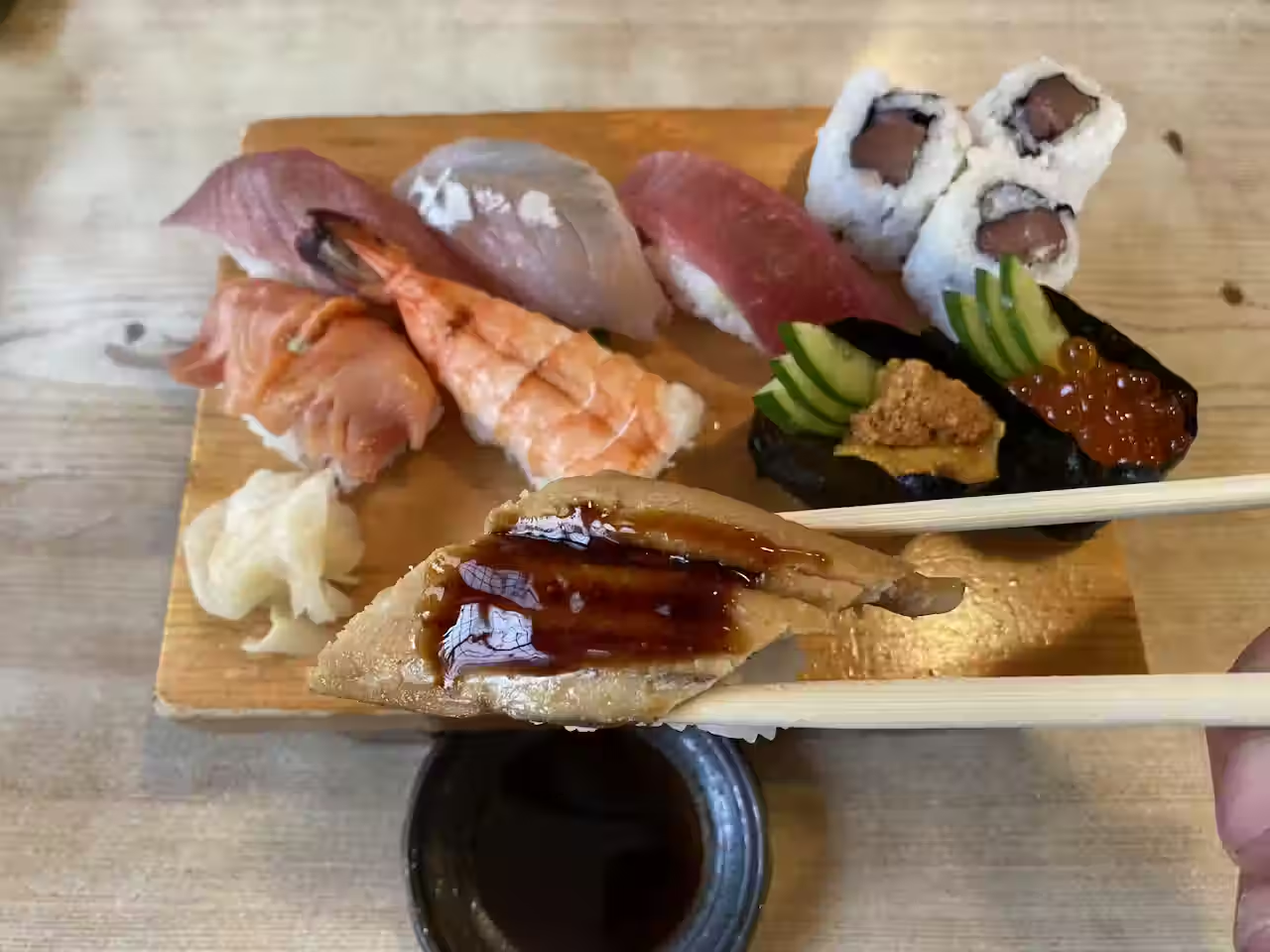
A chef presses a small mound of rice, lays a slice of glossy fish on top, and brushes it once with sauce. Then the piece lands in front of you, ready to eat. That short sequence sums up Edomae sushi (江戸前寿司), the Tokyo style of nigiri sushi that grew out of Edo street stalls two centuries ago.
This guide explains what the name means, how the style developed, and which preparation methods define it. It also covers classic toppings, counter etiquette, typical prices, and how to book a seat in Tokyo. Some points are less settled than you might expect, so we flag those as we go.
What Is Edomae Sushi?
Edomae sushi is the Tokyo tradition of nigiri sushi, known for combining seasoned rice with seafood that is often cured, marinated, simmered, steamed, aged, or otherwise prepared before serving. Much of the work therefore happens before the piece reaches you. It shows how traditional Tokyo sushi differs from conveyor-belt sushi, because its chefs season both the fish and the rice before serving.
Edomae Sushi at a Glance
- Origin
- The style took shape in Edo, now Tokyo, during the early nineteenth century, when stalls sold hand-pressed sushi as a quick meal.
- Rice
- Chefs season the rice (shari) with vinegar and salt. Many traditional counters use akazu, a red vinegar made from sake lees.
- Techniques
- Common preparations include curing with salt and vinegar, marinating in soy sauce, simmering, boiling, kelp curing, and aging.
- Classic toppings
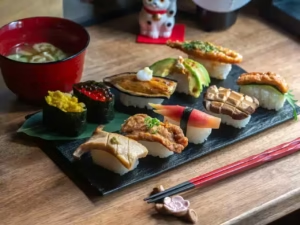
- Typical toppings (neta) include marinated tuna, kohada (gizzard shad), simmered anago (conger eel), boiled prawn, simmered clam, squid, sea bream, and sweet omelet.
- Serving style
- The chef usually brushes each piece with nikiri, a soy sauce simmered with sake or mirin, or adds salt or wasabi. Most pieces therefore need no extra dipping.
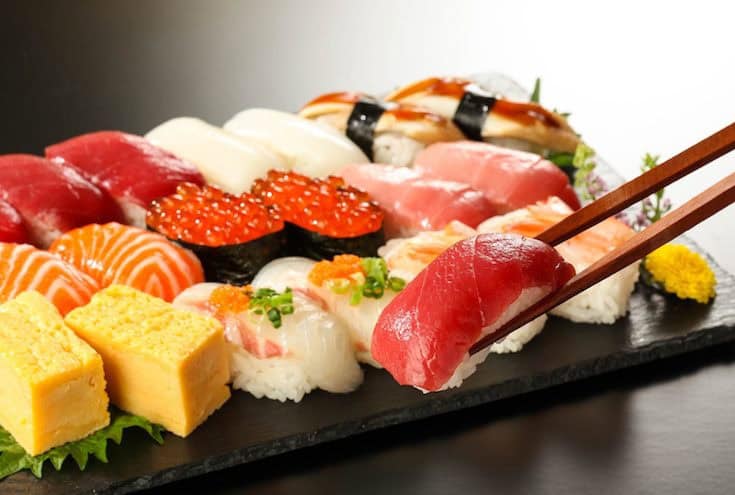
No single certification defines the style, so authentic interpretations vary from shop to shop. Still, it represents a highly refined tradition of Tokyo sushi craftsmanship. For the wider picture, see our overview of Japanese sushi and our guide to Tokyo food.
What Does Edomae Mean?
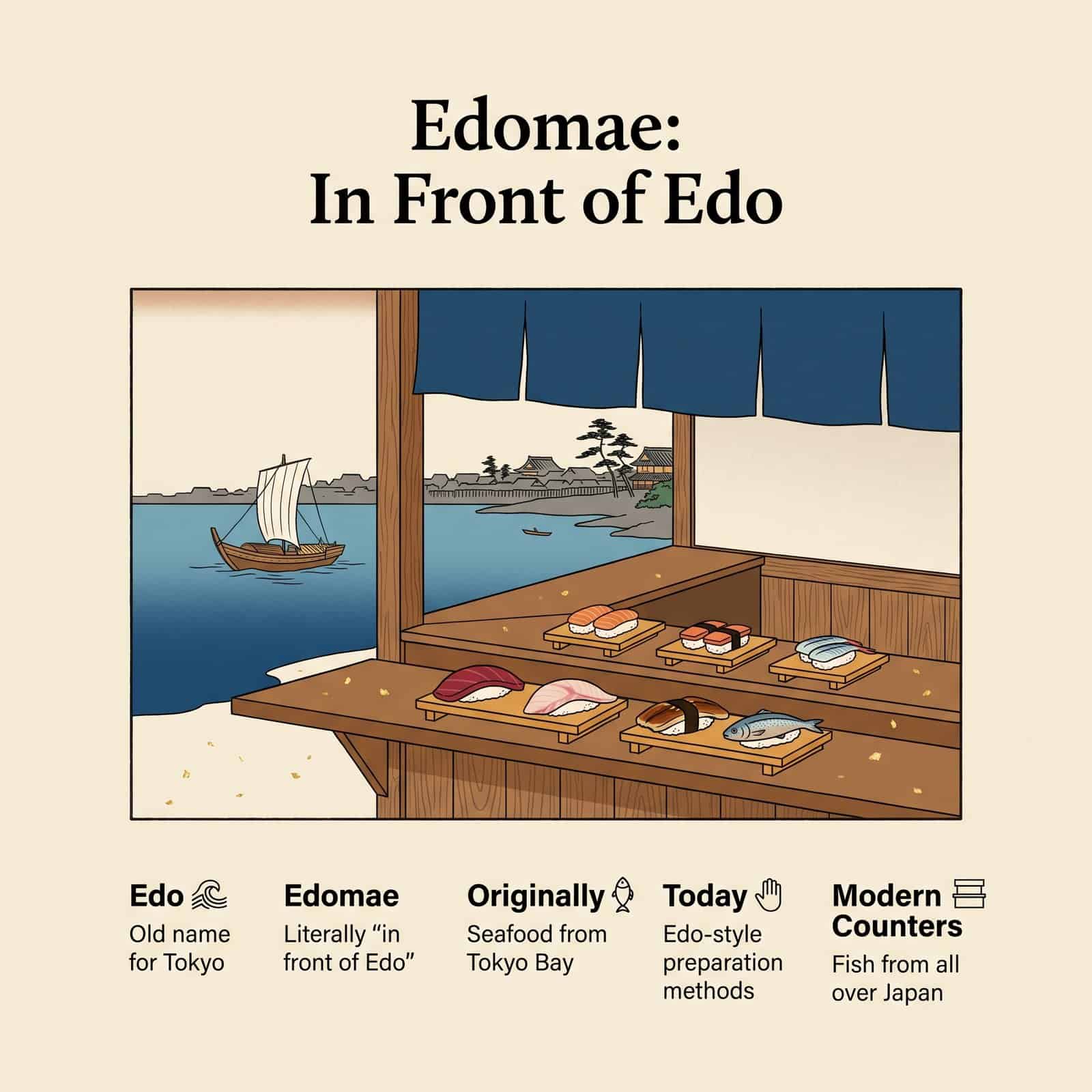
Edomae (江戸前) literally means “in front of Edo.” Edo is the old name for Tokyo, and the phrase pointed to the bay in front of the city. Tokyo’s official tourism guide, GO TOKYO, explains that the word refers to what is now Tokyo Bay. Originally, therefore, it described Tokyo Bay seafood rather than a cooking style.
The meaning has since widened. Today the term usually describes the preparation methods that Edo chefs developed for that catch. As a result, a modern counter can call its sushi Edomae while buying fish from all over Japan.
Edomae Sushi History
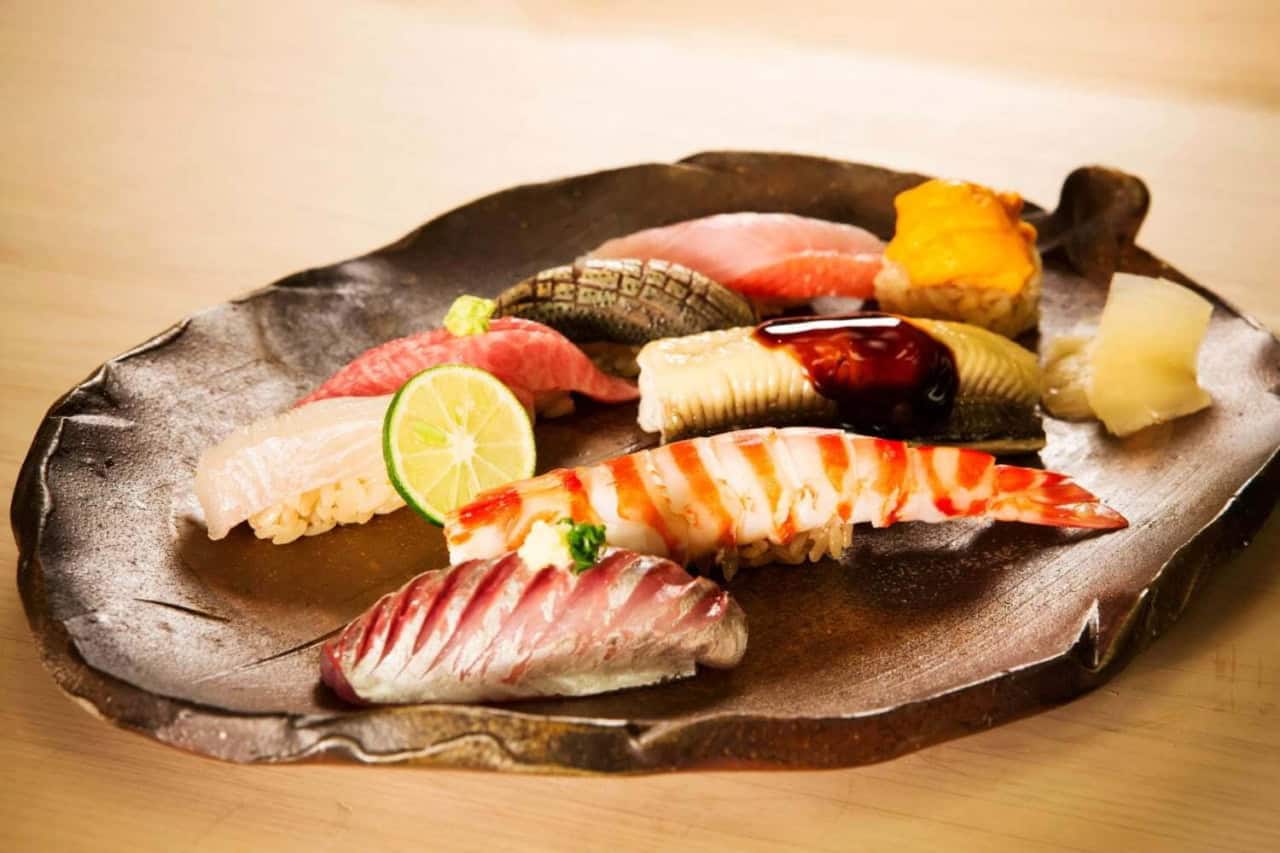
Sushi did not move in one straight line from fermented fish to nigiri. Instead, several styles appeared in turn, and older ones survived beside newer ones. The short timeline below shows the main steps, and the sections after it add detail.
| Period | Style | What changed |
|---|---|---|
| Ancient to Heian period | Narezushi | Cooks fermented salted fish with rice to preserve it. |
| Muromachi period | Namanare | Shorter fermentation meant people also ate the rice. |
| Early 1700s | Hayazushi | Vinegar and salt seasoned the rice, so fermentation became unnecessary. |
| Mid Edo period | Box, rolled, and rod sushi | Molded and pressed styles became popular in Edo. |
| Early 1800s | Nigiri sushi | Chefs pressed rice by hand and served it at once. |
From Narezushi to Vinegared Rice
Japan has eaten narezushi since ancient times. This older style preserves salted fish through lactic-acid fermentation with cooked rice. According to the Ministry of Agriculture, Forestry and Fisheries (MAFF), a shorter version called namanare appeared in the Muromachi period (1336–1573). People then ate the sour rice together with the fish. You can still taste this tradition in dishes such as funazushi from Shiga.
Later, cooks skipped fermentation altogether. Mizkan’s Sushi Lab, written with food historian Terutoshi Hibino, dates vinegar-seasoned hayazushi to the early 1700s. Box sushi was popular in Edo before nigiri arrived, and pressed styles such as Osaka sushi continue that line today.
Hanaya Yohei and the Rise of Nigiri
Nigiri sushi emerged in Edo around the early nineteenth century. The identity of the first maker remains uncertain. The Edo-Tokyo Museum library lists several accounts, including one that names a shop called Matsu-ga-zushi. Another credits Hanaya Yohei with selling the modern form during the Bunsei era (1818–1830).
Because of that, we avoid calling Yohei the inventor. He is widely credited with popularizing an early form of nigiri sushi, and historians describe him as the person who refined it. MAFF also names three famous Edo shops that helped the style spread: Kenuki-zushi, Yohei-zushi, and Matsu-ga-zushi.
Street Food for a Busy City
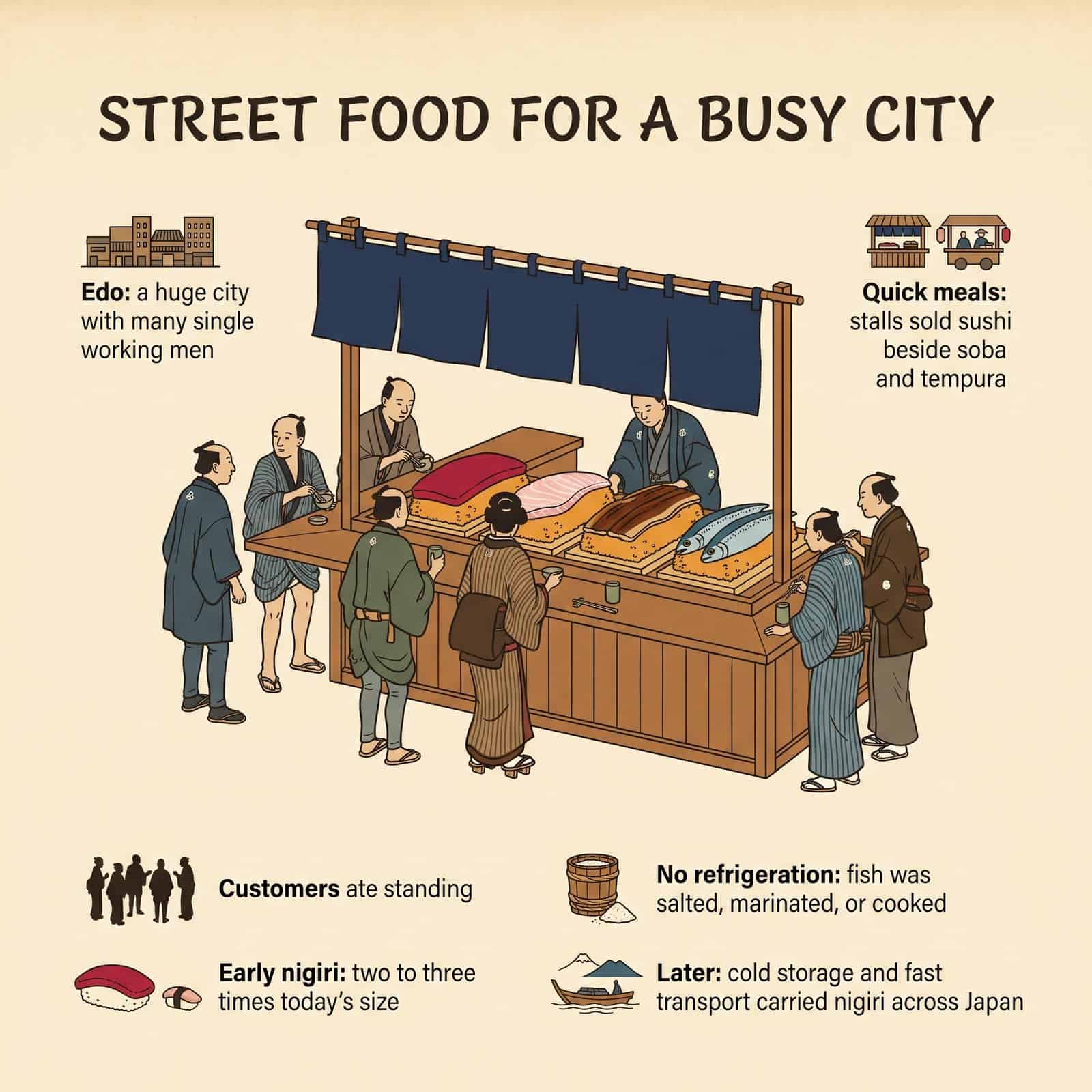
Edo was a huge city with many single working men, so quick meals sold well. Stalls offered sushi beside soba and tempura, and customers ate standing. Early nigiri was also much bigger. Mizkan’s history notes that one piece was two to three times today’s size.
Without refrigeration, raw fish spoiled fast. Chefs therefore salted, marinated, or cooked the catch before service. Those habits began as practical measures, but they also made the fish taste better. Eventually, cold storage and fast transport carried nigiri across Japan, while Tokyo counters kept the older methods alive.
Traditional Edomae Techniques
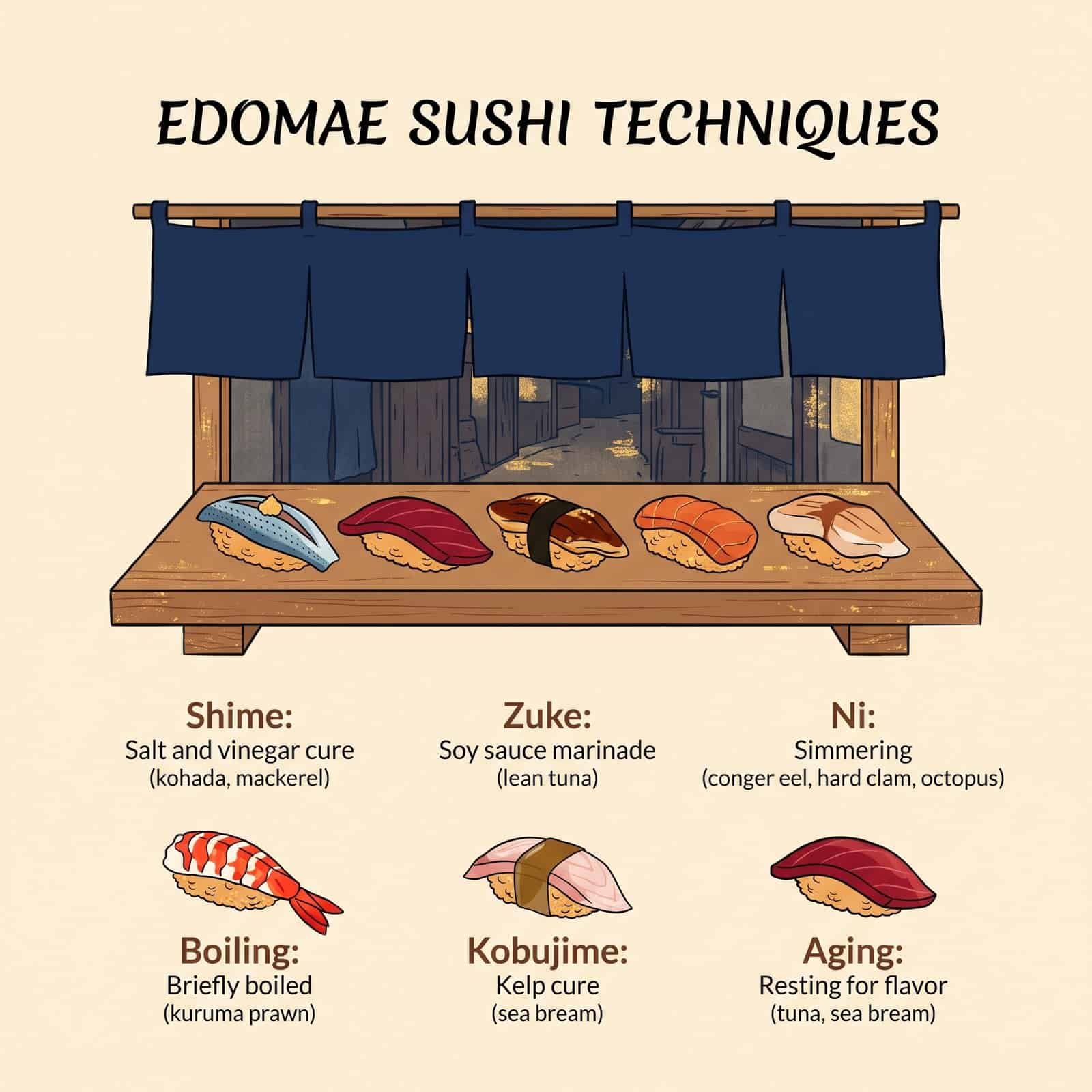
These Edomae techniques started as ways to keep seafood usable. However, their purpose has shifted. Today chefs use them to adjust moisture, aroma, texture, and umami, so that topping and rice taste like one bite. Classifications also differ by shop. Some chefs count four methods, while others add steaming and searing and count six.
Shime: Curing with Salt and Vinegar
Shime (締め) suits silver-skinned fish such as kohada, mackerel, and horse mackerel. First, salt draws out excess moisture and rough odors. Then vinegar firms the flesh and adds a clean, sharp note. Timing matters a great deal here, since a few minutes can change the result.
Zuke: Marinating in Soy Sauce
Zuke (漬け) means marinating fish in a soy-based liquid. Lean tuna is the classic example, though some chefs also marinate white fish. The marinade seasons the surface and deepens the savory flavor. Thicker slices and longer soaking give a softer, richer bite, so each shop sets its own balance.
Ni: Simmering and Boiling
Ni (煮) covers toppings that chefs cook in liquid. Anago, hard clam, and octopus simmer until tender. Afterward, the chef often brushes them with tsume, a sweet reduction of the cooking liquid. Prawns follow a similar idea, because brief boiling firms the flesh and brings out sweetness. Our anago zushi guide looks at the eel in more depth.
Kobujime: Curing with Kelp
Kobujime (昆布締め) presses lightly salted white fish between sheets of kelp. The kelp pulls out water and lends its own umami, so mild fish such as sea bream gain depth. Strictly speaking, this method is a form of curing. Even so, many shops treat it as a separate skill.
Aging, Steaming, and Searing
Chefs often age or cure the fish to concentrate its flavor. Tuna and sea bream rest at controlled temperatures, and the period depends on species, size, and fat. In addition, some counters steam shellfish or sear oily fish over a flame. Not every restaurant lists these as formal techniques, but you will meet them often.
| Technique | Typical seafood | Effect on flavor |
|---|---|---|
| Shime (curing) | Kohada, mackerel, horse mackerel | Firmer flesh and brighter acidity |
| Zuke (marinating) | Lean tuna, some white fish | Deeper savory taste and softer texture |
| Ni (simmering) | Anago, hard clam, octopus | Tender flesh that carries a sweet glaze |
| Boiling | Kuruma prawn | Firm bite and natural sweetness |
| Kobujime (kelp curing) | Sea bream and other white fish | Less moisture and added kelp umami |
| Aging | Tuna, sea bream | Concentrated flavor and softer flesh |
Sushi Rice, Akazu Red Vinegar, and Akashari
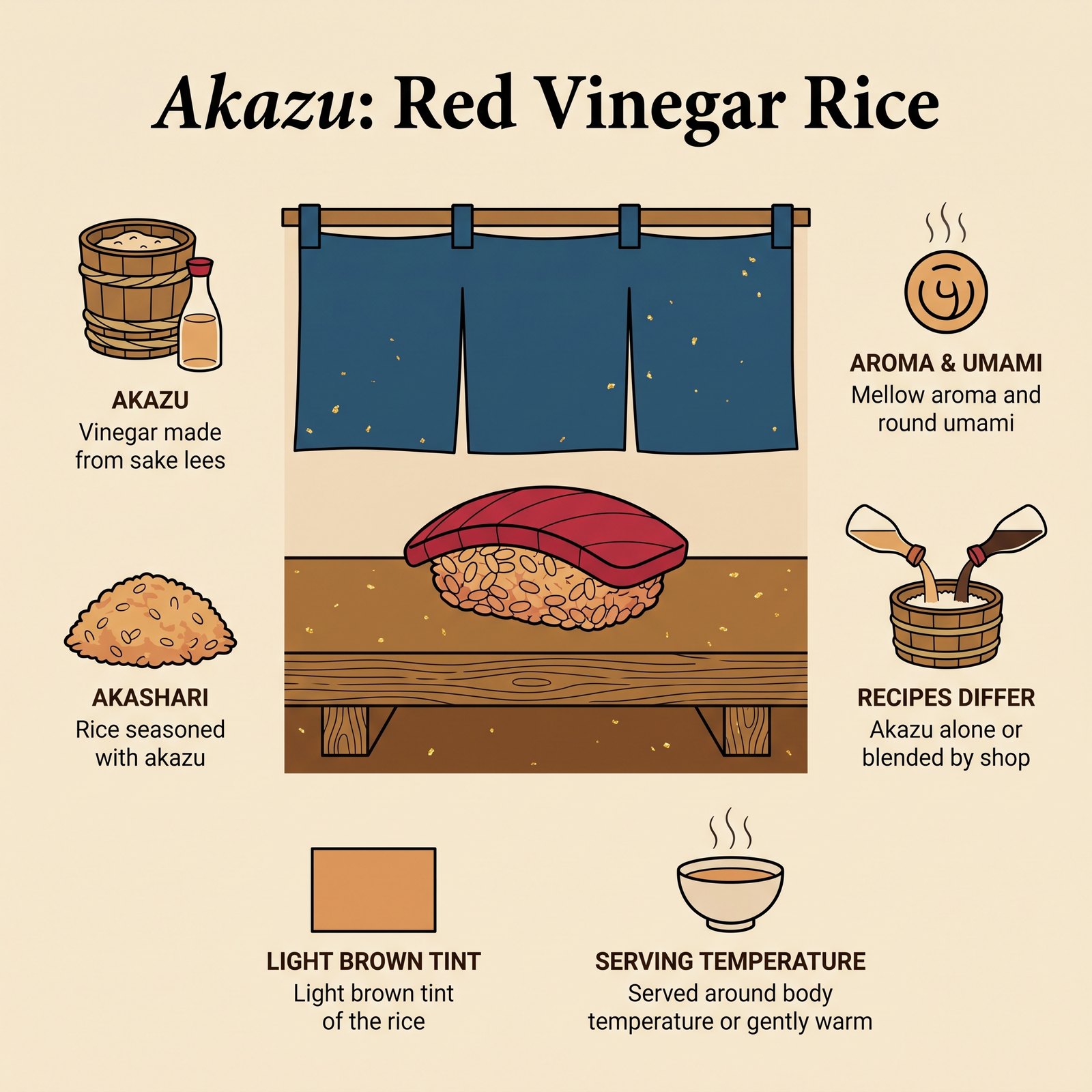
Chefs treat sushi rice as seriously as the fish. Akashari (赤シャリ) is sushi rice seasoned with akazu, a vinegar traditionally made from sake lees. The vinegar gives the rice a light brown tint, a mellow aroma, and round umami. By Mizkan’s own account, brewer Nakano Matazaemon developed this lees vinegar in Handa after visiting Edo in 1804.
Akazu red vinegar is an important tradition, but it is not a requirement. Recipes differ by shop. Some chefs use less sugar, while others blend akazu with rice vinegar. Temperature varies too. Specialist counters commonly serve shari around body temperature or gently warm, but the exact temperature depends on the chef and topping. Our guide to sushi vinegar and akazu explains the seasoning, and the sake kasu article covers the lees.
Traditional Edomae Sushi Toppings
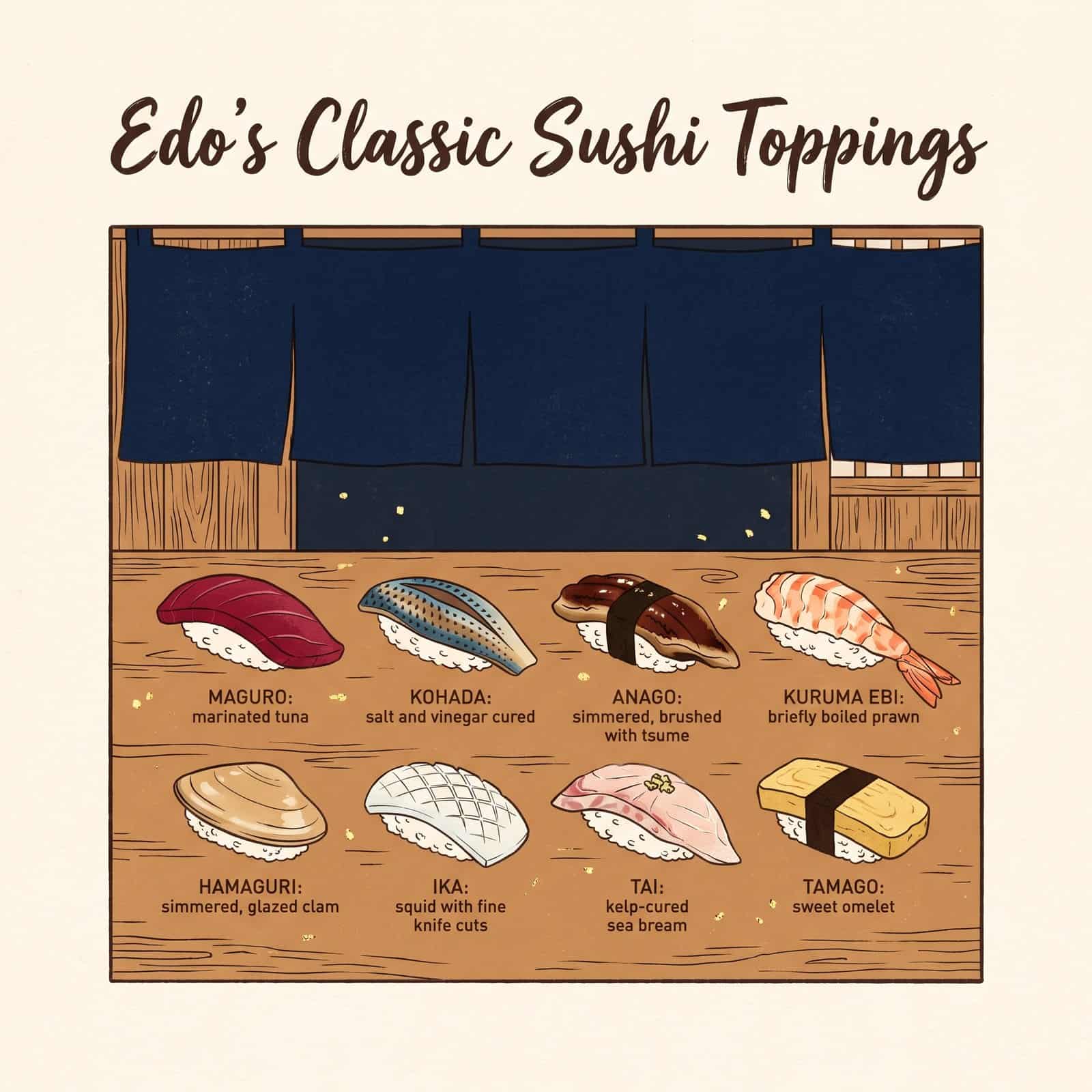
Each classic topping pairs a fish with a method. The table below compares the best-known examples, so you can see what to expect before you order. Menus change daily, though, and no counter serves all of them at once.
| Topping | Preparation | Flavor |
|---|---|---|
| Maguro (tuna) | Often zuke, marinated in soy sauce | Savory, with a clean iron note |
| Kohada (gizzard shad) | Salted, then cured in vinegar | Bright, sharp, and slightly oily |
| Anago (conger eel) | Simmered and brushed with tsume | Soft, sweet, and delicate |
| Kuruma ebi (prawn) | Briefly boiled and butterflied | Firm and gently sweet |
| Hamaguri (hard clam) | Simmered, then glazed | Tender, briny, and rich |
| Ika (squid) | Scored with fine knife cuts | Mild, sweet, and smooth |
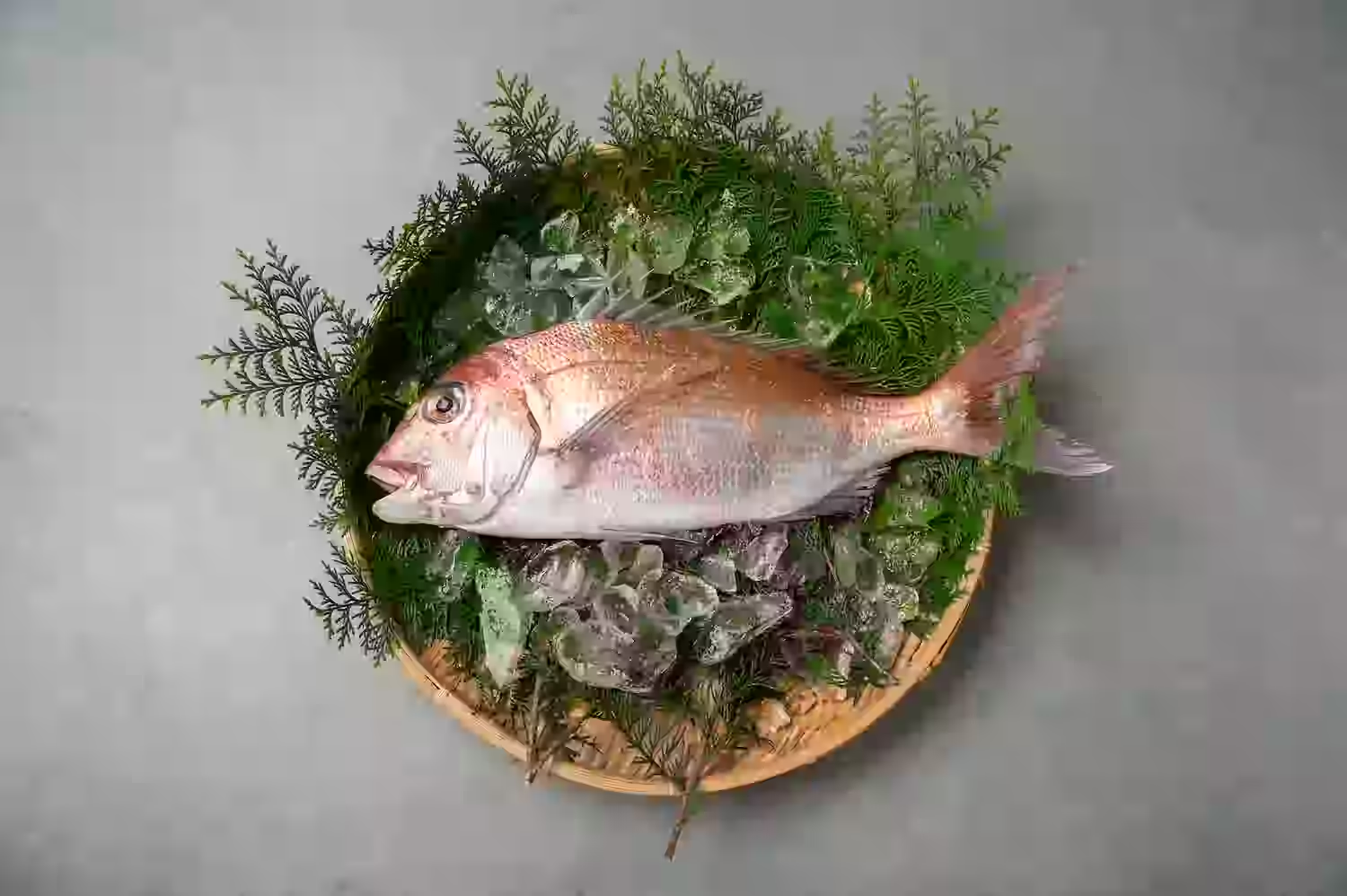
| Tai (sea bream) | Kelp cured or rested | Light, with gentle umami |
| Tamagoyaki or gyoku (omelet) | Sweet omelet, sometimes made with shrimp or fish paste | Sweet, and dense like cake at traditional counters |
Kohada deserves a special mention. Many sushi fans watch this piece closely, because salting and vinegar timing leave little room for error. For more on individual toppings, see our pages on maguro sushi and tamagoyaki. For another regional style that uses marinated fish, see our guide to Bekko sushi.
Seasonal Edomae Sushi Toppings
Seasonality sits at the heart of the craft. Chefs follow the market, so the lineup shifts through the year. The table below gives examples of toppings associated with each season. However, these are broad associations rather than a fixed calendar. The best season varies by species, fishing ground, and restaurant.
| Season | Examples |
|---|---|
| Spring | Kasugo (young sea bream), sayori (halfbeak), hamaguri |
| Summer | Shinko (young kohada), anago, aji (horse mackerel) |
| Autumn | Saba (mackerel), kohada, ika |
| Winter | Maguro, hirame (flounder), buri (yellowtail) |
Edomae Sushi vs Regular Sushi: How They Differ
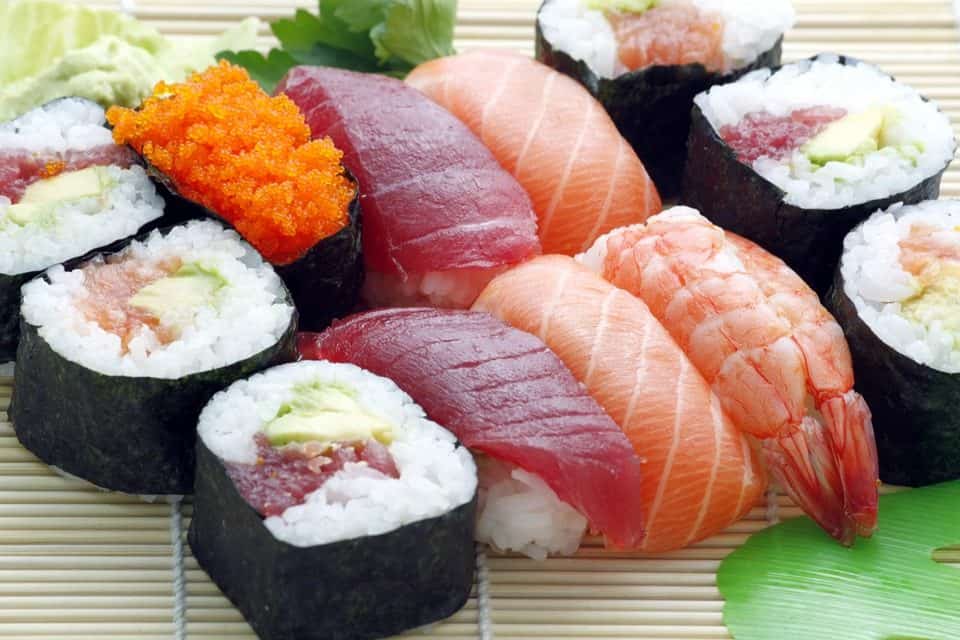
Many readers ask how this Tokyo style differs from the sushi they already know. Both share the same Edo roots, so the comparison below shows differences of emphasis rather than separate origins. The line is blurry, though, since casual chains borrow old methods and specialist counters keep experimenting.
| Point | Traditional Edomae sushi | Contemporary casual sushi |
|---|---|---|
| Emphasis | Techniques developed at Edo sushi shops and stalls | Same foundations, with a focus on variety, speed, and access |
| Rice | Often akazu or a house vinegar blend | Often milder rice vinegar, sometimes sweeter |
| Fish preparation | Many toppings cured, marinated, simmered, or aged | Less curing or aging, though searing, marinating, and simmering also appear |
| Seasoning | The chef usually applies nikiri, salt, or wasabi | Diners usually dip pieces in soy sauce |
| Service style | Often counter service, piece by piece | Plates, sets, or conveyor belts |
Service formats also overlap. Many specialist counters offer omakase, a course the chef chooses, while service formats vary by restaurant. Some serve set lunches, and others take single orders. If the casual side interests you, read our feature on conveyor belt sushi in Japan.
What Does Edomae Sushi Taste Like?
The first impression is seasoning. Each bite arrives salted, glazed, or sharpened with vinegar, so the flavor feels complete. Cured kohada tastes bright and tight, whereas simmered anago turns soft and sweet. Marinated tuna sits somewhere between, savory and deep.
Aroma matters as well. Akashari carries a mellow, slightly malty scent that differs from white vinegar rice. The stronger seasoning may surprise diners used to mild white-vinegar rice. However, chefs design it to balance cured, aged, or fatty toppings. Then the texture follows. Loosely pressed grains fall apart on the tongue, while the topping stays firm or silky. Whether that boldness suits you is, in the end, a matter of taste.
How to Eat Edomae Sushi
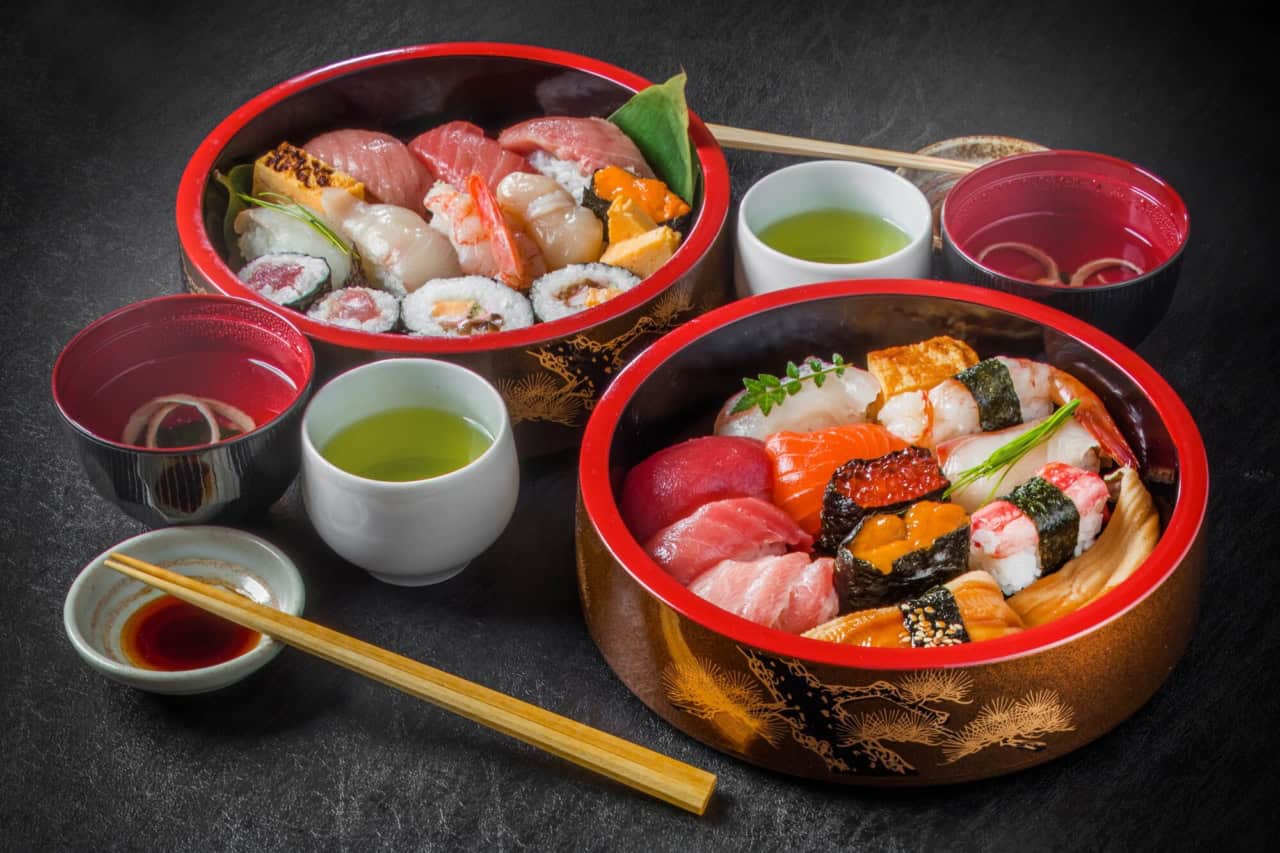
Edomae sushi etiquette is simpler than its reputation suggests. Three moments matter most, and each has an easy rule. House rules differ, though, so follow the restaurant when its guidance conflicts with ours.
Before Eating
Arrive on time, because many counters start every guest together. Skip strong perfume, since scent travels in a small room. Also tell the restaurant about allergies when you book, not at the seat. Finally, ask before you take photos.
When Each Piece Arrives
Eat each piece soon after it lands, while the rice is still at its best. Fingers and chopsticks are both fine. The chef seasons each piece so diners can eat it without adding soy sauce. A brush of nikiri soy sauce, a pinch of salt, or a dab of wasabi is usually already there. Therefore, taste first and adjust later only if the shop offers soy sauce.
Between Pieces
Use gari, the pickled ginger, to reset your palate between toppings. Tea does the same job. Meanwhile, feel free to ask what a fish is or how the chef prepared it. Many chefs are happy to answer, although a busy service may limit the conversation.
Where to Eat Edomae Sushi in Tokyo
Tokyo is the birthplace of Edomae sushi and remains the best place to explore its traditional techniques. The Edomae sushi restaurants below are not a ranking. Instead, we chose them for traditional preparation, published information, and a spread of budgets and booking styles.
Tsukiji Kagura Sushi (Tsukiji Main Shop)
Best for beginners and casual visits. This Tsukiji shop highlights red vinegar rice and seared toppings on its official site. Its own budget guide suggests about ¥4,000 at lunch and ¥10,000 at dinner. Branches differ, so check which one you are booking.
- Address: 4-14-13 Tsukiji, Chuo-ku, Tokyo
- Access: About 5 minutes on foot from Tsukiji Station (Hibiya Line)
- Phone: 03-3541-4180
- Booking: Official website form or phone
Bentenyama Miyako Sushi (Asakusa)
Best for classic preparation with a published menu. By its own account, the shop dates to 1866 and keeps methods such as nikiri, tsume, zuke, and kobujime. The tax-included menu lists bowls from ¥3,300 and nigiri sets from ¥5,390 to ¥18,260. It also shows that this style is not omakase-only.
- Address: 2-1-16 Asakusa, Taito-ku, Tokyo
- Phone: 03-3844-0034
- Booking: Phone. See the official website for hours and closing days
Shinbashi Shimizu (Shinbashi)
Best for a specialist counter with clear course prices. The booking page lists tax-included courses at ¥16,000, ¥30,000, and ¥35,000. However, it asks that a Japanese speaker join the party, and it does not allow photos. Reservation required.
- Address: 2-15-10 Shinbashi, Minato-ku, Tokyo
- Phone: 03-3591-5763
- Booking: TableCheck booking page
Sushi Masuda (Minami-Aoyama)
Best for an evening omakase near Omotesando. The restaurant runs two dinner seatings and closes on Sundays and public holidays. Its website publishes no course price, so check the booking page for the current course price. Reservation required.
- Address: IJK Minami-Aoyama Rei 1F, 3-14-27 Minami-Aoyama, Minato-ku, Tokyo
- Phone: 03-6438-9179
- Booking: Phone or the online service named on the official website
Sukiyabashi Jiro (Ginza)
Best for a once-in-a-trip splurge. The official menu lists omakase from ¥88,000 including tax, with about 20 pieces. Booking rules are strict as well. Overseas guests can reserve only through their hotel concierge, and late cancellations carry a fee.
- Address: Tsukamoto Sogyo Building B1F, 4-2-15 Ginza, Chuo-ku, Tokyo
- Phone: 03-3535-3600
- Booking: Hotel concierge for overseas visitors. See the official website
Edomae Sushi Price in Tokyo and How to Reserve
How to Choose an Edomae Sushi Restaurant
Start with budget, because prices span a very wide range. Next, think about format. Lunch sets and single orders suit a first visit, whereas a long omakase rewards some familiarity. Then check booking rules and language support, since both vary by shop. Finally, menu words such as zuke, kohada, nikiri, and akazu suggest the kitchen follows older methods.
Typical Price of Edomae Sushi in Tokyo
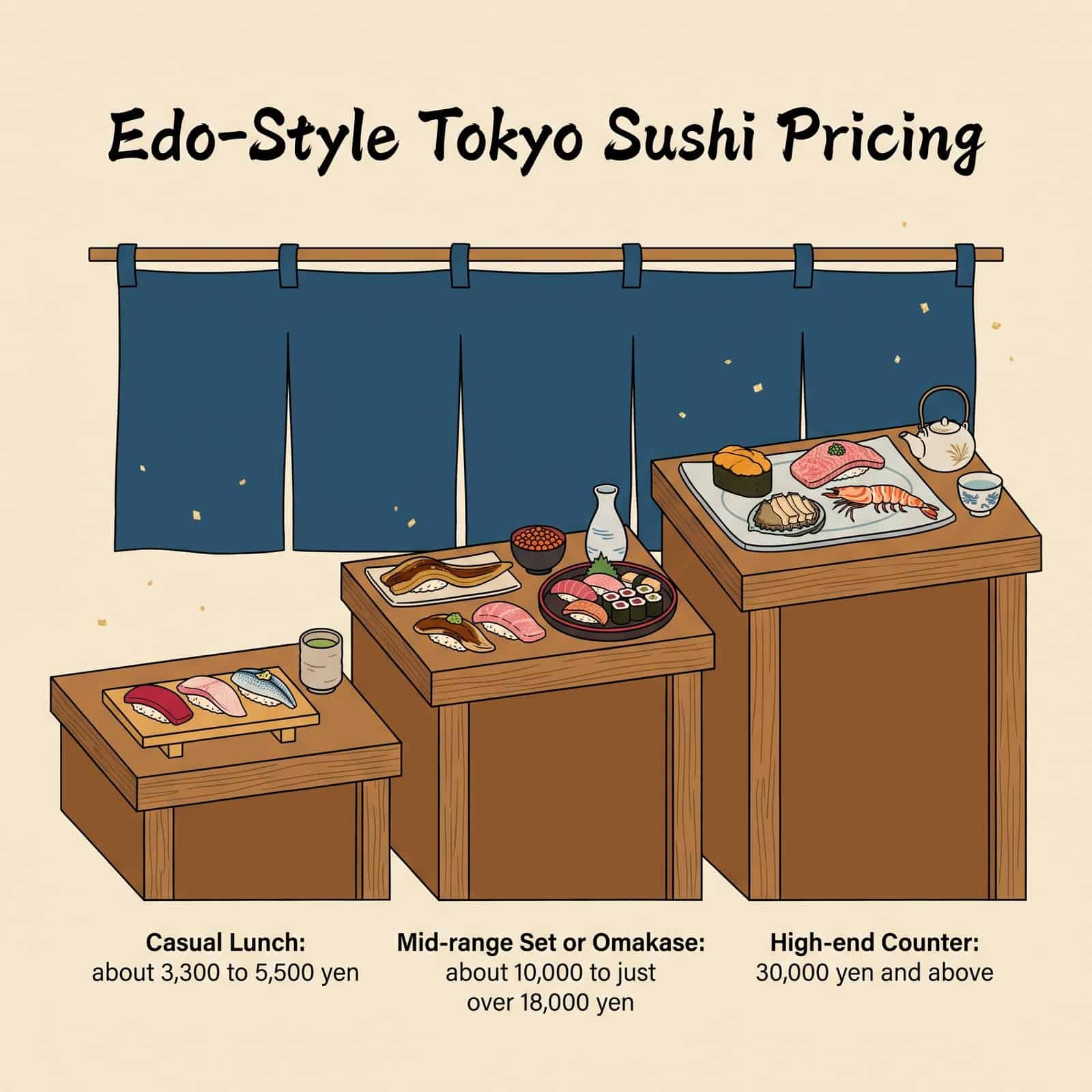
No reliable market average exists, so the published prices above serve as a guide. They fall into three rough tiers.
- Casual lunch: about ¥3,300 to ¥5,500, for example a bowl or small set at Bentenyama Miyako Sushi or lunch at Tsukiji Kagura Sushi.
- Mid-range omakase or set: roughly ¥10,000 to just over ¥18,000, such as larger nigiri sets or a lunch course at a specialist counter.
- High-end counter: ¥30,000 and above, and far more at the most famous names.
How to Reserve Edomae Sushi
Reservation procedures vary. Opening dates, deposits, prepayment, and rules on lateness all differ by restaurant, so treat the steps below as a checklist rather than fixed rules.
- Official website: look first for a booking form or a link to the shop’s chosen service.
- Hotel concierge: some counters accept overseas guests only this way, so ask your hotel early.
- Reservation services: platforms such as TableCheck show live availability and course prices.
- Cancellation policy: read it before you confirm, because fees can be high and no-shows hurt small shops.
Allergies and Dietary Needs
Traditional menus center on seafood, so options are limited for some diners. Tell the restaurant in advance about allergies to crustaceans, shellfish, fish, egg, wheat, or soy. Also ask whether the kitchen can avoid cross-contact, since small counters share boards and knives. If the answer is no, it is safer to choose another shop.
What to Notice at the Counter
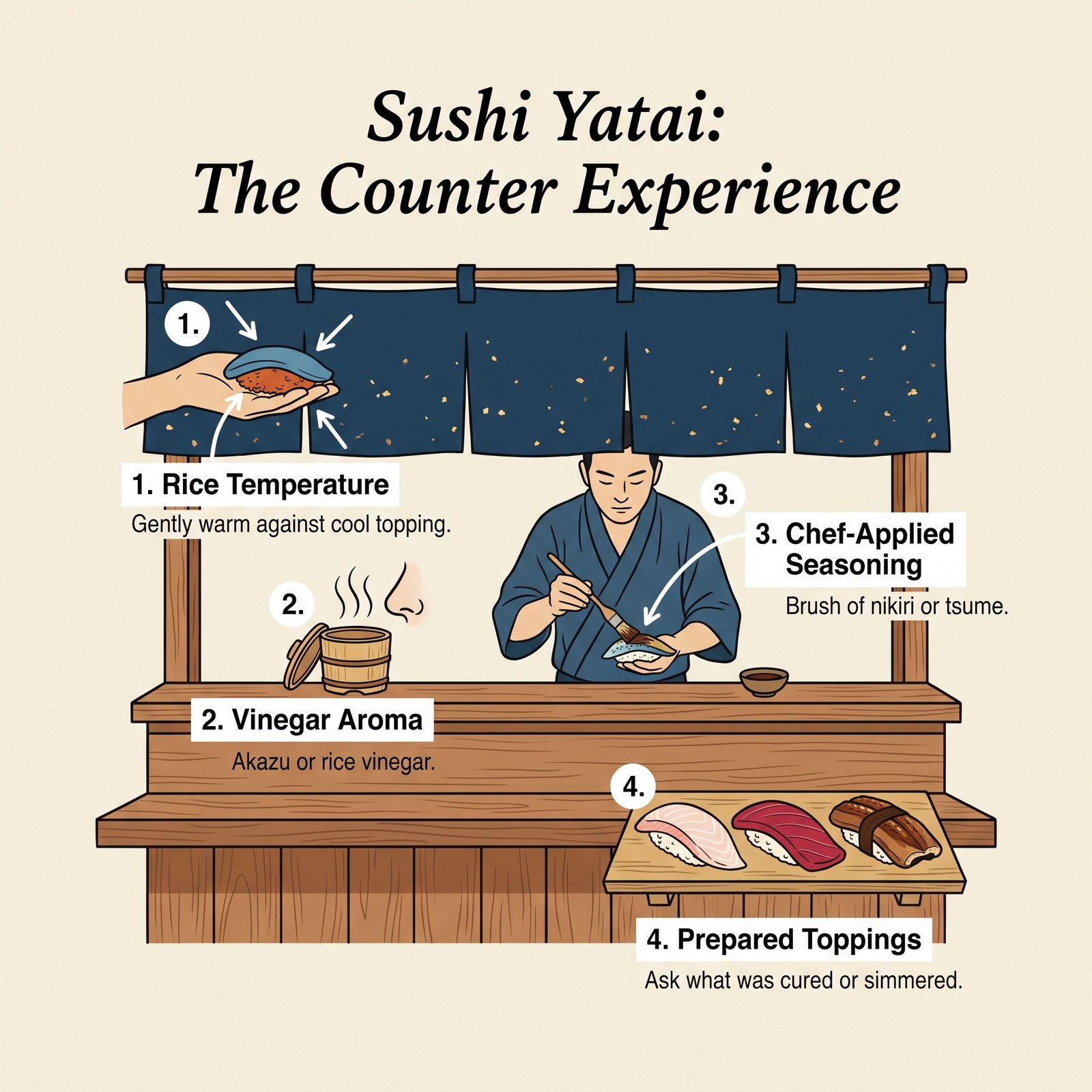
You do not need expert knowledge to enjoy a first visit. Four details will tell you most of the story, and they are easy to spot once you know them.
- Rice temperature: notice whether the shari feels gently warm against the cooler topping.
- Vinegar aroma: smell the rice, because akazu and rice vinegar give very different scents.
- Chef-applied seasoning: look for the brush of nikiri or tsume before the piece arrives.
- Prepared toppings: ask which pieces the chef cured, marinated, simmered, or aged.
Then choose a restaurant by budget, service style, and reservation requirements. Our price and booking section above is a good place to start planning.
Frequently Asked Questions
Ingredients and Rice
- Is Edomae sushi always raw?
-
No. Many classic pieces are cooked or cured before serving. Examples include simmered anago, simmered clam, boiled prawn, seared fish, and vinegar-cured kohada. In fact, the sweet omelet contains no raw seafood at all.
- Is all Edomae sushi made with Tokyo Bay seafood?
-
No, not today. Historically, the name pointed to fish from the bay in front of Edo. Modern chefs, however, buy seafood from across Japan and overseas. The term now describes this Tokyo style and its methods more than the fishing ground.
- Does Edomae sushi always use akazu?
-
No. Red vinegar is an important tradition, but shops interpret it differently. Some use akazu alone, while others blend it with rice vinegar. Rice color alone is therefore not a test of authenticity.
- What does akazu sushi rice taste like?
-
It tastes rounder and more savory than white vinegar rice. The acidity feels soft, and the aroma is mellow, a little like aged sake. Because the flavor is stronger, it pairs well with fatty or cured fish.
Ordering at the Restaurant
- Do I need to order omakase?
-
No, although many specialist counters serve only a chef’s course. Other shops offer lunch sets, bowls, or single pieces. Check the menu page before you book, since the format affects both price and time.
- Can I add soy sauce?
-
First follow the chef’s seasoning. Most pieces already carry nikiri, salt, or a glaze, so extra sauce can upset the balance. If the shop sets out soy sauce, use a little and follow any guidance from the staff.
- Is salmon a traditional Edomae topping?
-
No. Salmon was not part of the classic Edo lineup, which focused on fish such as kohada, tuna, and anago. Still, some modern restaurants serve it, especially casual ones. Traditional counters usually leave it off the menu, so ask if you want it.
Diet and Food Safety
- Can vegetarians eat Edomae sushi?
-
Only with advance planning. The traditional style centers on seafood, and stocks or glazes often contain fish as well. Some restaurants can prepare vegetable nigiri or an alternative course if you ask before booking. Otherwise, our vegan sushi guide lists easier options.
- How should I handle takeaway sushi?
-
Eat takeaway sushi promptly and follow the seller’s storage and use-by instructions. Japan’s health ministry asks sellers to tell customers to eat takeout food promptly, because risk rises with time. Do not eat sushi that sat at room temperature or whose condition is uncertain.
References
- GO TOKYO Gourmet – Discover Edomae Sushi in Tokyo, Where Nigiri Continues to Evolve (Accessed October 2026)
- GO TOKYO Gourmet – Experience the Taste and Spirit of Edomae Sushi. How to Enjoy Sushi the Tokyo Way (Accessed October 2026)
- National Diet Library Collaborative Reference Database (Edo-Tokyo Museum Library) – Edo no Nigirizushi no Hassho wa? (Accessed October 2026)
- Ministry of Agriculture, Forestry and Fisheries, Our Regional Cuisines – Nigirizushi, Tokyo (Accessed October 2026)
- Ministry of Agriculture, Forestry and Fisheries, Nippon Traditional Foods – Narezushi (Accessed October 2026)
- Mizkan Sushi Lab – History of Sushi (4): Edo Nigirizushi Culture and Hanaya Yohei (Accessed October 2026)
- Mizkan Sushi Lab – History of Sushi (7): Famous Shops Connected to Hanaya Yohei (Accessed October 2026)
- Mizkan Sushi Lab – History of Sushi (5): Handa Red Vinegar and Nakano Matazaemon (Accessed October 2026)
- Oku-Akasaka Sushi Tanji – Four Edomae Techniques: Curing, Marinating, Simmering, Ageing (Accessed October 2026)
- Journal for the Integrated Study of Dietary Habits (J-STAGE) – Akano, H. (2021). Sushi no Hensen to Su no Chikara, 31(4), 201–206 (Accessed October 2026)
- Science of Cookery (J-STAGE) – Ohmae, K. (1986). Sushi to Chori: Chushingura, Beethoven, Edomae-zushi, 19(1), 2–9 (Accessed October 2026)
- Iwanami Shoten – Hibino, T. (1999). Sushi no Rekishi wo Tazuneru, Iwanami Shinsho (Accessed October 2026)
- Ministry of Health, Labour and Welfare – Preventing Food Poisoning in Takeout and Delivery (Accessed October 2026)
- Consumer Affairs Agency – Points for Using Takeout: Preventing Food Poisoning (Accessed October 2026)
- Tsukiji Kagura Sushi – Store Information (Accessed October 2026)
- Bentenyama Miyako Sushi – Menu (Accessed October 2026)
- TableCheck – Shinbashi Shimizu Reservation Page (Accessed October 2026)
- Sushi Masuda – Official Website (Accessed October 2026)
- Sukiyabashi Jiro – Menu (Accessed October 2026)
Related Articles
- Sushi (寿司) (Surveyed: October 2026)
- The Soul of Sushi Rice: A Guide to Japan’s Sushi Vinegar (Sushi-zu) and Red Vinegar (Akazu) (Surveyed: October 2026)
- Anago zushi (穴子寿司) (Surveyed: October 2026)
- Maguro sushi (マグロ寿司) (Surveyed: October 2026)
- Bekko Sushi (べっこうずし) (Surveyed: October 2026)
- Gari (ガリ): Sushi’s Perfect Palate Cleanser & Its History (Surveyed: October 2026)
- Funazushi (鮒ずし) (Surveyed: October 2026)
- Think You Know Sushi? Explore 10 Unique Local Styles from Japan (Surveyed: October 2026)




Comments