



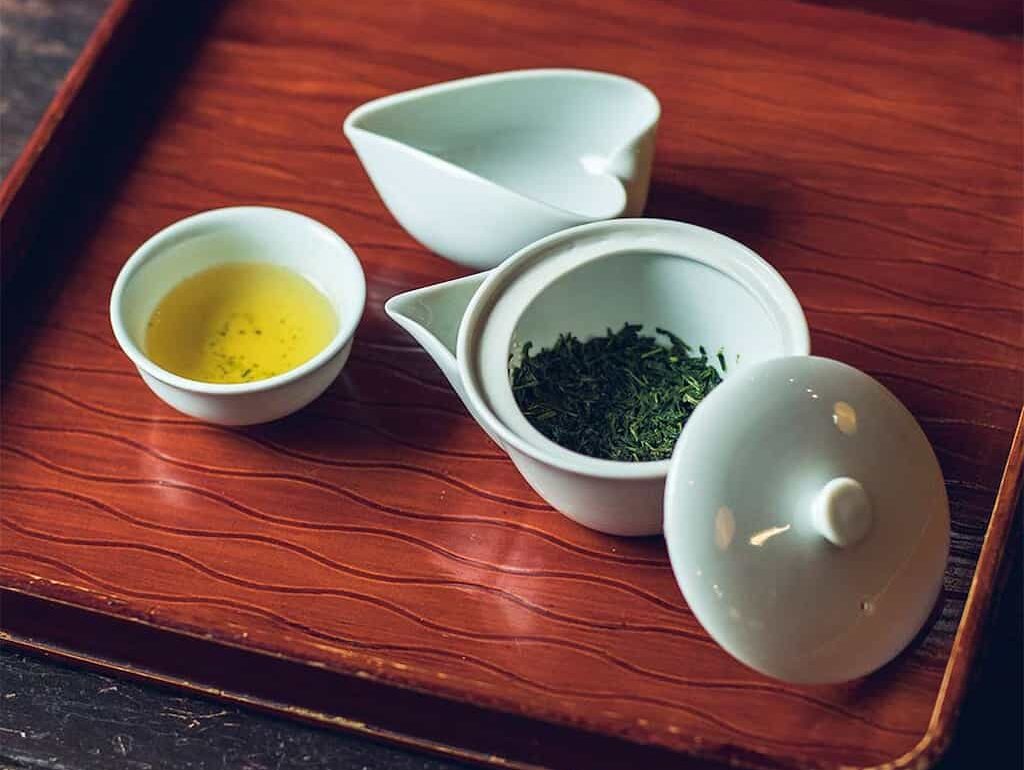
Gyokuro (玉露) is Japan’s highest grade of shaded green tea. Farmers cover the plants for about 20 days before harvest, which raises umami-rich theanine and lowers bitter catechins. It contains roughly 2,650 mg of theanine per 100 g, about twice as much as regular sencha.
In Japan, gyokuro is the tea you serve to honored guests. This guide explains what makes it special, how it differs from sencha and matcha, its accidental invention in 1835, and how to brew it at the correct low temperature. The brewing step matters more than most people expect.
Gyokuro Quick Facts
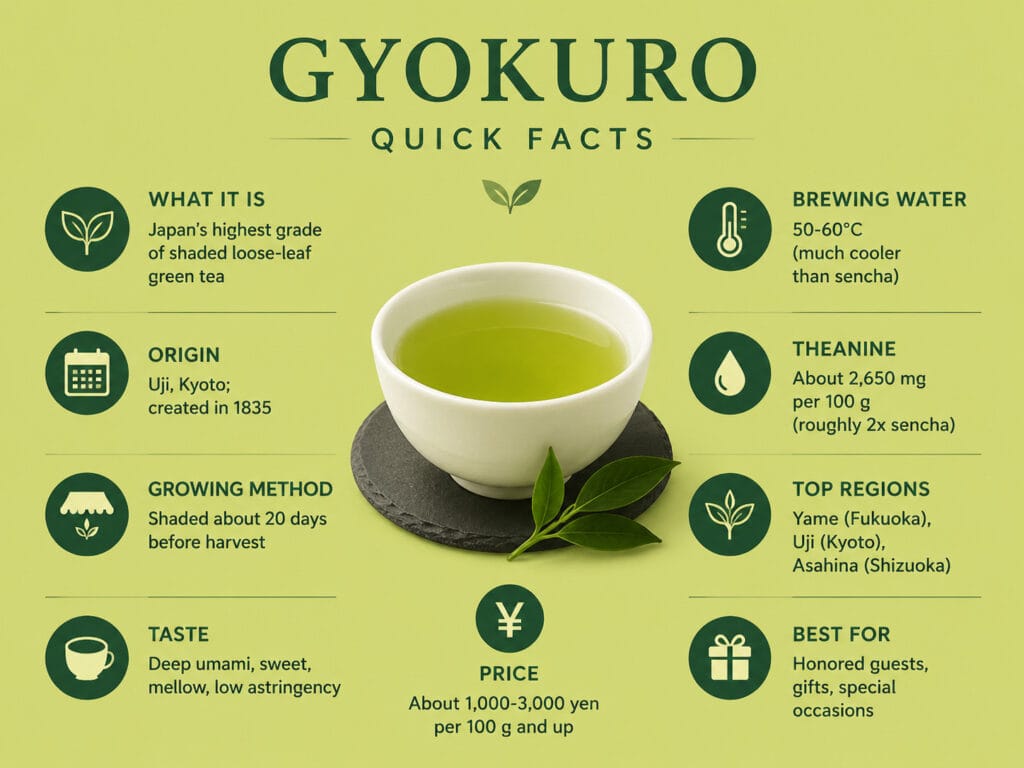
| What it is | Japan’s highest grade of shaded loose-leaf green tea |
| Origin | Uji, Kyoto; created in 1835 |
| Growing method | Shaded about 20 days before harvest |
| Taste | Deep umami, sweet, mellow, low astringency |
| Brewing water | 50-60°C (much cooler than sencha) |
| Theanine | About 2,650 mg per 100 g (roughly 2x sencha) |
| Top regions | Yame (Fukuoka), Uji (Kyoto), Asahina (Shizuoka) |
| Price | About 1,000-3,000 yen per 100 g and up |
| Best for | Honored guests, gifts, special occasions |
What Is Gyokuro?
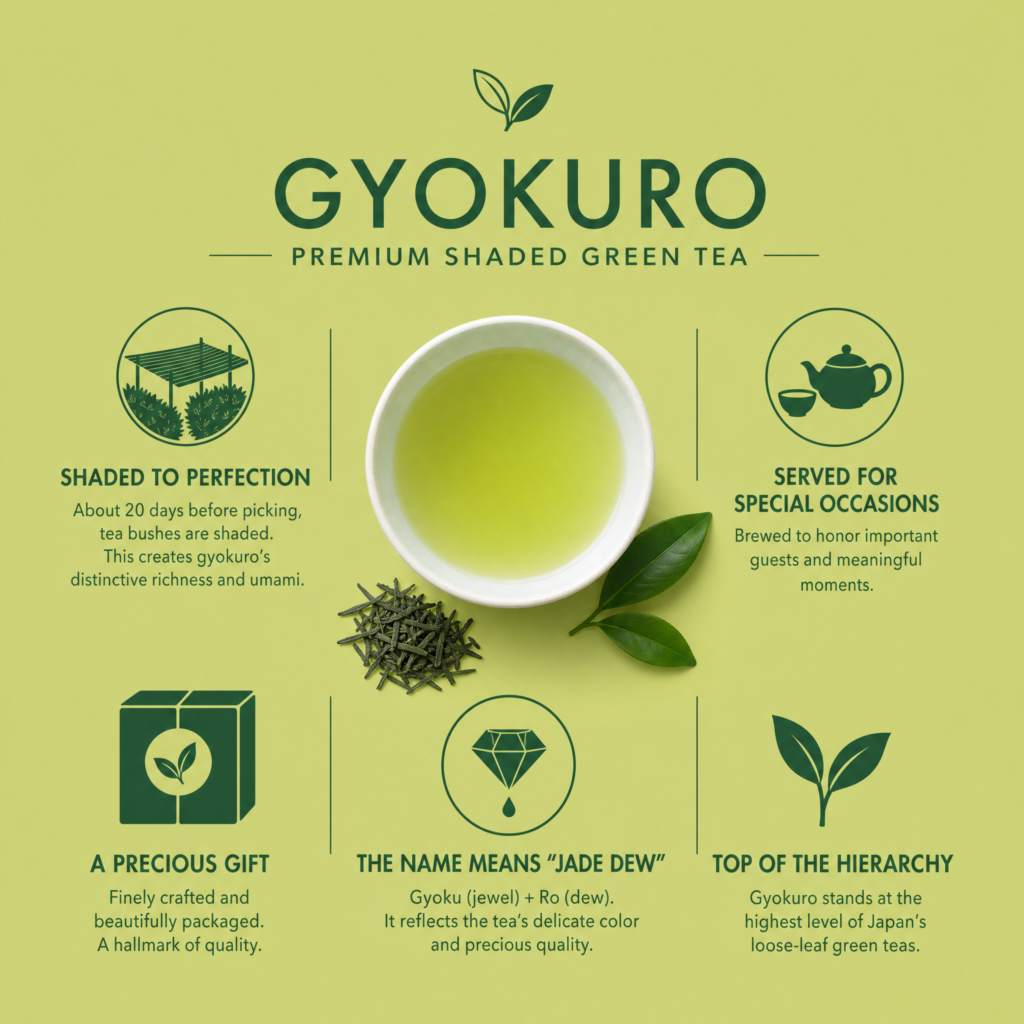
Gyokuro is a premium Japanese green tea grown in the shade. About 20 days before picking, farmers cover the tea bushes with reeds, straw, or black netting. This shading changes the leaf chemistry and creates the tea’s signature depth.
People treat it differently from everyday tea. Households brew it for important visitors and special occasions. Fine gift shops sell it in formal packaging. In short, gyokuro sits at the very top of Japan’s loose-leaf tea hierarchy.
The Name Means “Jade Dew”
The name combines two characters: gyoku (玉, jewel or jade) and ro (露, dew). It describes the pale green, dew-like color of the brewed tea. The name also traces back to an early product shape, rolled like drops of dew. Either way, it signals something precious.
What Does Gyokuro Taste Like?
Gyokuro tastes rich, sweet, and deeply savory. The first sip delivers a wave of umami, closer to broth than to ordinary tea. Astringency stays low, and a mellow sweetness lingers. The aroma is fresh and slightly marine, often compared to nori seaweed.
I will admit, my first cup confused me. It hardly tasted like “tea” at all. Then the depth clicked, and ordinary green tea suddenly felt thin. That intensity is exactly why people reserve gyokuro for special moments.
The Science Behind the Umami
The flavor comes down to one amino acid: theanine. Shading blocks sunlight, which slows the conversion of theanine into bitter catechins. As a result, the leaves keep more theanine, the source of umami and sweetness. Low-temperature brewing then extracts that theanine while leaving most bitterness behind.
The numbers show the gap clearly. The table compares theanine content across three green teas, using Japanese tea industry reference data.
| Tea | Theanine (per 100 g) | Growing method |
|---|---|---|
| Gyokuro | About 2,650 mg | Shaded ~20 days |
| Matcha (tencha) | About 2,260 mg | Shaded ~20 days |
| Sencha | About 1,280 mg | Full sun |
Theanine was first discovered in gyokuro by the researcher Yajiro Sakato in 1949. It forms in the tea plant’s roots, then moves into the new shoots. Shading preserves it, which is why shaded teas taste so mellow.
Gyokuro vs Sencha vs Kabusecha vs Matcha
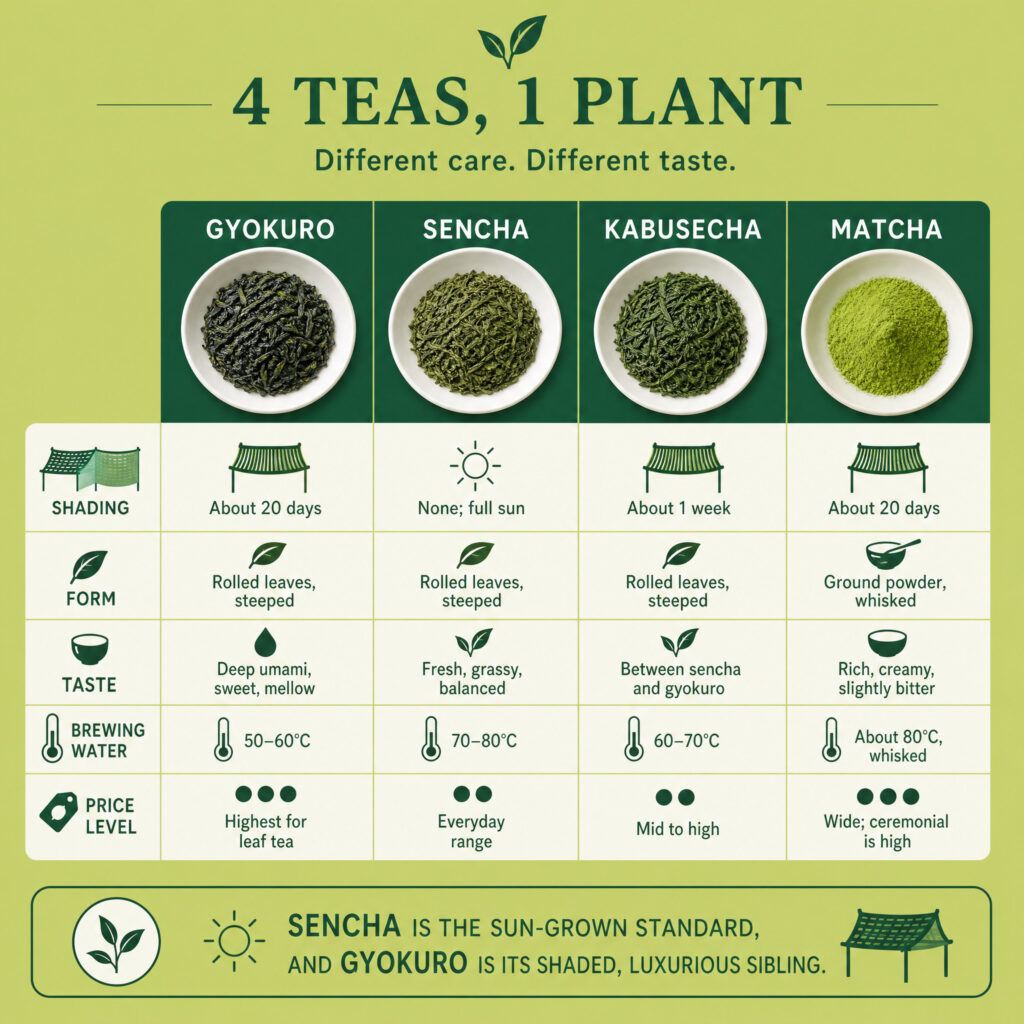
These four teas come from the same plant, Camellia sinensis. The growing and processing methods set them apart. The table sums up the key differences.
| Gyokuro | Sencha | Kabusecha | Matcha | |
|---|---|---|---|---|
| Shading | About 20 days | None; full sun | About 1 week | About 20 days |
| Form | Rolled leaves, steeped | Rolled leaves, steeped | Rolled leaves, steeped | Ground powder, whisked |
| Taste | Deep umami, sweet, mellow | Fresh, grassy, balanced | Between sencha and gyokuro | Rich, creamy, slightly bitter |
| Brewing water | 50-60°C | 70-80°C | 60-70°C | About 80°C, whisked |
| Price level | Highest for leaf tea | Everyday range | Mid to high | Wide; ceremonial is high |
Put simply, sencha is the sun-grown standard, and gyokuro is its shaded, luxurious sibling. Kabusecha sits in between, with a shorter shading period. Matcha shares gyokuro’s long shading, but producers grind those leaves into powder instead of steeping them.
History: An Accidental Invention in 1835
Gyokuro’s story begins with a happy accident. In 1835, Kahei Yamamoto VI of the Edo tea house Yamamotoyama visited Kyoto’s Uji area. His family firm had already helped spread Nagatani Soen’s green sencha across Japan.
According to the tea history text “Chagyo Tsukan” (1900), the young Yamamoto stayed in Kokura Village in Kuze County. At a local roastery, he watched workers steam and dry shaded tencha leaves. He then tried rolling the soft leaves into small, dew-like balls. The resulting tea tasted remarkably sweet and rich.
Yamamotoyama sold this new tea under the name “gyokuro.” Later producers refined the rolling into the needle shape we know today. From there, the luxury tea spread nationwide, and Uji, Yame, and Asahina grew into its great production centers.
How Gyokuro Is Made
Every step aims to protect the leaf’s sweetness. The process rewards patience and careful hands.
- Shading (about 20 days). Farmers cover the bushes as new buds open. Theanine stays high, and bitter catechins fall.
- Careful picking. Workers select only tender young leaves, often by hand.
- Immediate steaming. Producers steam the leaves right after harvest to stop oxidation.
- Rolling and drying. Machines and hands roll the leaves into fine, glossy needles.
- Sorting and finishing. Only uniform, high-grade leaves reach the final product.
Terroir also shapes the cup. Soil, climate, and water differ by region. So the same grade of gyokuro can taste noticeably different from Yame, Uji, or Asahina. Comparing them is part of the fun.
Major Gyokuro Producing Regions
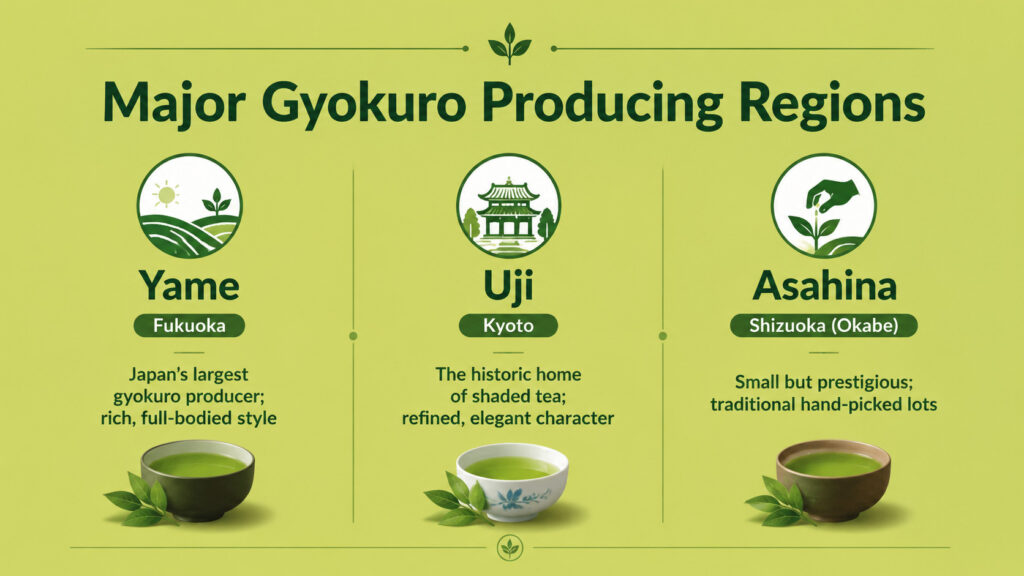
Three regions define premium gyokuro in Japan. Each brings its own character to the cup.
| Region | Prefecture | Known for |
|---|---|---|
| Yame | Fukuoka | Japan’s largest gyokuro producer; rich, full-bodied style |
| Uji | Kyoto | The historic home of shaded tea; refined, elegant character |
| Asahina | Shizuoka (Okabe) | Small but prestigious; traditional hand-picked lots |
Yame in Fukuoka now leads national gyokuro production. Uji in Kyoto carries the deepest history, alongside its famous matcha. For the wider story of Kyoto tea, see our guide to Uji cha.
How to Brew Gyokuro
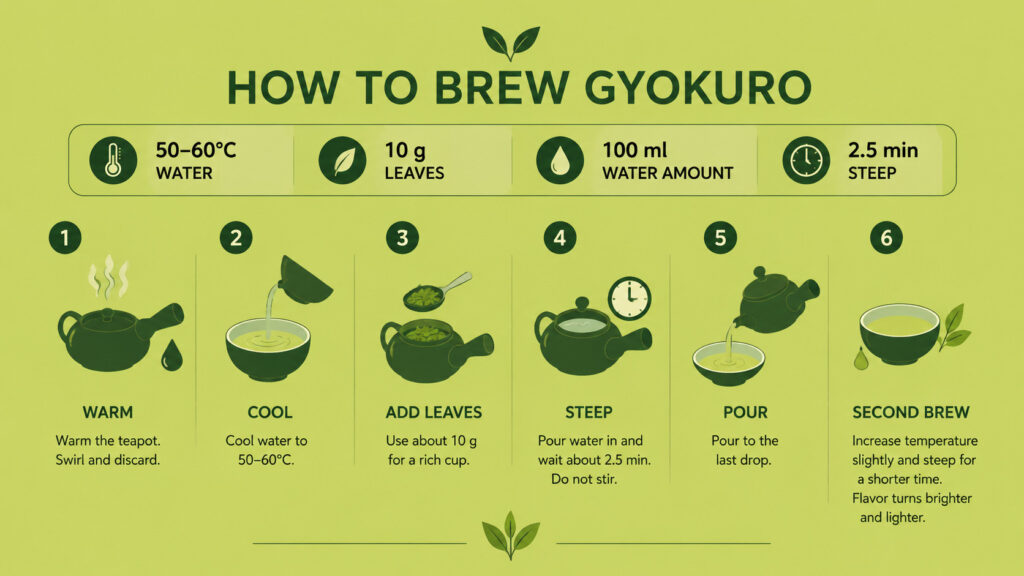
Brewing is where most people go wrong. Gyokuro needs cooler water and more patience than everyday tea. A yuzamashi, a small water-cooling vessel from senchado (the sencha tea ceremony), helps here.
- Warm the teapot. Pour hot water in, swirl, and discard.
- Cool the water. Let 100 ml of boiled water rest in a yuzamashi until 50-60°C. No yuzamashi? Pour the water between two cups a few times.
- Add the leaves. Use about 10 grams for a rich, proper cup.
- Steep quietly. Pour the cooled water in and wait about 2.5 minutes. Do not stir.
- Pour to the last drop. Squeeze out every drop; leftover water dulls the second brew.
For the second steeping, raise the water temperature slightly and shorten the wait. The flavor turns brighter and lighter. Many drinkers enjoy three or even four infusions this way. Each round reveals a different face of the same leaves.
Bonus: Eat the Leaves
Do not throw the spent leaves away. Gyokuro leaves are tender and packed with umami. In tea regions, people dress them with a little ponzu or soy sauce and eat them like a small salad. It feels wasteful to skip this final treat.
Health Aspects of Gyokuro
Gyokuro is rich in a few notable compounds. Its high theanine gives a calm, focused feeling rather than a jittery one. Catechins act as antioxidants, though shading lowers their level compared with sencha. So the tea leans smooth rather than sharp.
One point deserves care, though. Gyokuro holds more caffeine than most green teas, since shading concentrates it in the young leaves. People usually drink it in small, concentrated servings, which keeps the total modest. Even so, those sensitive to caffeine may want to enjoy it earlier in the day.
How Much Does Gyokuro Cost?
Gyokuro costs more than any other Japanese leaf tea. Standard grades run roughly 1,000 to 3,000 yen per 100 grams. Competition-grade and hand-picked lots climb far higher. The price reflects the labor: shading, hand-picking, and small yields. For a first purchase, a mid-range Yame or Uji gyokuro offers the best introduction.
Recommended Gyokuro Brands
These three brands are reliable starting points, each with a distinct character.
- Uji Yamashiro gyokuro: carefully selected Uji leaves with classic richness and sweetness. The formal packaging suits gifts.
- Kitagawa Hanbei “Hekiryoku”: from a Kyoto maker founded in 1861, with multiple national tea competition top prizes. Elegant and refined.
- Yamamotoyama “Gyokuro Joukisen”: from the house that created gyokuro in 1835. A taste of the original lineage.
Where to Enjoy Gyokuro in Tokyo
Chacha Kobo (Takadanobaba)
Chacha Kobo specializes in organically grown, pesticide-free tea leaves. The shop focuses on tea and health, a link that goes back to tea’s origins as medicine. The menu covers gyokuro, sencha, shaved ice, and parfaits. It makes a gentle introduction to serious Japanese tea.
Gyokuro in Modern Culture
Gyokuro is no longer only a formal tea. Modern cafes and makers have found fresh ways to serve it. This keeps a centuries-old tea relevant for younger drinkers.
- Cold-brew gyokuro: steeping in cold water for hours draws out pure sweetness and umami, with almost no bitterness.
- Ice-drip service: some specialty shops drip melting ice over the leaves for an intense, dewy first cup.
- Gyokuro sweets: the leaves flavor jelly, chocolate, and soft serve, echoing the matcha dessert boom.
- Tea pairings: upscale restaurants now pair gyokuro with food, treating it almost like a fine wine.
These new formats share one goal. They highlight the umami and sweetness that make gyokuro special. So even a first-timer can appreciate it, no tea ceremony required.
Conclusion
Gyokuro rewards a little effort. Shade-grown leaves, cool water, and a patient 2.5-minute steep produce a cup unlike any other green tea. The deep umami, backed by its high theanine content, explains both the price and the prestige.
If you are new to Japanese tea, start with a mid-range gyokuro from Yame or Uji, and brew it properly at least once. Then explore the wider world of ryokucha (Japanese green tea), or browse all Japanese tea types to find your next favorite.
Gyokuro FAQ
What is gyokuro?
Gyokuro is Japan’s highest grade of shaded loose-leaf green tea. Farmers cover the plants for about 20 days before harvest. This builds strong umami and sweetness with little bitterness. The name means “jade dew.”
How is gyokuro different from sencha?
Sencha grows in full sunlight, while gyokuro grows in the shade for about 20 days. Shading raises theanine and lowers bitter catechins. As a result, gyokuro tastes sweeter and far more savory. It also needs cooler brewing water.
Why is gyokuro so expensive?
The production takes far more labor than regular tea. Farmers shade the bushes, pick tender leaves carefully, and accept smaller yields. Only high-grade leaves pass sorting. That effort concentrates in every gram.
What temperature should the water be?
Aim for 50 to 60°C. Cool water draws out sweet theanine while limiting bitterness. Boiling water ruins gyokuro’s delicate balance. A yuzamashi, or simply moving water between cups, cools it easily.
Does gyokuro have caffeine?
Yes, and more than most green teas. Shading increases caffeine in the young leaves. However, people drink gyokuro in small, concentrated servings. The theanine also gives its lift a calmer, smoother feel.
How many times can I steep the leaves?
Three to four infusions work well. Raise the temperature a little and shorten the time with each round. The flavor shifts from deep umami to bright freshness. Afterward, you can even eat the leaves with ponzu.
Where is the best gyokuro produced?
Three regions stand out. Yame in Fukuoka leads national production and makes rich, full-bodied gyokuro. Uji in Kyoto offers the deepest history and refined character. Asahina in Shizuoka produces small, prestigious hand-picked lots.
Who invented gyokuro?
Kahei Yamamoto VI of Yamamotoyama is credited with its creation in 1835. He experimented with shaded tencha leaves in the Uji area. His rolled, dew-like tea became the prototype. Later makers refined it into today’s needle shape.
References
- MAFF, Reiwa 1 Tea-Related Reference Data (theanine content by tea type), https://www.maff.go.jp/j/seisan/tokusan/kaju/ocha.html (Surveyed: June 2026)
- Nihoncha (Japan Tea Central Association), About Japanese Tea, https://www.nihon-cha.or.jp/ (Surveyed: June 2026)
- Fukuoka Yamecha Promotion Council, About Yamecha, https://www.yamecha.or.jp/ (Surveyed: June 2026)
- Yamamotoyama, Official Site (history of gyokuro), https://www.yamamotoyama.co.jp/ (Surveyed: June 2026)
Related Articles
- Matcha (抹茶) (Surveyed: June 2026)
- Sencha (煎茶) (Surveyed: June 2026)
- Ryokucha (緑茶) (Surveyed: June 2026)
- Uji Cha (宇治茶) (Surveyed: June 2026)
- Japanese Tea Types (Surveyed: June 2026)



Comments