




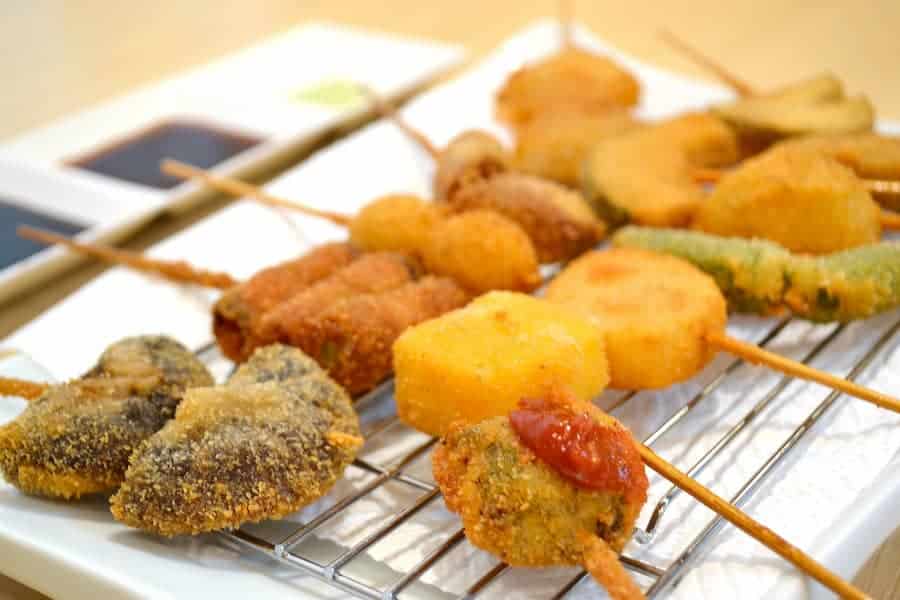
Kushi Katsu is Osaka’s deep-fried skewer dish, made with meat, seafood, or vegetables coated in batter and panko. In Osaka, people use kushikatsu and kushiage almost interchangeably. It is famous for its crisp texture and the no-double-dipping sauce rule.
Kushi Katsu (also written Kushikatsu, sometimes called Kushiage) sits at the heart of Osaka street food. You will find it everywhere, from Shinsekai stalls to Dotonbori counters. Locals love it cheap, hot, and washed down with beer.
Quick Facts About Kushi Katsu
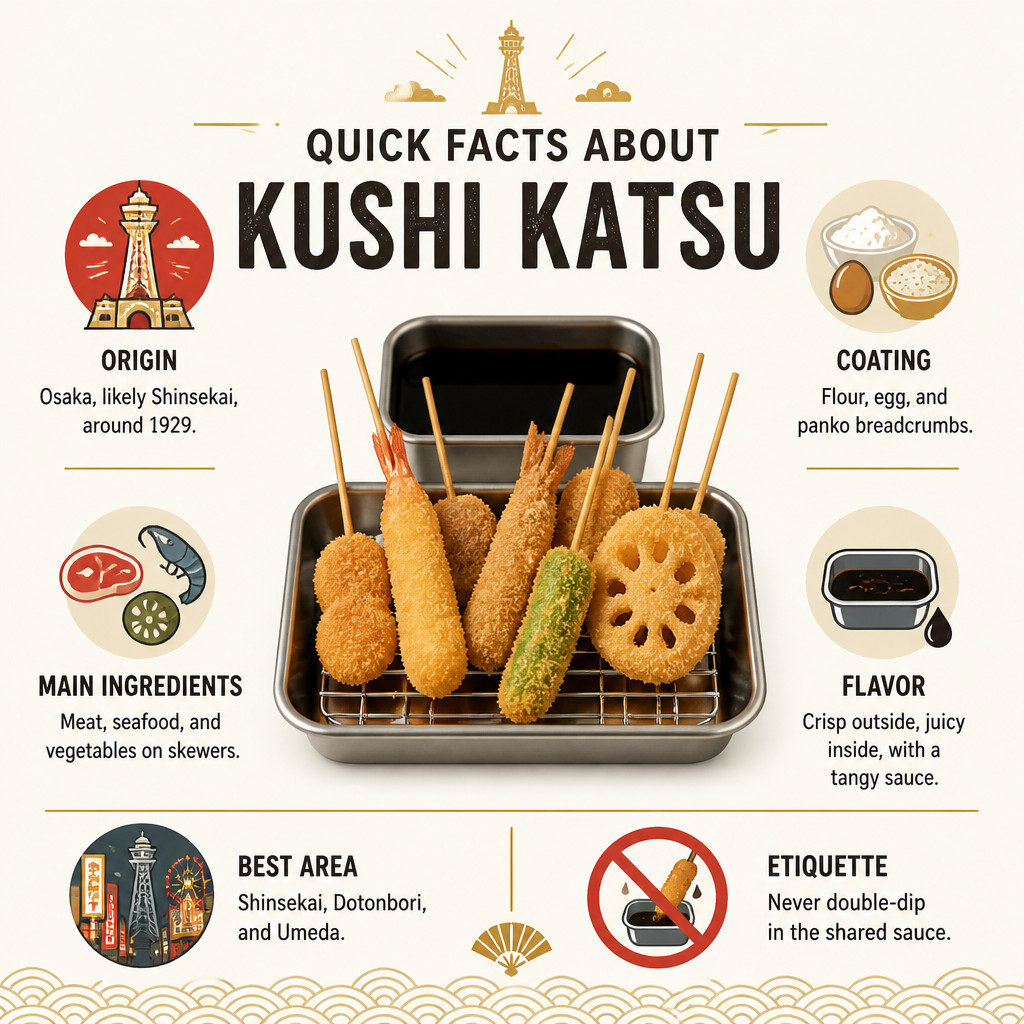
- Origin: Osaka, likely Shinsekai, around 1929.
- Main ingredients: meat, seafood, and vegetables on skewers.
- Coating: flour, egg, and panko breadcrumbs.
- Flavor: crisp outside, juicy inside, with a tangy sauce.
- Best area: Shinsekai, Dotonbori, and Umeda.
- Etiquette: never double-dip in the shared sauce.
What Is Kushi Katsu?
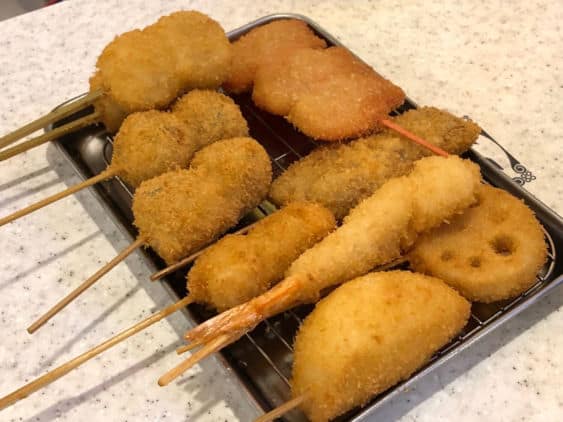
Kushi Katsu means skewered, deep-fried food. The name joins two words: “kushi” for skewer and “katsu” for deep-frying. Many diners call it kushikatsu, and many shops also use the name kushiage. In Osaka, the two words mean the same thing.
Cooks thread bite-size pieces onto bamboo skewers. Then they coat each one in flour, egg, and panko. A quick fry gives that signature golden crust. Shops and stalls across Osaka serve it, often with long queues outside.
A First Taste
The basket arrives smelling of hot oil and crisp batter. The first bite cracks, then reveals the tender filling inside. Each skewer tasted different. Lotus root felt crisp, shrimp stayed juicy, and quail egg added a mild richness. The tangy sauce ties it all together.
Key Ingredients of Kushi Katsu
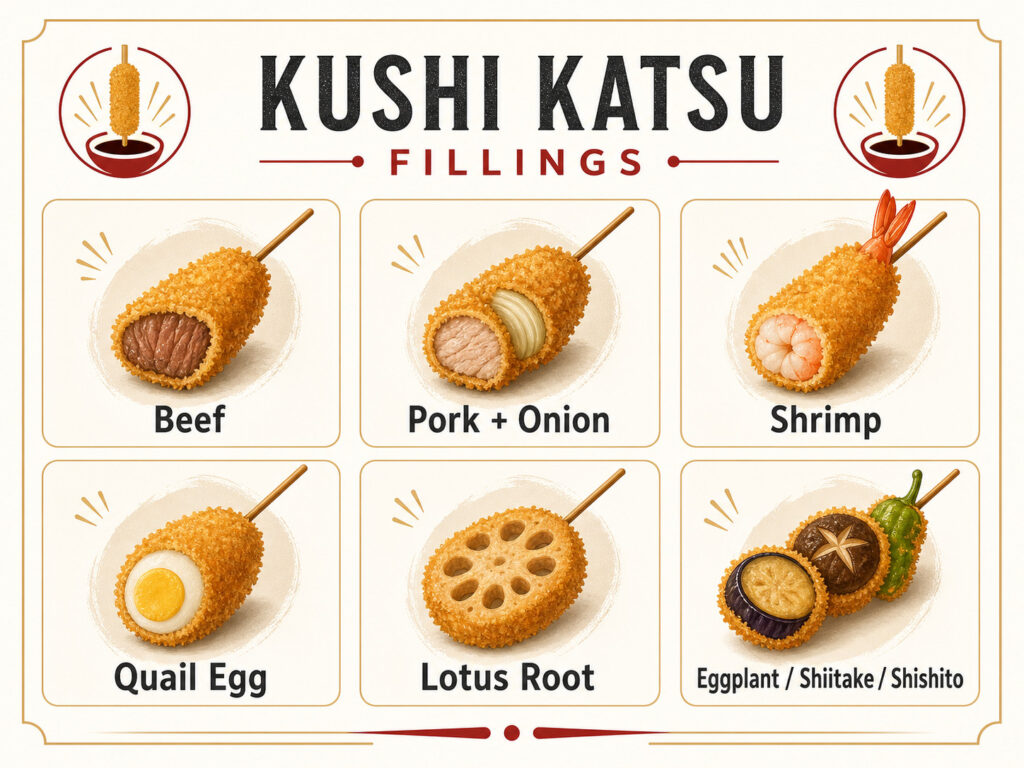
Almost anything works on a skewer. Still, a few fillings show up again and again. Here are the popular ones.
- Beef: the original and most classic filling.
- Pork and onion: a common, hearty pairing.
- Shrimp: juicy and sweet under the crust.
- Quail egg: small, rich, and creamy.
- Lotus root: crunchy and lightly sweet.
- Eggplant, shiitake, shishito: popular vegetable picks.
Kushikatsu Sauce and the No-Double-Dipping Rule
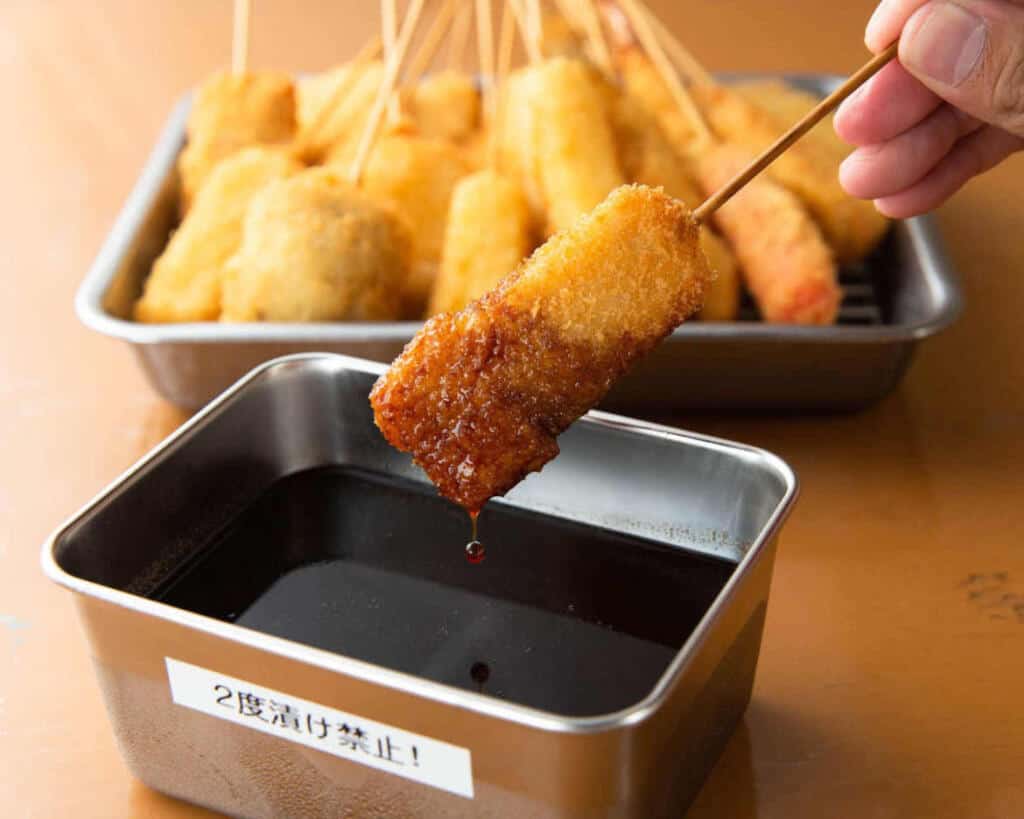
The sauce defines the experience. The classic is a thin, tangy Worcestershire-style sauce. Shops keep it in a shared container on the counter. So one rule matters above all: never dip twice.
No Double Dipping: everyone shares the sauce, so you dip each skewer only once. Want more sauce? Scoop it on with a piece of the free cabbage instead.
Some fans prefer other flavors too. Mustard pairs well with richer skewers. A little soy sauce suits shiitake nicely. The free cabbage on the table also cleanses the palate between bites.
How to Eat Kushi Katsu in Osaka
Eating it is part of the fun. Just follow three simple steps.
- Dip once: coat the skewer in the shared sauce a single time.
- Use cabbage: if you want more sauce, spoon it on with cabbage.
- Eat it hot: enjoy each skewer fresh, while the crust stays crisp.
Kanto vs Kansai Kushikatsu
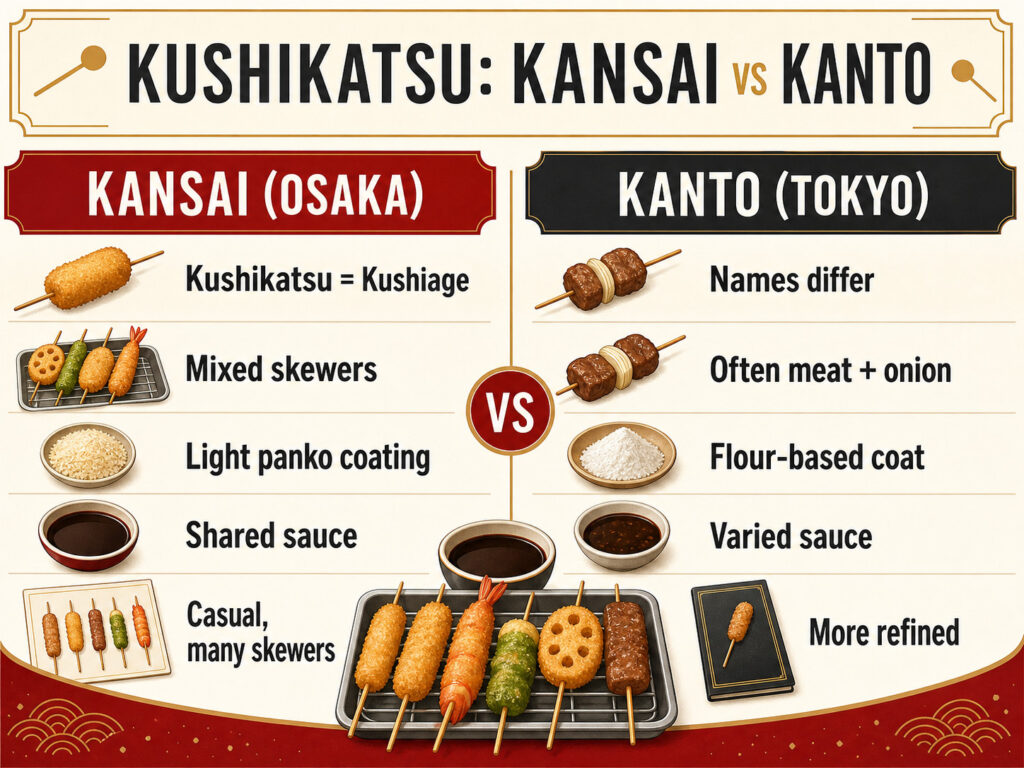
The dish changes between regions. In Osaka, kushikatsu and kushiage mean the same thing. In Tokyo, the two names point to slightly different foods. The table below makes it clear.
| Kansai (Osaka) | Kanto (Tokyo) | |
|---|---|---|
| Name usage | Kushikatsu = kushiage | The two names differ |
| Skewer composition | Mixed meat, seafood, vegetables | Kushikatsu often meat and onion |
| Batter style | Light panko coating | Sometimes a flour-based coat |
| Sauce | Shared thin tangy sauce | Often individual or varied |
| Ordering style | Casual, many cheap skewers | Can be more refined, course-like |
Why Shinsekai Is the Heart of Kushikatsu
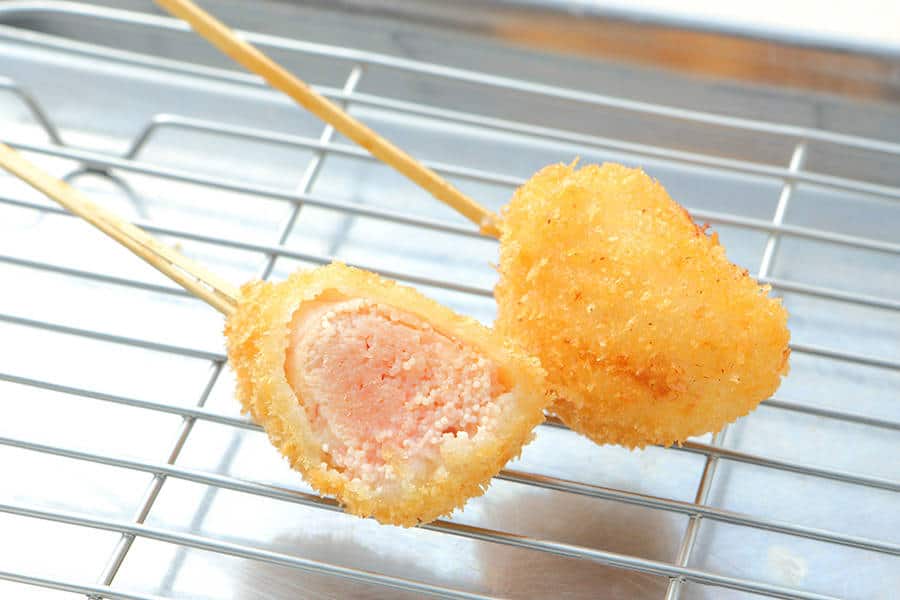
Shinsekai is the spiritual home of this dish. The retro district sits below Tsutenkaku Tower in south Osaka. Its old-school bars and stalls line every street. Here, kushikatsu grew up as cheap, filling food for workers.
The mood is loud, casual, and friendly. People stand at counters, beer in hand, skewers sizzling nearby. So a visit here feels like the real Osaka. For more of the city’s flavors, see our Osaka food guide.
History of Kushi Katsu
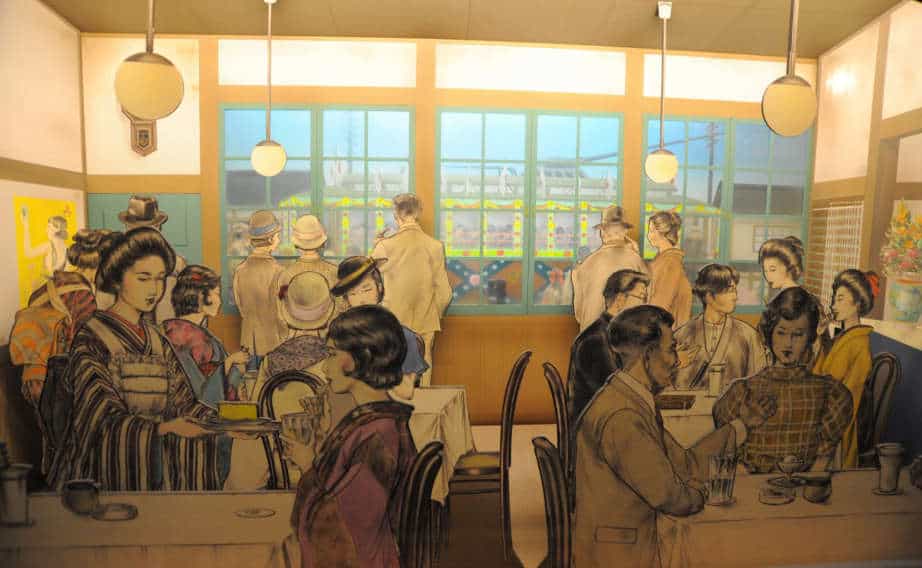
The most widely told story points to Osaka. Kushi Katsu likely began in Shinsekai around 1929. A shop owner served cheap fried skewers to laborers. Early cooks threaded bite-size meat and vegetables onto skewers before frying them.
At first, the skewers held only beef. Later, cooks added vegetables and seafood. Other theories trace it to Tokyo, and some link it to Nagoya’s miso katsu. Still, the Osaka origin is the version most people know today.
It belongs to Osaka’s konamon and casual-eating culture. The dish stayed cheap, quick, and made for sharing. To learn more, read about the world of Osaka’s konamon.
How to Make Kushi Katsu
You can make it at home with simple tools. The trick is the oil temperature and a light coating. Keep the oil around 160 to 170°C for an even fry.
Ingredients for 4 Servings
| Ingredient | Amount |
|---|---|
| Beef tenderloin | 400 g |
| Onion | 1/2 |
| Shiitake | 4 |
| Sweet potato | 1/2 |
| Eggplant | 1 |
| Egg | 1 |
| Flour | 300 g |
| Panko breadcrumbs | 1 1/2 cups |
| Oil for frying | 3-4 cups |
| Cabbage, tomato, lemon | to serve |
| Salt and pepper | to taste |
Steps
Rinse the vegetables, then pat them dry. Cut everything into bite-size pieces. Shred the cabbage and soak it in cold water.
Microwave the sweet potato for two to three minutes. This softens it before frying. Meanwhile, lightly pound the beef to tenderize it.
Thread the meat and vegetables onto bamboo skewers. Season them with a little salt and pepper. Then heat the oil to about 160 to 170°C.
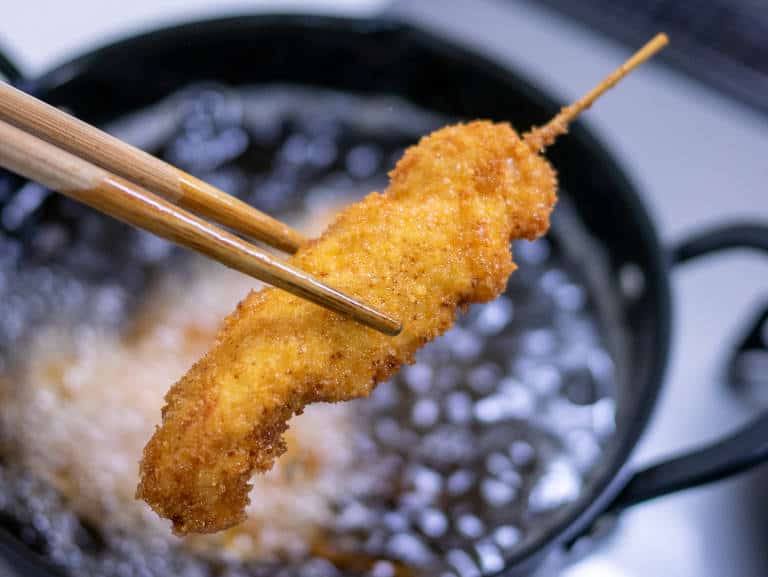
Dip each skewer in flour, then egg, then panko. Fry until the coating turns light golden. Harder vegetables need a little longer than soft ones.
Drain the excess oil on a rack. Serve hot with cabbage, tomato, and lemon. Add your favorite sauce on the side.
One tip helps a lot: fry in small batches. Crowding the pot drops the oil temperature fast. That makes the coating greasy instead of crisp.
Where to Eat Kushi Katsu in Osaka
Osaka has countless kushikatsu shops. A casual meal often costs a few hundred yen per skewer. A full sitting usually lands around 1,500 to 3,000 yen. Here are a few favorites by area and style.
Kushikatsu Daruma (Dotonbori)
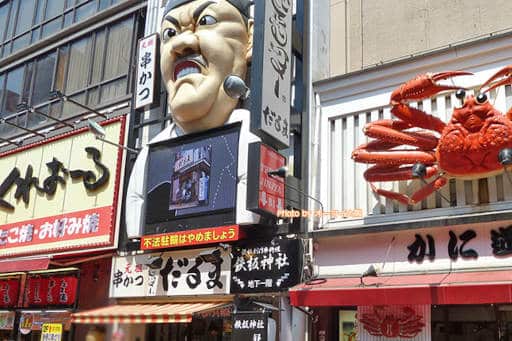
Daruma is the most famous kushikatsu name in Osaka. It has served since 1929, and the lines stay long. You can spot it by the angry-chef logo on the sign.
- Area: Dotonbori.
- Budget: casual and affordable.
- Best for: first-timers who want the classic taste.
Ageha Grand Front Osaka (Umeda)
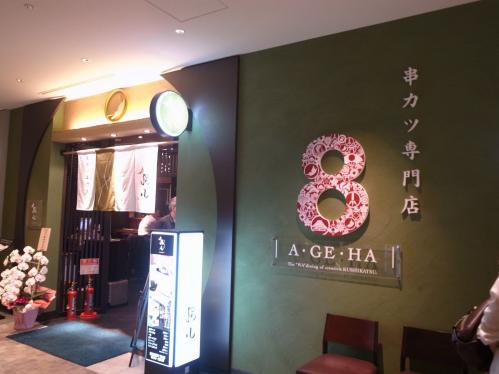
Ageha serves a lighter, fluffier style of skewer. It sits two minutes from Hankyu Umeda Station. The modern interior suits casual meals and small gatherings.
- Area: Umeda.
- Budget: mid-range.
- Best for: a tidy, modern sit-down meal.
Kushikatsu Katsu Whity Umeda (Umeda)
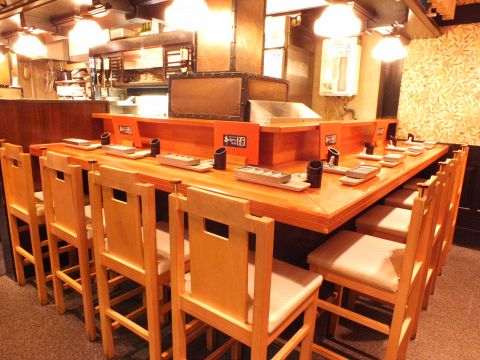
This shop has pleased diners since 1960. Its “Kushikatsu Gozen” set costs about 1,264 yen. The set brings miso soup and seven kinds of skewers. It sits a minute from Umeda Subway Station, with cozy counter seats.
- Area: Umeda (Whity underground mall).
- Budget: affordable set meals.
- Best for: a quick, good-value lunch.
Outside Osaka: Kushikatsu Tanaka
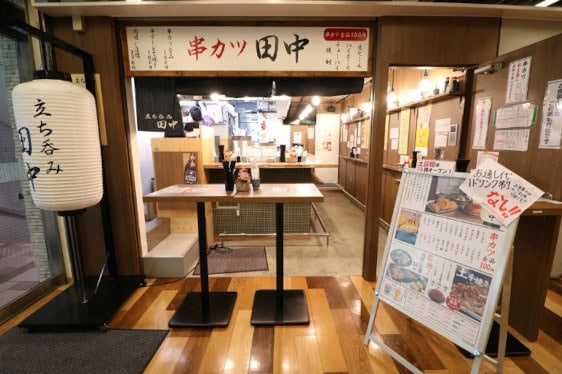
Kushikatsu Tanaka is a nationwide chain, big in Tokyo too. The Shinjuku branch draws workers and tourists alike. It is an easy way to try the dish outside Osaka.
- Area: Tokyo (and nationwide).
- Budget: casual and affordable.
- Best for: a taste of Osaka style away from Osaka.
Conclusion
Kushi Katsu sums up the spirit of Osaka. It is cheap, crisp, and made for sharing with a cold beer. The shared sauce and one-dip rule are part of the charm.
So when you visit, head to Shinsekai and order a few skewers. If you are exploring Osaka street food, pair this with our guides to takoyaki and Kansai-style okonomiyaki. For another local drinking dish, try doteyaki.
Kushi Katsu FAQ
What is kushi katsu?
Kushi katsu is Osaka’s deep-fried skewer dish. Cooks coat meat, seafood, or vegetables in panko, then fry them. The result is crisp outside and tender inside. People dip each skewer in a tangy sauce.
Where did it originate?
Most people trace it to Osaka’s Shinsekai district. It likely appeared around 1929. A shop owner served cheap fried skewers to local workers. Other theories mention Tokyo, but the Osaka story is best known.
What is the difference between kushikatsu and kushiage?
In Osaka, the two words mean the same dish. In Tokyo, they can differ slightly. There, kushikatsu often means meat and onion skewers. Kushiage covers a wider mix of meat, seafood, and vegetables.
What sauce goes with it?
The classic is a thin, tangy Worcestershire-style sauce. Shops keep it in a shared container. Some diners also enjoy mustard or a little soy sauce. The flavor stays light so it does not mask the filling.
Why can’t you double dip?
The sauce sits in a shared container for everyone. Dipping a bitten skewer again is unhygienic. So shops allow just one dip per skewer. If you want more, scoop sauce on with a piece of cabbage.
Where should I eat it in Osaka?
Shinsekai is the classic place to start. Dotonbori and Umeda also have great shops. Famous spots like Daruma draw long lines. Arrive early or off-peak to cut the wait.
Is kushi katsu vegetarian-friendly?
You can find vegetable and cheese skewers at most shops. However, kitchens often share the frying oil with meat. The communal sauce may also contain non-vegetarian ingredients. So ask the staff if you avoid animal products.
How much does it cost?
Casual shops charge a few hundred yen per skewer. A full meal often runs 1,500 to 3,000 yen. Set menus can be cheaper and easier for first-timers. Drinks and extra skewers add to the total.
References
- Wikipedia, Kushikatsu, https://en.wikipedia.org/wiki/Kushikatsu (Surveyed: June 2026)
- Osaka Convention & Tourism Bureau, Osaka Food Guide, https://osaka-info.jp/en/ (Surveyed: June 2026)
- Kushikatsu Daruma, Official Site, https://kushikatu-daruma.com/ (Surveyed: June 2026)
Related Articles
- Takoyaki (たこ焼き) (Surveyed: June 2026)
- Kansai Style Okonomiyaki (関西風お好み焼き) (Surveyed: June 2026)
- Doteyaki (どて焼き) (Surveyed: June 2026)
- The World of Osaka’s Konamon (Surveyed: June 2026)
- Osaka Food Guide (Surveyed: June 2026)



Comments