





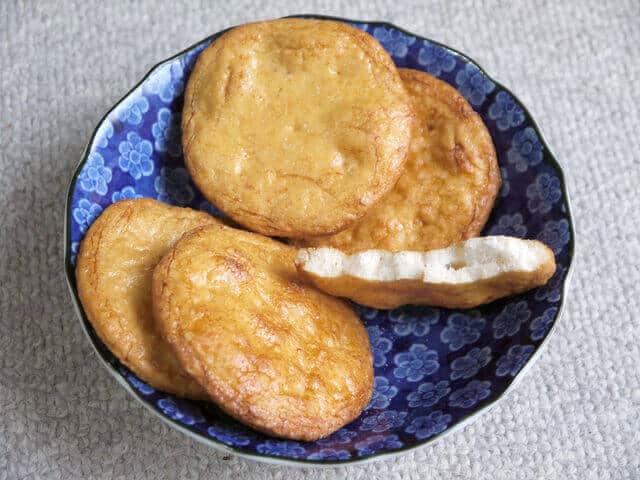
Senbei are traditional Japanese rice crackers made from rice or flour, then grilled, baked, or fried until crisp. Children and older adults both enjoy this crunchy snack across Japan. Many people in Japan love senbei, and shops sell it in nearly every train station and supermarket. There is not just one type of senbei. Each variety differs by ingredient, flavor, size, and cooking method. One theory says it came from China, though nobody can confirm this for certain. This guide covers what senbei is, its history, how to make it at home, popular flavors, and where to buy it in Japan.
What Is Senbei?
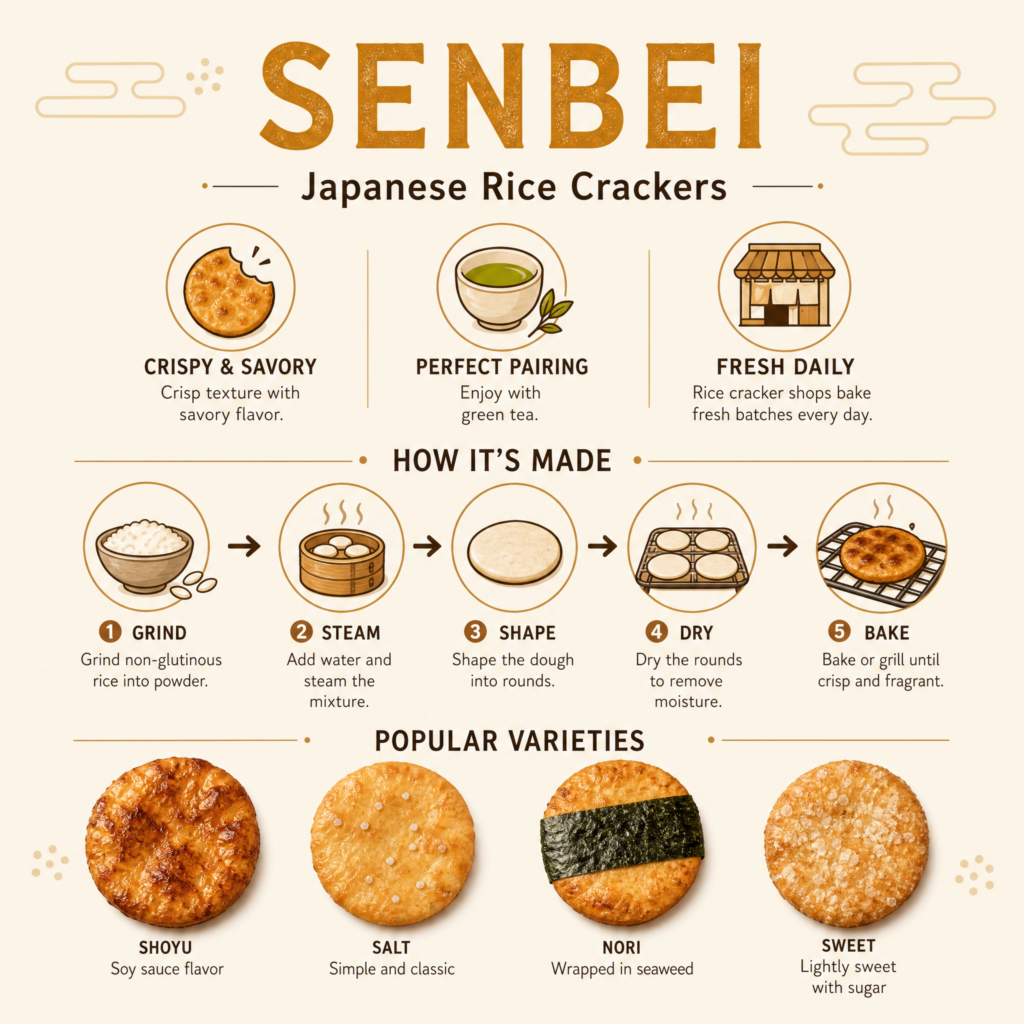
Senbei is a Japanese rice cracker made from non-glutinous rice flour, water, and seasoning. Makers steam the dough, shape it into rounds, dry it, then grill or bake it until firm. People usually eat senbei with green tea as a light afternoon snack.
Most senbei get their flavor from soy sauce or salt, though sweeter versions exist too. Rice cracker shops across Japan bake fresh batches daily, and the smell alone draws customers off the street. A good shoyu senbei smells lightly smoky, cracks sharply when bitten, and leaves a salty soy sauce finish.
To make it, producers grind non-glutinous rice into powder, add water, then steam the mixture. Makers shape the dough into rounds, dry it, and bake it until crisp. Okaki and arare look similar, but they come from glutinous rice instead, which changes both the texture and the chew. For a broader look at Japanese confections beyond senbei, the Japanese Snacks Guide covers wagashi and other treats worth trying.
Senbei vs Arare vs Okaki
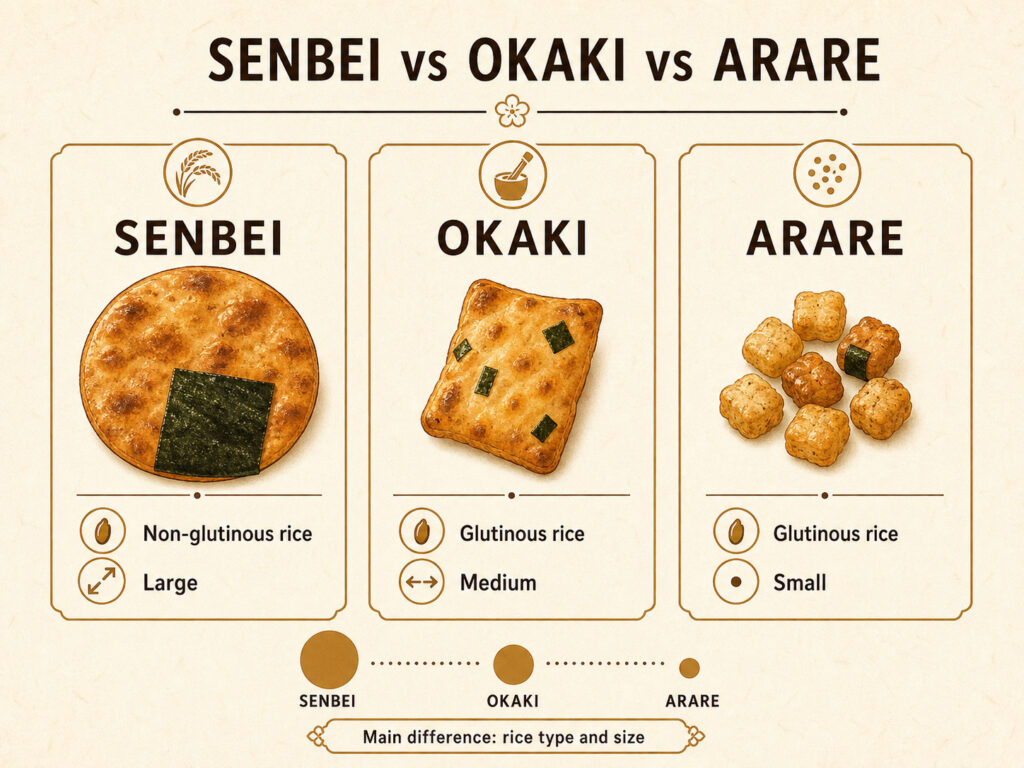
Readers often confuse these three snacks, and honestly, the names alone don’t help much. Senbei uses non-glutinous rice, while arare and okaki both rely on glutinous rice. Size sets arare and okaki apart from each other. Okaki pieces run larger, while arare stays bite sized, often no bigger than a coin.
| Snack | Main Ingredient | Typical Size | Texture |
|---|---|---|---|
| Senbei | Non-glutinous rice (uruchimai) | Large, palm sized | Hard, crisp, dense |
| Okaki | Glutinous rice (mochigome) | Medium, bite sized | Light, airy crunch |
| Arare | Glutinous rice (mochigome) | Small, pea sized | Small crunchy bits |
Some senbei break this rule slightly. Kawara senbei and nanbu senbei use wheat flour rather than rice, which is why regional variety matters so much in this snack category. For a wheat-based example from western Japan, try the Kawara senbei from Hyogo and Kagawa.
Senbei History
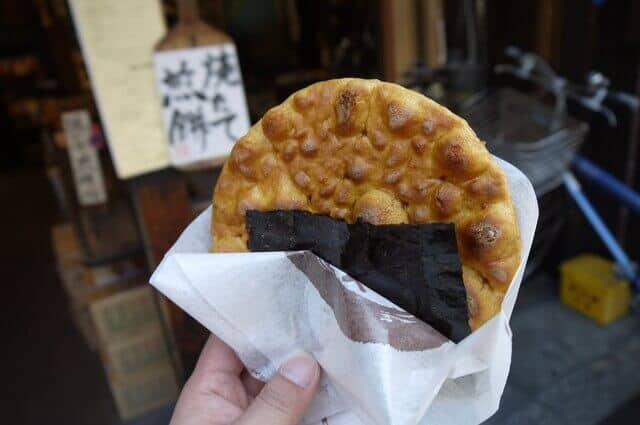
Senbei history involves several competing stories rather than one confirmed origin. These are folklore and popular legend, not verified historical records, so it helps to treat them as theories rather than facts.
- Some say the Buddhist monk Kukai brought the technique back from China during the Heian period.
- Others credit a follower of the tea master Sen no Rikyu with creating an early version as a tea snack.
- Rice and mochi dumplings were already common food during the Yayoi era, according to oral tradition, though this predates senbei as a distinct snack.
Whatever the true origin, senbei did not become a proper snack food until after the Muromachi period. Many of today’s famous senbei brands trace their roots to the Edo period instead.
In one popular origin story, farmers steamed leftover rice, mixed it with salt, shaped it, dried it in the sun, and grilled it over charcoal. Soka, a post town along the Oshu Highway, became known for this style. Makers did not use soy sauce until later, when shoyu-flavored senbei became common and eventually overtook the plain salted version in popularity.
Why Is Senbei Round?
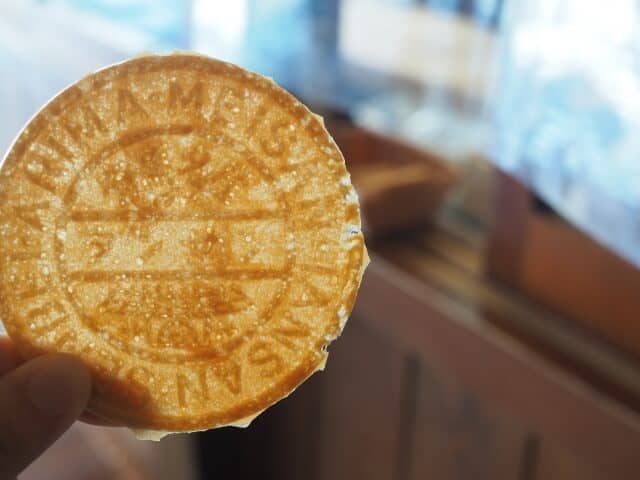
This is one of the most repeated senbei legends, separate from the origin theories above. An old woman named Osen reportedly ran a teahouse along the Nikko Kaido in Soka during the Edo period, selling rice dumplings to travelers. A passing samurai noticed leftover dumplings being thrown into the river and suggested flattening and baking them instead of wasting them.
When Osen crushed the dumplings by hand, they naturally spread into round shapes before baking. That accidental shape stuck, and it remains the standard form for senbei today. Local records in Soka City still reference this story as the most beloved, even though historians cannot fully verify it.
What Does Senbei Taste Like?
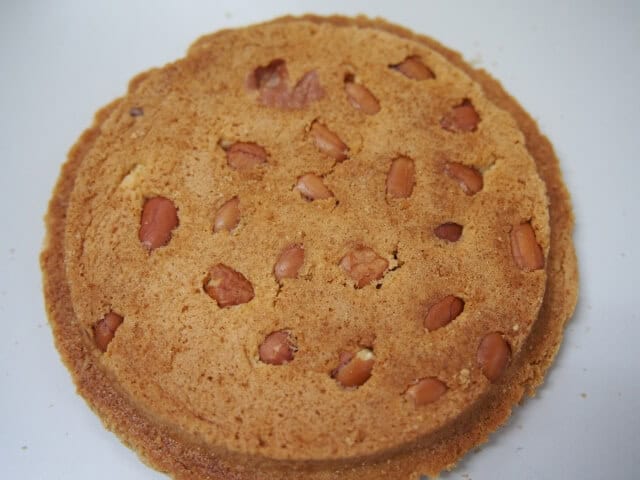
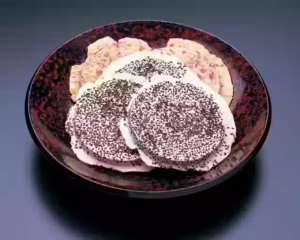
Soy sauce senbei tastes salty and slightly sweet, with a smoky edge from grilling. Salt senbei skips the sweetness entirely, leaning on a clean, simple crunch instead. Seaweed senbei adds a briny, oceanic note on top of the soy base, while sesame versions bring a nutty aroma that lingers after each bite.
Sugar-glazed senbei taste closer to a light cookie than a savory cracker. Spicy varieties, often coated in chili or wasabi, catch newcomers off guard the first time. Salad-flavored senbei, despite the odd name, usually taste mildly sweet and buttery rather than vegetable-like. Texture matters as much as flavor here. The chewing and crunching sound itself is part of the appeal for many fans.
Popular Types of Senbei in Japan
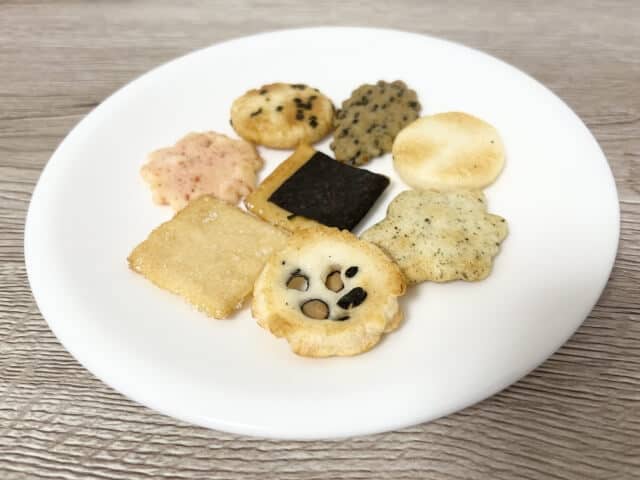
Japan has many kinds of senbei. Thickness, seasoning, toppings, and cooking method all change the final texture and taste. Below are the styles most travelers will encounter.
Shoyu Senbei
Shoyu senbei, also called atsuyaki senbei, is the thick, standard version most people picture first. Bakers coat it heavily in soy sauce, giving it a hard, chewy bite that holds up well with tea.
Nori Senbei
Nori senbei wraps a soy-flavored cracker in dried seaweed sheets. The seaweed adds a savory depth that pairs naturally with the salty base underneath.
Soka Senbei
Soka senbei comes from Saitama Prefecture and carries the name of the town most associated with senbei’s origin. It is hard-baked, sun-dried, and known for a strong soy sauce flavor with almost no sweetness.
Kawara Senbei
Kawara senbei uses wheat flour instead of rice, giving it a lighter, more brittle bite. It gets its name from its roof-tile shape and is closely tied to Hyogo and Kagawa regions.
Arare and Okaki Differences
Both come from glutinous rice, but arare stays small and bite sized, while okaki pieces run larger. Shops often sell arare as a mixed bag with several flavors in one package. Readers curious about a seasonal version can also look into Hina-arare, a colorful type served during Girls’ Day in March.
A few more varieties round out the category, each with its own regional following.
Usuyaki Senbei (Thin Crackers)
Usuyaki senbei is thinner and lighter than atsuyaki senbei. Its seasoning is not limited to soy sauce, and salty variations are common too.
Fried Senbei
Deep-fried senbei tends to carry a simple salty taste, though some brands add a sweet soy glaze for contrast.
Nure Senbei (Wet Rice Cracker)
Nure senbei comes from Choshi City, Chiba Prefecture, known for both rice farming and soy sauce production. Makers bake the dough, then soak it in soy sauce while it is still hot, producing a soft, chewy bite unlike most senbei. This style resembles Kaki mochi from Chiba, another regional rice snack worth trying.
Genkotsu
Genkotsu senbei is large, hard, and very chewy. Bakers usually season it with dark tamari soy sauce for a deeper, saltier finish.
How to Eat Senbei
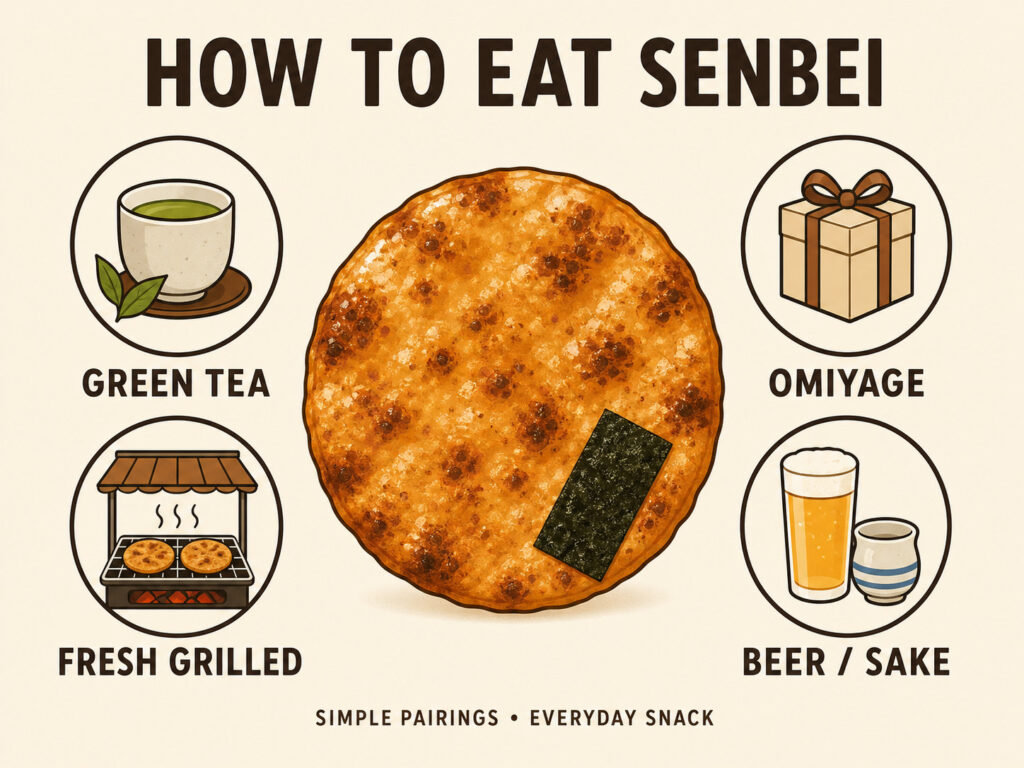
Green tea is the classic pairing for senbei, and honestly, it’s hard to beat. The bitterness of the tea balances the salty, sweet crunch nicely. Many travelers also buy senbei as omiyage, the small gift boxes people bring back from trips around Japan.
At festivals, vendors sometimes grill senbei fresh at outdoor stalls, brushing on soy glaze right before handing it over. For a more casual approach, senbei works well as a beer or sake snack, especially the spicier or saltier varieties. It’s a flexible snack that fits almost any setting, from formal tea service to a quick bite on a train platform.
Senbei Recipe
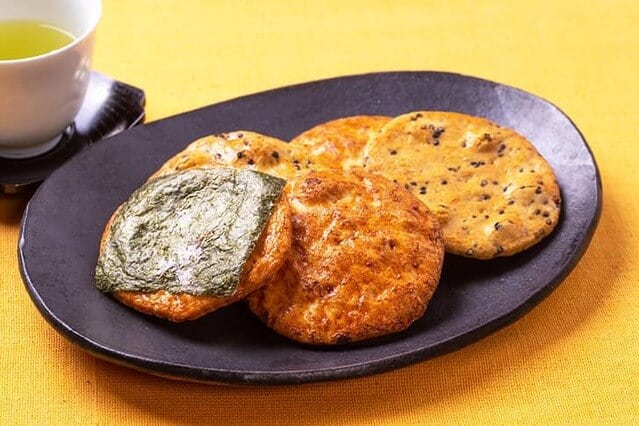
Making senbei at home takes patience more than skill. The sun-drying step alone takes several days, but the process itself is fairly simple once you get the rhythm down.
Senbei Ingredients
| Ingredient | Amount | Role | Substitution Note |
|---|---|---|---|
| Rice (uruchimai) | 130g | Base dough | Use short-grain Japanese rice; other rice types change texture |
| Boiling water | 100g | Binds and softens dough | No real substitute; must be hot for kneading |
| Soy sauce | 30g | Main flavor and glaze | Tamari works for a darker, richer taste |
| Sugar | 30g | Balances saltiness | Can reduce for a saltier, less sweet cracker |
How to Make Senbei
Wash the rice well, then dry it completely. Look for a whitish, opaque color rather than transparency. Grind the dried rice into a fine powder.
Make a small hollow in the rice powder and pour in boiling water. Stir with a spoon first. Once it cools slightly, knead it by hand until smooth.
Divide the dough into ping-pong-ball sizes. Press a small indent into each piece so heat can pass through evenly. Steam for about 30 minutes, checking that the dough turns slightly translucent.
Transfer the dough to a plastic-wrapped mortar. Pound it with a wrapped pestle, folding repeatedly, until it feels as soft as an earlobe. Split it in two, then cool each half in water to about 40°C.
Remove the dough from the water and knead out the extra moisture. Roll it flat on a baking sheet to about 3mm thick. Cut rounds using the rim of a cup.
Dry the rounds in direct sun for 3 to 5 days. This step brings out the rice’s natural sweetness. Let them dry until they crack slightly when bent.
Grill the dried rounds close to the heat source. When the dough puffs up, press it flat with a spatula. Brush on a soy sauce and sugar mixture. Listen for a light crackling sound as the glaze soaks into the hot cracker.
Where to Buy Senbei in Japan
Convenience stores and supermarkets stock basic senbei packs nationwide, usually near the snack aisle. Depachika, the basement food floors of department stores, carry premium gift boxes with wider flavor selections. Airports sell senbei too, often packaged specifically as omiyage for travelers heading home.
Soka City in Saitama has specialty shops dedicated entirely to senbei, given the town’s history with the snack. Traditional senbei shops in Tokyo, like the ones below, hand-bake crackers fresh daily rather than relying on factory production.
Bishamon Senbei Fukuya (毘沙門せんべい福屋)
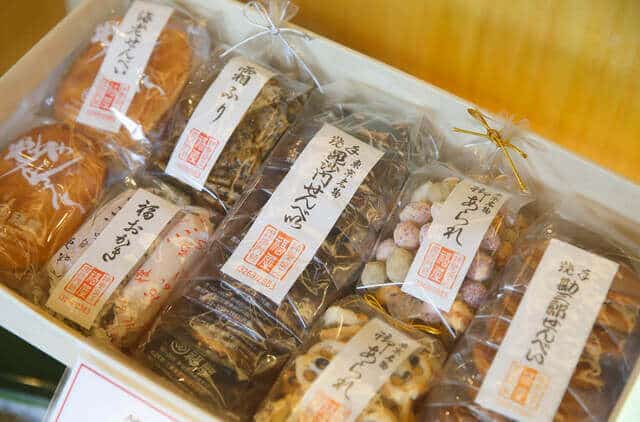
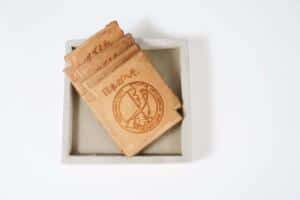
This shop sells sun-dried Bishamon senbei among a wide product lineup. The charred spots aren’t a mistake. They actually add to the flavor. Each cracker carries a soy sauce taste with a faint sweetness, sized to fit comfortably in one hand.
Kanda Tanpei (神田淡平)
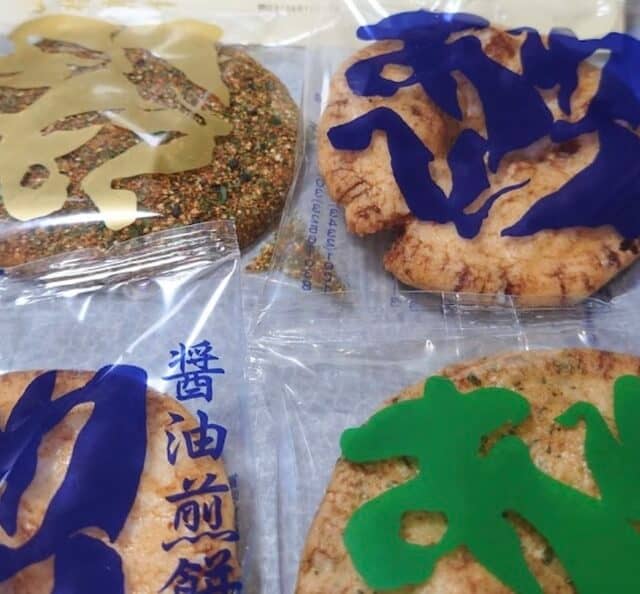
Kanda Tanpei mills domestic rice and makes its dough in house. The shop layers the dough carefully to bring out the rice’s natural flavor. Soy sauce saltiness and rice sweetness balance well in every bite.
Miharado Main Store (三原堂本店)
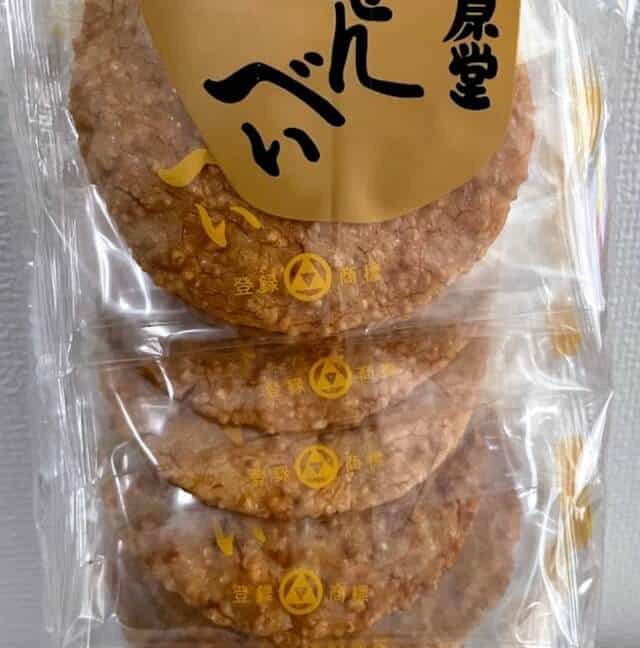
Miharado focuses on hand-baked soy sauce senbei alone, but the quality shows in every batch. Despite being a Japanese confectionery shop at heart, senbei sales now rival the rest of their menu. High-quality salt and a fragrant soy glaze leave a lingering aftertaste worth seeking out.
How Much Does Senbei Cost?
Supermarket packs of senbei generally cost a few hundred yen for a bag of six to ten pieces. Premium gift boxes from department stores or specialty shops run higher, often reflecting thicker crackers or hand-baked quality. Handmade pieces from artisan shops can cost several hundred yen each, especially for large, thick shoyu senbei. Prices shift by season and shop, so treat these as general ranges rather than fixed numbers.
Is Senbei Vegetarian or Vegan?
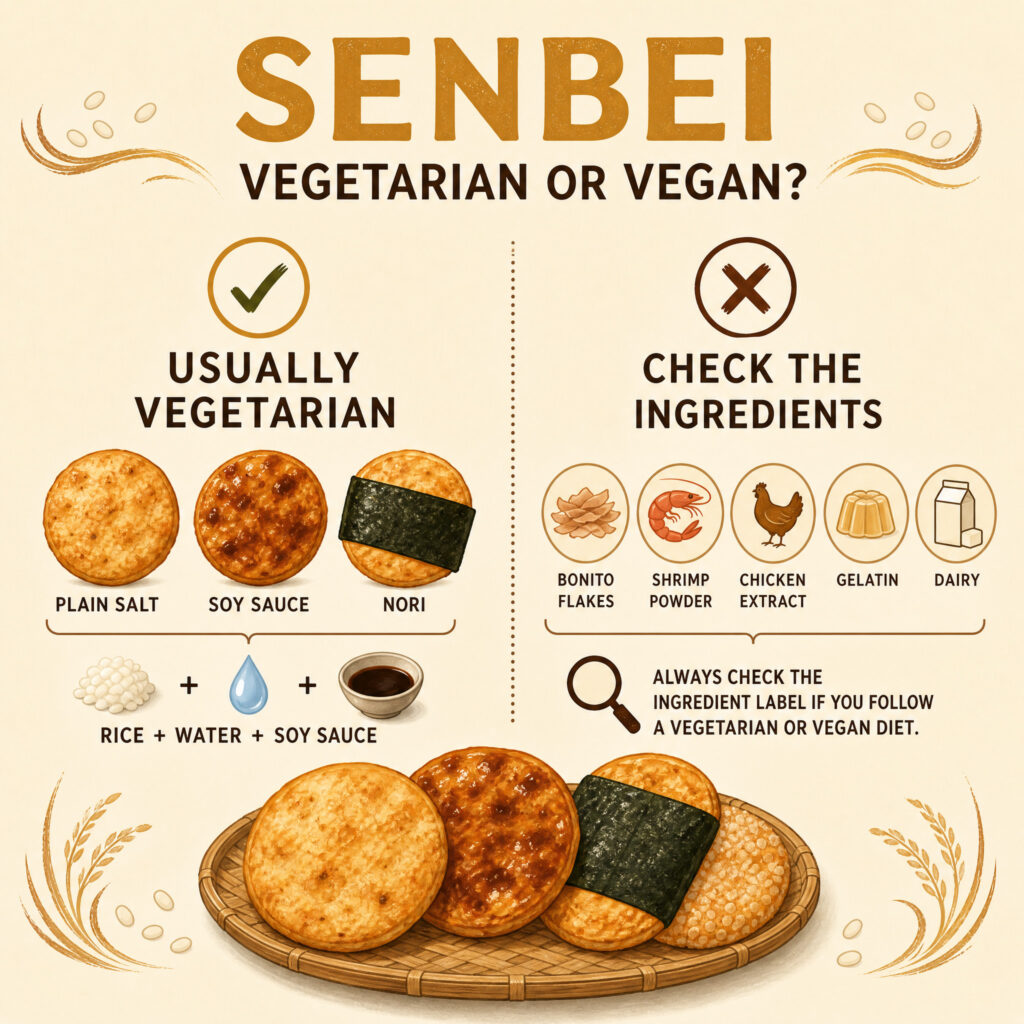
Plain salt, soy sauce, and nori senbei are usually vegetarian, since the core ingredients are just rice, water, and soy sauce. That said, some brands add bonito flakes, shrimp powder, chicken extract, gelatin, or dairy for extra flavor. Always check the ingredient label if you follow a vegetarian or vegan diet, since these additions aren’t always obvious from the flavor name alone.
How to Store Senbei
Senbei loses its crunch quickly once exposed to air, so storage matters more than people expect. Keep unopened packs in a cool, dry spot away from direct sunlight. After opening, transfer leftover pieces to an airtight container right away. Humidity is the main enemy here. Even a few hours in a damp kitchen can soften the texture noticeably. If your senbei goes slightly soft, a quick re-toast in a toaster oven can sometimes bring back some of the crispness.
Is Senbei Healthy?
Senbei is not really a health food, though it’s not the worst snack option either. Plain rice-based senbei is relatively low in fat, but soy sauce coating adds a fair amount of sodium. Fried varieties carry more fat than baked ones. Sweet, sugar-glazed senbei adds extra calories on top of the base cracker. Moderation is the simplest approach if sodium or sugar intake is a concern.
Final Thoughts
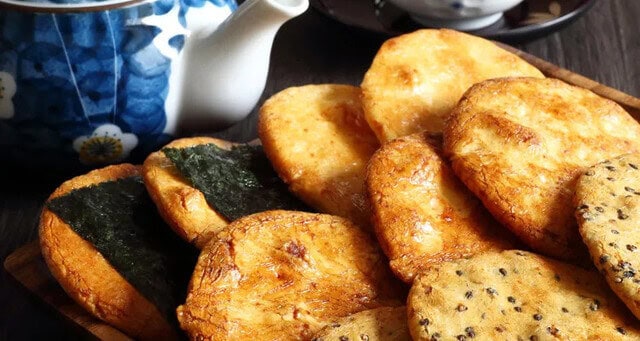
Senbei can be sweet or savory, plain or bold, simple or surprisingly complex. Sweet versions come coated in zarame sugar or flavored with fruit, while savory ones range from wasabi to curry blends. It’s easy to lose track of how many crackers you’ve eaten with a cup of tea in hand. That’s part of the charm, honestly. Once you understand the different types, from shoyu senbei to delicate okaki, choosing a bag at the store feels a lot less overwhelming.
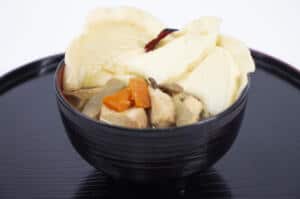
There are other Japanese snacks worth trying too, including Kaminari Okoshi, Hina-arare, and a warm soup version called Aomori senbei jiru.
Senbei FAQ
- What is senbei?
-
Senbei is a Japanese rice cracker made from non-glutinous rice flour, water, and seasoning, usually soy sauce or salt. Makers steam the dough, shape it into rounds, dry it, then grill or bake it until crisp. People often eat it alongside green tea as a light snack. It differs from arare and okaki, which both use glutinous rice instead.
- Is senbei healthy?
-
Senbei isn’t unhealthy in small amounts, but it’s not a health food either. Baked, plain versions are lower in fat than fried ones. Soy sauce coating adds sodium, and sweet varieties add sugar on top of the base cracker. Eating it in moderation is the simplest way to enjoy it without much worry.
- What does senbei taste like?
-
Most senbei taste salty and slightly sweet, with a strong soy sauce flavor and a smoky edge from grilling. Some varieties lean sweeter, coated in sugar or syrup, while others go savory with wasabi or curry seasoning. Texture plays a big role too, since the sharp crunch is part of why people enjoy it so much.
- Is senbei vegetarian?
-
Plain salt and soy sauce senbei are usually vegetarian, since the base ingredients are just rice and seasoning. However, some brands add bonito flakes, shrimp powder, or chicken extract for extra flavor. Checking the label is always the safest step if you avoid animal products.
- Where can I buy senbei in Japan?
-
Supermarkets and convenience stores sell basic senbei packs almost everywhere in Japan. Department store basements, known as depachika, carry premium gift boxes with wider flavor options. Traditional senbei shops, especially in areas like Soka City or Tokyo’s old neighborhoods, hand-bake crackers fresh for a more authentic taste.
References
- Soka City Official Website — History and Present of Soka Senbei (Surveyed: July 2026)
- Wikipedia Japan — Nure Senbei Origin and History (Surveyed: July 2026)
- Arigato Travel — Senbei, Arare, and Okaki: Not Your Conventional Rice Crackers (Surveyed: July 2026)
- Japanese Products Blog — Senbei vs. Okaki vs. Arare: Japanese Rice Crackers (Surveyed: July 2026)
- Beika Mochi — What Is the Difference Between Okaki and Senbei? (Surveyed: July 2026)
- Kodawari Times — History and Things to Do in Soka City, Saitama, Japan (Surveyed: July 2026)
- Miharado Main Store — Official Store Information (Surveyed: July 2026)
Related Articles
- Japanese Snacks Guide (Surveyed: July 2026)
- Kawara Senbei (Surveyed: July 2026)
- Kaki Mochi (Surveyed: July 2026)
- Hina-arare (Surveyed: July 2026)
- Senbei Jiru (Surveyed: July 2026)



Comments
List of comments (1)
cialis pills Declaration of Competing Interest None declared