




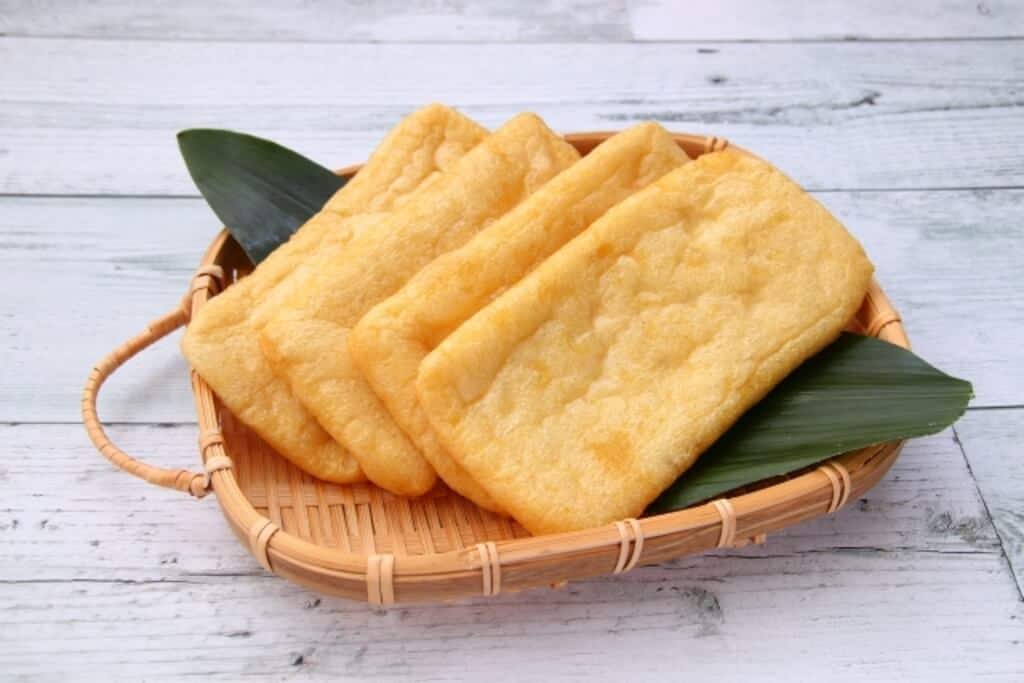
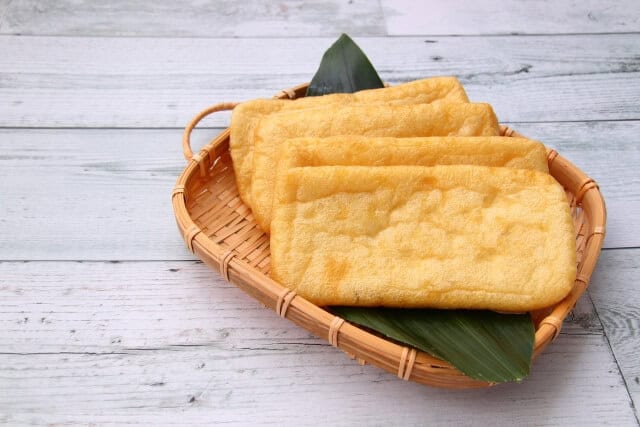
Aburaage (油揚げ) is thin Japanese deep-fried tofu with a golden, spongy texture. Cooks across Japan add it to miso soup, inari sushi, and noodle dishes. It looks simple, but it changes the depth of a dish remarkably fast. You make it by frying thin tofu slices twice in oil: first at low heat, then at high heat. This two-step process creates a hollow, airy interior that soaks up broth with ease.
What is Aburaage?
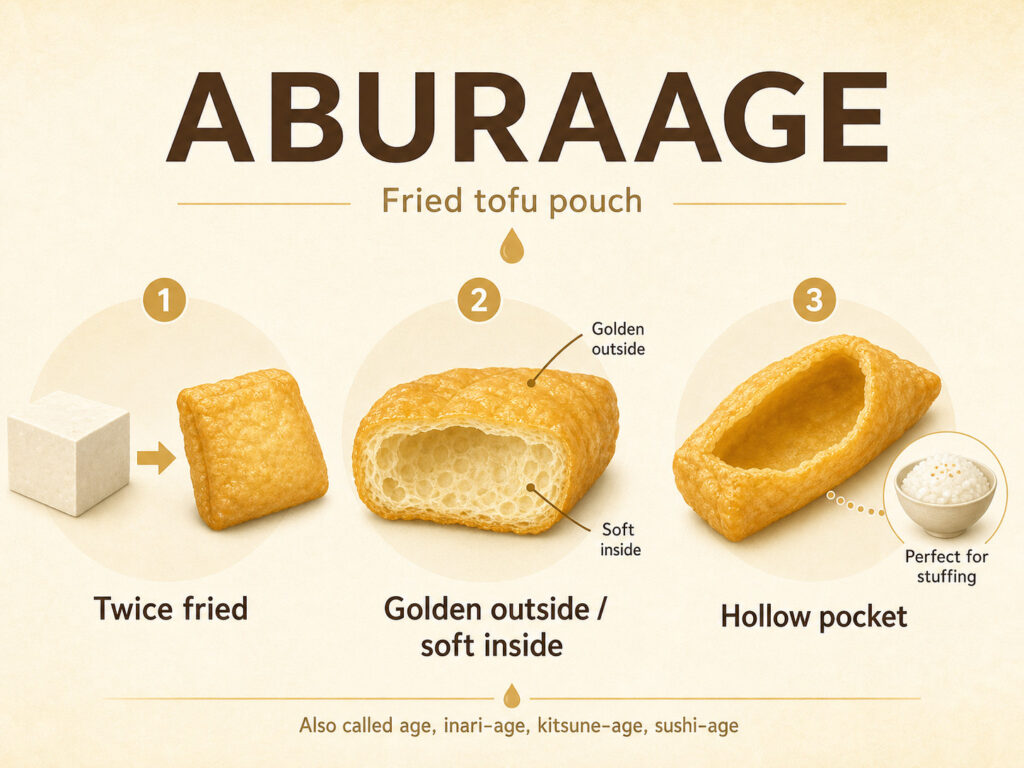
Aburaage is a thin tofu pouch that cooks fry twice in oil. Makers prepare it differently from regular tofu so it puffs up well during frying. The outside turns golden and slightly crispy. Inside, however, the texture stays soft and airy. When you cut it open, you find a hollow pocket perfect for fillings. This hollow space makes aburaage ideal for stuffing with vinegared rice, as in inari sushi.
Japanese cooks sometimes call it just “age.” They also use the names inari-age, kitsune-age, and sushi-age depending on how they plan to serve it. These names reflect the dish, not the ingredient itself.
Aburaage vs Atsu-age
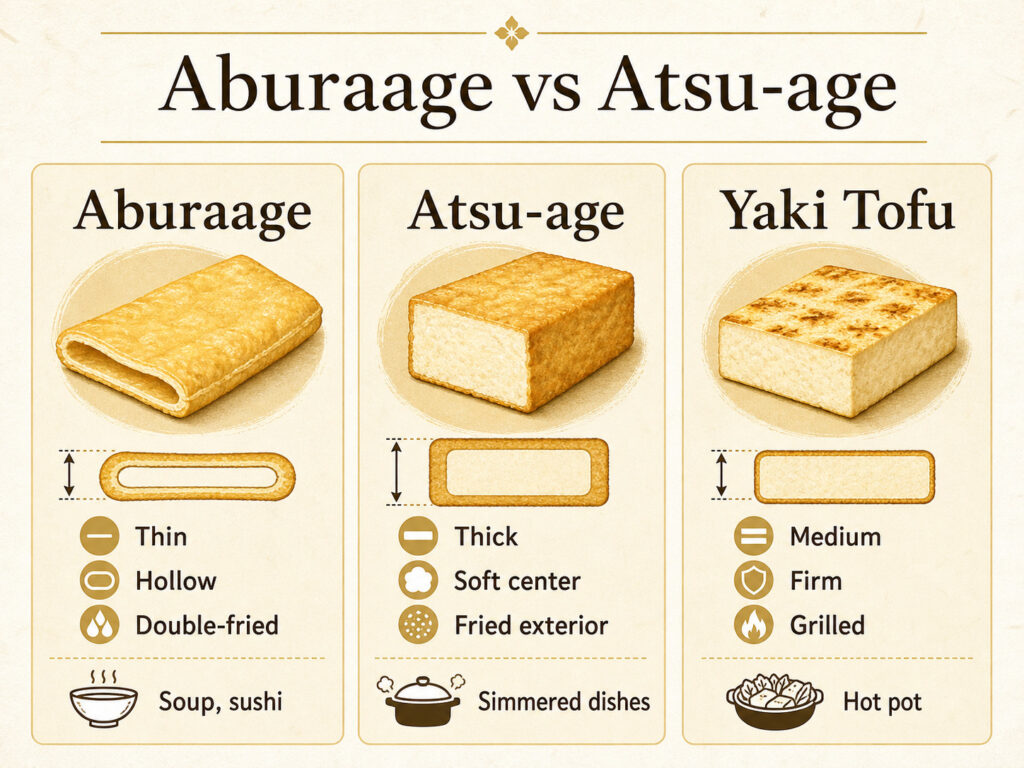
Aburaage, atsu-age, and yaki tofu look similar but behave very differently in cooking. The table below shows the key differences at a glance.
| Type | Thickness | Interior | Cooking Method | Common Uses |
|---|---|---|---|---|
| Aburaage (油揚げ) | Thin (~1 cm) | Hollow, spongy | Double-fried in oil | Miso soup, inari sushi, kitsune udon |
| Atsu-age (厚揚げ) | Thick (2–3 cm) | Raw tofu inside | Fried exterior only | Simmered dishes, oden |
| Yaki Tofu (焼き豆腐) | Medium | Firm, dense | Grilled over flame | Sukiyaki, hot pot |
Aburaage is the thinnest and most hollow of the three. Japanese cooks call the thicker version atsu-age (厚揚げ), which holds raw tofu at its core. Meanwhile, yaki tofu is grilled over flame rather than fried at all. Instead of a hollow center, it keeps a firm, dense texture throughout. Knowing these differences helps you choose the right ingredient for each dish.
Aburaage History
The exact origin of aburaage is not fully clear. However, historical records offer some useful clues. A popular cookbook from 1782, the Tofu Hyakuchin, may have included fried tofu. By 1853, tofu pouches had already gained wide recognition throughout Japan. We can trace this from early records of inari sushi, which uses the pouches to wrap vinegared rice.
One popular theory traces aburaage to the Muromachi period, roughly 500 years ago. Tradition holds that Buddhist monks created fried tofu as a meat alternative. Buddhism forbade animal slaughter, so monks relied on tofu for protein instead. They experimented to give tofu a richer, more satisfying texture. Through trial and error, aburaage gradually emerged from temple cuisine.
Japanese folklore also links aburaage to foxes and the Inari deity. Old stories say that foxes favor fried tofu above all other foods. Royals reportedly used aburaage as bait during fox hunts long ago. This folklore explains why aburaage appears so often near Inari shrines and in inari sushi even today.
What Does Aburaage Taste Like?
Aburaage has a mild, savory flavor that comes from its soybean base. The outer skin feels slightly firm when fresh but softens quickly in hot liquid. Inside, the texture is spongy and delicate. Because it absorbs liquid so readily, aburaage takes on whatever flavors surround it. In miso soup, for example, it soaks up dashi and miso beautifully. On its own, the taste stays subtle. However, that subtle quality is part of its appeal. Rather than overpowering a dish, aburaage supports and rounds out the other flavors.
How Aburaage Is Made
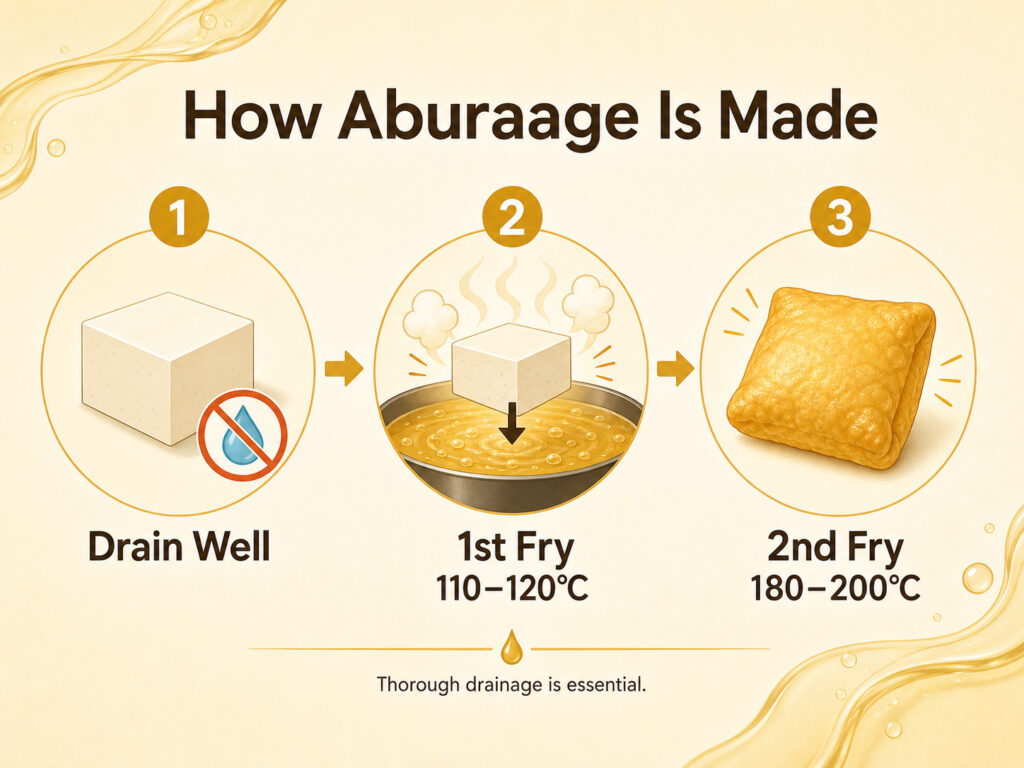
The process starts with firm tofu that makers slice thin, roughly 1 cm thick. First, the tofu must drain completely before going into the oil. Any remaining water causes cracking or large holes during frying. Next, makers lower the slices into oil at 110–120°C. During this stage, steam escapes through the protein and the tofu expands from inside. Then they raise the oil temperature to 180–200°C. This second frying seals the protein film and keeps the pouch puffed up. Even after cooling, a well-made aburaage holds its airy shape. Thorough drainage is the single most critical step in the whole process.
How to Prepare Aburaage Before Cooking
Fresh or packaged aburaage often holds excess oil from the frying process. Most Japanese cooks remove this before using the tofu in any dish. They call this step abura nuki (油抜き), meaning “oil removal.” The simplest way involves pouring boiling water over the aburaage and pressing it gently with a paper towel. Alternatively, you can blanch it in hot water for about 30 seconds. After draining, press it between two layers of kitchen paper to absorb remaining moisture. This reduces excess fat and helps the pouch take on seasonings more cleanly. Especially for miso soup and simmered dishes, abura nuki makes a noticeable difference in the final flavor.
How to Use Aburaage in Japanese Dishes
Aburaage works in a wide range of traditional Japanese recipes. Here are five common ways cooks use it throughout Japan.
Miso Soup
Slice aburaage into thin strips and add them to dashi broth with miso paste. The pouch absorbs the broth quickly and adds body to the soup. For extra depth, combine it with seasonal vegetables like spring cabbage or Chinese chives.
Inari Sushi
Open the aburaage pouch and fill it with seasoned vinegared rice. This gives you one of Japan’s most beloved lunchbox dishes. For a full preparation guide, see our article on inari sushi.
Kitsune Udon or Soba
Place a whole piece of sweetened aburaage on top of a bowl of hot udon or soba. Kitsune means “fox” in Japanese, which ties back to the old folklore about foxes and fried tofu. The sweet-savory contrast between the tofu and broth makes this dish distinctive.
Takikomi Gohan
Chop aburaage into small pieces and simmer it with rice, soy sauce, and seasonal vegetables. The tofu absorbs the seasoning during cooking and adds savory depth. This mixed rice dish suits both everyday meals and festive occasions.
Oden
Add whole pieces of aburaage to oden, Japan’s classic winter stew. Over time, the tofu soaks up the light dashi broth and becomes tender throughout. It is one of the most satisfying ingredients in the pot on a cold winter evening.
Aburaage Recipe
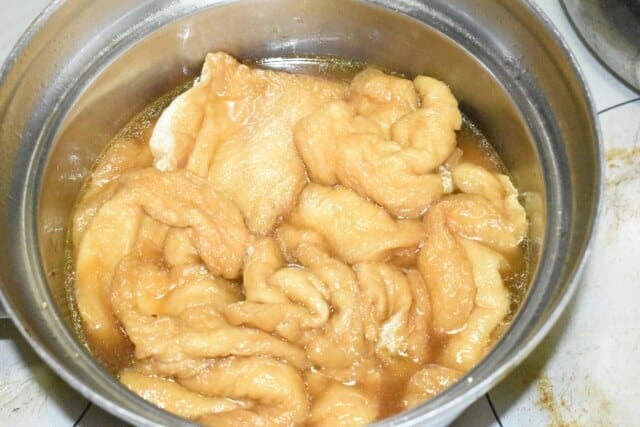
Basic Aburaage Ingredients
| Ingredient (serves 2) | Amount |
|---|---|
| Firm tofu | 100 g |
| Salad oil | 200 g |
How to Make Aburaage
Slice firm tofu to about 1 cm in height. Thinner cuts tend to create large holes during frying. This thickness gives the best balance of structure and puffiness at home.
Wrap the tofu in kitchen paper and drain well. The tofu should feel firm, like cream cheese. If it still feels wet, replace the paper and drain further before frying.
Place the drained tofu in oil at around 110–120°C. You will notice it expanding gently after a few minutes. Fry for about 20 minutes, then lift it out carefully.
Raise the oil temperature to 180°C and return the tofu to the pot. Roll the pieces gently with chopsticks to fry them evenly. After about 5 minutes, the exterior turns golden and crisp.
The key step is thorough drainage. Any water left in the tofu will cause cracking or uneven holes during frying. Replace the kitchen paper frequently until the tofu feels consistently firm to the touch.
Aburaage Names You May See in Stores
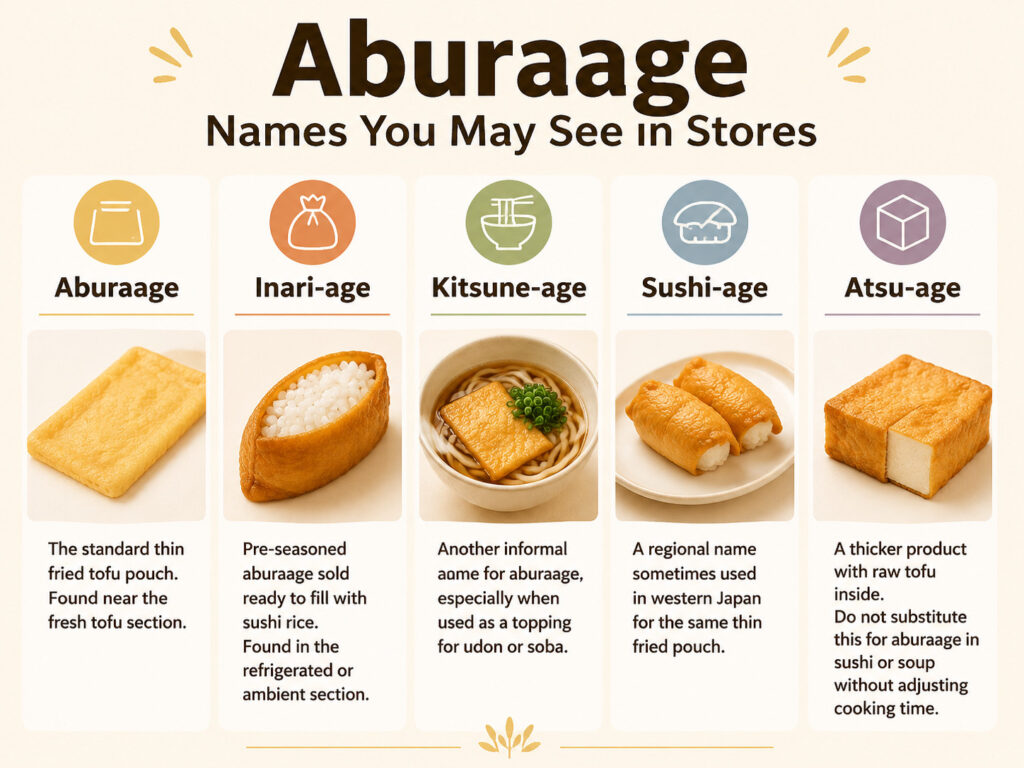
Shopping for aburaage can get confusing because the same ingredient appears under several different names. Here is a quick guide to help you choose correctly.
- Aburaage (油揚げ): The standard thin fried tofu pouch. Available at most Japanese supermarkets near the fresh tofu section.
- Inari-age (いなり揚げ): Pre-seasoned aburaage sold ready to fill with sushi rice. Often found in the refrigerated or ambient section.
- Kitsune-age: Another informal name for aburaage, especially when used as a topping for udon or soba.
- Sushi-age: A regional name sometimes used in western Japan for the same thin fried pouch.
- Atsu-age (厚揚げ): A thicker product with raw tofu inside. Do not substitute this for aburaage in sushi or soup without adjusting cooking time.
Where to Buy Aburaage
Most Japanese grocery stores carry aburaage in the refrigerated tofu section. You will usually find it vacuum-packed in sets of two to six pieces. Frozen aburaage is also available at larger supermarkets and is worth stocking if you cook Japanese food regularly. Outside Japan, Asian grocery stores and Japanese supermarkets stock both fresh and pre-seasoned versions. Pre-seasoned inari-age is also sold in cans or shelf-stable pouches and is convenient for quick inari sushi at home. If you are shopping online, look for the term “inari age” alongside “aburaage” to find all available options.
Taniguchiya, Fukui
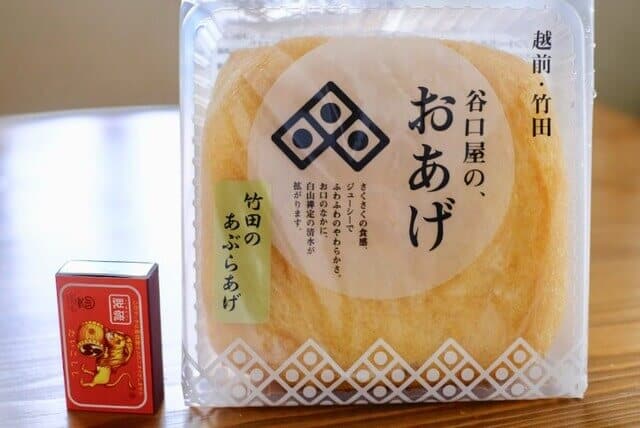
Taniguchiya is a long-established tofu shop founded in 1925 in Sakai City, Fukui Prefecture. Their flagship product, Taniguchiya no Okage, is fried for a long time in first-pressed rapeseed oil. The result is a rich, savory aburaage with a texture that rivals both meat and fish in presence. It pairs especially well with sake and white wine.
Ageya Matsubei, Niigata
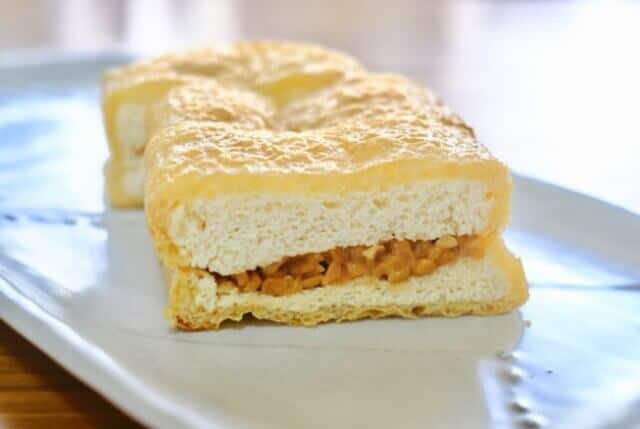
Ageya Matsubei’s Kinsei Tochio Fried Aburaage uses soybeans from Niigata Prefecture known for their natural sweetness and umami. Traditional Tochio aburaage usually has a small hole from the metal skewer used to drain the oil. Instead, Ageya Matsubei lays each piece flat to drain, producing a hole-free product with consistent thickness throughout. Try it alongside cold beer or Niigata sake for the best experience.
Ueda Tofu, Kyoto
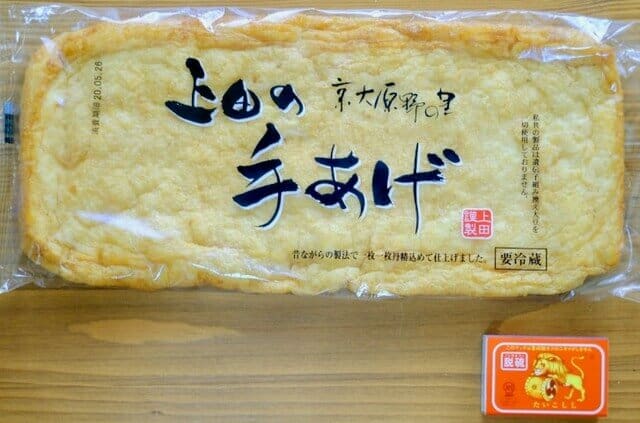
Ueda Tofu’s Oagesan measures 25–30 cm long and 12 cm wide. Compared to aburaage from Fukui and Niigata, it is thinner and denser. Each piece is fried individually by hand at low and then high temperatures. The aroma of rapeseed oil and the juicy, moist texture make this a standout product. Kyoto-style aburaage tends to be more delicate overall, reflecting the region’s refined food culture.
Aburage Culture in Fukui
Fukui Prefecture is famous across Japan for its thick, large-format aburaage. The local version is notably bigger and fluffier than the thin pouches sold in most other regions. Historically, Fukui’s aburaage culture is tied to a Buddhist memorial event called Hoon-ko, held to honor the death anniversary of Shinran, founder of Jodo Shinshu Buddhism. Families and temple communities traditionally gathered to eat large aburaage during these winter events. Over centuries, this spiritual and culinary tradition deepened Fukui’s regional identity around fried tofu. Today, Fukui’s aburaage draws visitors from all over Japan who travel specifically to taste it freshly made.
Is Aburaage Healthy?
Aburaage is a good plant-based protein source because it starts as tofu. It is also naturally gluten-free and dairy-free, which suits many dietary needs. However, the double-frying process does add fat, so portion size matters. Performing abura nuki (removing excess oil with hot water) before cooking can reduce fat content noticeably. Used in miso soup or mixed rice dishes rather than eaten alone, aburaage contributes protein without dominating the calorie count. It is not a superfood, but as part of a balanced Japanese diet, it fits well.
Is Aburaage Vegan?
Plain aburaage is vegan. It contains only tofu and oil. No animal products are used during the basic production process. That said, always read the label when buying pre-seasoned or flavored aburaage. Some commercial inari-age products are seasoned with dashi, which may contain fish-based ingredients. If you need a fully vegan option, choose plain unseasoned aburaage and season it yourself at home.
How to Store Aburaage
Fresh aburaage stays good in the refrigerator for about two to three days after opening. Keep it in an airtight container or wrap it tightly in plastic to prevent it from drying out. For longer storage, aburaage freezes very well. Place individual pieces in a zip-lock bag and freeze them for up to one month. Thaw in the refrigerator overnight or pour hot water over it to thaw quickly before cooking. Frozen aburaage actually absorbs broth even better after thawing because the cell structure breaks down slightly during freezing.
Final Thoughts
Aburaage is one of those quiet ingredients that quietly elevates almost every dish it touches. It absorbs flavors well, opens up as a pouch, and fits into Japanese cooking from breakfast miso soup to festive inari sushi. Beyond its versatility, it carries centuries of cultural meaning, from Buddhist temple kitchens to Fukui’s regional food heritage. Whether you buy it at a local tofu shop or a Japanese grocery overseas, it is worth keeping on hand. Once you start using aburaage regularly, it is hard to imagine Japanese cooking without it.
Explore other tofu-based Japanese dishes such as Yudofu, Tamago Tofu, Tatsuta-age, and Goma Tofu.
Aburaage FAQ
- What is aburaage?
-
Aburaage (油揚げ) is a thin Japanese fried tofu pouch. Makers fry it twice in oil so the interior becomes hollow and spongy. It is widely used in miso soup, inari sushi, and noodle dishes throughout Japan.
- What is the difference between aburaage and atsu-age?
-
Aburaage is thin, hollow, and used as a pouch or topping. Atsu-age is thicker and retains raw tofu at its center. Their textures differ significantly, so they are not interchangeable in most recipes.
- Is aburaage vegan?
-
Plain aburaage contains only tofu and oil, making it fully vegan. However, pre-seasoned commercial versions may include fish-based dashi. Always check the label before purchasing if you follow a strict plant-based diet.
- How do you remove oil from aburaage?
-
Pour boiling water over the aburaage in a colander, or blanch it in hot water for about 30 seconds. Then press it gently between sheets of kitchen paper. This step, called abura nuki, reduces excess fat and helps the tofu absorb seasonings more evenly.
- Where can you buy aburaage?
-
In Japan, aburaage is available at supermarkets near the fresh tofu section. Outside Japan, Japanese or Asian grocery stores usually carry it refrigerated or frozen. Pre-seasoned inari-age is also sold in cans or shelf-stable pouches at many Asian food retailers.
- What are the other names for aburaage?
-
Japanese cooks use several informal names depending on context. Common alternatives include inari-age, kitsune-age, and sushi-age. These names usually refer to the dish rather than any difference in the ingredient itself.
References
- Food in Japan – Aburaage (Surveyed: June 2025)
- Just One Cookbook – Aburaage (Surveyed: June 2025)
- Ministry of Agriculture, Forestry and Fisheries Japan (MAFF) – Regional food culture information (Surveyed: June 2025)
- Wikipedia – Abura-age (Surveyed: June 2025)
Related Articles
- Inari Sushi (Inarizushi) (Surveyed: June 2025)
- Yaki Tofu (Surveyed: June 2025)
- Tofu (Surveyed: June 2025)
- Yudofu (Surveyed: June 2025)
- Tamago Tofu (Surveyed: June 2025)



Comments