





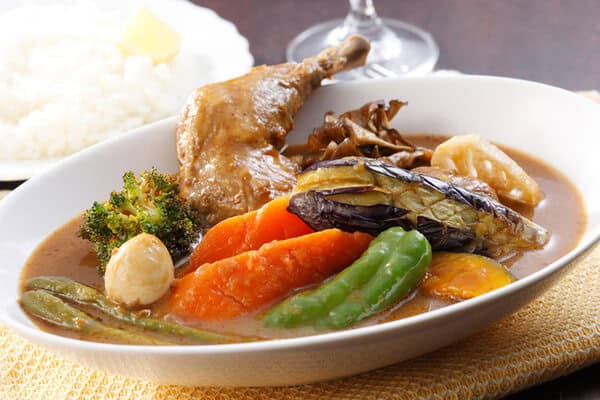
Soup curry is Sapporo’s signature dish of spice-infused broth, tender meat, colorful vegetables, and rice served on the side. In a typical bowl, fragrant spices meet bone-in chicken, fried vegetables, and clear savory soup. This guide explains its flavor, history, ingredients, home recipe, and places to try it in Sapporo.
Sapporo soup curry is a Hokkaido dish that combines thin, aromatic curry broth with large pieces of meat and vegetables. Unlike thick Japanese curry poured directly over rice, restaurants serve the broth and steamed rice separately. As a result, the meal feels warming in winter, yet its clean finish also suits summer.
What Is Sapporo Soup Curry?
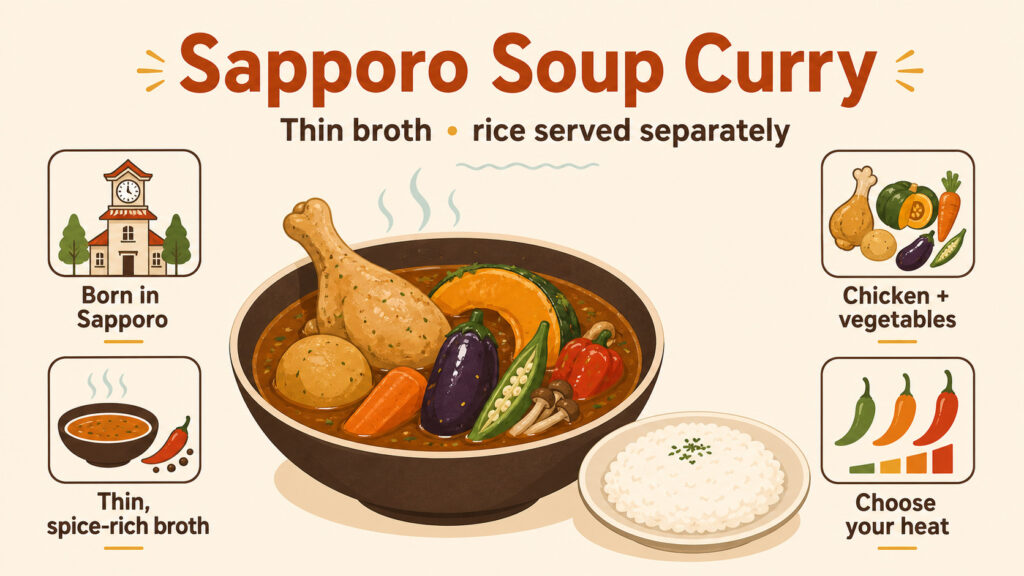
Sapporo soup curry is a modern Hokkaido specialty made with a thin, spice-infused broth. Most bowls include chicken, vegetables, and rice on a separate plate. Although it belongs to Japan’s wider curry culture, its texture and eating style are quite different.
Rather than relying on flour-based roux, the broth stays light and spoonable. Depending on the shop, cooks may use chicken bones, vegetables, tomatoes, seafood, Japanese dashi, or other stocks. They then add a distinct spice blend and chosen toppings.
Quick Facts
- Birthplace: Sapporo, Hokkaido
- Development: Medicinal-style curry in the 1970s shaped the early local style
- Broth: Thin and aromatic, often based on chicken, vegetables, tomato, seafood, or dashi
- Signature protein: Bone-in chicken leg is a classic choice
- Common vegetables: Potato, carrot, pumpkin, eggplant, pepper, okra, and mushrooms
- Rice style: Steamed rice is served separately
- Spice level: Diners can often choose the heat level
What Does Soup Curry Taste Like?
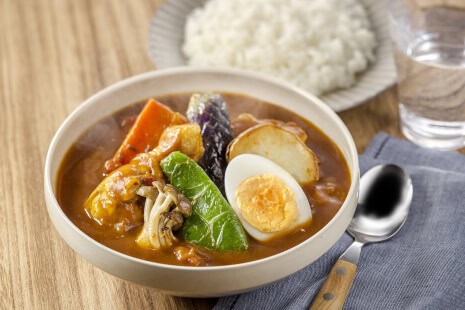
Soup curry tastes aromatic, savory, and lighter than roux-based Japanese curry. For example, cumin and cardamom often lead the aroma, while stock gives the broth a deep savory base. Meanwhile, fried vegetables add gentle sweetness, and diners can usually adjust the chili heat.
The first spoonful can be surprising. At first, fragrant spices rise from the clear broth. Soon after, tender chicken, sweet pumpkin, and crisp-edged vegetables make the flavor richer with each bite.
Soup Curry vs Japanese Curry
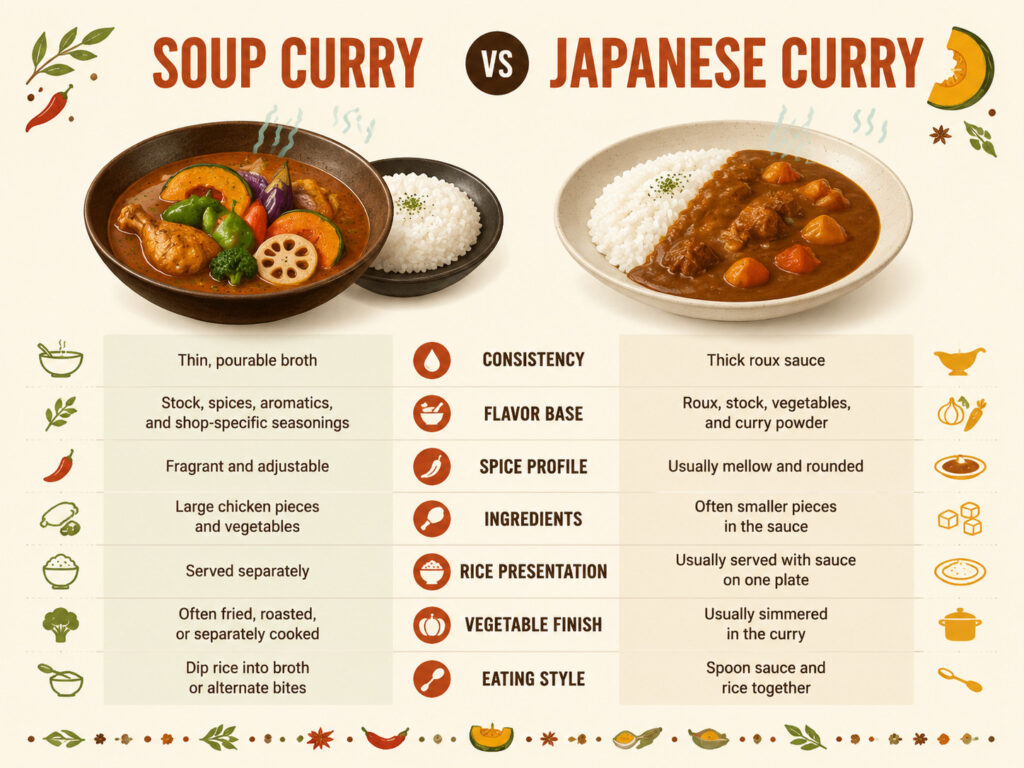
Soup curry differs from thick, roux-based Japanese curry. Its light consistency makes it closer to a spiced broth, although diners still eat it with rice. Therefore, the two dishes offer very different textures and eating styles.
| Feature | Sapporo Soup Curry | Japanese Curry Rice |
| Consistency | Thin, pourable broth | Thick roux sauce |
| Flavor base | Stock, spices, aromatics, and shop-specific seasonings | Roux, stock, vegetables, and curry powder |
| Spice profile | Fragrant and adjustable | Usually mellow and rounded |
| Ingredients | Large chicken pieces and vegetables | Often smaller pieces in the sauce |
| Rice presentation | Served separately | Usually served with sauce on one plate |
| Vegetable finish | Often fried, roasted, or separately cooked | Usually simmered in the curry |
| Eating style | Dip rice into broth or alternate bites | Spoon sauce and rice together |
Soup Curry History
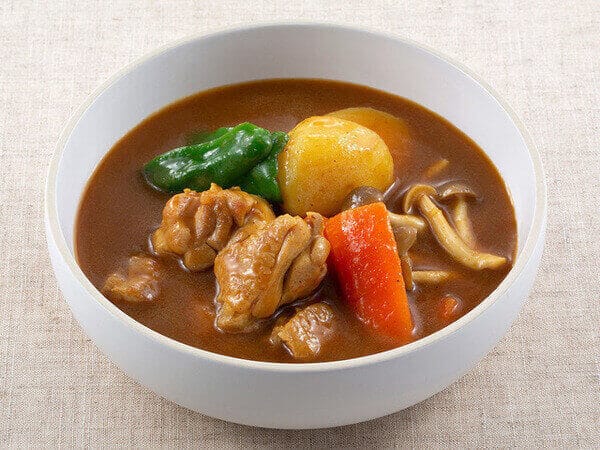
The widely cited origin story begins with medicinal-style curry in 1970s Sapporo. Ajanta helped establish an early chicken-based soup style. At the same time, several Asian soup and spice traditions influenced its development.
During the 1990s, Sapporo restaurants refined the dish into distinct local styles. In 1993, Magic Spice opened and helped spread the term “soup curry.” Consequently, specialty shops expanded across Sapporo and later throughout Japan.
- 1970s: Ajanta begins serving medicinal-style curry in Sapporo
- 1980s: Chicken-based bowls and spice-focused broth styles develop further
- 1993: Magic Spice opens and helps popularize the name “soup curry”
- Late 1990s to early 2000s: Specialty restaurants increase across Sapporo
- Modern styles: Shops offer chicken, seafood, vegetable, tomato, dashi, and shrimp-based variations
Why It Belongs to Sapporo
Sapporo’s climate and food culture helped the dish take root. Because the city has cold winters, a steaming bowl feels especially welcome. At the same time, separate rice keeps the meal lighter than thick curry. Hokkaido also supplies potatoes, pumpkins, onions, corn, mushrooms, meat, and seafood.
In addition, café culture encouraged experimentation. Cooks could combine Indian, Indonesian, Sri Lankan, Japanese, and Western soup ideas. As a result, no two specialty shops build broth in exactly the same way.
Soup Curry Ingredients
Soup curry ingredients vary by restaurant, season, and broth style. Even so, most bowls combine stock, aromatic spices, protein, and large vegetables. The table below shows useful ingredients for a home version.
| Ingredient | Role | Practical Substitute |
| Curry powder | Provides the main curry aroma | Use a mild or hot blend to suit your taste |
| Garam masala | Adds a warm finishing aroma | Use extra cumin and coriander if unavailable |
| Cumin | Gives earthy, toasted fragrance | Use ground cumin if whole seeds are unavailable |
| Coriander | Adds citrusy spice notes | Use ground coriander |
| Turmeric | Adds color and mild bitterness | Use a little extra curry powder |
| Chili | Controls heat | Use cayenne, chili flakes, or fresh chili |
| Tomato | Adds acidity and umami | Use canned chopped tomatoes |
| Chicken stock | Creates a savory broth | Use vegetable stock for a vegetarian version |
| Soy sauce | Adds salt and umami | Use tamari if gluten-free |
| Onion, garlic, and ginger | Build the aromatic base | Use prepared paste only when necessary |
Vegetables to Try
| Group | Examples | Best Cooking Method |
| Roots | Potato, carrot, lotus root, burdock | Roast, fry, or simmer until tender |
| Nightshades | Eggplant, bell pepper, tomato | Pan-sear or fry shortly before serving |
| Green vegetables | Okra, broccoli, asparagus, cabbage | Blanch, roast, or pan-sear |
| Mushrooms | Shimeji, maitake, shiitake | Roast or sauté until fragrant |
| Hokkaido produce | Pumpkin, sweet corn, onions | Roast or fry to highlight sweetness |
How to Make Sapporo Soup Curry at Home
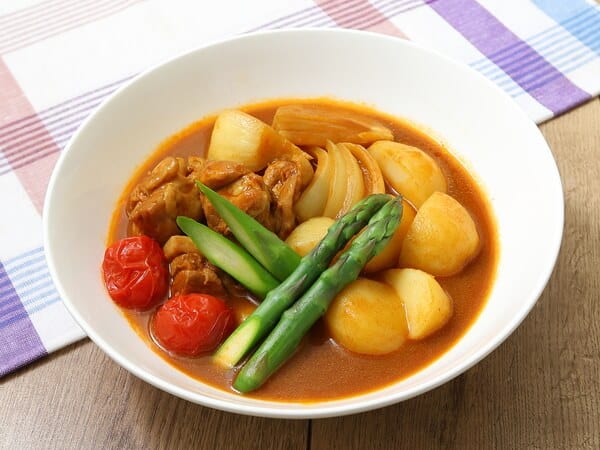
This soup curry recipe makes four servings. For best results, use a 5-liter heavy pot and allow about 75 minutes. The method follows Sapporo’s spice-broth style, rather than any one restaurant’s recipe.
Ingredients for Four Servings
- 4 bone-in chicken legs, about 1 kg total
- 1.5 liters chicken stock
- 2 tablespoons neutral oil
- 1 large onion, finely sliced
- 4 garlic cloves, grated
- 20 g fresh ginger, grated
- 400 g canned chopped tomatoes
- 2 tablespoons curry powder
- 2 teaspoons ground cumin
- 2 teaspoons ground coriander
- 1 teaspoon turmeric
- 1 teaspoon garam masala
- 1 to 2 teaspoons chili flakes, to taste
- 2 tablespoons soy sauce or tamari
- 1 teaspoon sugar or honey
- 2 potatoes, cut into large wedges
- 1 small kabocha squash or 300 g pumpkin, cut into wedges
- 1 eggplant, halved lengthwise
- 2 bell peppers, halved
- 150 g shimeji or other mushrooms
- 4 boiled eggs, optional
- 600 g cooked Japanese short-grain rice
- Salt, black pepper, and oil for vegetables
Make the Spice Base
Season the chicken with salt and black pepper. Heat oil in a heavy pot over medium-high heat. Brown the chicken for 4 to 5 minutes per side, then transfer it to a plate.
Next, lower the heat to medium. Cook the onion for 10 minutes until soft and golden. Add garlic and ginger, then cook for 1 minute.
Afterward, add curry powder, cumin, coriander, turmeric, and chili. Stir for 30 seconds only. The spices should smell fragrant, not burnt.
Simmer the Broth and Chicken
Now add tomatoes, stock, soy sauce, and sugar. Return the chicken to the pot. Bring the broth to a gentle simmer.
Cover the pot loosely and simmer for 35 to 40 minutes. Meanwhile, keep the broth below a hard boil. The thickest chicken section should reach 74 degrees Celsius.
Finally, stir in garam masala. Taste the broth, then add salt, soy sauce, or chili if needed. The finished broth should taste savory and aromatic, not heavy.
Cook the Vegetables and Rice
Heat an oven to 220 degrees Celsius. First, toss potato and pumpkin with oil and salt. Roast them for 25 to 30 minutes. Then add eggplant, peppers, and mushrooms during the final 12 minutes.
Many Sapporo shops use su-age, or uncoated deep-frying, for vegetables. At home, however, roasting or pan-searing uses less oil and still gives good flavor. It will not create the exact same crisp surface.
While the chicken simmers, cook 600 g of Japanese rice. Serve 130 to 180 g per person, depending on appetite. Finally, keep the rice separate until the bowl reaches the table.
Assemble the Bowls
Place one chicken leg in each deep bowl. Next, ladle over the hot broth and arrange roasted vegetables on top. Add an egg if desired. Serve the rice on a separate plate with a spoon.
Tips for Making the Best Soup Curry: Fry spices briefly, because burnt spices taste bitter. Also, use a gentle simmer, because boiling can dry the chicken. Finally, add vegetables near serving time, so they keep their color and texture.
Troubleshooting
- Bitter broth: Spices likely cooked too long. Therefore, use lower heat and fry them for less time.
- Oily surface: Skim excess fat, then add a little stock or tomato for balance.
- Weak flavor: Add salt first, then soy sauce and a small amount of garam masala.
- Overcooked vegetables: Instead, roast or fry them separately and add them at the end.
- Dry chicken: Keep the broth at a gentle simmer and check doneness early.
- Too much heat: In that case, add stock, tomato, or a small spoonful of yogurt when serving.
- Broth too thick: Add hot stock in small amounts until it becomes spoonable.
How to Eat Soup Curry
There is no single correct way to eat soup curry. Because rice arrives separately, you can control each bite. Start with the method that feels most comfortable.
- Dip the rice: Spoon a small amount of rice into the broth, then eat it with soup.
- Alternate bites: Taste the broth, vegetables, chicken, and rice separately.
- Add soup to rice: Spoon broth over rice little by little for a softer texture.
- Finish with rice: Add the final rice portion to the remaining broth, if you like.
Choosing a Bowl in Sapporo
Specialty restaurants often let diners customize several parts of the meal. First, choose a broth. Next, select protein, vegetables, rice size, toppings, and spice level. For a first visit, a chicken-and-vegetable bowl is usually the easiest introduction.
- Broth: Choose chicken, tomato, shrimp, dashi, vegetable, or creamy styles
- Heat: Start low if you do not know the restaurant’s spice scale
- Protein: Try chicken leg, pork, lamb, seafood, tofu, or vegetables
- Vegetables: Add pumpkin, eggplant, okra, mushrooms, corn, or root vegetables
- Rice: Pick a small portion when ordering many toppings
- Extras: Cheese, boiled egg, fried chicken, or seasonal vegetables can change the bowl
Vegetarian and Dietary Options
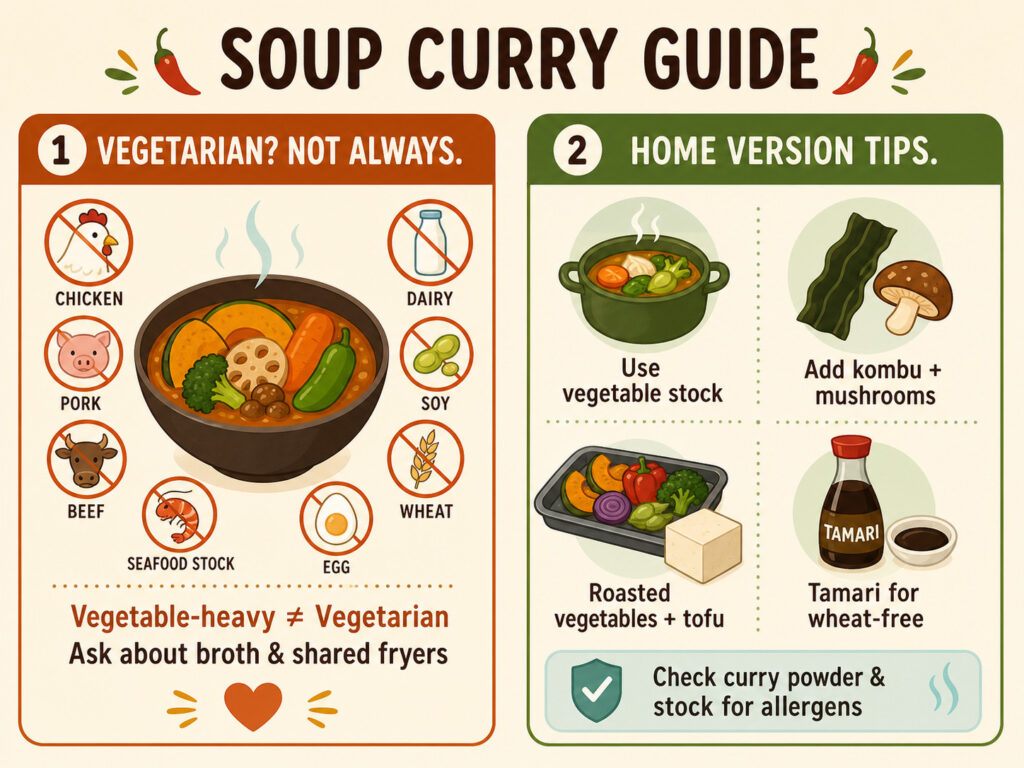
Traditional bowls often contain chicken, pork, beef, seafood stock, dairy, soy, wheat, or egg. Therefore, a vegetable-heavy bowl does not always mean it is vegetarian. Ask staff how they make the broth and whether shared fryers are used.
For a vegetarian home version, use vegetable stock, kombu, mushrooms, roasted vegetables, and tofu. If you avoid wheat, tamari can replace standard soy sauce. Still, check every packaged curry powder and stock product for allergens.
Where to Eat Soup Curry in Sapporo
Sapporo has many specialty restaurants, from long-running pioneers to newer vegetable-focused shops. Therefore, the best choice depends on your preferred broth, toppings, and spice level. Start with an official restaurant page whenever possible.
Ajanta and Magic Spice
Ajanta and Magic Spice are closely tied to the history of Sapporo soup curry. Ajanta is associated with the earlier medicinal-style curry tradition. Meanwhile, Magic Spice is associated with spreading the name “soup curry” after its 1993 opening.
Both restaurants suit travelers interested in the dish’s history. However, check their official channels for current locations, menus, prices, reservations, and opening times. Restaurant details can change quickly.
Soup Curry Suage4
Soup Curry Suage4 is convenient for travelers near Sapporo Station. Its menu includes chicken leg curry, vegetable curry, pork kakuni, seafood options, and several soup choices. In particular, fried chicken and vegetables create a pleasant contrast to the broth.
Find More Local Shops
The official Sapporo tourism guide introduces a range of local soup curry restaurants. Therefore, use it to compare neighborhoods, styles, and current visitor information. It is especially helpful if Suage4 is busy or you want a different broth style.
More Hokkaido Curry Dishes
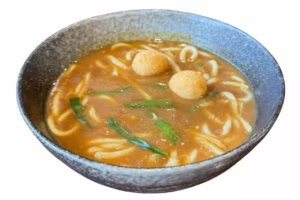
Soup curry is one part of Hokkaido’s diverse food culture. For a richer curry soup with ramen noodles, try Muroran Curry Ramen, Hokkaido’s curry-flavored noodle specialty. It offers another way to enjoy Hokkaido’s warming spice dishes.
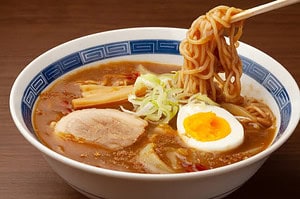
For another Sapporo classic, see our Sapporo Ramen guide. You can also explore seafood, dairy dishes, grilled lamb, and regional specialties through our complete Hokkaido food guide.
Takeaway
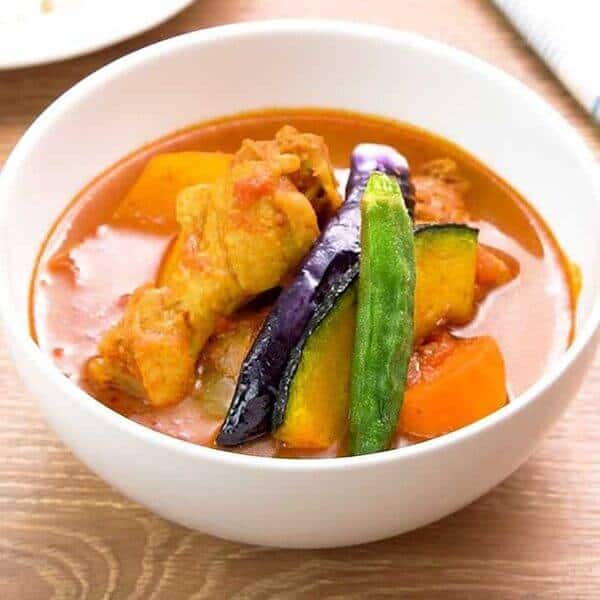
Sapporo soup curry is a modern Hokkaido specialty with thin spice-infused broth, large chicken and vegetable toppings, and separately served rice. Its history grew from Sapporo’s medicinal-style curry culture and later restaurant innovation. You can make a satisfying home version with stock, spices, chicken, and roasted vegetables. However, trying several shops in Sapporo reveals how differently each cook approaches broth and heat. Afterwards, continue your food trip with Muroran Curry Ramen, Sapporo ramen, and other Hokkaido specialties.
Soup Curry FAQ
Is soup curry thin?
Yes, soup curry has a thin and spoonable broth. Unlike Japanese curry rice, it does not use a thick flour-based roux. However, stock, spices, tomato, and aromatics still give it a full flavor. Some restaurants make richer styles than others.
How spicy is Sapporo soup curry?
Heat levels vary widely by restaurant. Therefore, many specialty shops let diners select mild, medium, or very hot options. Start with a low level if you do not know the restaurant’s spice scale. You can usually add more chili, but you cannot easily remove it.
How is soup curry different from Japanese curry rice?
Soup curry uses a thin spiced broth, while Japanese curry rice usually uses a thick roux sauce. Restaurants serve rice separately, rather than covering it with curry. In addition, large vegetables often remain more distinct in the bowl. The result feels lighter and more aromatic.
How do you eat soup curry?
Dip small spoonfuls of rice into the broth, or alternate bites of rice and soup. Alternatively, spoon broth over rice little by little. You can also add the final rice portion to the remaining soup. There is no strict rule, so choose the method you enjoy.
Which vegetables are common in soup curry?
Potato, carrot, pumpkin, eggplant, bell pepper, okra, and mushrooms are common. Restaurants often fry or roast vegetables separately before serving. As a result, this method keeps their flavor and texture clear. Seasonal Hokkaido vegetables can also appear on limited menus.
Is soup curry gluten-free?
Some bowls may be gluten-free, but you should never assume that they are. Soy sauce, stock powders, spice blends, roux, and fried toppings can contain wheat. Therefore, ask the restaurant about its broth and fryer before ordering. At home, use tamari and clearly labeled gluten-free products.
Can soup curry be vegetarian?
Yes, a vegetarian version can use vegetable stock, kombu, mushrooms, tofu, and roasted vegetables. However, traditional bowls often use meat or fish-based stock. Restaurants may also use shared cooking equipment. Therefore, confirm ingredients and preparation methods when dining out.
Where should I try soup curry in Sapporo?
Ajanta, Magic Spice, and Suage are useful starting points. For history, Ajanta connects diners with the medicinal-style roots of the dish. Meanwhile, Magic Spice offers an Indonesian-influenced approach and customizable heat. Suage provides central locations with chicken, vegetables, and several soup choices.
References
- Welcome to Sapporo — Sapporo Soup Curry: History, Flavors and Ways to Enjoy It (Surveyed: July 2026)
- Welcome to Sapporo — Soup Curry Restaurants (Surveyed: July 2026)
- Hokkaido Love — Soup Curry (Surveyed: July 2026)
- Magic Spice — Soup Curry MAGIC SPICE English Page (Surveyed: July 2026)
- Soup Curry Suage — Soup Curry Suage4: Shop Information and Menu (Surveyed: July 2026)
Related Articles
- Muroran Curry Ramen (Surveyed: July 2026)
- Sapporo Ramen (Surveyed: July 2026)
- Hokkaido Food Guide (Surveyed: July 2026)



Comments