





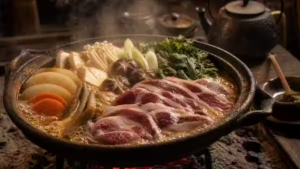
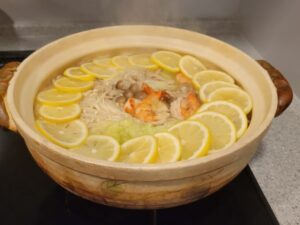
Every autumn, salmon swim back from the ocean into the lower Ishikari River. Then, as the evenings turn cold, people in Ishikari gather around a bubbling pot of Ishikari nabe. This salmon hot pot comes from Ishikari City, where the river meets the Sea of Japan. Inside, chunks of fresh salmon, cabbage, onion and tofu simmer together in a kombu broth seasoned with miso.
It started as a working fishermen’s meal, and it is still the dish locals reach for when autumn salmon arrive. So this guide explains what it is and how it developed. It also compares it with sanpeijiru and shows how to cook it at home. If you only want to cook, jump to the Ishikari nabe recipe.
What Is Ishikari Nabe?
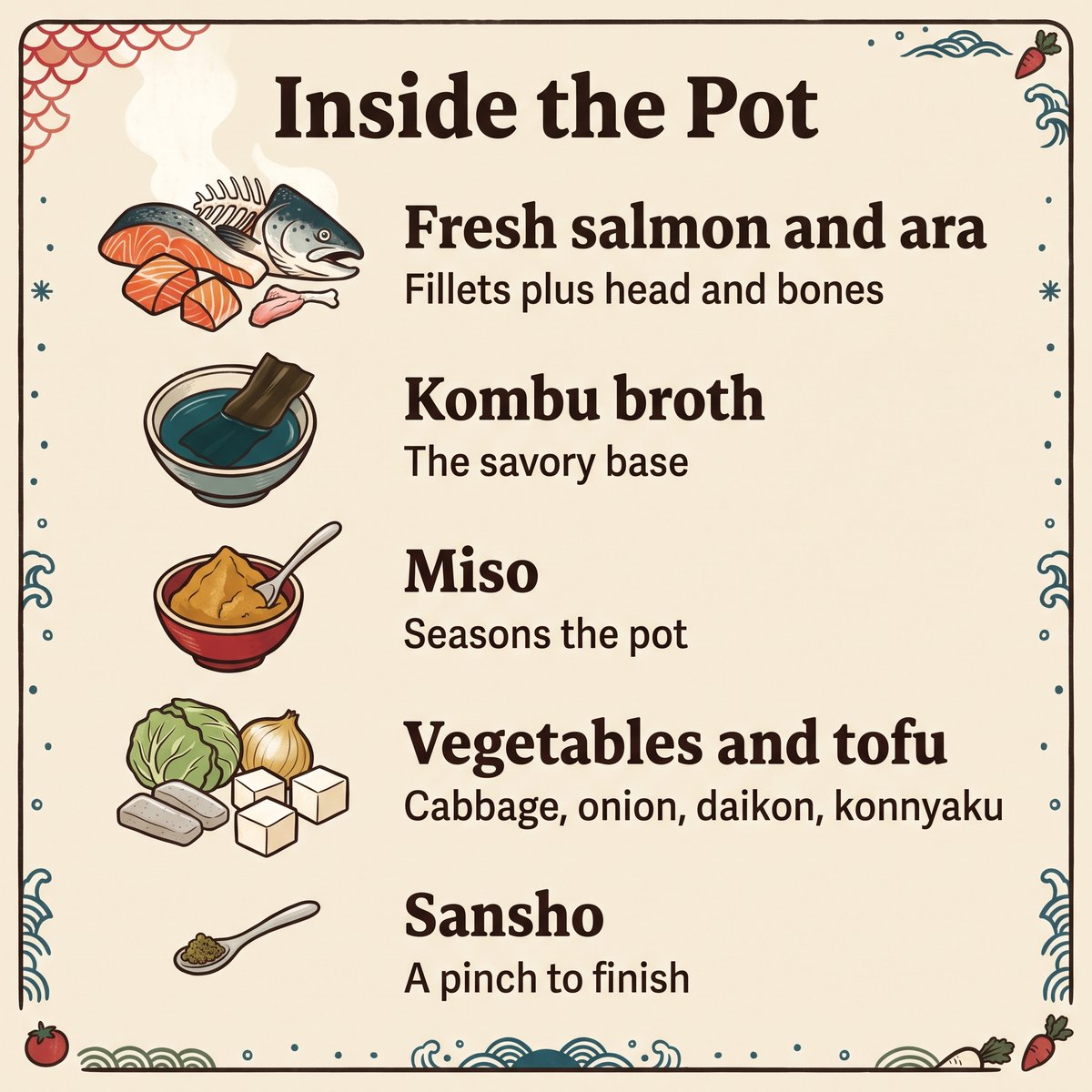
Ishikari nabe (石狩鍋) is a salmon and miso hot pot from Ishikari City in Hokkaido. According to Japan’s Ministry of Agriculture, Forestry and Fisheries, cooks simmer fresh salmon and ara with vegetables in kombu broth. Then they season the pot with miso and finish it with sansho. Some households also add butter, milk or sake lees for extra richness.
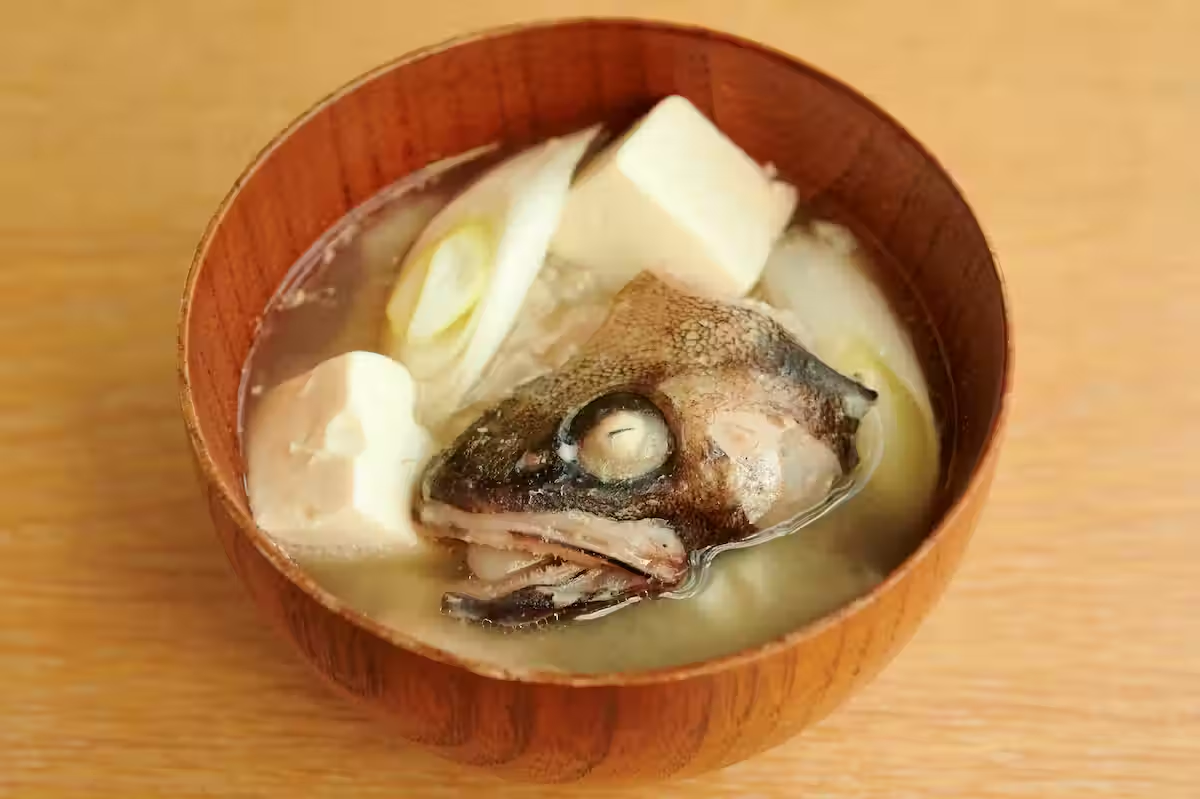
What sets it apart is the ara. The head and bones go into the pot with the fillets. As a result, the broth picks up their flavor and natural oils.
Ishikari Nabe at a Glance
- Japanese name
- 石狩鍋 (Ishikari nabe)
- Origin
- Ishikari City, at the mouth of the Ishikari River, Hokkaido
- Main fish
- Fresh salmon, including the head and bones (ara)
- Soup base
- Kombu dashi seasoned with miso
- Typical vegetables
- Cabbage, onion, long onion, daikon, shiitake
- Other ingredients
- Tofu, konnyaku; butter in some homes
- Finishing spice
- Ground sansho pepper
- Best season
- Autumn salmon season into winter

What Does “Nabe” Mean?
Nabe means both the cooking pot and the dish cooked in it. So nabemono are Japanese hot-pot dishes cooked and shared at the table. They are especially comforting during Hokkaido’s cold winters. For more styles, browse our guide to Japanese hot pot dishes.
What Does Ishikari Nabe Taste Like?
Think of a richer, fuller miso soup, with salmon oils adding depth. Cabbage and onion soften into the broth, so it turns sweeter as it cooks. Finally, a pinch of sansho adds a citrusy, slightly numbing lift. It isn’t spicy, though, since sansho tingles rather than burns. For many people, the broth itself is the highlight.
History of Ishikari Nabe
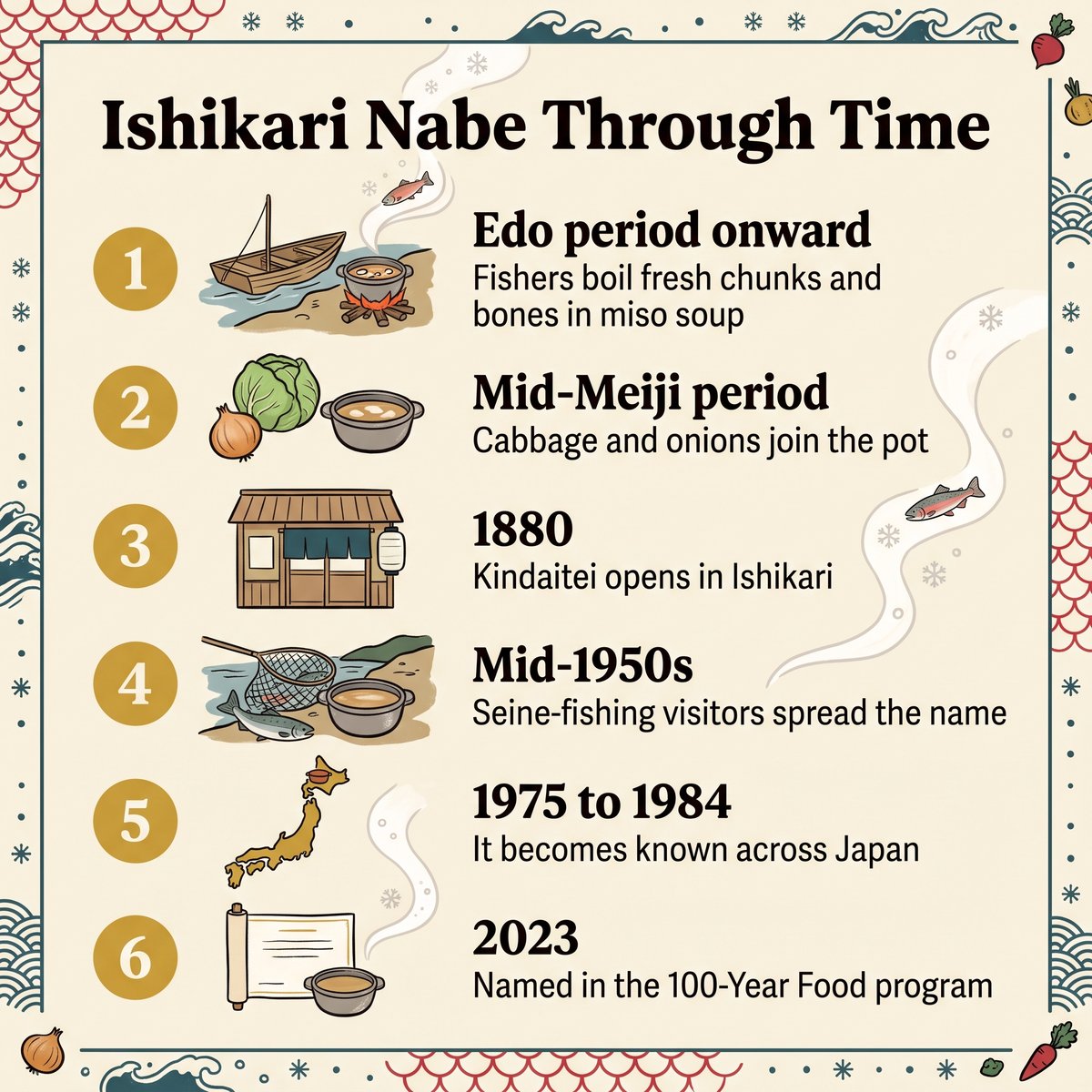

Ishikari nabe began as a fishermen’s salmon meal at the Ishikari River mouth and only later gained its name. According to Japan’s Agency for Cultural Affairs, it grew from a fishing-village meal called dainabe, eaten between work shifts. From there, the story moves in clear stages.
- Edo period onward
Fishers harvest salmon at the Ishikari River mouth. Then, to celebrate big catches, they drop fresh chunks and bones into a pot of miso soup.
- Mid-Meiji period
Cabbage and onions spread across Hokkaido farms. Soon, paired with miso, they give the dish its present form.
- 1880
Kindaitei opens in Ishikari. It later becomes closely associated with the restaurant-style version.
- Mid-1950s
Visitors flock to watch salmon seine fishing. Meanwhile, cooks serve them the hot pot, and the name “Ishikari nabe” takes hold.
- 1975 to 1984
The dish becomes widely known across Japan as a Hokkaido regional food.
- 2023
The Agency for Cultural Affairs adds it to its 100-Year Food program, in the “future” category. The program honors regional food cultures meant to last for generations. The dish also wins a special expert award.
From Fishermen’s Meal to Tourist Favorite
Why salmon heads and bones? Because fishermen ate what was at hand, and the bony parts gave the broth deep flavor. Later, in the mid-1950s, seine-fishing tours drew crowds to the river mouth. In fact, the Agency for Cultural Affairs says visitors sometimes topped 1,000 a day. Local cooks fed them hot pot while they waited for the nets, and word spread.
Kindaitei, founded in 1880, often appears as the birthplace of the dish. Still, official histories trace it to the earlier dainabe meal. So it is fairer to say Kindaitei helped refine and preserve the restaurant style. Meanwhile, better freezing and transport after the war made fresh salmon easier to get elsewhere.
Ishikari Nabe Day
Japan observes Ishikari Nabe Day on September 15. The Japan Anniversary Association registered the observance after a request from a local promotion group. The date falls in the Ishikari salmon season. Its numbers also make a Japanese pun suggesting “let’s go eat.” In 2007, Ishikari City also launched a project to grow the number of restaurants serving the dish.
Where Is Ishikari Located?
Ishikari City lies just north of Sapporo, where the Ishikari River enters Ishikari Bay. The river runs 268 kilometers and is Japan’s third-longest by main-channel length. The place name, moreover, comes from an Ainu name for the river. However, sources give more than one interpretation, such as “a winding river.” So treat any single translation as one possible reading, not settled fact.
Salmon has shaped this estuary for centuries. Long before the dish had a name, Ainu communities fished salmon here. Later, modern fishing changes reshaped who used those grounds. For more regional dishes, see our Hokkaido food guide.
Why Ishikari Nabe Represents Hokkaido
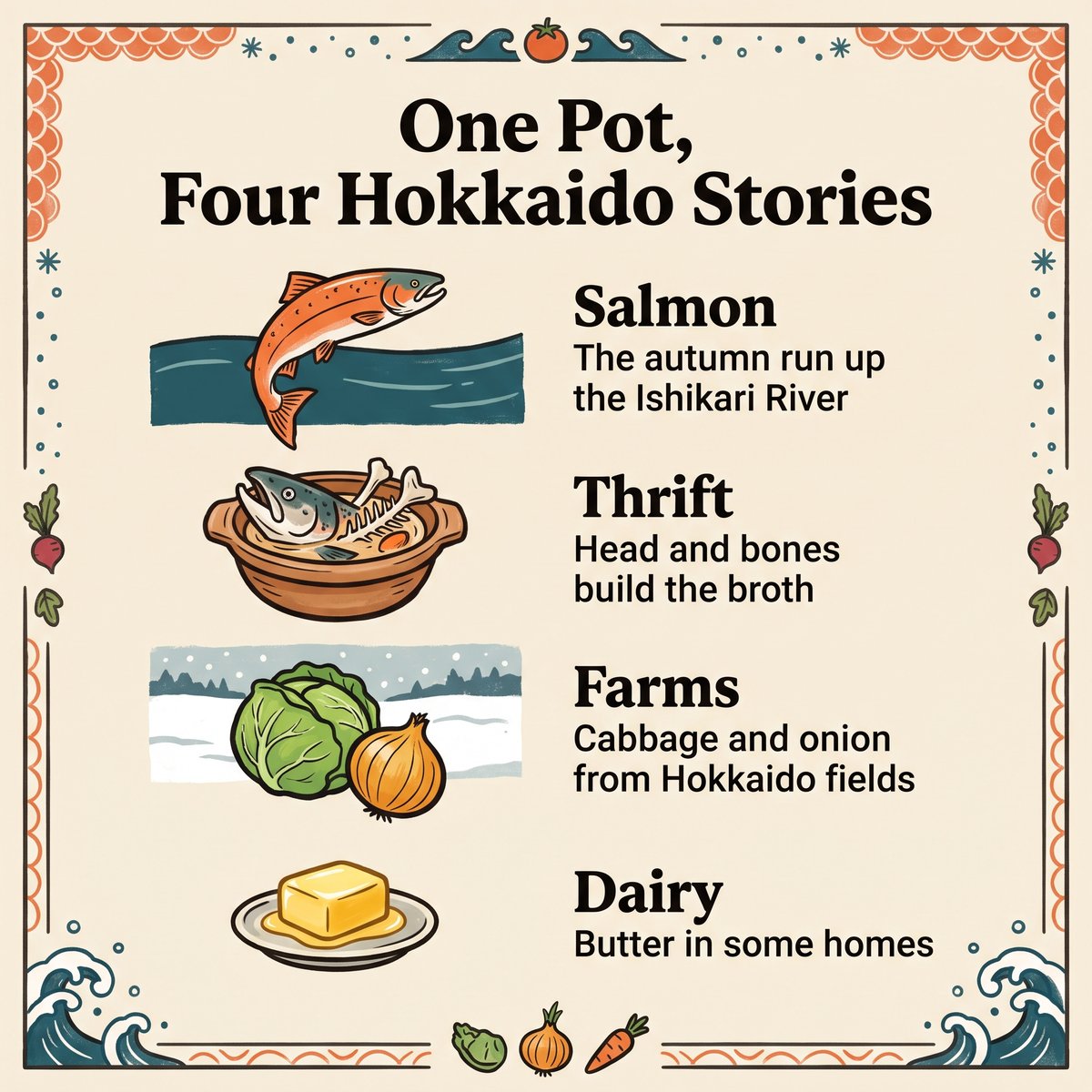
Ishikari nabe is famous because it puts several sides of Hokkaido into one pot. Salmon comes first. For example, the fish return to the Ishikari River every autumn. That run shaped life at the river mouth for centuries. Thrift matters too. Instead of wasting the head and bones, fishermen used them to build a rich broth.
Miso and vegetables then add a farming layer, since cabbage and onions spread across Hokkaido farms in the Meiji era. Some homes also stir in butter, a nod to the island’s dairy farming. And in a cold climate, a shared pot on the table simply makes sense. Put together, one pot tells a small story of the island.
Did You Know?
Before anyone called it Ishikari nabe, locals knew the fishermen’s meal as dainabe. During big salmon catches, fishers celebrated by dropping fresh chunks and bones into a pot of miso soup. The name “Ishikari nabe” only took hold after World War II, when tourists came to watch the nets.
Ishikari Nabe Ingredients
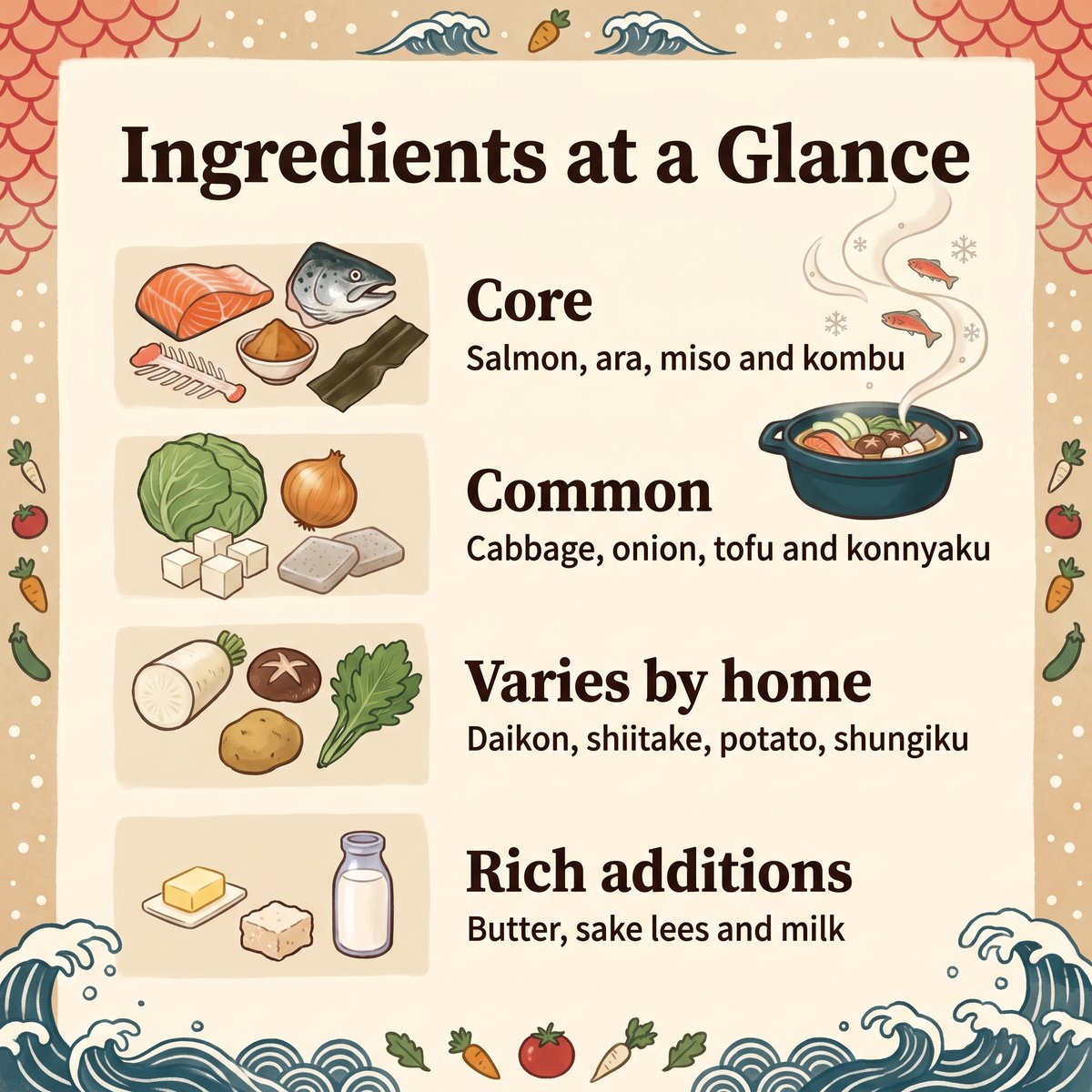

Salmon, miso and vegetables form the core. Beyond that, the mix changes from house to house, which is part of the fun. Here, then, is how the ingredients usually break down.
Core
- Fresh salmon fillets
- Salmon ara (head, bones)
- Miso
- Kombu
Common
- Cabbage
- Onion
- Long onion
- Tofu
- Konnyaku
Varies by home
- Daikon, carrot
- Shiitake
- Potatoes
- Shungiku greens
- Salmon roe
Rich additions
- Butter
- Sake lees
- Milk
How to Choose Salmon for Ishikari Nabe
Use fresh, unsalted salmon, ideally autumn salmon. Also, skin-on pieces hold together better in the pot. Before cooking, remove any scales and check carefully for pin bones.
Next, look for ara if you can. In Japanese cooking, ara means the head, collar and bones left after filleting a fish. Cooks also prize these parts because they give soups and stews deep flavor. The Ministry’s traditional version even adds a little salmon milt (shirako) and roe.
Which Miso Works Best?
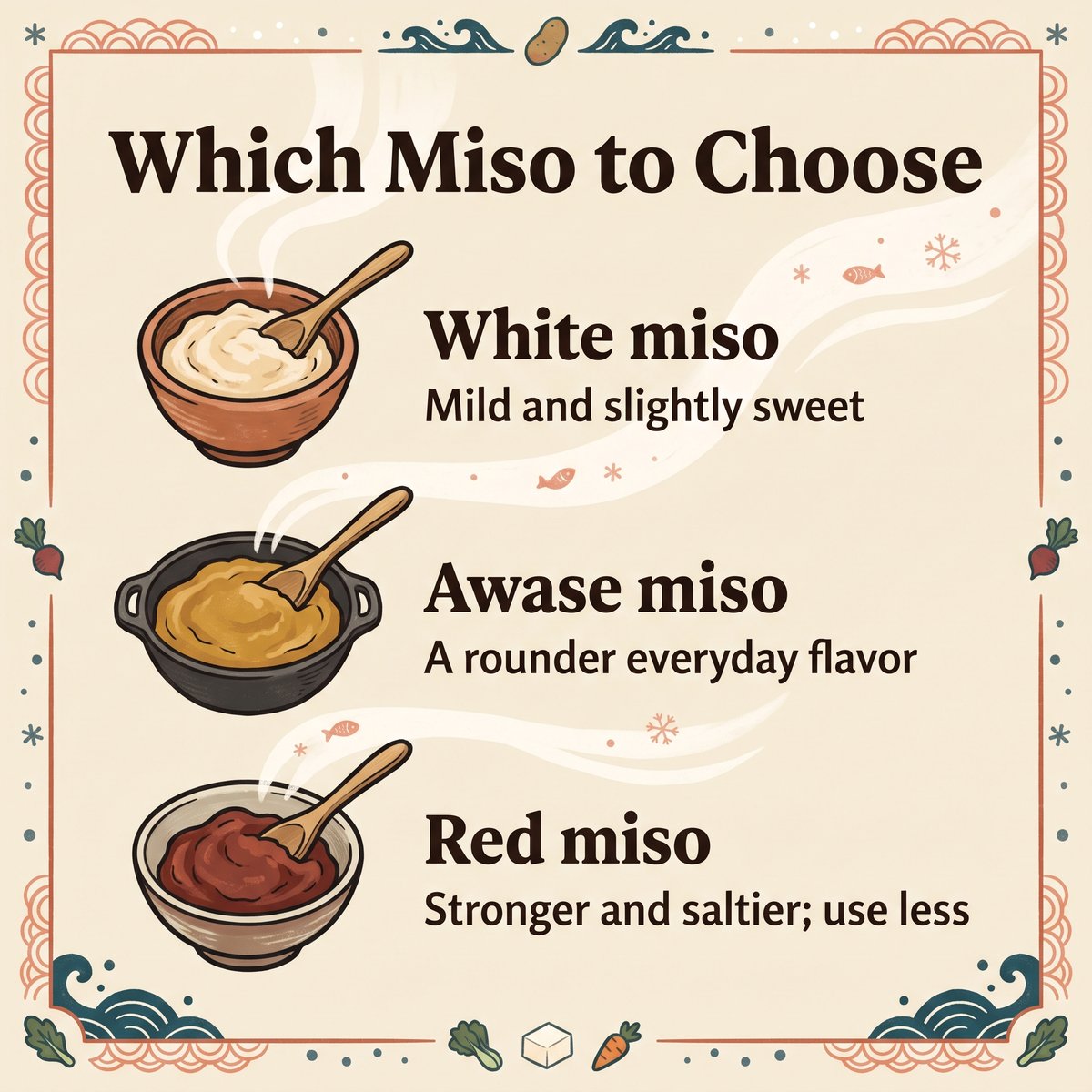
Many Ishikari recipes use white miso, which keeps the broth mild and slightly sweet. Awase, or mixed miso, instead gives a rounder, everyday flavor. Red miso, by contrast, tastes stronger and saltier, so use less of it. Whichever you choose, add it gradually and taste as you go.
Finding Ingredients Outside Japan
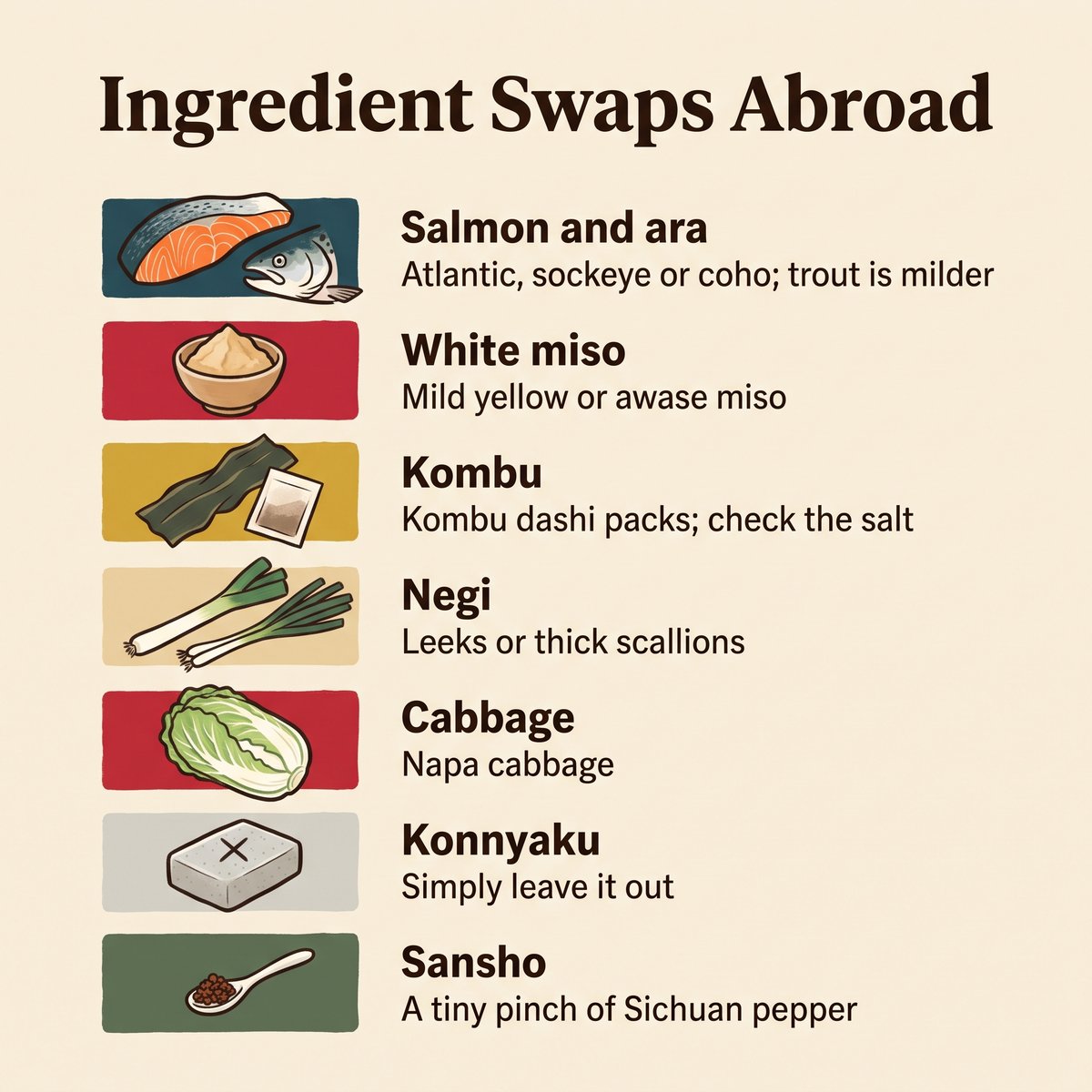
Live in the US, Canada, the UK or Australia? Good news: most of what you need is easy to find. Asian grocery stores cover the Japanese items, while online shops fill the gaps. Here is where to look and what to swap.
| Ingredient | Where to look | Easy swap |
|---|---|---|
| Salmon and ara | Fish counters; ask for heads and frames | Atlantic, sockeye or coho salmon; trout for a milder taste |
| White miso | Asian grocery stores, larger supermarkets, online | Mild yellow or awase miso |
| Kombu | Japanese or Korean markets, online | Kombu dashi packs (check the salt) |
| Long onion (negi) | Asian grocery stores | Leeks or thick scallions |
| Cabbage | Any supermarket | Napa cabbage |
| Konnyaku | Japanese grocery stores | Simply leave it out |
| Sansho pepper | Japanese grocery stores, online spice shops | A tiny pinch of Sichuan pepper, a close relative |
How to Make Ishikari Nabe
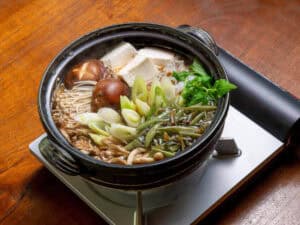
You can make Ishikari nabe at home with a wide pot and readily available vegetables. Below is our household version, which adds sake lees and butter for a richer finish. A donabe clay pot or any wide, heavy pot works well. Prefer measured amounts? See the official four-serving version after the steps.

Ishikari Nabe (Household Version)
Ingredients
- Fresh salmon
- Kombu
- Water
- Sake
- Mirin
- Miso
- Sake lees
- Chinese cabbage
- Carrot
- Onion
- Daikon
- Potatoes
- Other vegetables you like
- Butter
- Salt
In this household version, you adjust the amounts to taste.
How to Make Ishikari Nabe in 7 Steps
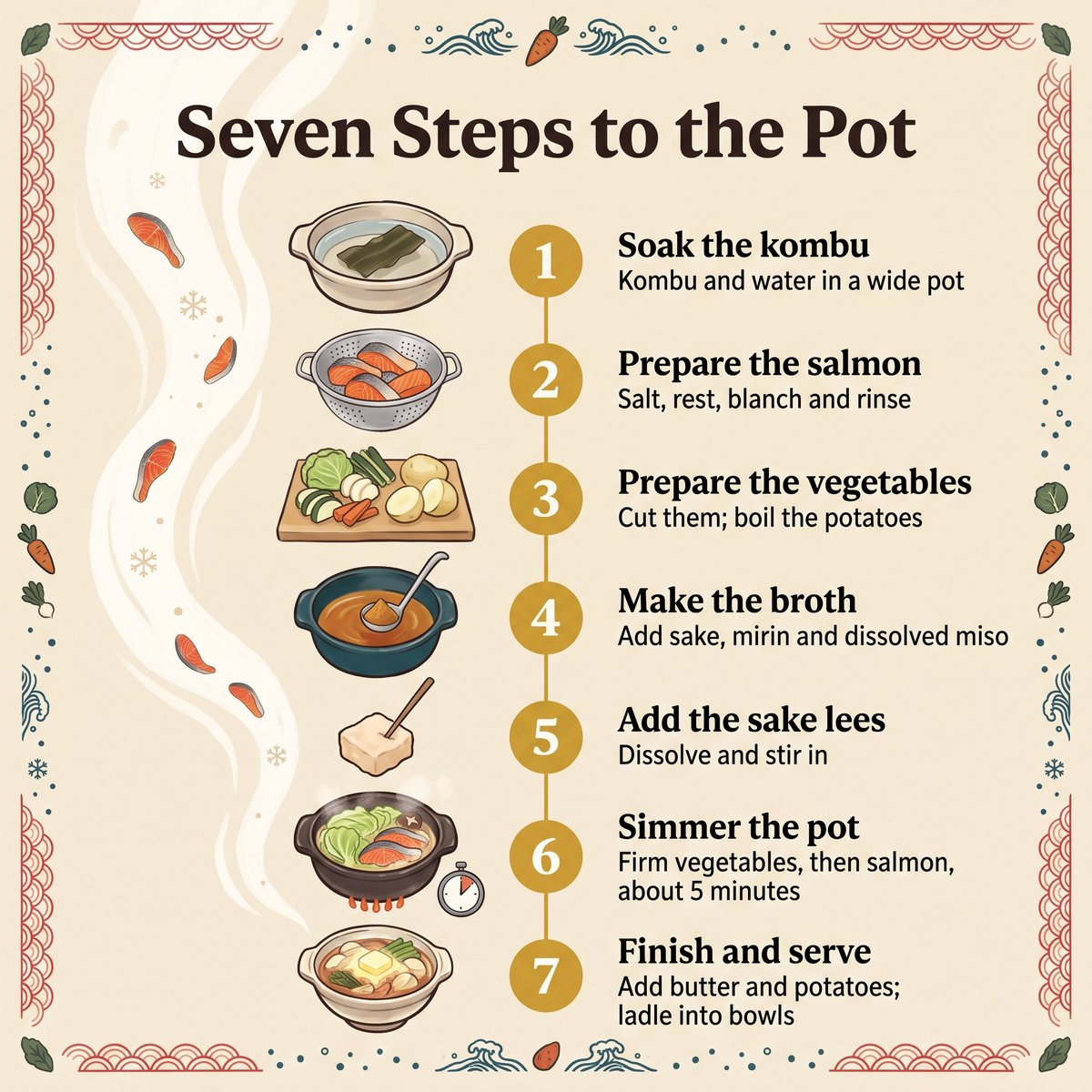
- Soak the kombu. First, place the kombu and water in a wide pot.
- Prepare the salmon. Cut the salmon into evenly sized pieces so they cook at the same rate. Lightly salt them, rest them in a colander, then blanch briefly and rinse away any residue.
- Prepare the vegetables. Cut the vegetables. Boil the potatoes, then cut them in half.
- Make the broth. Next, heat the pot to make kombu stock. Add sake and mirin. Dissolve the miso in a ladleful of warm broth, return it to the pot, and taste before adding more so it doesn’t get too salty.
- Add the sake lees. Once the broth is hot, dissolve the sake lees and stir them in, adjusting to taste.
- Simmer the firm vegetables and salmon. When the pot comes to a simmer, add the Chinese cabbage stalks, carrots, onions, daikon and other firm vegetables. Add the salmon and simmer for about 5 minutes.
- Finish and serve. Add the butter and potatoes, then the remaining vegetables. Once everything is cooked, ladle the hot pot into bowls and serve right away.
Common Mistakes
- Boiling the miso hard: a rolling boil dulls its aroma, so keep it to a gentle simmer.
- Salty broth: add miso a little at a time, since sake lees and stock add salt too.
- Dry salmon: overcooking makes it tough and lets it break apart.
- Mushy greens: add leafy vegetables last.
Need Measured Amounts? The Official Four-Serving Version
We cook our household pot by feel. If you prefer exact amounts, Japan’s Ministry of Agriculture, Forestry and Fisheries publishes a traditional version for four. However, it differs from ours. It uses no sake lees or butter, and it adds burdock, spinach and green beans.
MAFF Ishikari Nabe (Serves 4)
- Salmonabout 400 g
- Salmon milt and roea little
- Tofu1 block
- Konnyaku1 block
- Daikon150 g
- Carrot100 g
- Burdock50 g
- Shiitake4
- Long onion3 stalks
- Napa cabbage4 leaves
- Spinach100 g
- Green beans50 g
- Kombuto line the pot, plus kombu stock as needed
- Miso mixture100 g miso, 2 tbsp mirin, a little sugar and salt
- Sanshoa pinch, to finish
Summarized from the MAFF recipe page (checked October 2026). In this version, the miso mixture sits in the center of a kombu-lined pot, with the ingredients arranged around it. See the original page for the full method.
Serving, Leftovers and Diet Notes
Set the pot in the middle of the table and let everyone serve themselves. Keep a small ladle in the pot, and top up the vegetables as the pot empties.
Leftovers and Food Safety
Cool leftovers promptly in shallow containers and refrigerate them. Reheat thoroughly until the broth is steaming hot before serving.
Freezing: freeze the broth and salmon, but leave out tofu, konnyaku and potatoes, since they turn spongy or grainy. Thaw in the refrigerator, then reheat until steaming.
Allergens: contains fish, soy (miso and tofu) and dairy (butter). Also check miso and stock labels for wheat if you avoid gluten.
What about a vegetarian version? You can mimic the broth with mushrooms and tofu, and it tastes good. Even so, it isn’t really Ishikari nabe, since salmon defines the dish.
How to Enjoy Ishikari Nabe: Sides, Drinks and Shime
Ishikari nabe is a shared meal, so it shines with simple sides, a good drink and a final course. Here is how to round it out.
Side Dishes
Steamed white rice is the classic partner, while simple Japanese pickles add crunch. Beyond that, keep sides light. After all, the pot already holds fish, tofu and plenty of vegetables.
What to Drink with Ishikari Nabe
There is no fixed rule. Still, a dry junmai sake is a natural match, because its clean rice flavor doesn’t fight the miso. Hokkaido has its own sake breweries, so a local bottle adds a sense of place. Light lager beer also works well. If you skip alcohol, hot hojicha (roasted green tea) keeps things simple.
Finishing the Pot: What Is Shime?
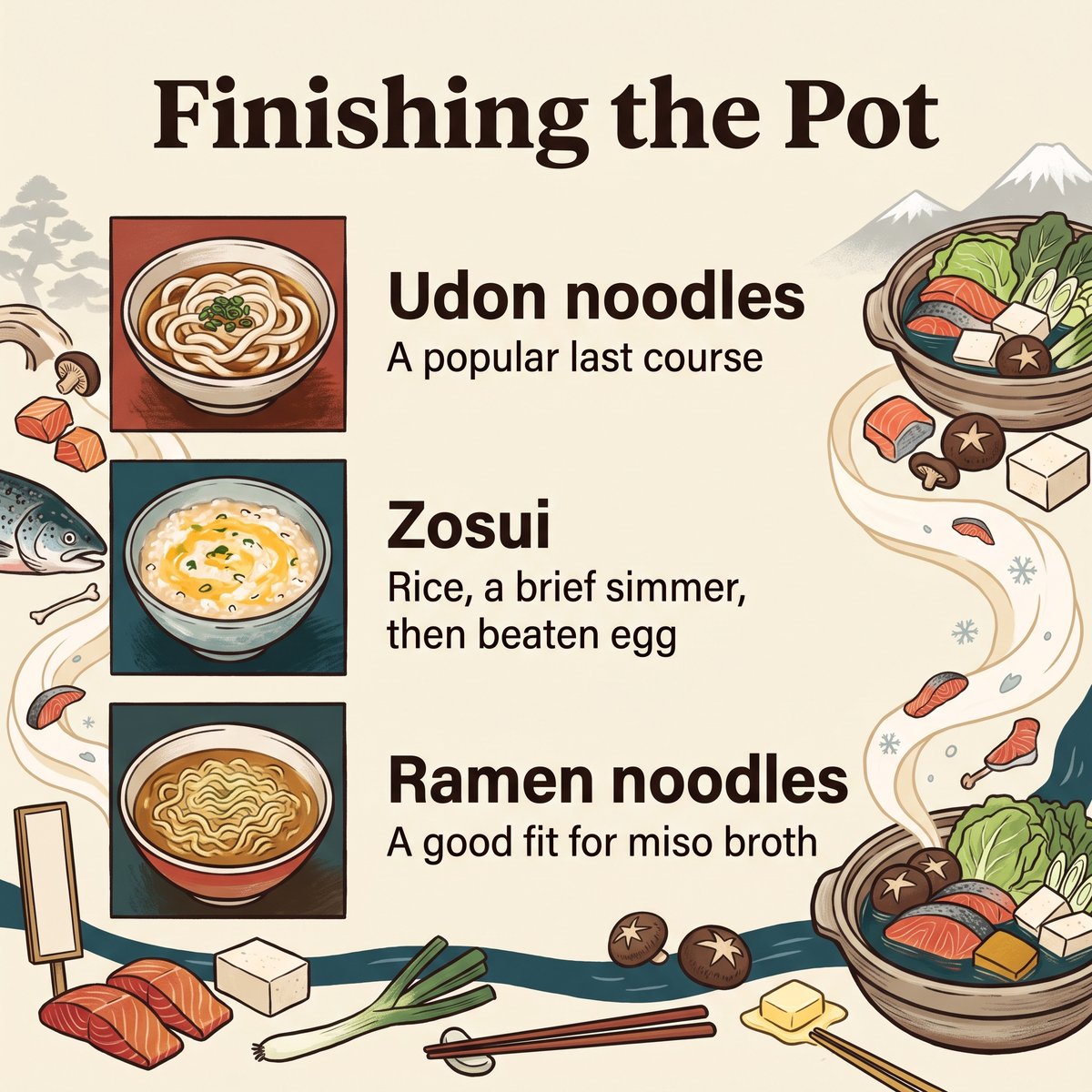
In Japan, many hot-pot meals end with shime, a final course cooked in the leftover broth. By then, the broth holds the flavor of everything that simmered in it. Udon noodles, for instance, are a popular choice. Zosui is another favorite: add cooked rice, simmer briefly, then stir in a beaten egg. Some people prefer ramen noodles, which suit a miso broth well.
Traditional Version vs Modern Variations
The widely recognized traditional core is simple: salmon and ara, vegetables, kombu broth, miso and a pinch of sansho. Everything else is a household choice. For example, Ishikari City’s own recipe uses salmon and its trimmings with cabbage and onion. It also adds tofu, konnyaku, white miso and sansho.
Traditional core
- Fresh salmon and ara
- Kombu broth
- Miso
- Cabbage and onion
- Sansho to finish
Household variations
- Butter for richness
- Sake lees for body
- Milk for a creamy broth
- Potatoes or corn
- Salmon roe on top
Butter, potatoes and corn also nod to Hokkaido’s dairy and farming identity. So these additions feel local, even if they aren’t part of the original fishermen’s meal.
Ishikari Nabe vs Sanpeijiru
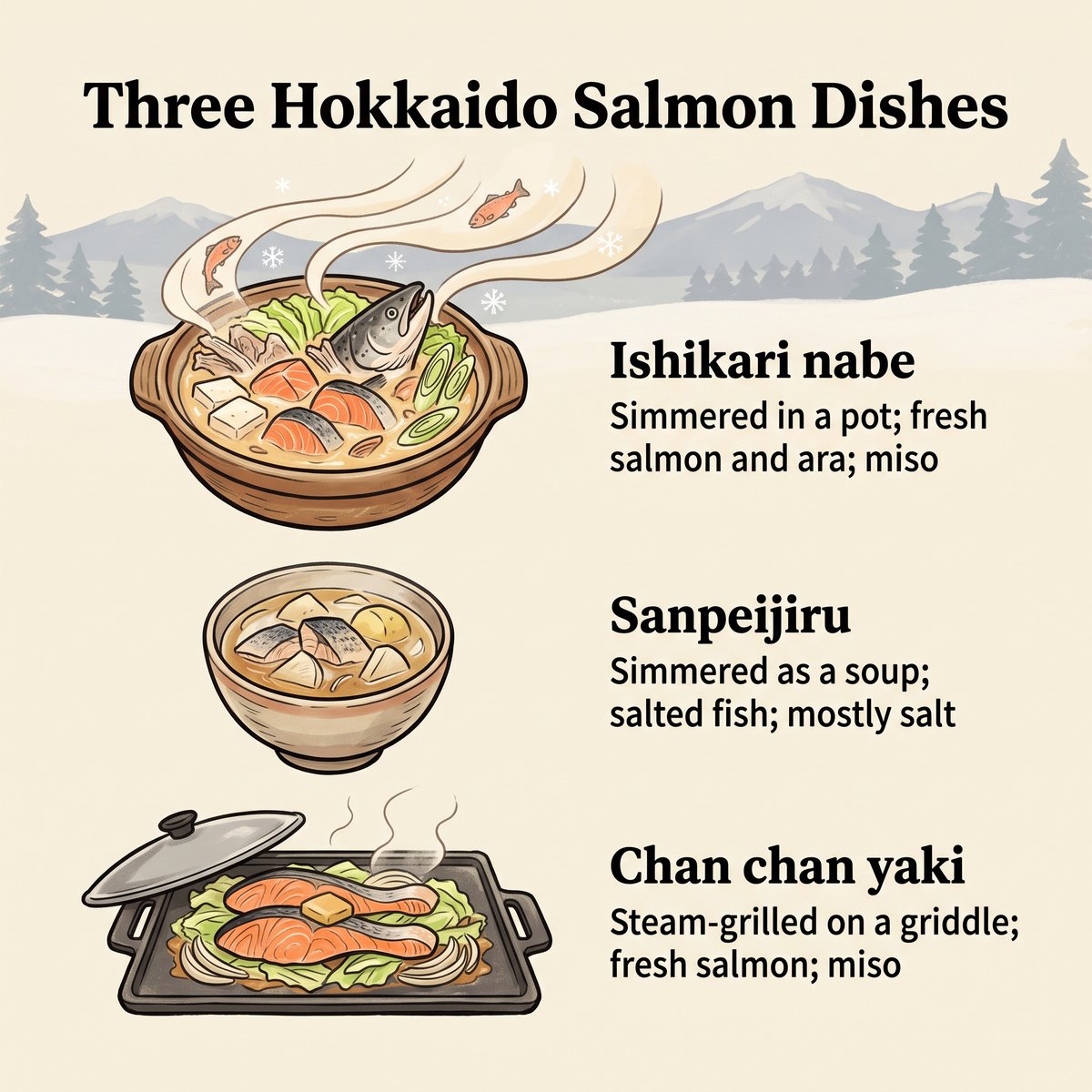
The main difference is the fish. Ishikari nabe normally uses fresh salmon and miso. Sanpeijiru, by contrast, uses salted fish and relies on that salt for seasoning. However, some areas make a miso-seasoned sanpeijiru too, so the line is not absolute.
Chan chan yaki is another Hokkaido salmon dish that people mix up with both. Instead of simmering in broth, it cooks salmon and vegetables with miso on a griddle or in a covered pan.
| Ishikari nabe | Sanpeijiru | Chan chan yaki | |
|---|---|---|---|
| Cooking method | Simmered in a pot | Simmered as a soup | Steam-grilled on a griddle |
| Fish | Fresh salmon and ara | Salted salmon or herring | Fresh salmon |
| Seasoning | Miso | Mostly salt from the fish | Miso |
| Vegetables | Cabbage, onion, tofu | Daikon, carrot, potato | Cabbage, onion, carrot |
| Serving style | Shared hot pot | Individual soup bowls | Shared from the griddle |
When Do People Eat Ishikari Nabe?

Ishikari nabe is a Hokkaido winter food, but the season really starts with autumn salmon. In Ishikari, salmon come back to the river in autumn, which is also why Ishikari Nabe Day falls in September. Many Hokkaido families start eating hot pots early, as soon as the evenings turn cool. Today it is both a family meal and a draw for visitors.
A Note on Nutrition
Of course, salmon provides protein, and the pot holds plenty of vegetables. Sodium, however, varies a lot with the amount of miso, sake lees and packaged stock. So if you watch salt, go easy on the miso and lean on the vegetables for flavor.
Where to Eat Ishikari Nabe in Ishikari and Sapporo

For the most local experience, head to Ishikari itself. The historic Honcho area near the river mouth is roughly 40 minutes by car from northern Sapporo. Buses also run from central Sapporo, but routes vary, so check current timetables first.
Information checked in October 2026. Hours, prices and reservation rules may change; contact each restaurant before visiting.
Kindaitei (金大亭)
Kindaitei opened in 1880 and is the name most linked with restaurant-style Ishikari nabe. It also sits near the Ishikari River in the old Honcho district. Note that it takes reservations only, so book ahead.
- Address
- 1 Shinmachi, Ishikari City, Hokkaido
北海道石狩市新町1 - Phone
- 0133-62-3011
- Hours
- 11:00–19:00
- Booking
- Reservations only; irregular closing days
Other Ishikari Restaurants Serving the Dish
Ishikari City lists local restaurants that serve Ishikari nabe as part of a local-produce group. Here, for example, are several from that list. Many need advance notice for the hot pot, so call before going.
| Restaurant | Area | Phone | Closed |
|---|---|---|---|
| Barato Garden (茨戸ガーデン) | Oyafuru | 0133-64-1955 | New Year holidays |
| Shuan Masuya (酒庵 升屋) | Hanakawa-kita | 0133-75-1188 | Sundays and holidays |
| The Yoshioka (ザ・吉岡) | Oyafune-cho | 0133-62-3562 | Irregular |
| Sushi Sojuncho Hidaka (鮨爽醇鳥 ひだか) | Hanakawa-minami | 0133-73-2266 | Tuesdays |
| Bishoku Kobo Hana (美食工房 花) | Bannaguro | 0133-64-8606 | Tuesdays |
Based on Ishikari City’s published member list. Romanized names are our own.
Conclusion: Why Ishikari Nabe Is Worth Trying
Ishikari nabe is more than a salmon soup. It carries the story of a fishing town, from dainabe on the riverbank to tourists waiting for the nets. Fresh salmon and its bones, kombu broth, miso and sweet vegetables make it distinct from other Hokkaido dishes. A pinch of sansho, or a pat of butter at home, finishes it off.
So you have two easy ways in. Cook the recipe above on a cold night, or plan a trip to Ishikari in salmon season. Either way, compare it with other pots like Negima nabe from Tokyo and the sumo wrestlers’ Chanko nabe.
Ishikari Nabe FAQ
About the Dish
- What does Ishikari nabe taste like?
-
It tastes savory and mildly sweet, with a rich salmon flavor. Miso gives the broth warmth, while cabbage and onion add natural sweetness. A pinch of sansho brings a light citrusy kick. Butter, if you add it, then makes the broth rounder.
- What is the difference between Ishikari nabe and Sanpeijiru?
-
Ishikari nabe uses fresh salmon and miso, while sanpeijiru usually uses salted fish. As a result, sanpeijiru takes most of its seasoning from that salt. Some regions do make a miso version of sanpeijiru, though. So the fish treatment is the clearest difference.
- Is Ishikari nabe spicy?
-
No. Traditional Ishikari nabe is savory rather than spicy. Its flavor comes from miso, salmon and vegetables, not chili. Sansho adds a light tingle, but you can leave it out.
- Is butter traditionally required?
-
No, butter is optional. The traditional core is salmon, vegetables, kombu broth, miso and sansho. Some households add butter for richness, which reflects Hokkaido’s dairy culture. Add it near the end or at the table so its aroma stays fresh.
Cooking at Home
- Can I make Ishikari nabe without salmon ara?
-
Yes, fillets alone work fine for home cooking. The broth will taste lighter and less deep than one made with the head and bones. Skin-on fillets help a little, since the skin adds richness. Good kombu stock also makes up some of the difference.
- Can I use frozen salmon?
-
Yes. Frozen salmon works well if you thaw it properly first. Move it to the refrigerator the night before, then pat it dry before cutting. Choose unsalted fillets, since salted salmon makes the broth too salty.
- What type of miso is best for Ishikari nabe?
-
White miso is a common choice, since it keeps the broth mild and slightly sweet. Mixed awase miso also works well for an everyday flavor. Red miso tastes stronger and saltier, so use less. Add any miso gradually and taste as you go.
Leftovers and Diet
- Can I prepare Ishikari nabe in advance?
-
Yes, partly. Make the kombu stock and cut the vegetables ahead, then keep them refrigerated. Cook the salmon just before serving so it stays moist. For leftovers, cool them quickly in shallow containers, refrigerate, and reheat until steaming hot.
- Can I freeze Ishikari nabe?
-
Yes, with some care. Freeze the broth and salmon, but leave out tofu, konnyaku and potatoes, because freezing ruins their texture. Thaw it in the refrigerator and reheat until the broth is steaming hot. Then add fresh tofu and greens.
- Is Ishikari nabe gluten-free?
-
Not always. Salmon, vegetables, kombu and tofu contain no gluten. However, some miso is made with barley or wheat, and packaged stock may contain wheat too. So if you avoid gluten, check every label and look for products marked gluten-free.
References
- Ministry of Agriculture, Forestry and Fisheries – Our Regional Cuisines: Ishikari Nabe, Hokkaido (Accessed October 2026)
- Agency for Cultural Affairs – 100-Year Food Database: Ishikari Nabe (Accessed October 2026)
- Agency for Cultural Affairs – 100-Year Food: Hokkaido List (Accessed October 2026)
- Ishikari City – Ishikari Nabe Recipe and Member Restaurants (Accessed October 2026)
- Hokkaido Tourism Organization (HOKKAIDO LOVE!) – Ishikari Nabe (Accessed October 2026)
- Ministry of Agriculture, Forestry and Fisheries, Hokkaido Regional Office – Washoku Network Hokkaido Newsletter (Sanpeijiru and Ishikari Nabe) (Accessed October 2026)
- Ministry of Land, Infrastructure, Transport and Tourism – Rivers of Japan: Ishikari River (Accessed October 2026)
Related Articles
- Sanpeijiru (Surveyed: October 2026)
- Complete Guide to Hokkaido Food (Surveyed: October 2026)
- Japanese Hot Pot (Surveyed: October 2026)
- Negima Nabe (ねぎま鍋) (Surveyed: October 2026)
- Chanko Nabe (Surveyed: October 2026)
- Jingisukan (Surveyed: October 2026)





Comments