




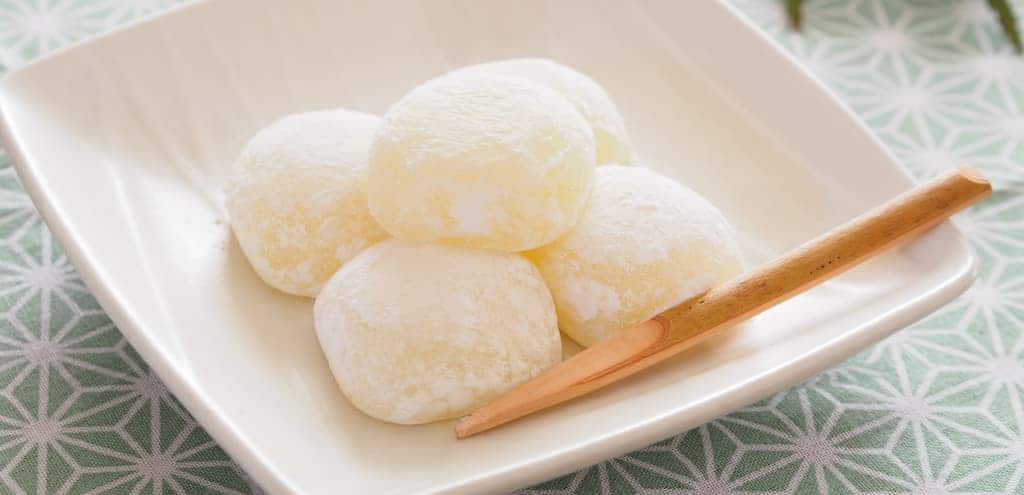
きびだんご Kibi dango is a traditional Japanese sweet dumpling from Okayama Prefecture, and one of the most famous wagashi souvenirs in western Japan. Small, soft, and lightly sweet, each dumpling is made from millet or glutinous rice flour and dusted with kinako roasted soybean flour. If you have heard the name before but cannot quite picture what it is, think of it as a chewier, earthier cousin of regular mochi, shaped into small balls and skewered. And if you know the Japanese folktale Momotaro, you already have the most important cultural context for understanding why this sweet became so beloved.
Kibi Dango and Momotaro: The Connection That Made It Famous
Momotaro, or “Peach Boy,” is one of Japan’s most enduring folk stories. A boy born from a giant peach grows up to fight demons on their island, accompanied by a dog, a monkey, and a pheasant. The animals agree to join him in exchange for a share of his rations: kibi dango, millet dumplings. That single detail embedded kibi dango into the national imagination.
Okayama’s connection to the Momotaro story is not coincidental. In the early Showa period, a link was drawn between the folklore and the legends of Kibitsu Shrine in Okayama. After World War II, Okayama actively promoted itself as the hometown of Momotaro as part of tourism development, drawing on the shrine’s local legend of Kibitsuhiko. The association stuck. Today, Momotaro imagery is everywhere in Okayama, and kibi dango is universally recognized as both the sweet from the folktale and the sweet to buy when you visit the prefecture. The two are inseparable in the popular imagination.
What is Kibi Dango?
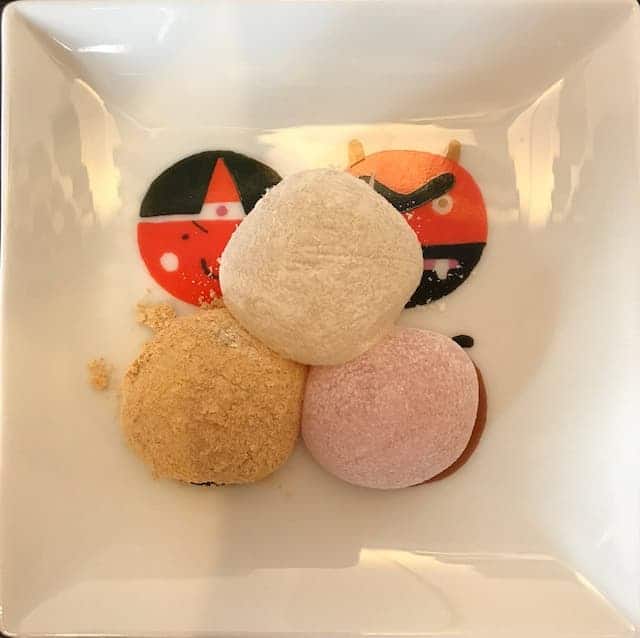
Kibi dango (きびだんご) belongs to the wagashi family of traditional Japanese confections. The name combines kibi (黍), the Japanese word for millet, and dango, the word for a round dumpling. Traditionally, the dumplings were made from millet flour mixed with glutinous rice flour, shaped into small balls, and skewered. Today, most commercial versions use glutinous rice flour as the primary ingredient rather than millet, with millet playing a secondary or flavoring role. The name and cultural identity have outlasted the original dominant ingredient.
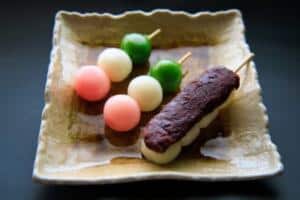
The finished dumplings are round, slightly translucent, and have no filling. They are typically coated in kinako (roasted soybean flour) or sometimes anko (sweet red bean paste). The texture is softer and more delicate than standard dango, and notably gentler than the dense chew of regular mochi.
Is Kibi Dango the Same as Mochi?
This question comes up often, and the answer is no, though the two are closely related.
Mochi is made by pounding cooked glutinous rice into a dense, elastic mass. The texture is firm, stretchy, and very chewy. Standard kibi dango uses a combination of millet flour and joshinko (rice flour), mixed and shaped without the same pounding process. The result is noticeably softer, less elastic, and less dense. The millet component also adds a subtle earthiness that mochi does not have. Both are round and white and coated with kinako at times, which explains the visual confusion. But eating them side by side, the difference in texture is immediately clear.
Why is Kibi Dango Associated with Okayama?
The name holds the answer. Kibi no Kuni, the ancient name for the region that is now Okayama Prefecture, was historically known for millet cultivation. Millet (kibi) grew well in the area’s climate and soil, and was one of the five major grains in Japan alongside rice, wheat, beans, and foxtail millet. When a confection made from local millet was created at Kibitsu Shrine in the region, it naturally took on the name of the land: Kibi Dango.
The name carries both the grain and the geography. That double meaning is one reason the sweet became so tightly identified with Okayama even after millet was largely replaced by glutinous rice flour in the modern recipe.
What Does Kibi Dango Taste Like?
Flavor
The sweetness is mild and clean. Kibi dango does not hit you with sugar the way many confections do. There is a gentle, slightly nutty quality from the millet or rice base, and the kinako coating adds a roasted, earthy depth that lingers pleasantly. The overall impression is understated. It is the kind of sweet that improves every time you eat it, because the subtlety becomes more interesting rather than less.
Texture
Soft, springy, and slightly sticky. The dumplings yield immediately under gentle pressure but have enough elasticity that they do not feel fragile. They are best eaten fresh, when the texture is at its most delicate. Left for too long, they firm up and lose that characteristic softness.
Aroma
Fresh kinako has a warm, almost coffee-like fragrance that is immediately recognizable. Good kibi dango carries that aroma as soon as you open the package. It is one of those food smells that triggers appetite before you have even taken a bite.
A Brief History of Kibi Dango
Origin: A Tea Ceremony Confection at Kibitsu Shrine
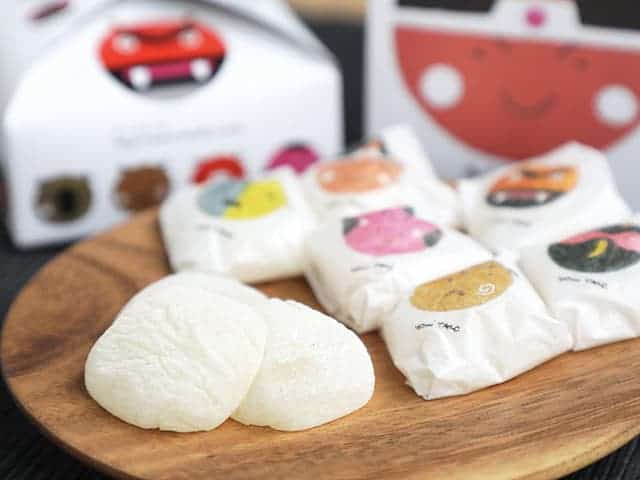
Kibi dango is believed to have originated during the late Edo period, when a wagashi craftsman named Asajiro Takeda first made a dumpling as a sweet for tea ceremonies at Kibitsu Shrine in Okayama. The earliest version was square-shaped and contained red bean paste. A later craftsman, Hanzo Takeda, improved the form into the small, round, unfilled balls that define the sweet today. A tea master associated with the Okayama domain named Sanensai Igi further refined the recipe and gave the sweet its current name, “Kibi Dango.”
Spread: The Railway and Station Souvenir Culture
Kibi dango remained a local specialty until 1891, when the Sanyo Railway opened and Okayama Station began operating. Street vendors set up at the station and began selling kibi dango to travelers. This was a turning point. Station souvenirs were one of the primary ways regional food became nationally known in Meiji-era Japan. Kibi dango spread across the country on the backs of railway travelers, becoming Okayama’s most recognized export sweet within a generation.
Modern Era: Momotaro Branding and Commercial Products
The Momotaro association, formalized in postwar tourism promotion, gave kibi dango a second wave of national visibility. By the latter twentieth century, multiple confectionery companies in Okayama were producing their own versions, ranging from traditional kinako-dusted classics to contemporary variations with soy sauce, chocolate, and local fruit flavors. The sweet became a standard gift item for anyone returning from Okayama, a status it maintains today.
How to Make Kibi Dango at Home
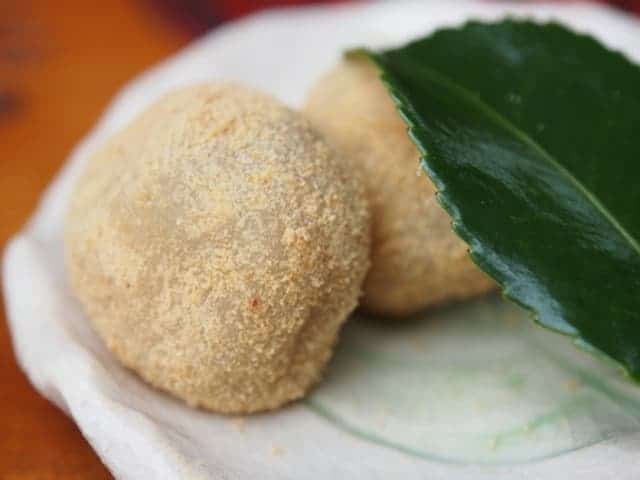
Ingredients (makes 4 skewers)
| Ingredient | Amount |
| Glutinous millet (kibi) | 50g |
| Water (for soaking and cooking millet) | 100ml |
| Joshinko (non-glutinous rice flour) | 50g |
| Boiling water (for joshinko) | 60ml |
| Caster sugar | 10g |
| Salt | a pinch |
| Kinako topping | |
| Soybean flour (kinako) | 3 tbsp |
| Caster sugar | 10g |
Steps
Soak the millet in water for 30 minutes, then drain. Place the soaked millet and fresh water in a heat-resistant bowl, cover with plastic wrap, and microwave at 600W for 5 minutes. Allow it to steam for 10 minutes, then transfer to a mortar and grind with a pestle until the mixture becomes sticky and cohesive.
Combine joshinko and boiling water in a separate heat-resistant bowl, mixing with a spatula. Cover and microwave at 600W for 1 minute. Stir, cover again, and microwave for another minute. The mixture should be smooth and slightly translucent. Add it to the mortar with the millet and combine thoroughly with the pestle. Add sugar and salt and mix until evenly incorporated.
Wet your hands lightly to prevent sticking. Divide the mixture into 12 equal portions and roll each into a smooth, round ball. Try to keep the size consistent so they cook and rest evenly. The mixture should be soft but manageable.
Mix the kinako and sugar in a flat tray. Roll each ball in the mixture to coat evenly. Thread 3 balls onto each bamboo skewer. Serve immediately for the best texture. If not eating right away, cover loosely so the kinako does not dry out too much.
Key tip: grind the cooked millet thoroughly in the mortar before adding the joshinko. Incomplete grinding leaves a grainy texture in the finished dumplings. The mixture should feel smooth and cohesive before you add the rice flour component.
Types of Kibi Dango: Traditional and Contemporary
Traditional versions
The classic kibi dango is a plain round ball dusted with kinako, with no filling. Some shops offer versions with anko (sweet red bean paste) inside, which gives the dumpling a richer, more substantial flavor. A sea salt version using mineral-rich sea salt from Izu Oshima Island is another restrained, traditional-feeling variation that enhances the natural sweetness of the rice base without overwhelming it.
Contemporary and souvenir versions
Several Okayama shops have introduced more unusual flavors aimed at gift buyers and tourists. Soy sauce kibi dango, made with local Tora Shoyu, adds a savory-sweet dimension that is surprisingly appealing. Salted chocolate kibi dango wraps chocolate and almond pieces in salt-flavored gyuhi mochi skin, merging Western confectionery with Japanese technique. Chocolate-coated versions dusted in cocoa powder exist at a few specialty shops. Muscat kibi dango, made with Okayama’s famous muscat grape extract, delivers a clean, fruity sweetness that reflects one of the prefecture’s other agricultural strengths.
Where to Buy Kibi Dango in Okayama
Nakayama Shoyodo — Soy Sauce and Chocolate Variations
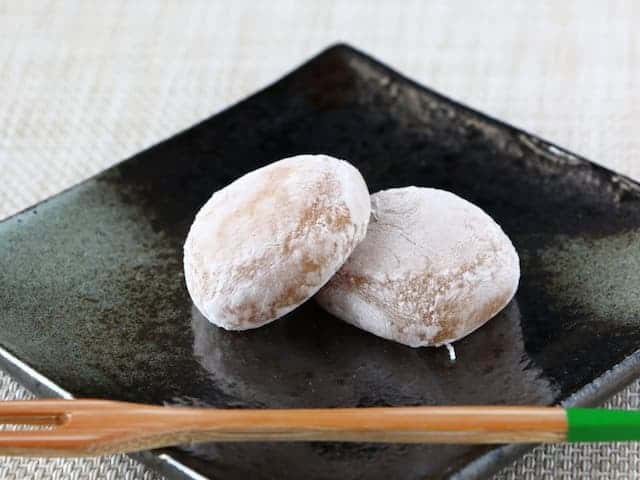
Nakayama Shoyodo makes two of the more distinctive contemporary versions of kibi dango available in Okayama. Their Momotorao variety incorporates Tora Shoyu soy sauce directly into the dough, giving each dumpling a savory background note that makes it unusually snackable. The name combines “Momotaro” and “Torao” from the soy sauce brand. Their salted chocolate version wraps chocolate with almond accents inside salt-flavored gyuhi, offering a Japanese-Western hybrid for those who want something less traditional.
Koeido — The Long-Established Classic and Sea Salt Variety
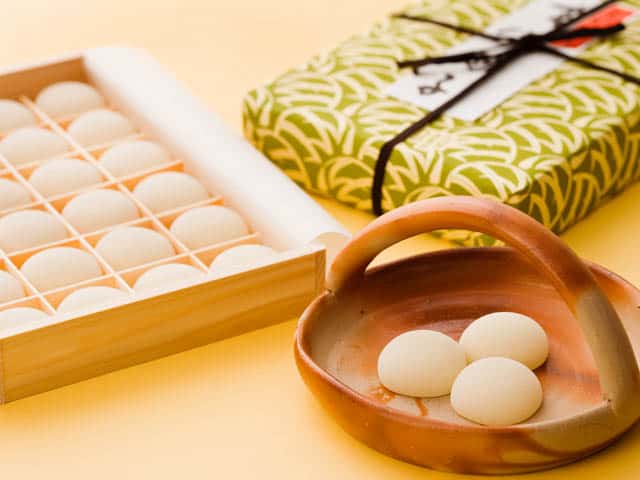
Koeido is one of the most respected names in Okayama kibi dango. Their Ganso Kibi Dango sea salt version uses natural sea salt from Izu Oshima, chosen for its mineral content and clean flavor. The salt brings out the sweetness of the rice base without adding any sharpness. Their Mukashi Kibi Dango uses specially cultivated glutinous rice from the Takamatsu district of Okayama, famous for its Mandokoro Mochi rice variety. This premium version is known for its particularly springy texture and light sweetness, and it often sells out on weekends.
Yamawaki Sangetsudo — Chocolate Kibi Dango
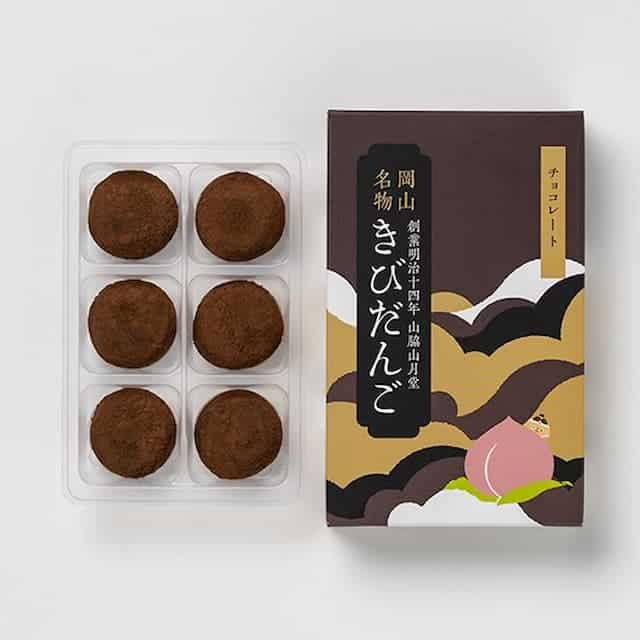
Yamawaki Sangetsudo makes a chocolate kibi dango that wraps rich cacao-flavored chocolate inside a soft mochi skin, then coats the outside in cocoa powder. It is the most dessert-like of the main kibi dango varieties, suited for those who enjoy wagashi but want something more indulgent. Available online and through their stores.
Takehisa Yumeji Honpo Shikishimado — Muscat Kibi Dango
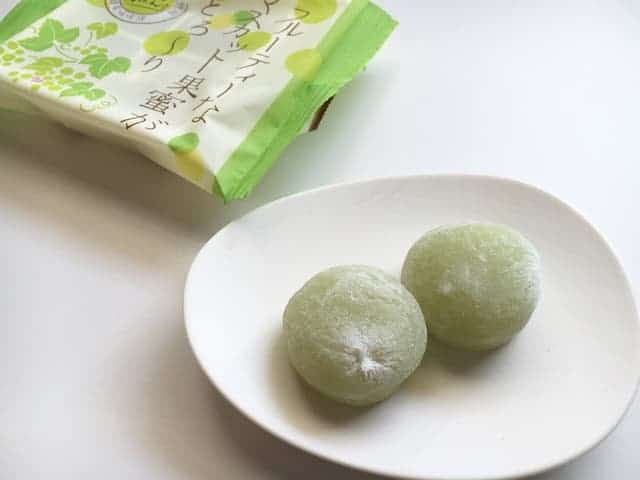
Shikishimado’s muscat kibi dango uses nectar from Okayama-grown muscat grapes incorporated directly into the dumpling. Okayama is one of Japan’s leading muscat-producing regions, and the fruit’s floral, citrusy sweetness pairs remarkably well with the mild, starchy base of kibi dango. This version is a good example of a souvenir that reflects two of the prefecture’s strengths at once.
Final Thoughts
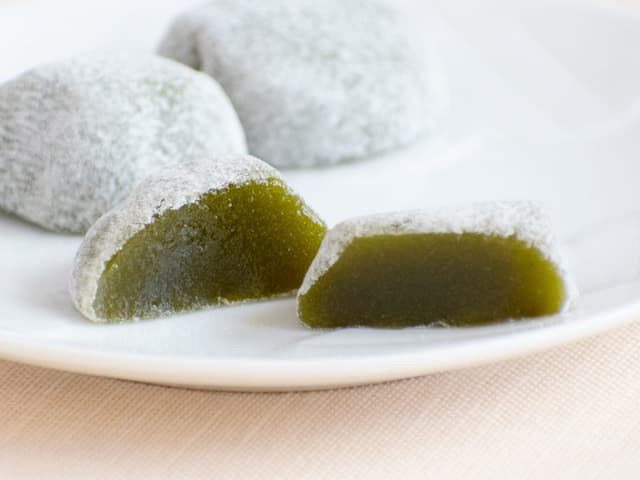
Kibi dango is one of those Japanese sweets that earns its reputation through simplicity rather than complexity. The ingredients are few, the flavor is subtle, and the cultural story behind it is unusually rich. Whether you try the classic kinako-dusted version at Koeido or the soy sauce twist from Nakayama Shoyodo, you are tasting something that connects directly to Okayama’s history, its agricultural identity, and one of Japan’s most beloved folktales.
If kibi dango opens an interest in Japanese sweets more broadly, the guides on wagashi and mizu yokan cover two more categories of traditional Japanese confectionery worth knowing. For other types of dango, the Japanese sweets collection covers the full range of regional varieties.
Interested in Japanese sweets? Read more about wagashi and other traditional Japanese confections on Food in Japan.
Kibi Dango FAQ
What is kibi dango?
Kibi dango (きびだんご) is a traditional Japanese sweet dumpling from Okayama Prefecture. Small, round, and lightly sweet, it is made from millet flour and glutinous rice flour, shaped into balls, and typically dusted with kinako (roasted soybean flour). It is one of Japan’s most famous regional wagashi and a classic souvenir from Okayama.
Is kibi dango the same as mochi?
No. Mochi is made by pounding glutinous rice into a dense, elastic mass and has a firm, stretchy texture. Kibi dango uses millet flour and joshinko (rice flour) without pounding, producing a softer, less elastic result. The millet adds a subtle earthiness that mochi does not have. Both are round and often coated in kinako, which creates visual confusion, but they taste and feel different.
Why is kibi dango famous in Okayama?
The name kibi dango literally combines kibi (millet) and dango (dumpling), and kibi was historically grown in Kibi no Kuni, the ancient name for what is now Okayama Prefecture. The sweet was created at Kibitsu Shrine in Okayama during the Edo period, and became widely known when it began being sold at Okayama Station after the Sanyo Railway opened in 1891. Its association with the Momotaro folklore, which was linked to Okayama in the postwar era, cemented its status as the prefecture’s defining souvenir.
What is the connection between kibi dango and Momotaro?
In the Momotaro folktale, the hero carries kibi dango as rations on his journey to fight demons, and shares them with the dog, monkey, and pheasant who become his companions. In the postwar period, Okayama actively promoted itself as the hometown of Momotaro using legends from Kibitsu Shrine. This made kibi dango nationally famous as both the sweet from the story and the souvenir to buy in Okayama.
What does kibi dango taste like?
The flavor is mild and lightly sweet with a subtle earthiness from the millet. The kinako coating adds a roasted, nutty depth. The texture is soft and slightly springy, less dense than mochi. It is a gentle sweet that does not overwhelm, making it well-suited to eating alongside tea.
Where can I buy kibi dango in Okayama?
The main places are Okayama Station, souvenir shops in the Kurashiki Bikan Historical Quarter, and specialist confectionery shops like Koeido and Nakayama Shoyodo. Most shops offer multiple varieties. Traditional kinako-dusted versions are available everywhere; specialty flavors like sea salt, soy sauce, and muscat are shop-specific.
Is kibi dango gluten-free?
Traditional kibi dango is made from millet flour and joshinko (rice flour), both of which are naturally gluten-free. Most versions contain no wheat. However, some contemporary variations include ingredients like soy sauce or chocolate that may contain gluten. Check the specific product label if you have a gluten sensitivity.
Can I make kibi dango at home?
Yes, and it is achievable with basic kitchen equipment. The main ingredients are glutinous millet, joshinko (rice flour), sugar, and kinako. The key step is grinding the cooked millet thoroughly before combining it with the rice flour. Incomplete grinding produces a grainy texture. The full process takes about 30 to 40 minutes and does not require specialist tools.
References
- Food in Japan — Original Kibi Dango article
- Food in Japan — Wagashi guide
- Food in Japan — Mizu Yokan
- Food in Japan — Japanese sweets collection
- Nakayama Shoyodo — shoyodo.jp
- Koeido — koeido.co.jp
- Yamawaki Sangetsudo — dango.co.jp
- Takehisa Yumeji Honpo Shikishimado — shikishima.co.jp




Comments