




Walk through central Fujinomiya around lunchtime and you will smell it before you see it. Sauce hits a hot iron griddle somewhere, and the scent drifts down the street toward Fujisan Hongu Sengen Taisha. Locals barely notice. For them, this has been the smell of home since childhood.
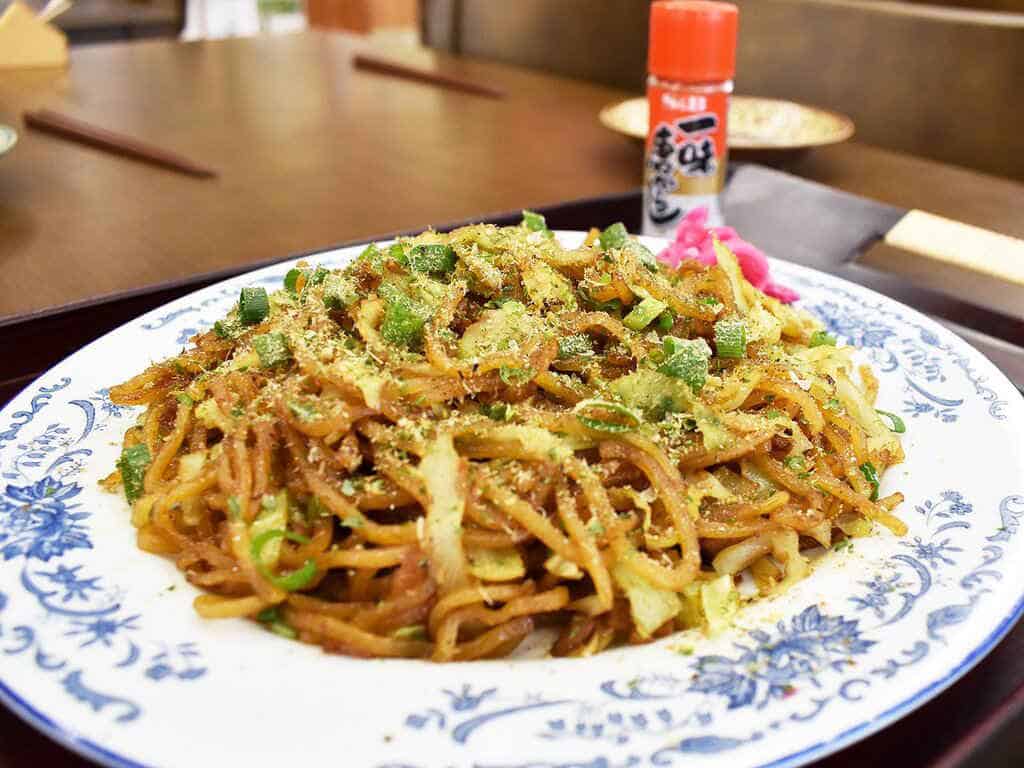
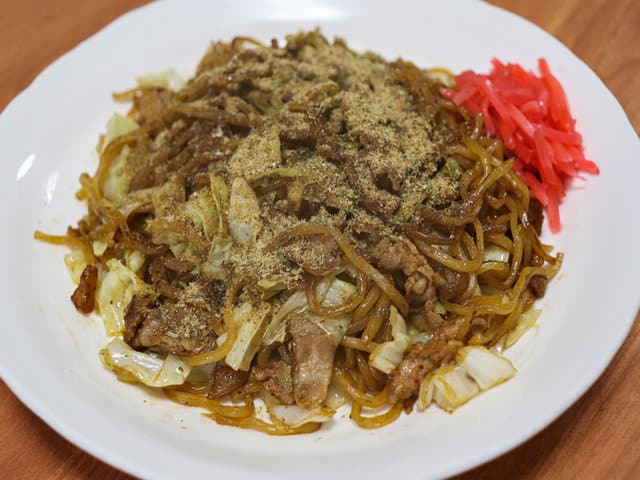
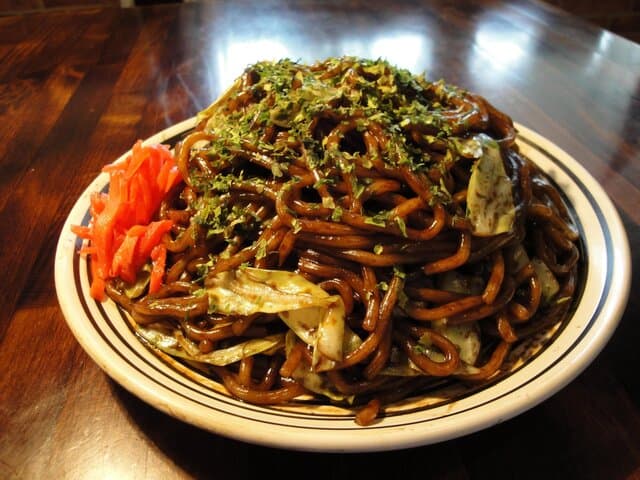
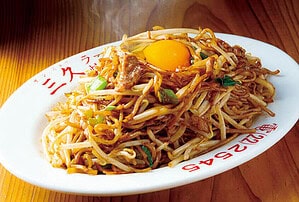
Fujinomiya Yakisoba is a local fried noodle dish from Fujinomiya City in Shizuoka Prefecture. Cooks use firm steamed noodles, cabbage, nikukasu, savoury sauce, and sardine powder. The noodles have a distinctly chewy texture, and the dish became famous as one of Japan’s best-known B-class gourmet foods. This guide explains the flavour, the history, the recipe, and the best places to eat it in Fujinomiya.
Fujinomiya Yakisoba at a Glance
| Region | Fujinomiya City, Shizuoka Prefecture (Chubu) |
| Main ingredients | Steamed noodles, cabbage, nikukasu, sauce, sardine powder |
| Flavour | Savoury and smoky, with fish umami on the finish |
| Texture | Firm and springy, noticeably chewier than usual yakisoba |
| Typical price | Roughly 500 to 800 yen for a standard portion |
| Best place to eat | Omiya Yokocho and the streets around Fujinomiya Station |
| Similar dishes | Yokote Yakisoba, Ota Yakisoba, standard sauce yakisoba |
What Is Fujinomiya Yakisoba?
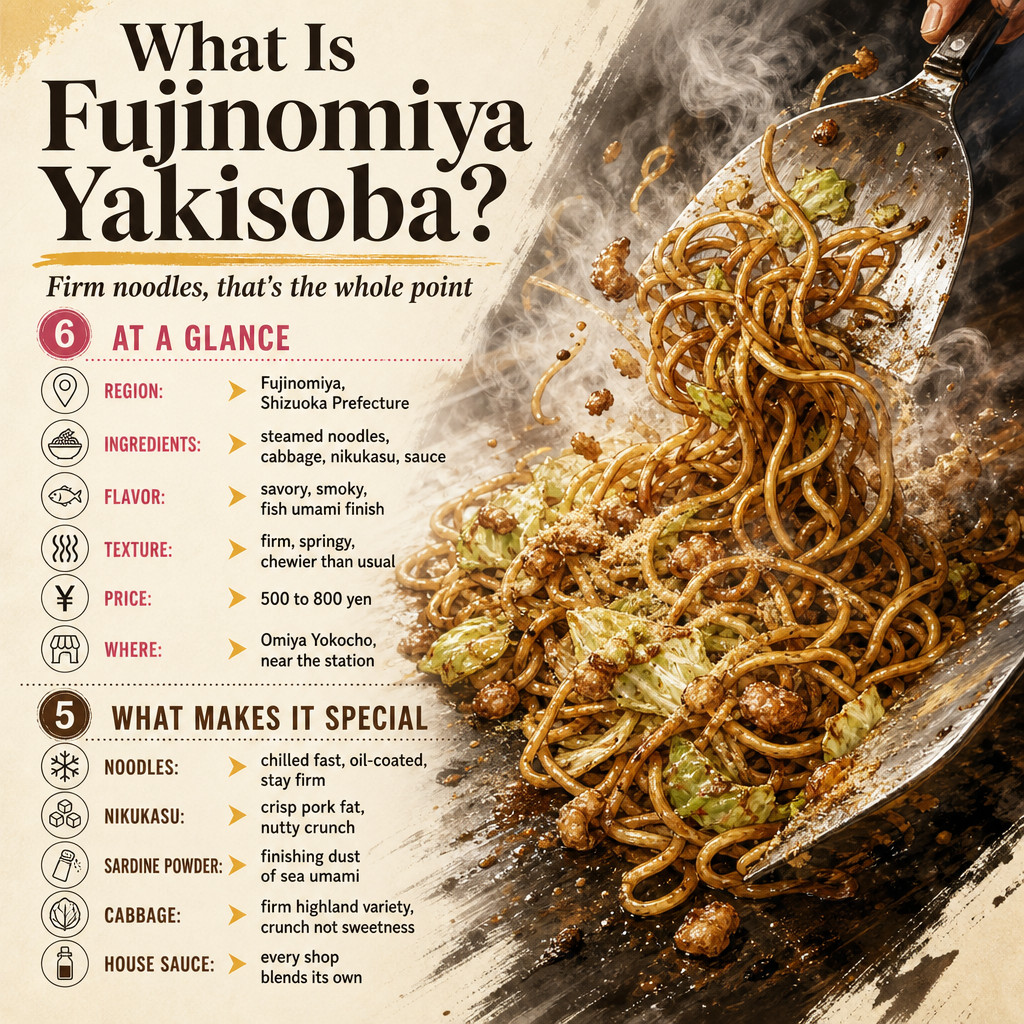
Fujinomiya Yakisoba is a regional style of fried noodles from Fujinomiya City in Shizuoka Prefecture. Cooks fry steamed wheat noodles on a thick iron griddle with cabbage and nikukasu, then season everything with a Worcestershire-based sauce. Sardine powder goes on at the end. The noodles stay firm rather than soft, which is the whole point.
The dish sits under the wider umbrella of yakisoba, yet locals treat it as its own category. Some people even argue it should not share the name at all. That sounds dramatic, though the reasoning holds up once you taste both side by side.
What makes Fujinomiya Yakisoba special
- Chewy steamed noodles: steamed, chilled fast, then coated in oil, so they hold their bite under high heat.
- Nikukasu: crisp pork fat left over from rendering lard, which adds a nutty, savoury crunch.
- Sardine powder: a finishing dust of dried fish that layers sea umami over the sauce.
- Cabbage: firm highland cabbage grown around Fujinomiya, chosen for crunch rather than sweetness.
- House sauce: most shops blend their own, so no two plates taste quite the same.
What Makes Fujinomiya Yakisoba Different?
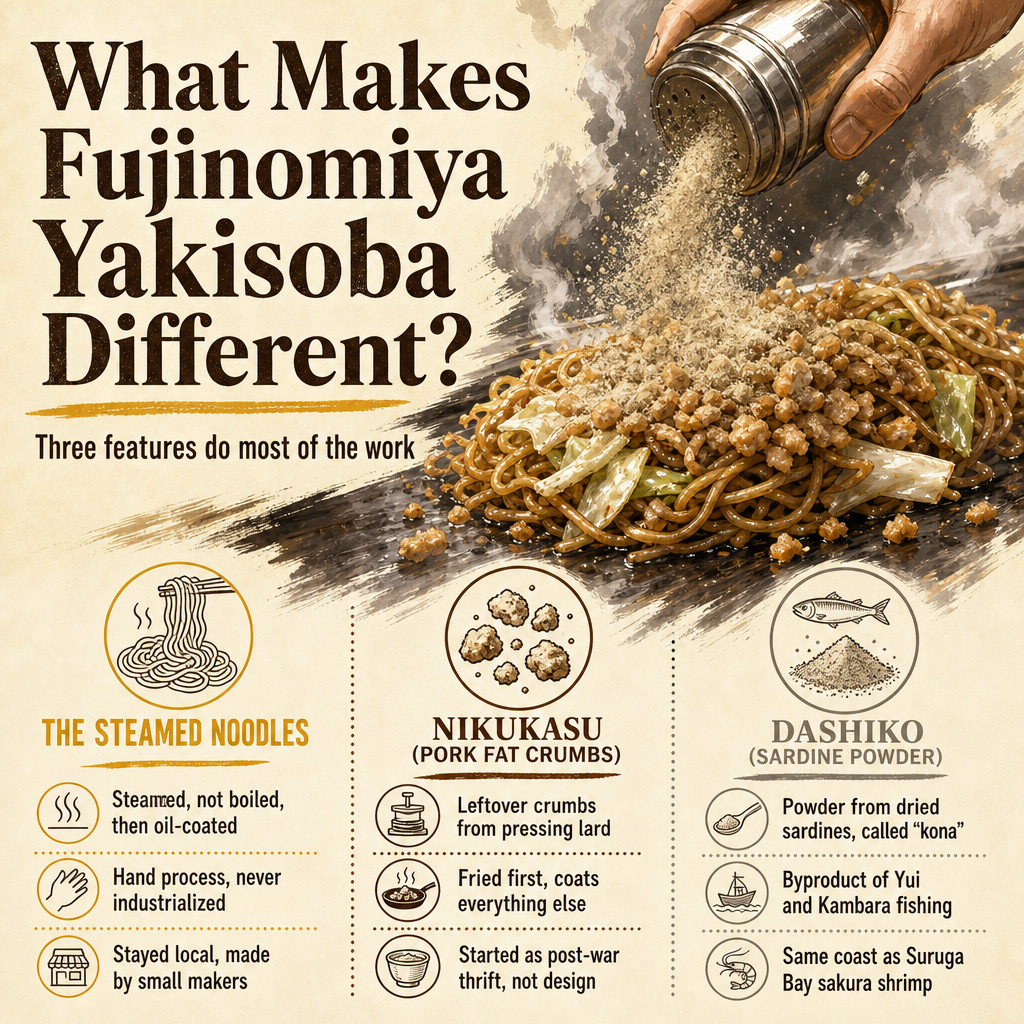
The Fujinomiya Yakisoba Society lists ten defining features of the dish. Three of them do most of the work, so let us start there.
1. The Steamed Noodles
Ordinary yakisoba uses boiled noodles. Fujinomiya uses steamed ones instead. Local noodle makers steam the dough, chill it rapidly, then coat the surface with oil. That process drives out moisture and leaves a noodle that keeps longer and fights back when you chew it.
The method also explains why the style stayed local. Steaming involves a lot of hand work, so factories never automated it easily. Large manufacturers skipped it, and the technique survived only in Fujinomiya. Today a handful of small makers in the city still supply the shops, and each one produces a slightly different noodle.
2. Nikukasu (Pork Fat Crumbs)
Nikukasu is what remains after butchers press lard out of pork back fat. Cooks chop it small, then fry it first so the fat coats everything else. The texture lands somewhere between a pork crackling and a toasted nut, with a faint sweetness underneath.
Its origin is pure thrift. Pork itself cost too much in the post-war years, so shops used the by-product instead. Nobody planned it as a signature ingredient. Even so, the umami it carries now defines the dish, and some shops chop it coarsely just to keep the crunch obvious.
3. Dashiko (Sardine Powder)
The final dusting is dashiko, a powder made mainly from dried sardines. Locals often just call it “kona”, meaning powder. It looks like a light grey snowfall over the noodles, and it changes the flavour more than you would expect.
The supply chain sits nearby. Fishing ports at Yui and Kambara on Suruga Bay have produced dried sardine flakes for generations. Fragments that broke into powder during production or transport could not be sold as flakes, so Fujinomiya cooks bought them cheaply for seasoning. The same waters give Shizuoka Suruga Bay’s famous Sakura Shrimp, which shows how much this coast shapes local cooking.
What Does Fujinomiya Yakisoba Taste Like?
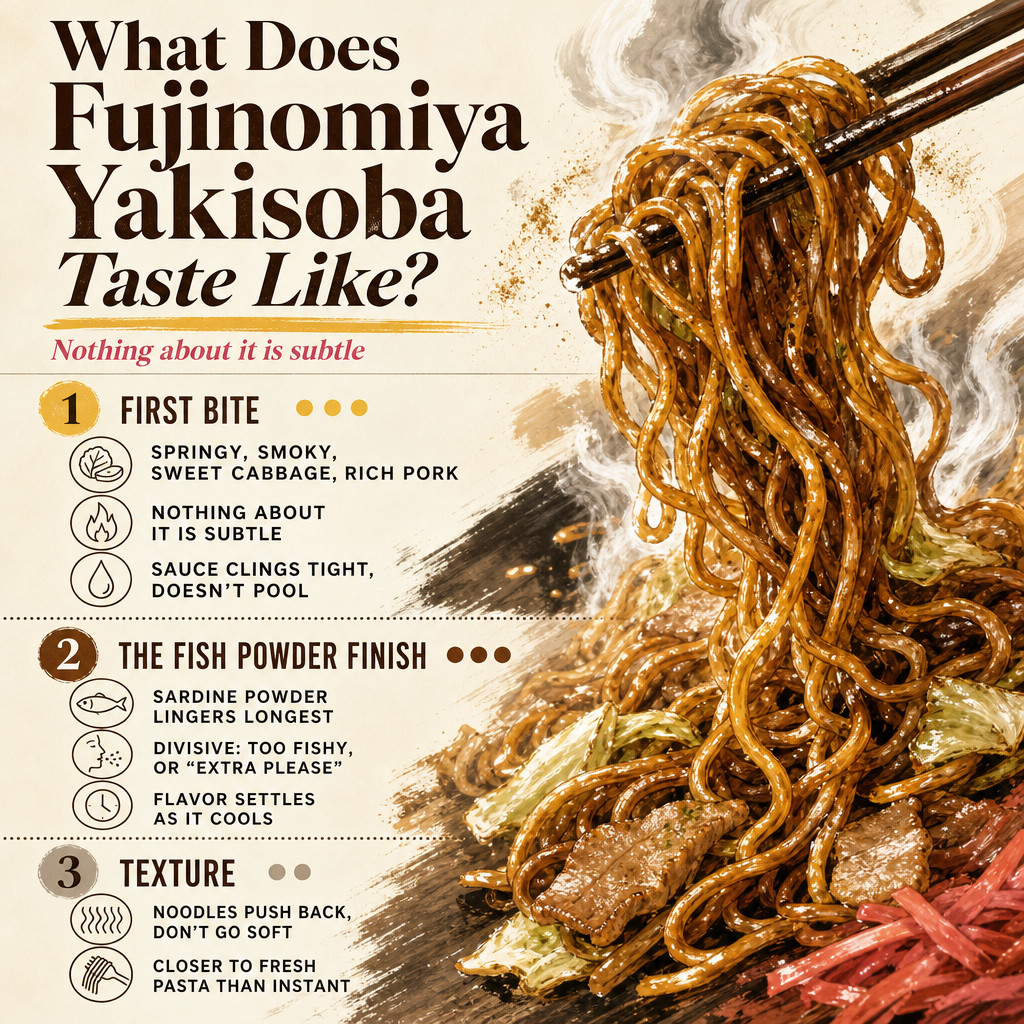
The first bite feels springy and smoky, with sweet cabbage, rich pork flavour, and a savoury dusting of fish powder. Nothing about it is subtle. Because the noodles carry less water, the sauce clings tightly instead of pooling on the plate.
Sardine powder arrives last and lingers longest. Honestly, that finish divides people. Some travellers find it too fishy against the sweet sauce, while regulars ask for extra. Give it a few mouthfuls before deciding, since the flavour settles as the plate cools slightly.
Texture, though, is where the dish earns its reputation. Standard yakisoba noodles turn soft and slippery. These push back against your teeth, closer to fresh pasta than to instant noodles.
The History of Fujinomiya Yakisoba
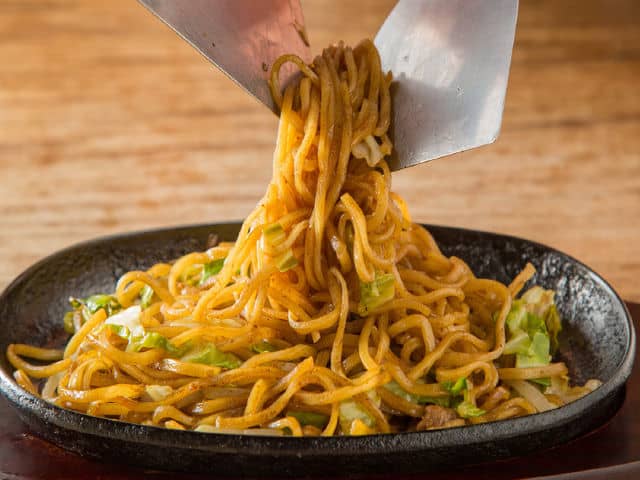
Post-War Noodles and Dagashiya Culture
Fujinomiya grew as a temple town around Fujisan Hongu Sengen Taisha, and silk spinning mills later filled it with young workers. After the war, cheap filling food mattered more than anything else. Flour, cabbage, and a griddle covered all three needs.
Refrigeration barely existed then, which made the steamed noodle genuinely useful. It kept for days without spoiling, so shops across the area adopted it. Marumo Food Industry, one of the city’s noodle makers, traces the invention to its founder trying to recreate the rice vermicelli he had eaten overseas during the war.
Children ate it at dagashiya, the old-fashioned penny sweet shops, alongside okonomiyaki. That detail matters more than it sounds. Because the dish grew up as an after-school snack, Fujinomiya people still treat yakisoba as a side dish rather than a main. Local menus commonly list a yakisoba teishoku, which pairs the noodles with rice and miso soup. After a night of drinking, many residents finish with yakisoba instead of ramen.
From Local Habit to National Name
For decades nobody thought of it as special. The name “Fujinomiya Yakisoba” did not even exist until 1999, when the city and the chamber of commerce ran a workshop on reviving the shopping district. Around sixty residents attended, and early ideas focused on Mount Fuji, the spring water, and the shrine.
Those subjects felt too sacred to joke about, so the group looked for something ordinary instead. Someone raised the yakisoba from the neighbourhood sweet shops. In 2000, participants founded the Fujinomiya Yakisoba Society under Hidehiko Watanabe, who ran the campaign on puns and press coverage rather than a budget.
Volunteers formed a survey team, visited shops at night, and produced the first Fujinomiya Yakisoba map. NHK picked up the story, and national coverage followed quickly. The society reports an economic impact of 43.9 billion yen across its first nine years.
The B-1 Grand Prix then made the dish famous nationwide. Fujinomiya won the first two editions in 2006 and 2007, which turned a local habit into a national brand. In 2022, Japan’s Agency for Cultural Affairs certified it under the “100-Year Food” programme.
Success brought a problem too. Shops elsewhere began selling completely different noodles under the same name, so the name itself is now a registered trademark. Businesses need permission from the rights holder before using it commercially. That step feels bureaucratic, yet it protects the definition the city spent years building.
Why Fujinomiya Yakisoba Is Famous in Shizuoka
Fujinomiya sits at the western foot of Mount Fuji, and the Fujinomiya Trail starts from the city. Sengen Taisha, the head shrine of more than 1,300 Sengen shrines, stands in the centre of town. Plenty of visitors arrive for the mountain and stay for lunch.
Local pride explains the rest. The dish belongs to residents rather than to restaurants, which is unusual for a regional speciality. Shops compete on sauce, griddle style, and whether customers cook their own plate.
Shizuoka has no shortage of famous food, of course. Shizuoka Oden, another famous Shizuoka local food, shares the same habit of finishing a dish with fish powder and aonori. For a sweeter stop, Kinako Mochi, a traditional Shizuoka sweet, works well after a heavy plate of noodles.
Fujinomiya Yakisoba vs Other Japanese Yakisoba
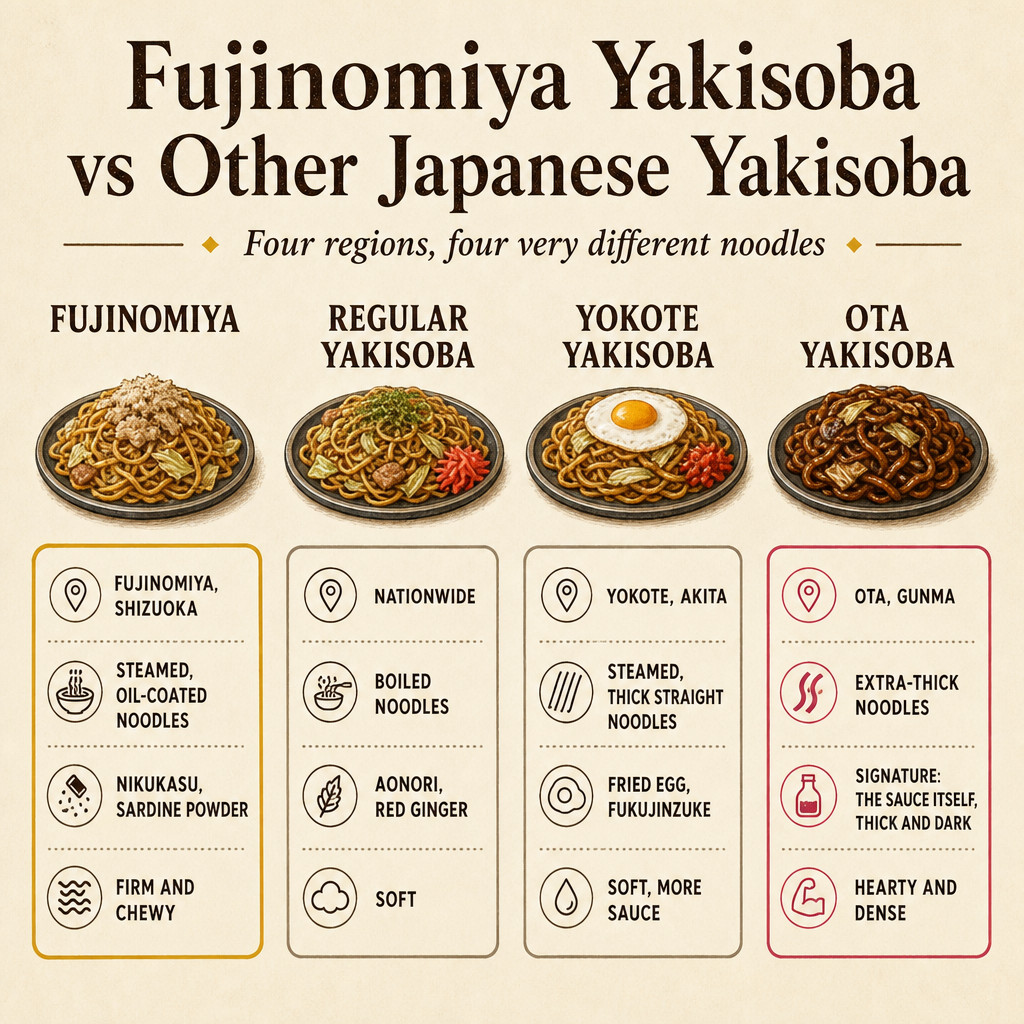
Japan recognises three major regional yakisoba. Fujinomiya represents Shizuoka, while Akita and Gunma supply the other two. The table below sets them against a standard sauce yakisoba.
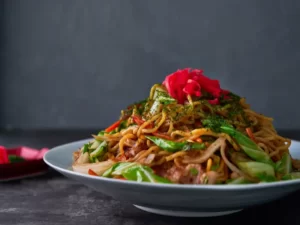
| Category | Fujinomiya Yakisoba | Regular Yakisoba | Yokote Yakisoba | Ota Yakisoba |
|---|---|---|---|---|
| Noodle type | Steamed, oil-coated | Boiled | Steamed, thick and straight | Extra-thick |
| Signature topping | Nikukasu, sardine powder | Aonori, red ginger | Fried egg, fukujinzuke | Sauce itself |
| Sauce | House-blended Worcestershire | Standard yakisoba sauce | Sweeter, more moisture | Thick and very dark |
| Texture | Firm and chewy | Soft | Soft with more sauce | Hearty and dense |
| Region | Fujinomiya, Shizuoka | Nationwide | Yokote, Akita | Ota, Gunma |
Yokote Yakisoba
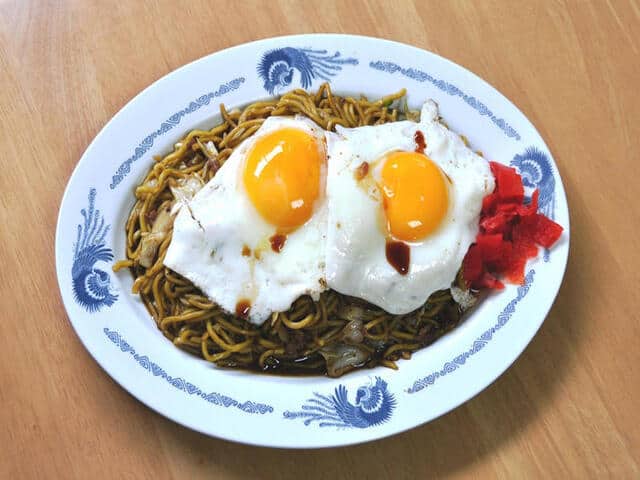
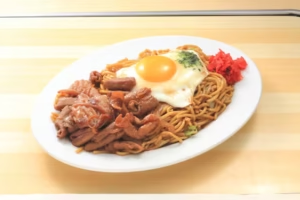
Akita’s version arrives under a sunny-side-up egg, with fukujinzuke pickles on the side. Worcestershire sauce gives it a sweeter profile, and the plate holds noticeably more moisture. Locals break the yolk and mix it through. Our guide to Yokote Yakisoba covers the full story.
Joshu Ota Yakisoba
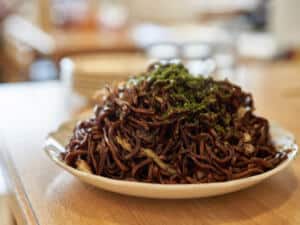
Gunma takes the opposite approach with very thick noodles and a dark, heavy sauce. No fixed rules govern the seasoning, so each shop builds its own recipe. Read more in our Ota Yakisoba guide.
Fujinomiya Yakisoba Ingredients
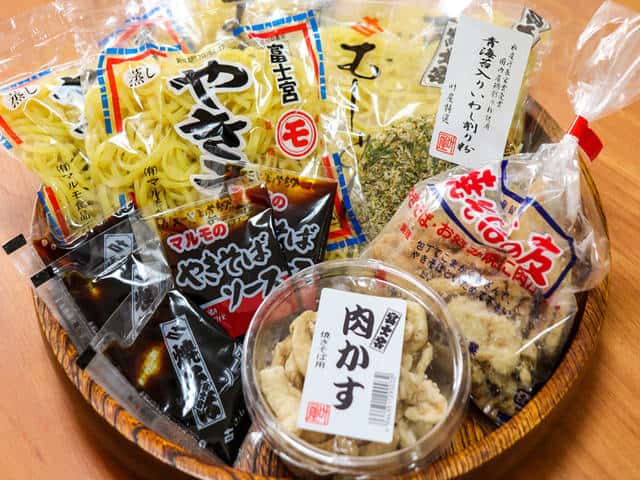
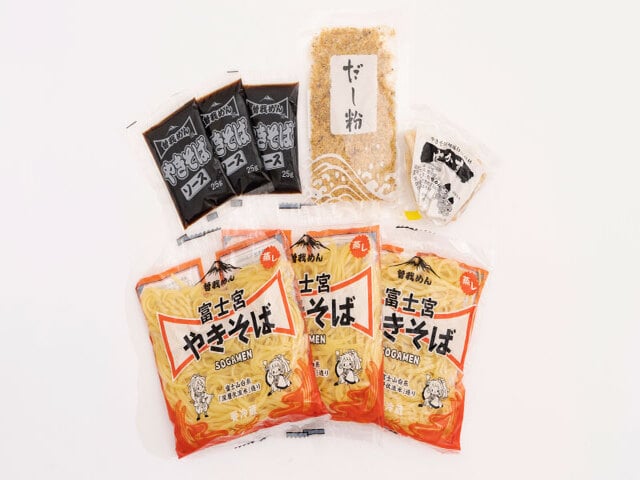
Mail-order sets from Fujinomiya usually bundle everything except the cabbage. The table below covers a two-person portion.
| Ingredient | Amount (2 servings) | Role on the griddle |
|---|---|---|
| Steamed yakisoba noodles | 2 portions | The chewy base of the dish |
| Cabbage | 200 g | Sweetness, crunch, and steam |
| Nikukasu | 30 to 50 g | Pork umami and crisp texture |
| Yakisoba sauce | 2 sachets | Worcestershire-based seasoning |
| Sardine powder (dashiko) | To taste | Finishing dust of sea umami |
| Hot water | 80 ml | Loosens and steams the noodles |
| Lard or oil | 1 tbsp | Coats the pan and carries flavour |
| Red pickled ginger | To taste | Sharp contrast against the sauce |
| Pork belly (optional) | 100 g | Extra richness beyond the nikukasu |
| Squid or egg (optional) | To taste | Common shop upgrades |
| Aonori (optional) | To taste | Seaweed aroma on top |
Substitutions work if you cannot source the real thing. Regular yakisoba noodles will do, although the result turns softer. Bacon bits, thin pork belly, or crisp fried tofu can stand in for nikukasu. Bonito powder replaces sardine powder reasonably well, and bean sprouts or onion stretch the vegetables.
How to Make Fujinomiya Yakisoba at Home
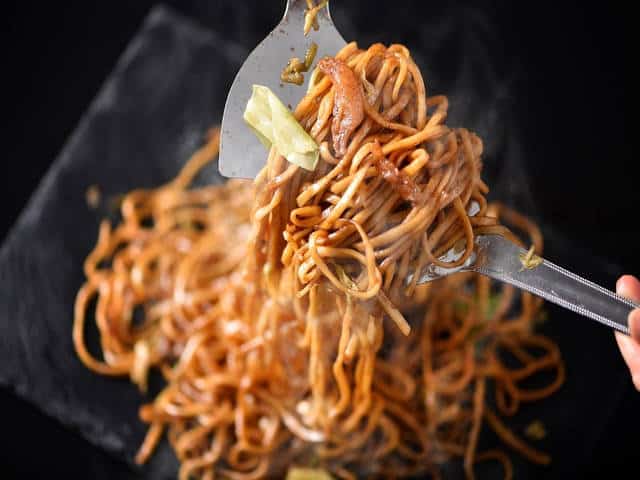
- Chop the nikukasu into pieces around 5 mm. Cut the cabbage into strips about 1 cm wide.
- Heat the pan properly before anything goes in. Then fry the nikukasu until the fat renders out.
- Add the cabbage and stir-fry briefly. Keep the heat high so the vegetables do not release too much water.
- Push everything to one half of the pan. Place the noodles in the empty half.
- Pour roughly 40 ml of hot water over each portion of noodles. Use hot water, never cold, because cold water drops the pan temperature.
- Spread the noodles out, then lay the cabbage on top like a lid. Steam until the noodles reach the firmness you want.
- Add the sauce and stir-fry everything quickly over high heat. You should hear it sizzle immediately.
- Plate up, dust generously with sardine powder, and add red pickled ginger. Serve straight away.
Cooking Tips, Storage, and Variations
Home stoves cannot match a restaurant griddle, so the society recommends cooking one portion at a time. Doubling the batch cools the pan and steams the noodles instead of frying them. Dissolving a little dashi or chicken stock powder into the hot water also deepens the flavour.
Water content is the main thing to watch. Cabbage releases very different amounts depending on the season, so add less water in spring. Too much moisture kills the chewy texture, which is the one quality you are trying to protect.
Where to Eat Fujinomiya Yakisoba in Shizuoka
Fujinomiya City has more than a hundred shops serving it, and the society publishes a printed map. Two areas cover most visitors. Omiya Yokocho sits directly in front of Sengen Taisha, while the streets north of JR Fujinomiya Station hold the older diners.
Fujinomiya Yakisoba Antenna Shop (富士宮やきそばアンテナショップ)
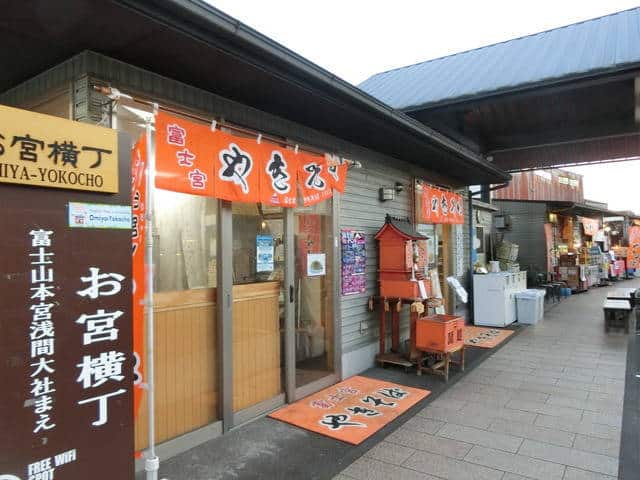
This stall opened with Omiya Yokocho itself and now works as the official reference point for the dish. Order at the counter, then eat on the open terrace outside. A small joke shrine dedicated to yakisoba stands next door, which locals treat with fond amusement. The Mount Fuji spring water well in the same alley is free to drink.
Sano Shokudo (さの食堂)
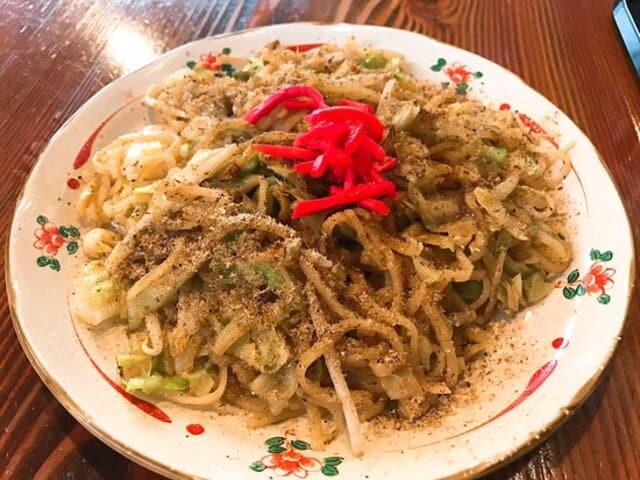
Sano Shokudo is a neighbourhood diner run by a Fujinomiya-born owner, roughly eight minutes on foot from the station’s north exit. The kitchen finishes its noodles with its own ramen broth, which gives the plate an unusually rounded flavour. Order the yakisoba teishoku if you want the full local experience, since it comes with rice and soup.
Yuguchi (ゆぐち)
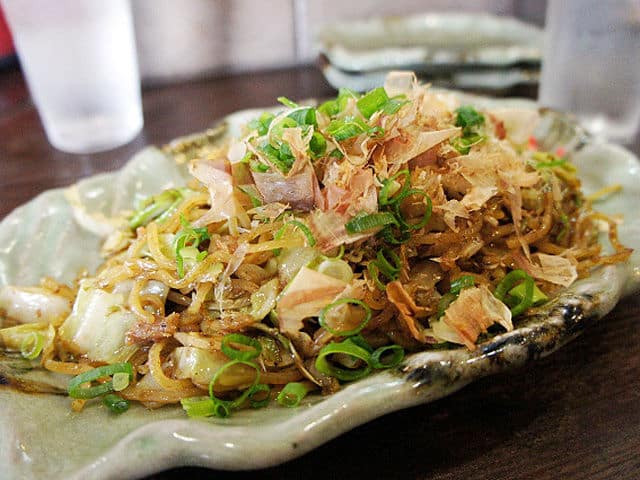
Yuguchi has traded for over forty years and still draws a queue on weekdays. The menu runs to roughly fifteen yakisoba variations, including kimchi and garlic versions. It sits well outside the town centre, so you will want a car or a taxi. The slow-braised pork trotters sell out fast, which regulars consider the real prize.
Prices, Ordering, and Dietary Notes
Most standard portions fall between roughly 500 and 800 yen, and a large size adds around 150 yen. Prices vary by shop, topping, and portion size, so check the board before ordering. Bring cash, since small shops rarely accept cards.
Cooking style differs too. Some shops cook for you, while others hand you a spatula and expect you to work the griddle. Beginners should ask the staff to cook, because timing the water is genuinely tricky.
Vegetarian travellers face a real obstacle here. Nikukasu, lard, pork, and sardine powder all appear in the standard plate, and the noodles contain wheat. Ask whether a shop can leave out the animal-based toppings, though many cannot change the griddle oil. Souvenir hunters, meanwhile, can pick up mail-order noodle sets in the city, or grab Unagi Pie, a popular Shizuoka souvenir, on the way home.
Conclusion
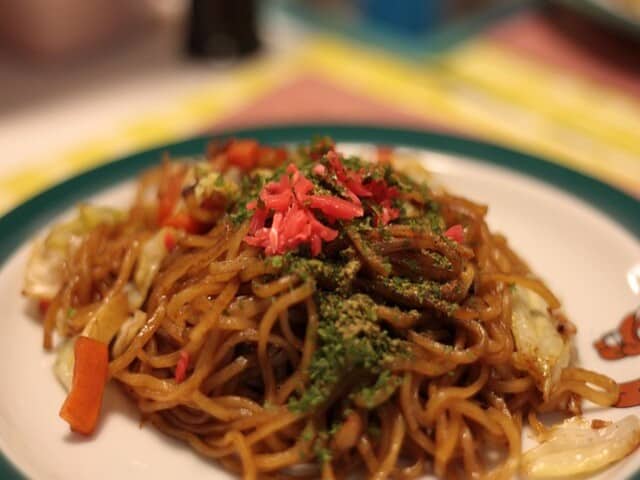
Fujinomiya Yakisoba started as a cheap snack in penny sweet shops, which still shows in the best plates. Nothing about it feels refined. Instead, it offers chew, smoke, pork fat, and a dusting of dried fish, all cooked in about four minutes.
If you are climbing Mount Fuji from the Fujinomiya side, or simply visiting Sengen Taisha, plan a stop around it. Two shops in one afternoon beats one, since the sauces differ noticeably. Then keep exploring more traditional foods from Shizuoka while you are in the prefecture.
Fujinomiya Yakisoba FAQ
Is Fujinomiya Yakisoba different from regular yakisoba?
Yes, three things set it apart clearly. It uses firm steamed noodles instead of boiled ones, adds nikukasu pork crumbs, and finishes with sardine powder. The texture stays springy rather than soft. Some locals argue it belongs in its own category entirely.
Where is Fujinomiya Yakisoba from?
It comes from Fujinomiya City in Shizuoka Prefecture. The city sits at the western foot of Mount Fuji, around two hours from Tokyo. JR Fujinomiya Station on the Minobu Line serves the town centre. More than a hundred shops in the city serve the dish.
What is nikukasu?
Nikukasu is the crisp residue left after butchers press lard from pork back fat. Cooks chop it small and fry it first, so its fat flavours the whole plate. The texture is light and slightly nutty. Shops once used it because actual pork cost too much.
Can I make Fujinomiya Yakisoba without nikukasu?
Yes, several substitutes come close enough. Chopped bacon or thin pork belly delivers similar richness, while crisp fried tofu bits offer a lighter option. The result will taste slightly cleaner and less nutty. Keep the sardine powder if you want the flavour to stay recognisable.
Where can I eat Fujinomiya Yakisoba?
Start at Omiya Yokocho, the small food alley in front of Fujisan Hongu Sengen Taisha. The streets around JR Fujinomiya Station hold several long-running diners as well. Teppan restaurants further out serve larger menus. The society also publishes a shop map covering the whole city.
How much does Fujinomiya Yakisoba cost?
A standard plate usually costs between roughly 500 and 800 yen. Large portions add about 150 yen, and extra toppings cost a little more. Set meals with rice and miso soup run higher. Prices vary by shop, so read the menu board first.
Is Fujinomiya Yakisoba suitable for vegetarians?
Usually not, because the standard recipe contains several animal products. Nikukasu, lard, pork, and sardine powder all appear on a typical plate. The noodles also contain wheat, so the dish never suits a gluten-free diet. Ask staff whether they can omit the meat toppings.
References
- Fujinomiya Yakisoba Society, What Is Fujinomiya Yakisoba, https://umya-yakisoba.com/fujinomiyayakisoba/ (Surveyed: August 2026)
- Prosumer Inc., About Fujinomiya Yakisoba, https://prosumer-inc.com/about-fujinomiyayakisoba/ (Surveyed: August 2026)
- Fujinomiya Yakisoba Society, History of the Noodles, https://umya-yakisoba.com/fujinomiyayakisoba/men-rekishi/ (Surveyed: August 2026)
- Shizuoka Yell Station, Interview with the Fujinomiya Yakisoba Society, https://shizuoka-yellstation.com/pickup/fujinomiya (Surveyed: August 2026)
- Fujinomiya Yakisoba Society, How to Cook It at Home, https://umya-yakisoba.com/tukuru/yaku-home/ (Surveyed: August 2026)
- Food Valley Fujinomiya Official Guide, Restaurant Listings, https://fujinomiya-foodvalley.jp/spot/4788.html (Surveyed: August 2026)
- Fujinomiya Yakisoba Society, About the Society, https://umya-yakisoba.com/aboutus/ (Surveyed: August 2026)
- Fujinomiya City Tourism Association, Fujinomiya Yakisoba Antenna Shop, https://fujinomiya.gr.jp/guide/198/ (Surveyed: August 2026)
- Nakajima, M., & Kimata, C. Examining a Regional Brand Building Model Through Food: The Case of Fujinomiya Yakisoba [PDF]. https://files01.core.ac.uk/download/pdf/148766551.pdf (Surveyed: August 2026)
- Ushida, Y. B-Class Local Gourmet: Current Status and Future Issues [PDF]. Josai International University. https://www.jiu.ac.jp/files/user/education/books/pdf/833-47.pdf (Surveyed: August 2026)
- Suzuki, T. A Study of “Local Brand”: Analysis of the Main Focus in the Success of “Fujinomiya Yakisoba” [PDF]. J-STAGE. https://www.jstage.jst.go.jp/article/jjacechubu/4/0/4_4-3/_pdf/-char/ja (Surveyed: August 2026)
Related Articles
- Yakisoba (焼きそば) (Surveyed: August 2026)
- Yokote Yakisoba (横手やきそば) (Surveyed: August 2026)
- Ota Yakisoba (太田やきそば) (Surveyed: August 2026)
- Shizuoka Oden (静岡おでん) (Surveyed: August 2026)
- Sakura Shrimp (桜えび) (Surveyed: August 2026)
- Kinako Mochi (きな粉餅) (Surveyed: August 2026)
- Unagi Pie (うなぎパイ) (Surveyed: August 2026)
- Shizuoka Food Guide (Surveyed: August 2026)



Comments