



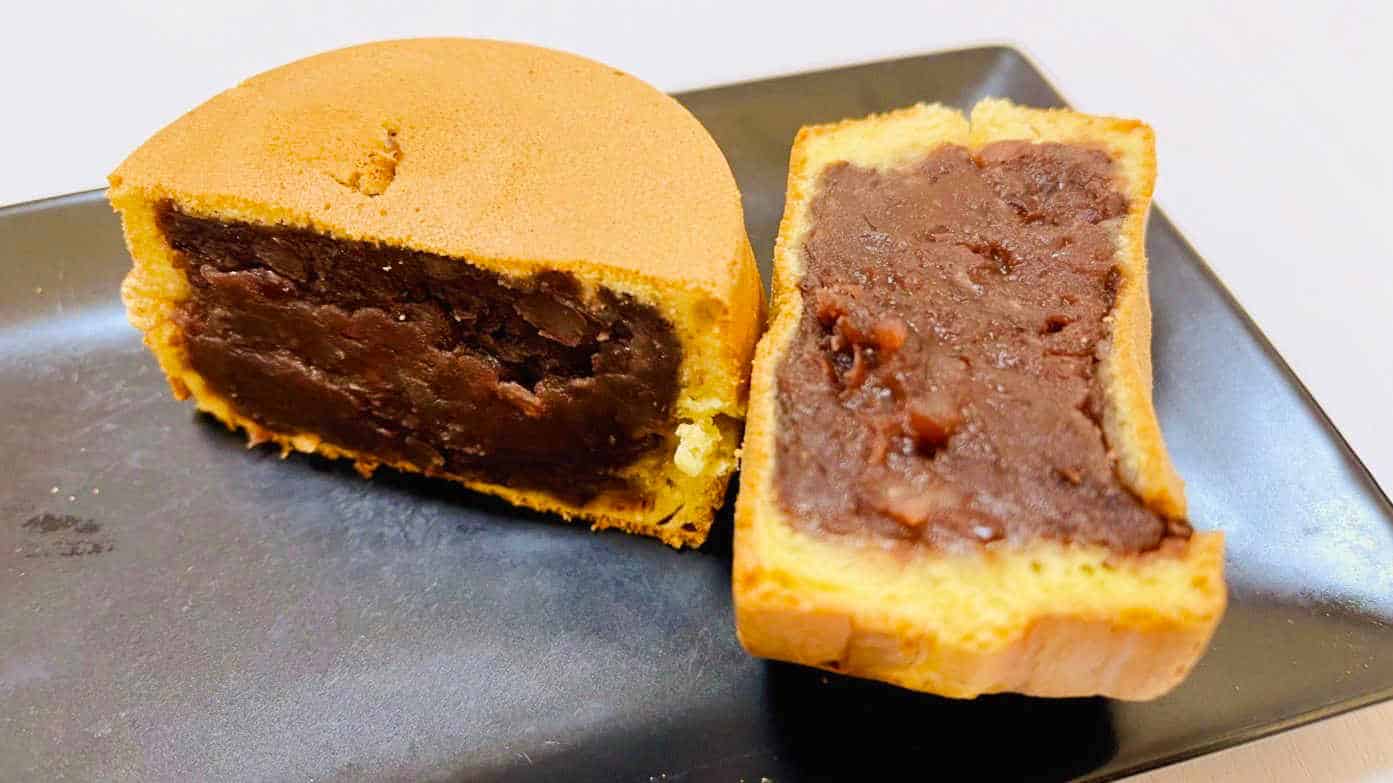
Imagawayaki, also written Imagawa Yaki, is a round Japanese street-food cake cooked in a metal mold. Shops commonly fill it with anko or custard. It originated in Edo-period Tokyo, and other regions call it obanyaki or kaitenyaki instead. Usually you will find it at festival stalls, department store food halls, and small neighborhood shops.
So why does one snack carry a dozen different names? And can you make it at home without a special pan? This guide covers the history, the fillings, and a workable recipe. It also explains where to buy it in Tokyo and how to reheat leftovers properly.
What Is Imagawayaki?
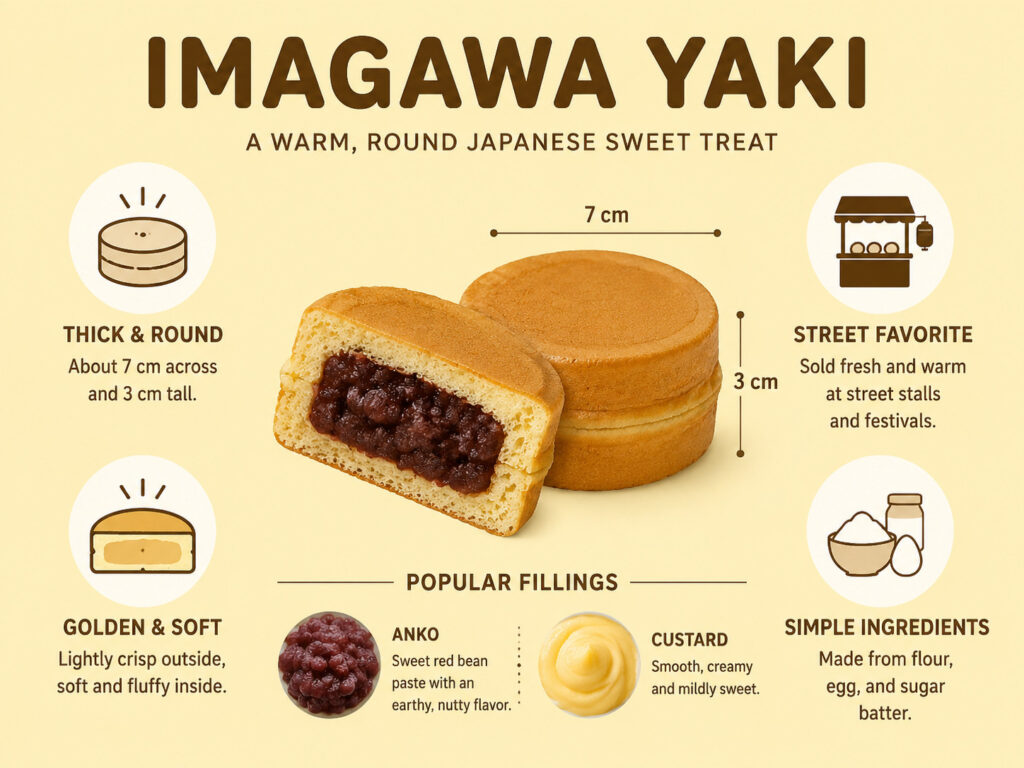
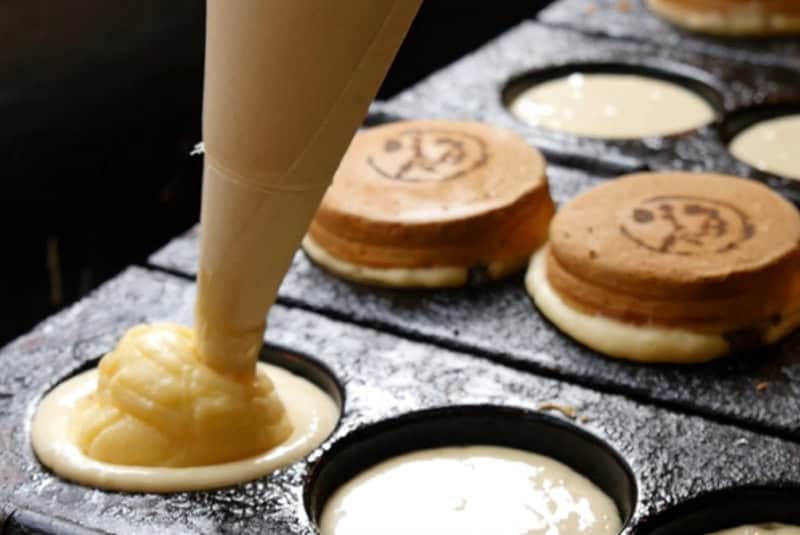
Imagawayaki is a Japanese confection made with flour, egg, and sugar. Cooks pour the batter into a round mold and add anko, custard, or another filling. The finished cake measures roughly 7 cm across and 3 cm tall. Shops sell it hot, straight from the griddle.
Incidentally, you will see the name written several ways in English. Imagawayaki and Imagawa Yaki are both standard, and Imagawa-yaki turns up as well. All three describe exactly the same snack, so this guide uses the one-word and spaced forms interchangeably.
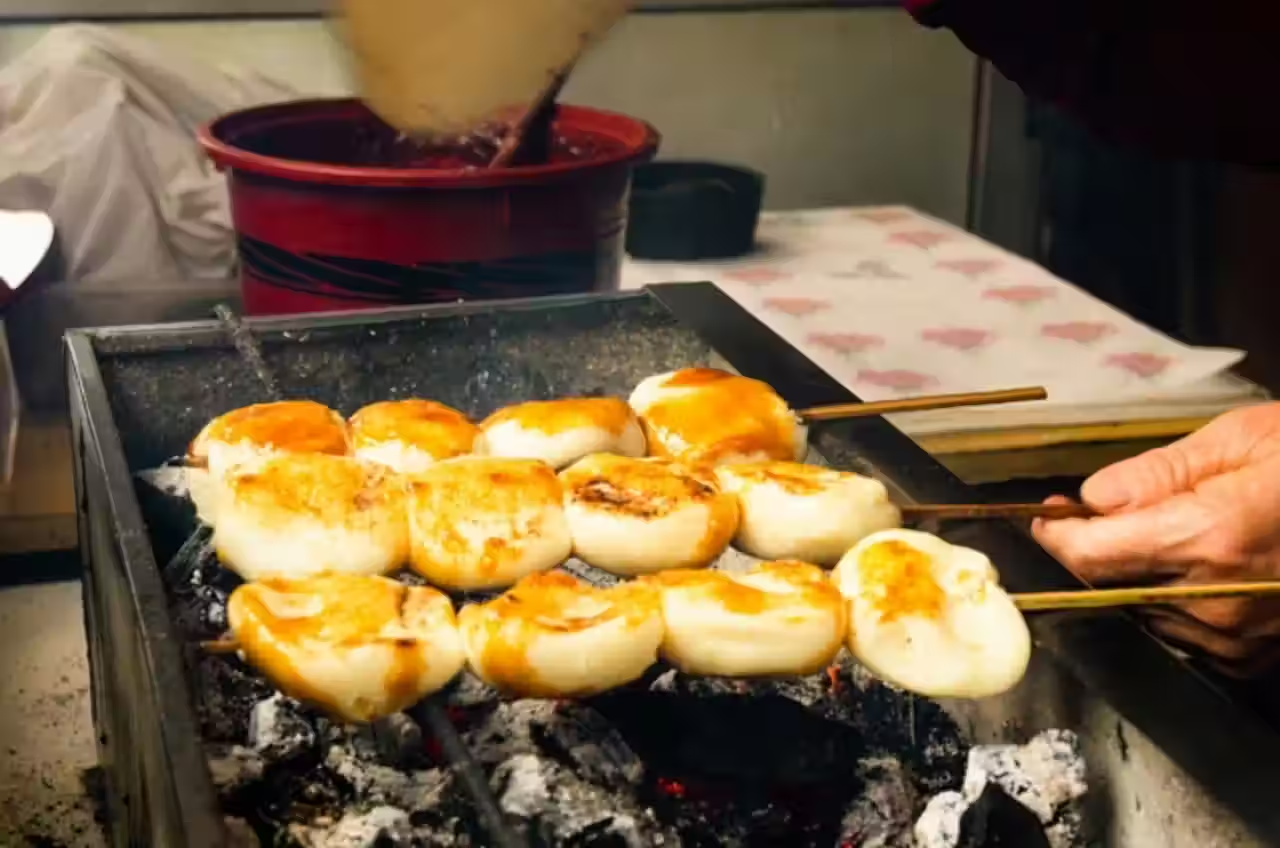
Unlike a flat pancake, it has a thick, disc-like shape overall. The outside turns golden brown and lightly crisp during cooking. The crisp shell gives way to a soft, fluffy center with the first bite.
Imagawayaki at a glance
- Origin: Kanda, Edo (now Tokyo), during the An’ei era of 1772 to 1781
- Shape: Round disc, about 7 cm wide and 3 cm thick
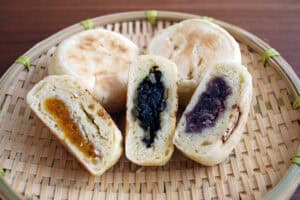
- Classic filling: Anko, or sweetened red bean paste
- Other names: Obanyaki, kaitenyaki, gozasoro, and many regional variants
- Serving style: Hot and unwrapped, eaten by hand within minutes
- Best season: Autumn and winter, when stalls and festivals appear
What Does Imagawayaki Taste Like?
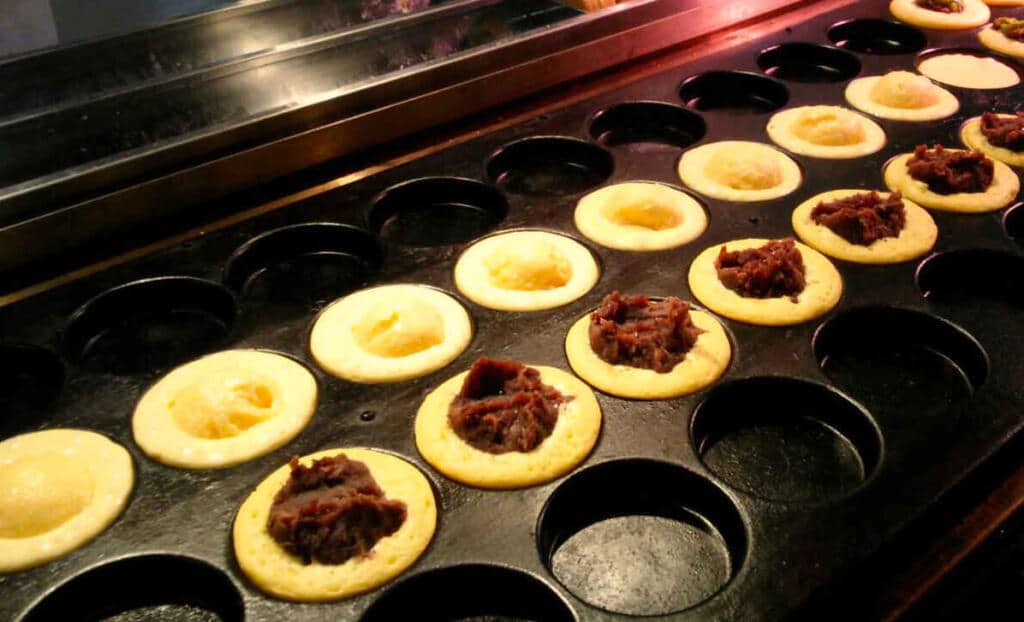
Generally, Imagawa Yaki is lightly crisp outside and faintly sweet from the batter’s sugar and honey. Inside, the texture turns soft and thick, almost like a dense pancake. The cooked cake stays fluffy as it cools, while the filling remains soft.
Anko brings an earthy sweetness with a subtle bean flavor that is not overly sugary. Custard, by contrast, tastes rounder and creamier, closer to a French pastry filling. Biting into a fresh piece releases a warm, slightly caramelized aroma from the grilled batter.
Worth knowing: the shell is crispest during the first few minutes off the griddle. Steam softens it quickly inside a paper bag, so eat it soon or leave the bag slightly open. Custard versions hold heat longer than anko ones, which matters when you reheat them later.
Popular Imagawa Yaki Fillings
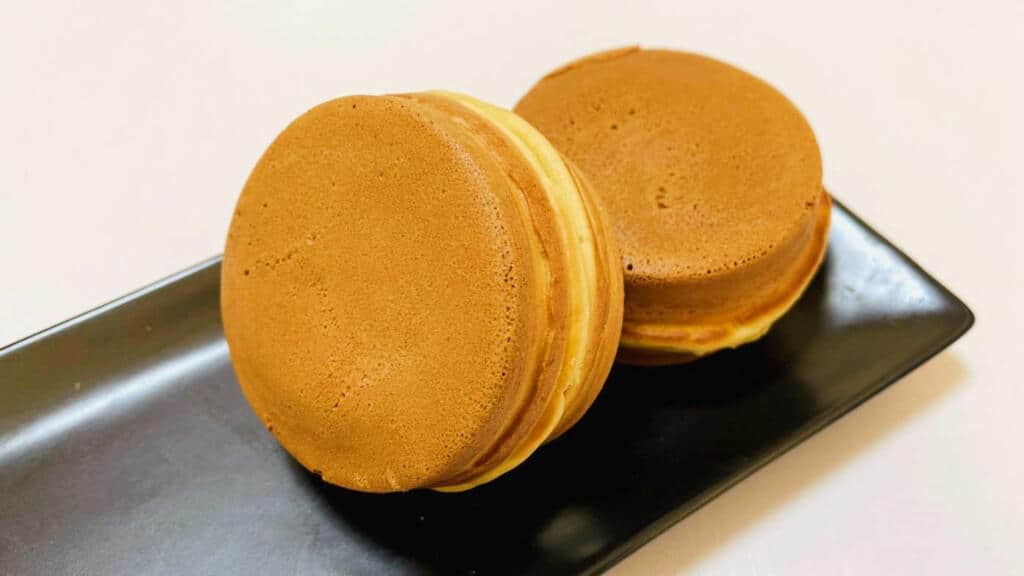
Which filling should you try first? That depends on your taste, although a few options stand out as favorites across Japan.
- Koshian. Smooth, strained red bean paste with a delicate texture.
- Tsubuan. Chunkier red bean paste that keeps some bean texture intact.
- Custard cream. Rich and smooth, and popular with younger customers.
- Shiro-an. White bean paste, milder and less earthy than azuki.
- Matcha cream. Bitter green tea flavor balanced with sweetness.
- Chocolate or cheese. Modern options that appear mainly at specialty shops.
Furthermore, shops rotate seasonal fillings, so pumpkin or sweet potato paste sometimes appear in autumn. Trying a few different fillings is part of the fun here.
History of Imagawa Yaki
- 250 years Roughly how long shops have sold it
- 100+ Regional names recorded across Japan
- 217 kcal Per 100 g, official food composition tables
The Bridge in Kanda
Imagawa Yaki traces back to the An’ei era, between 1772 and 1781, during the Edo period. That makes it roughly 250 years old. A shop near Imagawa Bridge in Kanda sold these warm, filled cakes fresh each day. Food historians commonly credit that stall with popularizing the snack. An Edo directory from 1777 also carries what many treat as the earliest written mention.
The name most likely came from Imagawa Bridge itself. Carpenters built that bridge during the Tenna era, around 1681 to 1683, over a canal known as Kanda-bori. The bridge took its name from Imagawa Zen’emon, the local headman who arranged the work. So the snack honors a person, two steps removed. Edo-period guidebooks held by the Tokyo Metropolitan Library describe the spot in detail.
You can still visit the site. The canal was filled in 1950 and the bridge removed, so nothing remains above ground. A stone marker stands in Kajicho 1-chome, Chiyoda City, a few minutes south of JR Kanda Station. One further theory links the name to the warlord Imagawa Yoshimoto, although records support the bridge explanation far better.
From Edo Snack to Nationwide Staple
- 1681-1683 Imagawa Bridge built over the Kanda canal
- 1772-1781 A stall near the bridge sells the first cakes
- 1777 An Edo directory records the name in print
- 1909 A Tokyo vendor reshapes it into taiyaki
- 1950 The canal is filled in, and the bridge disappears
- Late 1950s Griddle sets spread the name obanyaki nationwide
Originally, versions were larger and less uniform than today’s neat disc. Most shops eventually settled on the compact round form, although some regions kept bigger sizes. By the Meiji era, the cake had become an everyday treat rather than a specialty item.
Then came a famous spinoff, and it eventually outgrew the original. In 1909, a Tokyo vendor reshaped the same idea into a sea bream mold. That experiment produced fish-shaped taiyaki. Frozen supermarket versions arrived much later, which is why the snack no longer belongs only to festival season.
Regional Names for Imagawa Yaki
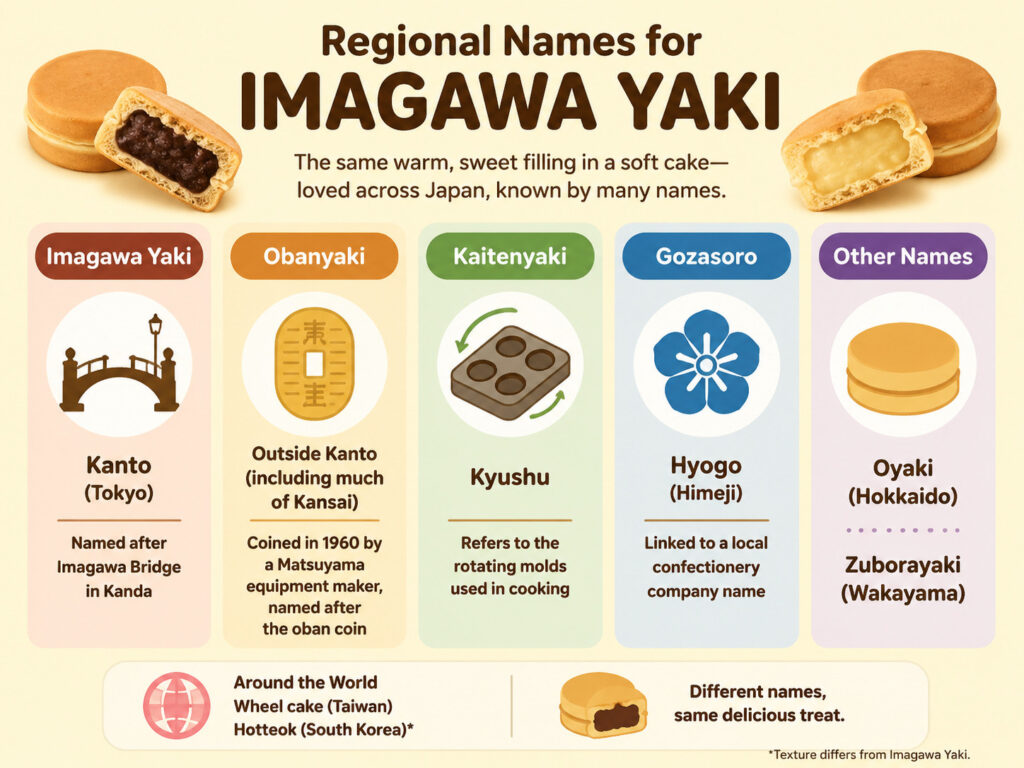
Why does one snack have so many names? The answer lies in how shops used to sell it. Griddle makers and shops printed their own name on the noren curtain hanging outside. Whatever the curtain said then became the local word.
Counts vary wildly. The linguist Shinsuke Kishie has documented well over a hundred regional names, and some tallies run higher still. Recent consumer surveys put imagawayaki first nationally, at roughly a third to half of respondents. Obanyaki and kaitenyaki follow close behind. Older linguistic fieldwork, by contrast, found obanyaki more widespread, so the picture keeps shifting.
Where each name is used
- Imagawayaki Kanto, centered on Tokyo
- Obanyaki Widely used across western and central Japan
- Kaitenyaki Osaka since before the war, and dominant in Kyushu
- Gozasoro Hyogo and neighboring prefectures
- Nijuyaki Hiroshima Prefecture in particular
- Taiko-manju Western Japan, named after a drum
- Oyaki Hokkaido, but see the caution below
Two cautions. First, these boundaries are loose, and usage often varies between neighboring towns or even within one prefecture. Second, oyaki means something completely different in Nagano, where it refers to a savory wheat dumpling stuffed with vegetables. Ordering by pointing works everywhere, so do not worry about picking the wrong word.
Obanyaki and the Novel That Named It
Obanyaki has an unusually well-documented origin. A novel called Oban, serialized in the late 1950s and set in Ehime, became a bestseller. Matsuyama Marusan, a confectionery equipment maker in Ehime, built a slightly larger griddle. Naturally, the company wanted to name the cake after the book.
Borrowing the title outright felt lazy. Instead, the company switched to oban, the large oval gold coin used from the sixteenth century onward. Then it sold griddles as a package with batter mix and a printed noren curtain. Anyone could open a stall overnight, and the name spread from Shikoku across the country.
Gozasoro, a Brand That Became a Word
Gozasoro is both a company and a common noun, which confuses plenty of visitors. The firm started in Himeji, Hyogo, in 1950, selling what it then called kaitenyaki. Its name comes from a formal expression of thanks used toward customers.
Once the shop hung banners reading Gozasoro, customers stopped asking for kaitenyaki and started asking for Gozasoro instead. The company later expanded nationally, and in parts of Hyogo the brand name now simply means this style of cake.
Names Outside Japan
Taiwan, meanwhile, sells a close relative as wheel cake, or chelunbing, usually with red bean or custard. Malaysian and Philippine versions exist too, often under local names.
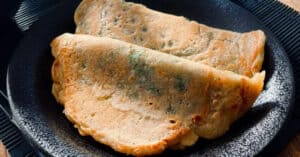
Korean hotteok, however, is a different food entirely. It uses a yeasted dough rather than a pourable batter. Cooks also press it flat in a pan instead of baking it in a mold. The usual filling is brown sugar with cinnamon and nuts. Calling hotteok another name for imagawayaki is simply inaccurate.
Imagawa Yaki vs Taiyaki vs Dorayaki
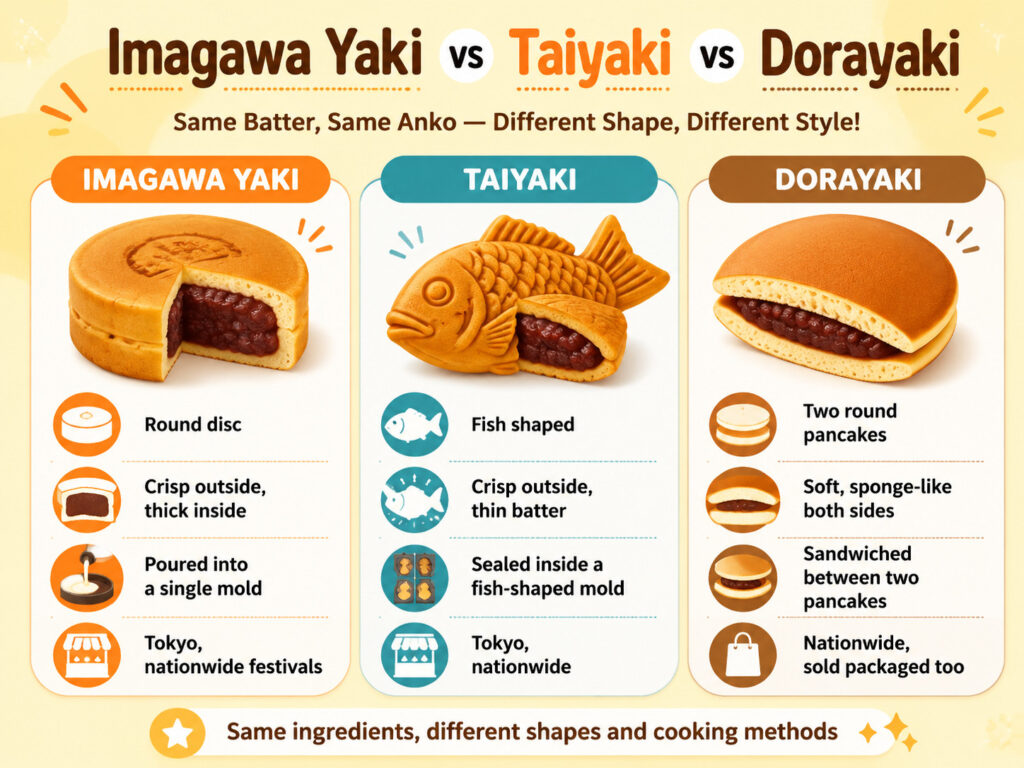
Basically, all three use similar batter and anko, so how do you tell Imagawa Yaki apart from the others? Shape is the obvious clue, although the mold and the cooking method matter more.
- Imagawa Yaki Round disc, thick and cakey, eaten hot
- Taiyaki Fish shaped, thin and crisp, eaten hot
- Dorayaki Two pancakes, soft sponge, eaten cool
| Feature | Imagawayaki | Taiyaki | Dorayaki |
|---|---|---|---|
| Shape | Round disc | Sea bream fish | Two stacked pancakes |
| Mold type | Deep round cavities on a griddle | Hinged fish-shaped tongs or plates | No mold, flat griddle only |
| Shell thickness | Thick and cakey | Thin, crisp all over | Soft and spongy |
| Cooking method | Two halves joined mid-cook | Batter and filling sealed, then turned | Cooked separately, assembled after |
| Serving temperature | Hot | Hot | Room temperature |
| Where to buy | Stalls, depachika, specialty shops | Stalls and dedicated shops | Supermarkets and wagashi shops |
Taiyaki appeared later, in 1909, as a reshaped version of this very snack. Consequently, the two share a direct family line. Dorayaki skips the mold entirely and sandwiches anko between two cooked pancakes. If you want a softer, doll-shaped cousin, our ningyo-yaki guide covers Asakusa’s version.
Imagawayaki Recipe
Ingredients, Makes 6 Pieces
| Ingredient | Amount | Note |
|---|---|---|
| Cake flour | 100 g | Low protein flour keeps the crumb tender |
| Egg | 1 medium | Room temperature mixes more smoothly |
| Sugar | 20 g | Helps the surface brown |
| Baking powder | 1 tsp | Gives the lift that makes it cakey |
| Honey | 2 tbsp | Adds aroma and keeps it moist |
| Melted butter | 10 g | Stir in last, off the heat |
| Water | About 120 ml | Add gradually until the batter ribbons |
| Anko | About 180 g | Roughly 30 g per piece, rolled into balls |
Equipment and Pan Options
- Dedicated imagawayaki pan. Cavities around 7 to 8 cm wide give the most authentic shape and even heat.
- Cast iron takoyaki or ebelskiver pan. Works nearly as well, though the pieces come out smaller and rounder.
- Foil rings in a non-stick pan. Fold strips of foil into 7 cm circles and grease them. Expect a slightly rougher edge and a flatter profile.
- No rings at all. You can cook two thick pancakes and sandwich the anko, but the result becomes closer to dorayaki than imagawayaki.
Cooking Steps
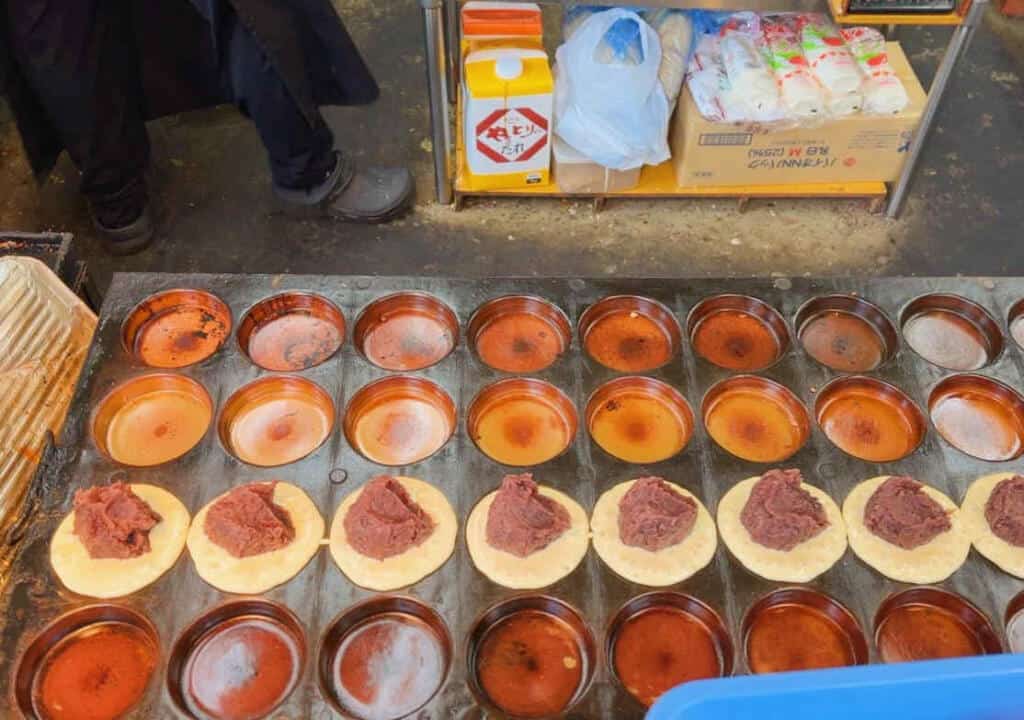
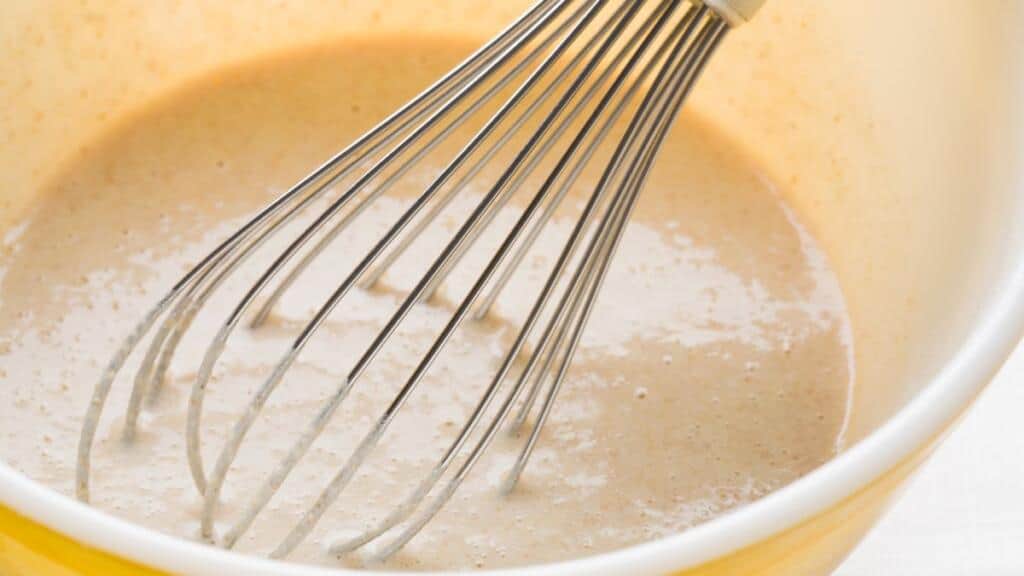
Whisk the flour, baking powder, and sugar together. Beat in the egg, then add water gradually until the batter falls in a smooth ribbon. Finally, stir in the honey and melted butter.
Rest the batter for fifteen minutes so the flour hydrates. Meanwhile, roll the anko into six balls of about 30 g and flatten them slightly into discs.
Heat the pan over low to medium-low heat and grease it lightly. Pour batter into each cavity until it reaches roughly two thirds full, which is about 30 ml.
Wait two to three minutes, until the surface looks matte at the edges but still wet in the middle. Set an anko disc in the center, then spoon a thin layer of batter over it.
If your pan has paired cavities, slide one half onto the other and press gently. Otherwise flip each piece once the base turns golden, usually after four to five minutes.
Cook the second side for another four to five minutes, turning occasionally to brown the rim. Remove the pieces when both faces look evenly colored. Serve warm, since the shell softens as it cools.
Troubleshooting
- The two halves will not join. You waited too long. Join them while the top still looks slightly wet.
- The outside burns before the center cooks. Lower the heat. This snack wants patience rather than a hot pan.
- The filling leaks out. Your anko disc sat too close to the edge, or the batter layer on top was too thin.
- The texture turns rubbery. Over-mixing develops gluten, so stop whisking as soon as the lumps disappear.
Where to Eat Imagawa Yaki in Tokyo
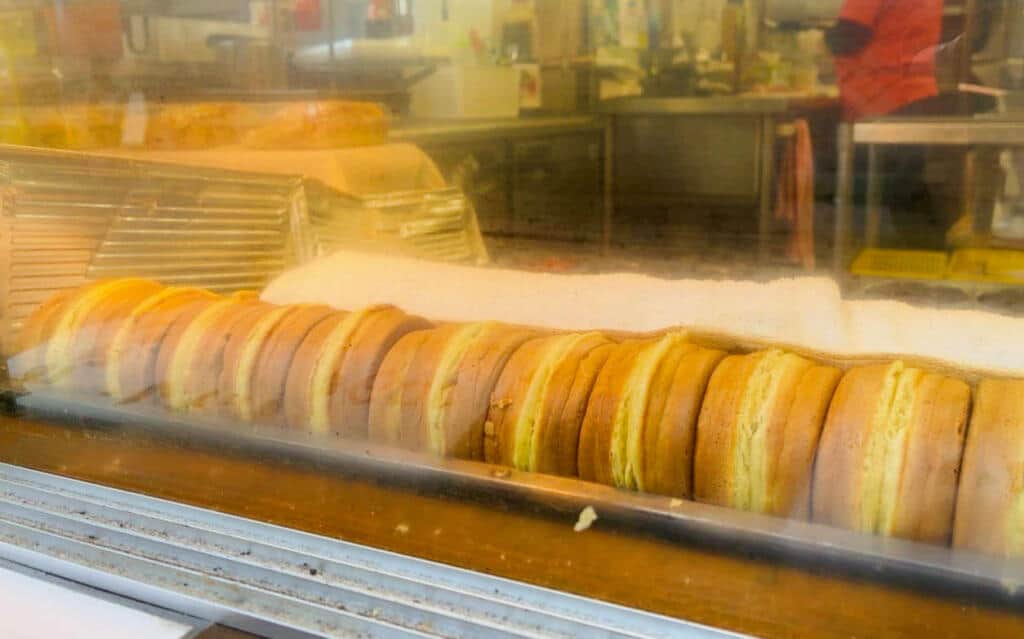
Tokyo offers three main routes to a warm piece of Imagawa Yaki, and each suits a different kind of day. Department store food halls, or depachika, sell it pre-wrapped as a quick snack. Festival stalls grill it in front of you, usually at a lower price. Specialty shops charge a little more but offer wider filling choices.
Neighborhood shops near suburban stations are often the best value, though they keep short hours. Availability shifts with the season too, since some shops pause sales through the hottest months.
Typical Prices
| Where you buy it | Approximate price each | Approximate USD / CAD |
|---|---|---|
| Festival stall or neighborhood shop | 150 to 220 yen | $0.95 to $1.40 / C$1.30 to C$1.95 |
| Department store counter | 200 to 300 yen | $1.25 to $1.90 / C$1.75 to C$2.65 |
| Specialty or premium filling | 250 to 350 yen | $1.55 to $2.20 / C$2.20 to C$3.05 |
| Frozen supermarket pack | 300 to 600 yen for several | $1.90 to $3.80 / C$2.65 to C$5.25 |
Ranges are approximate shelf prices observed in Tokyo as of August 2026, and they vary by shop, filling, and size. Conversions use about 159 yen per US dollar and 114 yen per Canadian dollar.
Azukiya Ando, Chofu
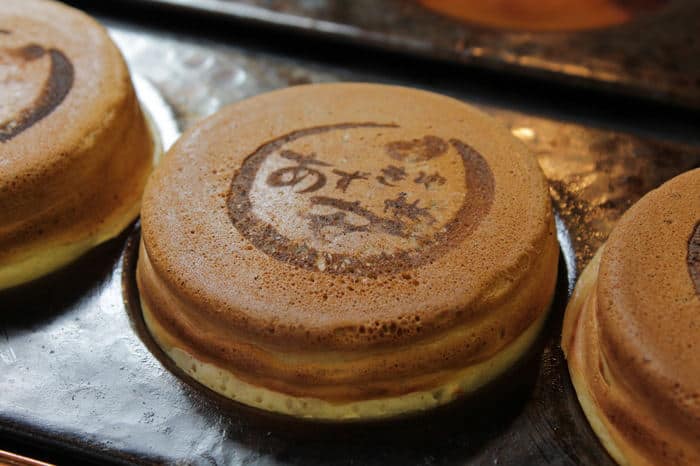
This shop stands on Tenjin-dori, the shopping street north of Chofu Station. Notably, it carries the recipe of an older local shop. The filling list runs well beyond anko too. Cream cheese and custard both appear alongside the classics, and shaved ice joins the menu in summer.
Bashoan, Shinjuku
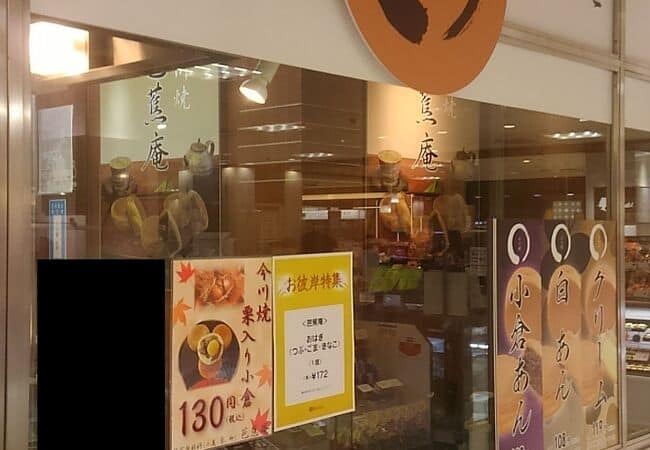
Bashoan began as a wagashi wholesaler in 1966 and has supplied the Keio Department Store since the mid-1990s. The counter sits inside the Shinjuku store, so it fits neatly into a shopping trip. Both imagawayaki and taiyaki come off the same griddle here, and white bean paste is the filling worth queuing for.
Aoyama Tajimaya, Minato
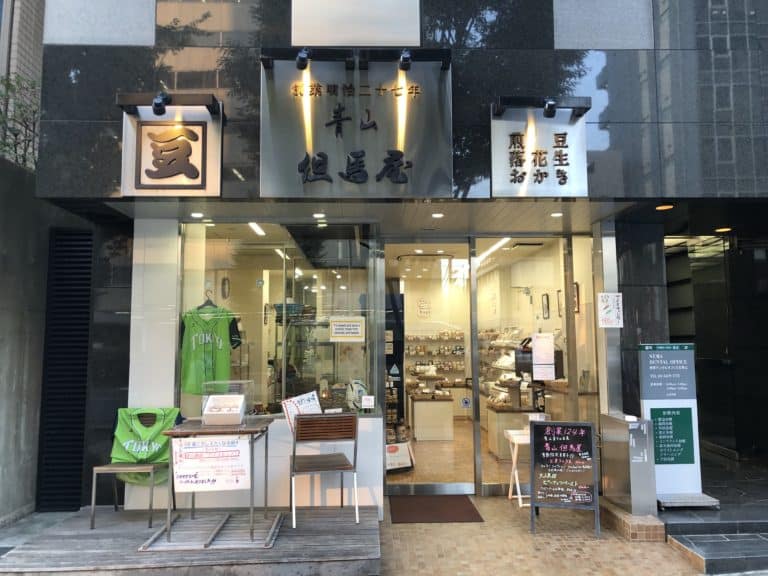
Founded in 1894, this Aoyama-dori shop specializes in peanuts and bean confectionery rather than cakes. Staff grill Imagawa Yaki at the storefront under the house name Aoyama-yaki. The peanut paste filling is the reason to come. Tsubuan and seasonal shiro-an round out the choices. Sales usually pause during the hottest months, so autumn through spring is the reliable window.
One practical warning. Customer reports say the griddle does not run continuously, and the day’s batch can sell out well before closing. Phoning ahead is the safest approach if this is your main reason for the trip.
Storage and Reheating
Basically, fresh Imagawa Yaki tastes best within an hour of cooking. After that, the shell softens and the pleasure drops noticeably. Storage is straightforward, although the reheating method decides the result.
- Room temperature: same day only, loosely covered
- Refrigerated: up to two days, wrapped airtight
- Frozen: about one month, wrapped individually
- Thawing: overnight in the fridge, or 30 minutes at room temperature
For a soft finish: microwave one piece for about 30 to 40 seconds at 500 W. For a crisp finish: microwave briefly, then move it to a toaster oven for two to three minutes. Anko takes reheating well. Custard, however, gets very hot in the center, so let it stand a moment before biting.
Calories, Allergens, and Dietary Notes
Japan’s official food composition tables list Imagawa Yaki with koshian at 217 kcal per 100 grams. A typical piece weighs around 90 grams, which works out to roughly 195 kcal. Carbohydrate accounts for most of that, at about 43 grams per piece, while fat stays low.
Custard and cream fillings, however, push both fat and calories higher than bean paste versions. One piece as an afternoon treat fits easily into a normal diet, though, especially with unsweetened tea alongside.
- Wheat. The batter is flour-based, so this snack is never gluten-free.
- Egg. Almost all batters contain egg, and custard fillings certainly do.
- Milk and butter. Common in the batter and in cream fillings.
- Vegan diets. Plain anko itself is plant-based, yet the batter usually is not. Ask before assuming.
Conclusion
Overall, imagawayaki rewards timing more than anything else. Whether a shop writes it as Imagawa Yaki or obanyaki makes no difference to the taste. Buy it hot, eat it within minutes, and the crisp shell against soft anko makes complete sense. Wait an hour and you are eating a decent but ordinary cake.
So where should you start? Order a plain anko piece from a neighborhood shop and eat it standing there. Then try custard on a second visit, and compare the two. If a shop calls it obanyaki or gozasoro instead, you are still getting the same thing.
Curious about similar snacks? Browse more Japanese pancake styles, or see what else appears at the stalls in our Japanese street food guide.
Imagawayaki FAQ
What is imagawayaki?
It is a round Japanese cake cooked in a metal mold and filled with sweet paste. Flour, egg, and sugar make the batter, while anko or custard usually goes inside. Each piece runs about 7 cm across and comes served hot. Stalls, department stores, and neighborhood shops all sell it.
Is Imagawa Yaki the same as obanyaki?
Yes, the two names describe the same snack. People in Kanto tend to say imagawayaki, while obanyaki is more common nationally. Recipe, shape, and fillings stay essentially identical either way. Only the sign above the counter changes.
What is inside Imagawa Yaki?
Sweetened red bean paste is the classic filling, in either smooth koshian or chunky tsubuan form. Custard cream now rivals it at most shops. White bean paste, matcha, chocolate, and cheese appear as well. Seasonal fillings such as pumpkin turn up in autumn.
Does it taste like taiyaki?
The flavors are close, since both use similar batter and filling. Texture is where they part ways, because the fish-shaped version has a thinner, crisper shell throughout. This round style keeps a thicker, cakier center instead. Choose by texture rather than taste.
Can you make it without a special pan?
Yes, although the shape suffers a little. Foil rings greased and set in a non-stick pan hold the batter well enough. A takoyaki or ebelskiver pan works too, giving smaller and rounder pieces. Without any rings, you end up with something closer to dorayaki.
How do you reheat Imagawa Yaki?
Microwave one piece for 30 to 40 seconds at 500 W if you want it soft. For a crisp shell, microwave briefly first, then finish it in a toaster oven for two to three minutes. Frozen pieces need thawing before either method. Let custard versions rest a moment, since the filling gets extremely hot.
Is imagawayaki vegetarian?
Standard versions contain no meat, so most vegetarians can eat them. Vegans face a harder question, because the batter normally includes egg and often milk or butter. Anko itself is plant-based, which sometimes causes confusion. Ask the shop about the batter rather than the filling.
References
- Tokyo Metropolitan Library, Imagawa Bridge, from Guide to Famous Spots of Edo (Surveyed: August 2026)
- Imagawayaki Honpo, Origin of Imagawayaki at the Kanda Imagawabashi Crossing (Surveyed: August 2026)
- Aoyama Gaienmae Shopping Street Association, Aoyama Tajimaya, founded 1894 (Surveyed: August 2026)
- Food Composition Database, Ministry of Education, Culture, Sports, Science and Technology, Imagawayaki with koshian, item 15005 (Surveyed: August 2026)
- Ministry of Education, Culture, Sports, Science and Technology, Standard Tables of Food Composition in Japan, Eighth Revised Edition, 2023 supplement (Surveyed: August 2026)
- Osaka Gas, Interview on regional names for kaitenyaki, with linguist Shinsuke Kishie and Gozasoro Co., Ltd. (Surveyed: August 2026)
- Nippon.com, Imagawayaki or Oban’yaki: The Many Names of a Popular Japanese Sweet (Surveyed: August 2026)
- Government of Japan, Oban, Japan’s Giant Gold Coins (Surveyed: August 2026)
- Azukiya Ando, Official Site (Surveyed: August 2026)
- Bashoan Co., Ltd., Company History (Surveyed: August 2026)
- Aoyama Tajimaya, Shop Information (Surveyed: August 2026)



Comments