




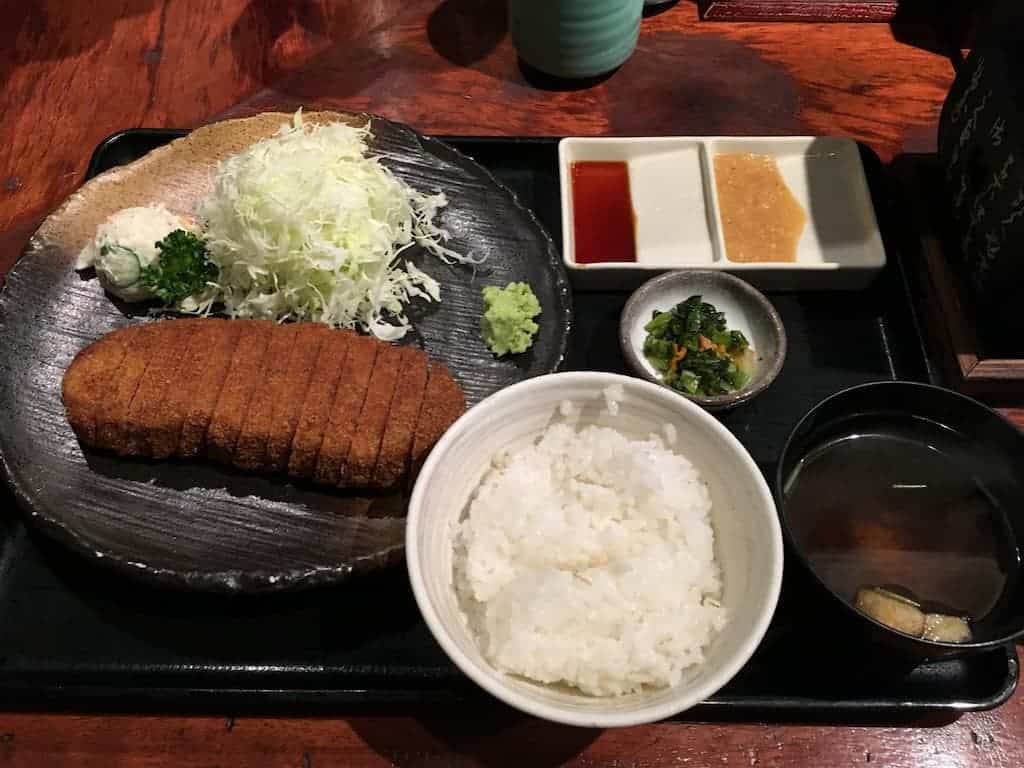
Gyukatsu, also known as beef cutlet or 牛かつ in Japanese, is a traditional dish that features a deep-fried cutlet made with wagyu beef. The beef is seasoned, coated in breadcrumbs, and then fried until it becomes crispy.
Similar to Tonkatsu, but with a twist, gyukatsu replaces the pork with wagyu beef. This dish is a specialty of Tokyo and is gaining popularity as people discover its unique flavors and textures.
As we delve into this article, we will explore the world of gyukatsu and discover what makes it so special.
Etymology
This dish should also have etymology and we should know the meaning behind the name of Gyukatsu. Thus, gyukatsu combines two words; “Gyu (牛)” and “Katsu (カツ)”. “Gyu” means “beef” in Japan and “Katsu” is a shortened form of “katsuretsu (カツレツ)”, the transliteration of the English word cutlet, which again derived from French côtelette, meaning “meat chop”.
What is Gyukatsu?
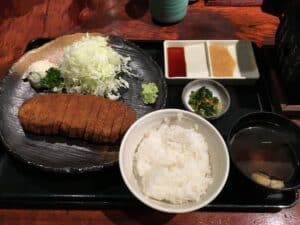
Gyukatsu is a Japanese dish from Tokyo that consists of breaded, deep-fried beef cutlets. You may be familiar with tonkatsu, which is the pork equivalent of this dish that has been popular for a long time. Gyukatsu was once a little-known dish, however, its popularity exploded in 2015. Locals choose to season the cutlet and coat it with breadcrumbs, then fry it until it becomes crispy. They usually cut it and serve it into bite-size pieces. Additionally, in restaurants, they usually accompany gyukatsu with various side dishes. It may include miso soup, sliced cabbage or other vegetables, pickled vegetables, dipping sauces, wasabi, barley rice, or Tororo, which is grated yams.
The Surprising Pink Center
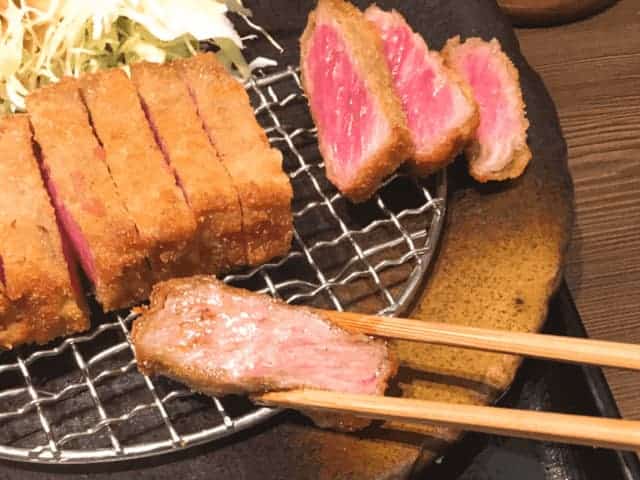
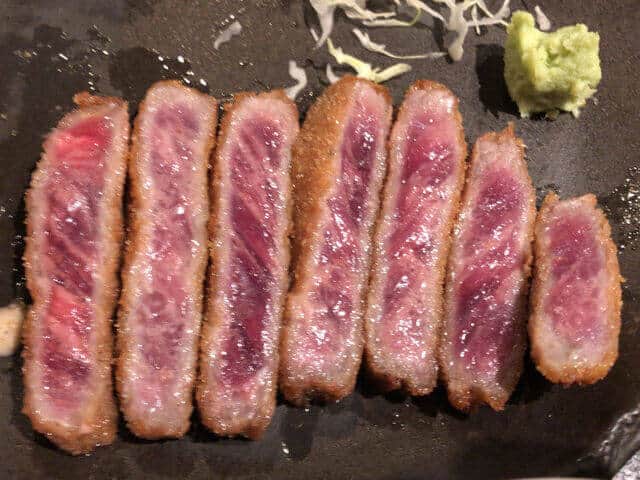
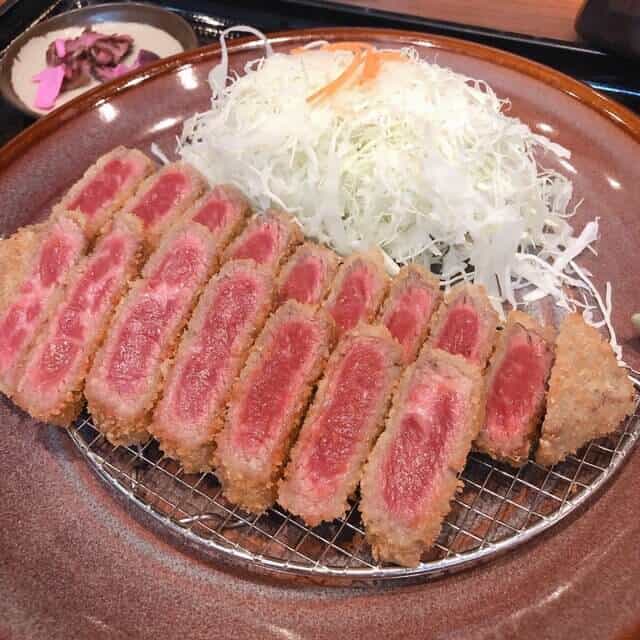
The taste is remarkably different from what you might expect if you’re thinking of typical fried foods. The beef itself is the star here, and it’s served rare to medium-rare in the center. Yes, rare. This catches many people off guard at first. You bite through that crispy exterior expecting fully cooked meat, but instead you get this tender, pink center that’s warm but not thoroughly cooked through.
The beef flavor is clean and pure, almost steak-like in its simplicity. Because the meat is only lightly fried on the outside, the interior retains that characteristic beefy richness without becoming dry or overcooked. There’s a slight sweetness to good quality beef that comes through beautifully when it’s prepared this way.
I remember hesitating the first time I saw that pink center. Growing up, I’d always been told beef should be cooked well-done for safety. But in Japan, the beef quality is high enough that serving it rare is standard practice for gyukatsu. Once you try it, it makes complete sense.
Crunch Gives Way to Butter-Soft Meat
The texture is where gyukatsu really shines. The outer crust is incredibly crispy, with a satisfying crunch that gives way immediately when you bite down. The panko breadcrumbs create these light, airy pockets rather than a dense, heavy coating. It’s delicate despite being fried, if that makes sense.
Then you hit the meat, and everything changes. The beef is exceptionally tender, almost buttery in how it yields to your teeth. There’s no chewiness, no resistance. The contrast between that crunchy exterior and the soft, yielding interior is what makes each bite so satisfying.
Compared to tonkatsu, which is cooked all the way through, gyukatsu has this additional dimension from the rare center. The pork version is wonderful in its own right, but it’s uniformly tender throughout. With gyukatsu, you’re experiencing something closer to eating a perfectly cooked steak that just happens to have a crispy coating.
The meat is usually cut into strips before serving, which makes it easier to eat with chopsticks. Some restaurants will let you finish cooking the pieces yourself on a hot stone if you prefer your meat more well-done, though I’d encourage trying it as intended first.
Savory Aromas and Sharp Contrasts
The aroma hits you before you even take a bite. There’s that familiar fried smell, savory and inviting, mixed with the scent of beef. It’s not greasy or heavy, though. The smell is surprisingly clean, probably because the frying is so quick and the oil is kept at the right temperature.
When you add wasabi or dipping sauce, new dimensions open up. The wasabi brings this sharp, nasal heat that cuts through the richness of the beef beautifully. The tangy tonkatsu sauce, sweet and slightly fruity, provides a different kind of balance. Some people prefer one over the other. I tend to alternate between bites.
The accompanying vegetables, especially the shredded cabbage, serve more than just a decorative purpose. They’re crisp and refreshing, offering a palate cleanser between bites of the rich beef. The cabbage is usually dressed simply, maybe with a light sesame dressing, so it doesn’t compete with the main attraction.
Supporting Cast of Sides
The side dishes aren’t just extras. They’re carefully chosen to complement the gyukatsu. The miso soup provides warmth and umami depth. The pickled vegetables offer acidity and crunch. If you get the tororo, that grated yam, it has this unique slippery texture and mild flavor that some people love and others find unusual at first.
Barley rice is heartier than regular white rice, with a slightly nutty flavor and chewier texture. It stands up well to the richness of the beef without getting lost. You might find yourself mixing a bit of everything together, or eating each element separately.
Is Rare Beef Really Safe?
You might be wondering about food safety with that rare center. Japanese restaurants serving gyukatsu use very high-quality beef that’s handled with strict hygiene standards. The quick, high-heat frying also sears the outside thoroughly, which is where most bacteria would be present anyway.
The traditional preparation keeps it rare because that’s when the beef is most tender and flavorful. Cooking it all the way through would make it closer to tonkatsu in texture, which somewhat defeats the purpose of using beef in the first place. But if you have concerns, many places will accommodate requests to cook it longer.
The Crisp Shell and Tender Heart
Eating this dish is all about the contrast between the hot outer layer and the cool middle. The outside is a thin coating of crumbs that feels very dry and crunchy. Inside, the beef is so soft that it feels almost like jelly on your tongue. If you use the small stone grill at your table to cook it longer, the fat becomes a hot and slippery liquid. This changes the bite from a cool sensation to a warm and melting one. It leaves a very moist and substantial feeling in your throat.
Savory Meat and Breaded Comparison
Gyukatsu has a very rich and beefy taste that is quite different from a Western country fried steak. While the Western version is usually cooked all the way through and covered in heavy gravy, this Japanese dish features a center that is rare and red. This keeps the natural sweetness of the beef alive. The thin breading is very light and salty, providing a savory umami that does not hide the meat. It tastes like a high quality steak wrapped in a toasted shell, offering a much more elegant and pure beef profile.
Lean Red Cuts and Marbled Selections
You will usually see two choices for the type of meat used in this dish. The lean red cut is very high in protein and has a clean, metallic taste. It is much lower in calories and feels like a light meal. The marbled cut is full of white fat, which makes the flavor much more buttery and sweet. This version is higher in calories but offers a much more decadent and rich experience. While the lean meat is simple and fresh, the marbled version feels like a heavy treat that melts in your mouth.
Gyukatsu History
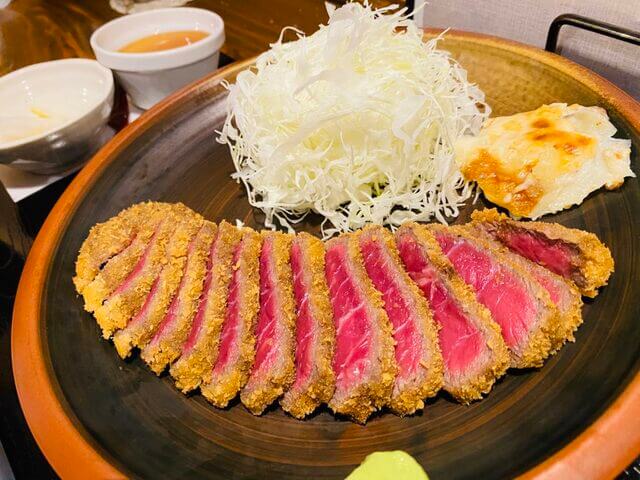
At the beginning of the Meiji era, there is a dish in which the Japanese fried battered young beef in an oil-filled frying pan. Later, this changed to a “fried” recipe with a large amount of oil, and it became what it is today.
Since the Taisho era, the main ingredient of katsuretsu in the Tokyo area is from young beef to pork. This is because it is cheaper and more easily available. The availability of it is a requirement for the process of popularization of Western food for Japanese people. Therefore, it suits the tastes of the Kanto people, who are in the cultural area. However, in the Kansai region such as Kobe, Osaka, and Kyoto, which are the beef culture areas, beef cutlets have become the mainstream instead of pork. Even now that the tonkatsu originated in Tokyo has become widespread nationwide, locals still eat this daily at home or outside.
Beef katsuretsu was a minor dish nationwide, but it became a boom in Tokyo in 2015. Additionally, its recognition is rapidly increasing from the metropolitan area to the whole country.
Gyukatsu Recipe
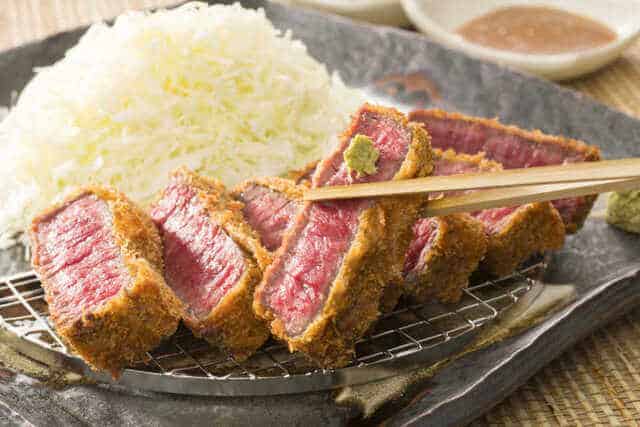
In this section, we will know what the gyukatsu recipe is. Firstly, let us know the gyukatsu ingredients. It consists mainly of beef, turnips with leaves, salt, flour, egg, bread crumbs, miso, chili oil, sugar, and soy sauce.
How to make Gyukatsu
Cut the beef and sprinkle it with salt and coarse black pepper on both sides. Sprinkle flour, beaten egg, and bread crumbs in that order, cover with plastic wrap, and leave in the refrigerator for about 5 minutes.
Wash the turnips well with the skin on, cut off the stems, leaving about 4 cm, and divide into 4 pieces.
Put frying oil to a depth of 2 cm in a pan, heat to 180°C, and add 1 beef one by one.
Fry for about 1 minute and 30 seconds until the surface turns golden brown, drain the oil, and let it rest for about 1 minute.
Mix the miso, sugar, and chili oil to make spicy miso.
Cut 4 into easy-to-eat pieces and serve with turnips and spicy miso. Add grated wasabi, salty sauce, and salt to your liking.
How do you eat Gyukatsu?
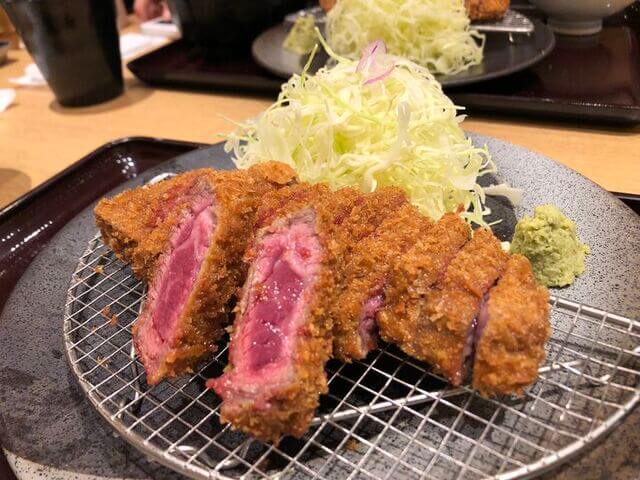
The proper way to eat gyukatsu is by cooking the fried beef on top of the stone stove. The stone stove is usually heated by a small candle inside the box. The meat tends to taste better since the heat activates all of the flavors. Additionally, there are five (5) ways to enjoy Gyukatsu. Firstly, is to dip it with wasabi and soy sauce. Secondly, dip it with soy sauce. Third, dip it with horseradish and onion sauce. Fourth, is to season it with rock salt. The last one is to sizzle it for a few seconds on the mini stone grill for your preferred doneness.
What are the types of beef cutlets?
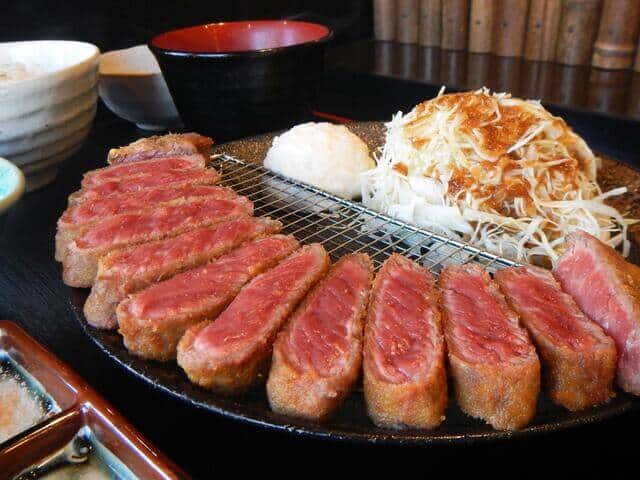
Katsumeshi (Hyogo Prefecture specialties)
A plate-filled dish with beef cutlet on top of white rice and sauce.
Kushikatsu
At Kushikatsu restaurants in the Kinki region centered on Osaka, the basic meat is not pork, but lean beef and tendon.
What cut is a beef cutlet?
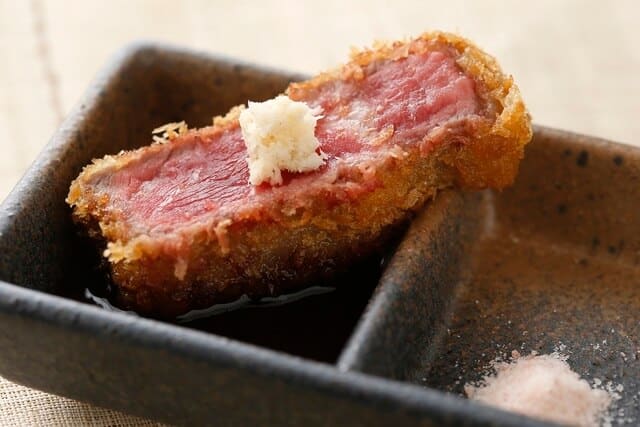
In cooking terms, a “cutlet” of meat — chicken, pork, beef, lamb, turkey — refers to a thin cut of meat usually from the leg or rib section (with fowl, sometimes the breast) of the animal. Commonly, locals pounded cutlets even thinner before they cooked them over high heat.
Recommended Gyukatsu Restaurants
Gyukatsu Motomura (Tokyo)
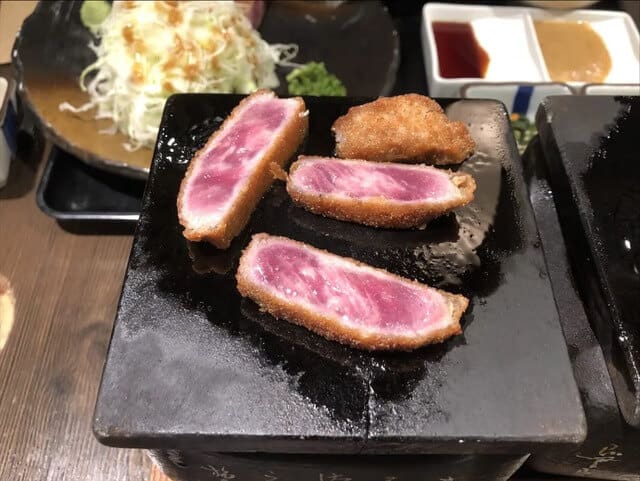
One of the things that one always misses from Tokyo is the food scene. There is so much interesting and delicious food to try in this metropolitan city including Gyukatsu from Gyukatsu Motomura. Gyukatsu Motomura is one of the most popular restaurants for this kind of dish. Their gyukatsu is a beef cutlet deep-fried until it turns golden on the outside while still medium-rare on the inside. You’ll get a nice pink color in the middle. The beef cutlet comes in the set meal with cabbage, potato salad, pickles, barley rice, miso soup, and grated yam (additional). Additionally, the rice is supremely tasty with the combination of fluffy rice and barley, if you order the set with grated yam, simply mix the grated yam with the rice to get the nice silky smooth texture.
Katsugyu (Kyoto)
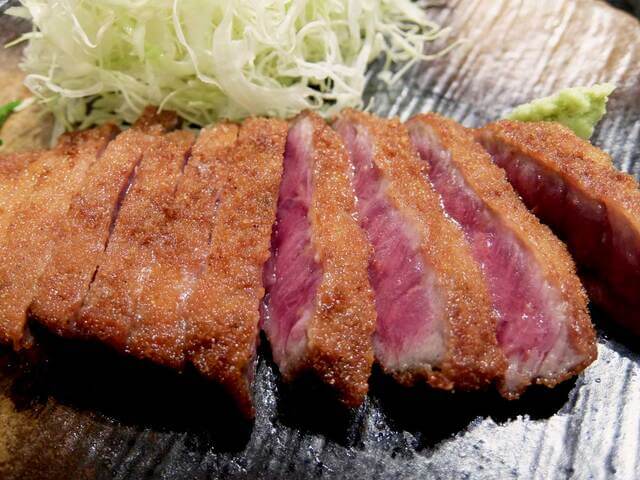
This shop is about a 5-minute walk from “Kyoto Station”. This shop serves slices of high-quality single meat that is medium-rare. Their beef Ribeye Cutlet Set (Medium)is ¥1,280 (excluding tax). It has an exquisite harmony of oil and crispy batter. Additionally, you can feel the original taste of the meat, and they also further brought the umami by the sauce, which is outstandingly delicious.
Meat Bar Shoutaian Shibuya (Tokyo)
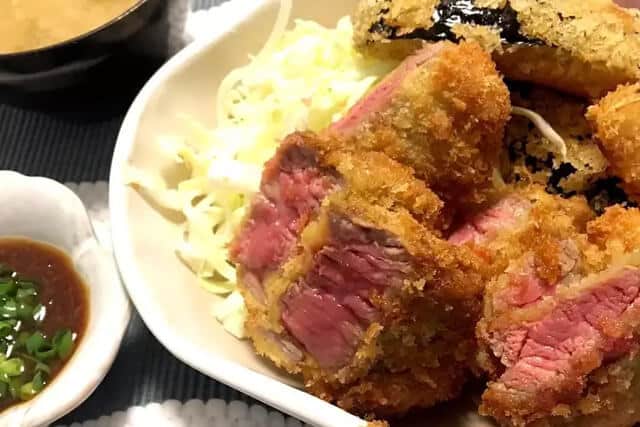
“Meat bar Shoutaian Shibuya store” was born from a yakiniku restaurant. It is a shop where you can casually enjoy A5 rank authentic Japanese black beef. The shop’s space is where you can relax and enjoy high-class Japanese black beef with sake. It is popular not only with young people in Shibuya but also with business people. The beef cutlet in this shop is a “Wagyu cutlet” using A5 rank Japanese black beef. They serve this juicy Wagyu beef cutlet with freshly grated ponzu sauce.
Apollo PLUS (Kyoto)
The next restaurant in Kyoto where you can enjoy beef cutlet is “Apollo PLUS”. This shop is about a 6-minute walk from “Karasuma Line Oike Station”. This shop carefully selects the A4 or higher Japanese black beef for the beef cutlet you can enjoy. “Kuroge Wagyu beef pork cutlet demiglace sauce” costs about ¥3,800 (tax included). The delicious taste of meat and the richness of demiglace sauce produce a very delicate taste.
Conclusion
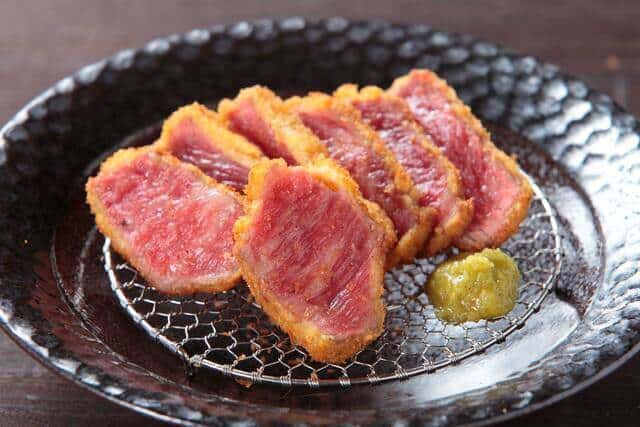
Gyukatsu comes in a set meal with cabbage, potato salad, pickles, barley rice, and miso soup. Overall, same as tonkatsu, gyukatsu is one of those foods that’s fun to cook and is super delicious to eat. The authentic Wagyu beef in Japan after all, is among the most sought-after and luxurious meats in the world. What makes it so special is its copious marbling, which creates a luxurious, buttery tenderness unlike any steak from cattle raised in America. Like steak, everyone can distinguish beef cutlets by how one is fried, such as rare, medium, and well-done.
Comments