





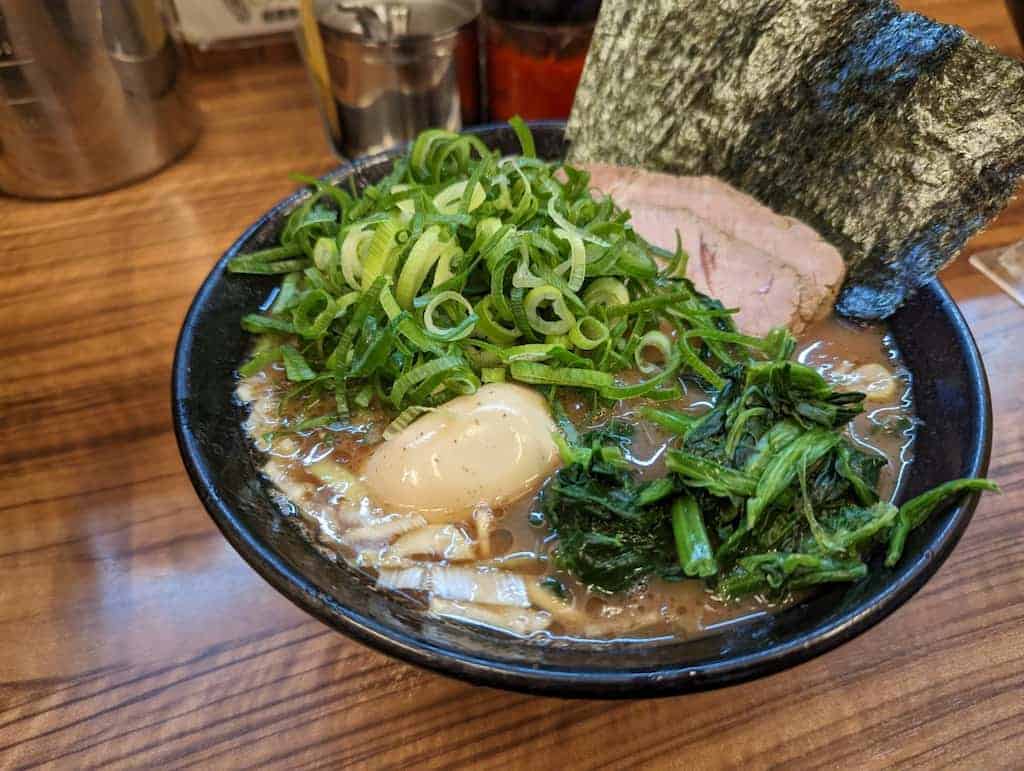
Iekei ramen (家系ラーメン) is a Yokohama ramen style built on a rich tonkotsu shoyu broth, glossy chicken oil, and thick chewy noodles. Chefs finish each bowl with chashu pork, spinach, green onions, and three sheets of nori seaweed. The style began at a single Yokohama shop in 1974, and roughly a thousand shops now follow it nationwide.
This guide covers the ingredients, the history, the ordering system, prices, and where to eat. It suits first-time visitors to Yokohama, ramen fans comparing regional styles, and anyone facing a ticket machine for the first time.
Quick Facts About Iekei Ramen
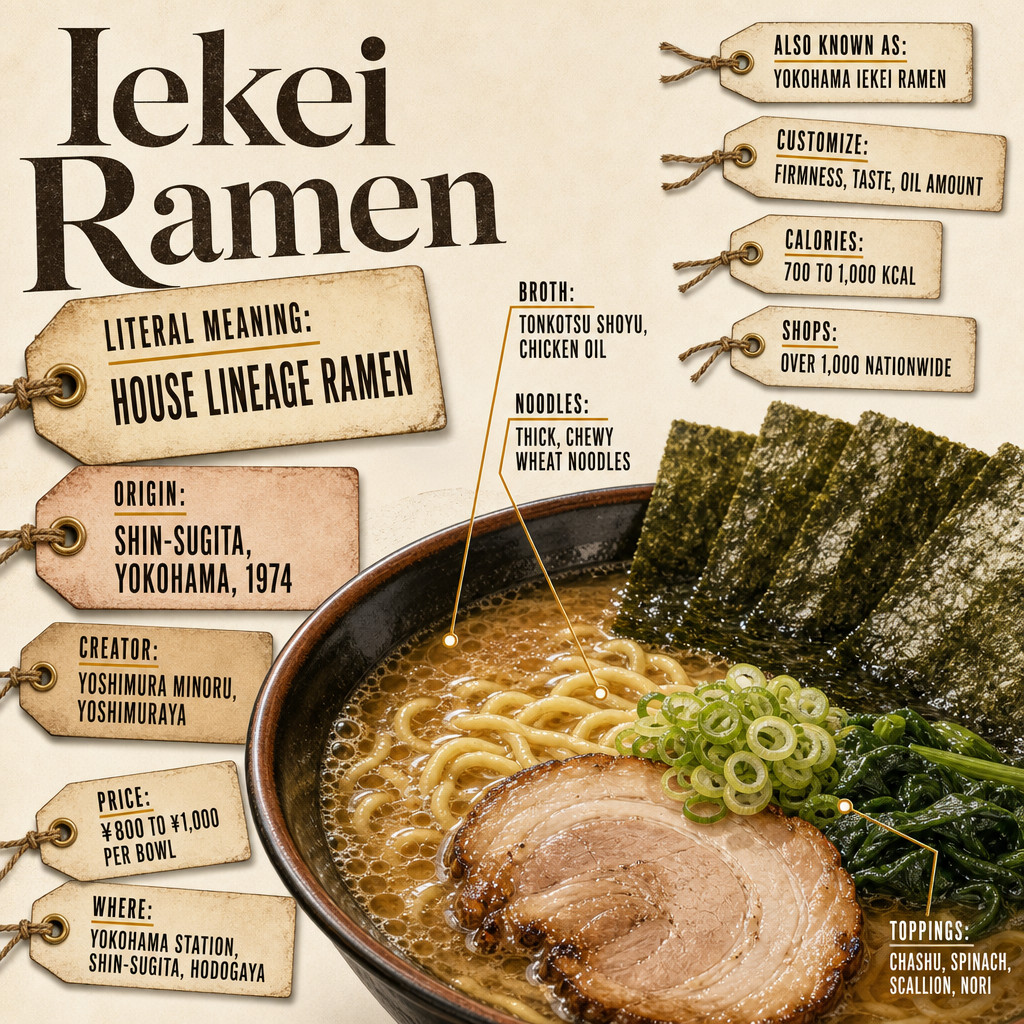
| Japanese Name | 家系ラーメン (iekei ramen) |
| Literal Meaning | House lineage ramen |
| Also Known As | Yokohama iekei ramen, Yokohama-style ramen |
| Origin | Shin-Sugita, Yokohama, Kanagawa Prefecture, 1974 |
| Creator | Yoshimura Minoru, at the shop Yoshimuraya |
| Broth | Tonkotsu shoyu, meaning pork bone and soy sauce, finished with chicken oil |
| Noodles | Thick, chewy wheat noodles |
| Standard Toppings | Chashu pork, spinach, green onions, nori seaweed |
| You Choose | Noodle firmness, taste strength, oil amount |
| Typical Price | About ¥800 to ¥1,000 for a plain bowl |
| Calories | Roughly 700 to 1,000 kcal per bowl |
| Shops Nationwide | Estimated at over 1,000 |
| Where to Try It | Yokohama Station west side, Shin-Sugita, Hodogaya |
Prices and calories above are typical examples rather than fixed standards, and they were checked in July 2026. Actual figures vary by shop, portion size, and how much oil you order.
What Is Iekei Ramen?
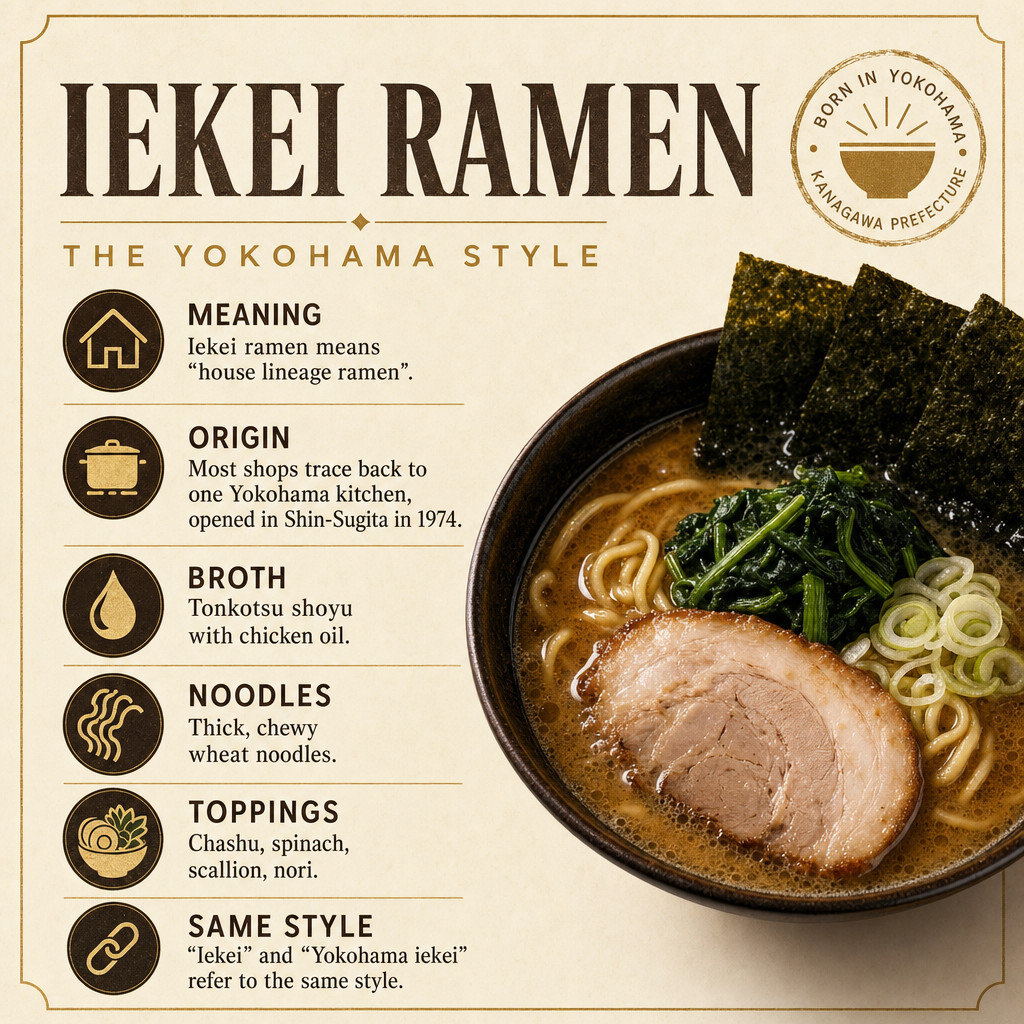
Iekei ramen is a ramen style, not a single recipe. Any shop qualifies if it serves a pork bone and soy sauce broth with chicken oil, thick noodles, and the standard nori and spinach toppings. The lineage matters as much as the bowl, because most shops trace their training back to one Yokohama kitchen.
Where the Name Comes From
The name explains the family tree. “家” (ie) means house, while “系” (kei) means lineage. Because so many early shops ended their names with “ya”, fans simply called the whole group iekei. The birthplace is Yokohama, in Kanagawa prefecture, home also to shirasu whitebait.
One point confuses newcomers. Iekei describes a lineage of shops, whereas Yokohama iekei ramen is simply the same style named after its home city. Both terms mean the same bowl.
Ingredients of Iekei Ramen
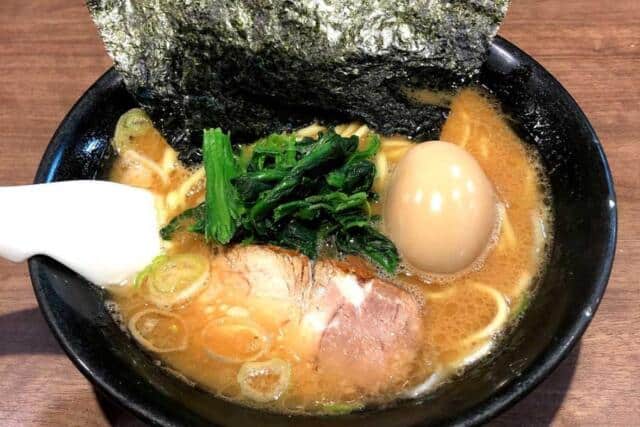
Five components define the bowl. Shops guard their ratios closely, yet the shopping list barely changes between kitchens.
- Pork bones (tonkotsu): leg bones and backbones boiled for hours to build body
- Chicken bones and skin: added for depth, and the reason the broth tastes rounder than pure tonkotsu
- Chicken oil (chiyu): rendered from skin and floated on top, giving the surface its shine
- Shoyu tare: a concentrated soy sauce (shoyu) seasoning poured into the bowl first
- Thick noodles: chewy medium-thick wheat noodles, classically from Sakai Seimen in Yokohama
Toppings stay deliberately simple. Chashu pork, spinach, green onions, and nori enhance the bowl with texture and umami. Additionally, most counters carry garlic, ginger, vinegar, and doubanjiang chili bean paste for self-service adjustment.
Iekei Ramen Characteristics
The Broth
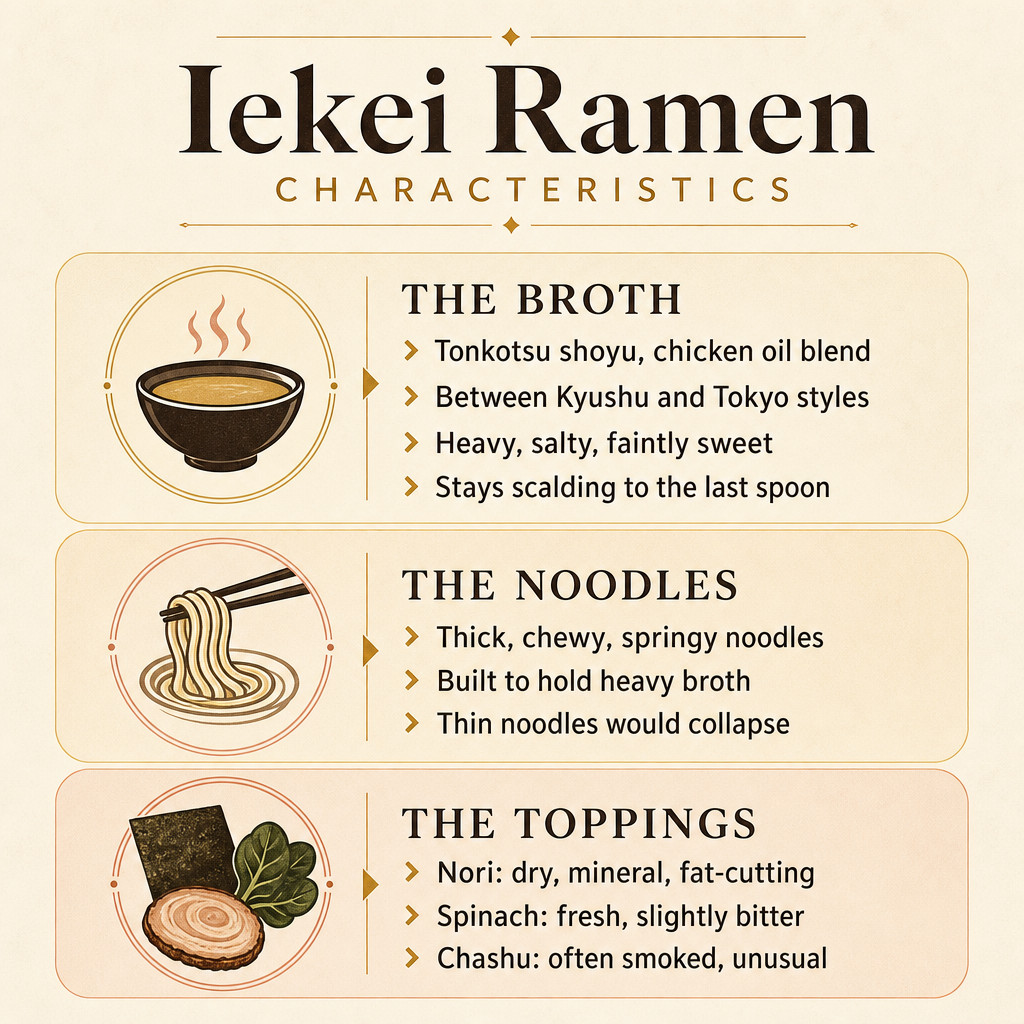
Chefs blend tonkotsu shoyu broth with aromatic chicken oil to create the signature flavor. As a result the soup lands between Kyushu pork bone soup and Tokyo soy sauce soup. It tastes heavy, salty, and faintly sweet, and the chicken oil keeps it scalding to the last spoonful.
The Noodles
Thick noodles matter more than people expect. Thin noodles would collapse in a broth this heavy, so shops use a chewy, springy cut. Consequently they hold their bite while carrying a thick coating of soup.
The Toppings
Nori seaweed is the topping fans argue about most. Its dry, mineral aroma cuts the fat, and the sheets soften once soaked. Spinach adds a fresher, slightly bitter note. Chashu often arrives smoked, which is unusual for ramen.
Iekei Ramen History
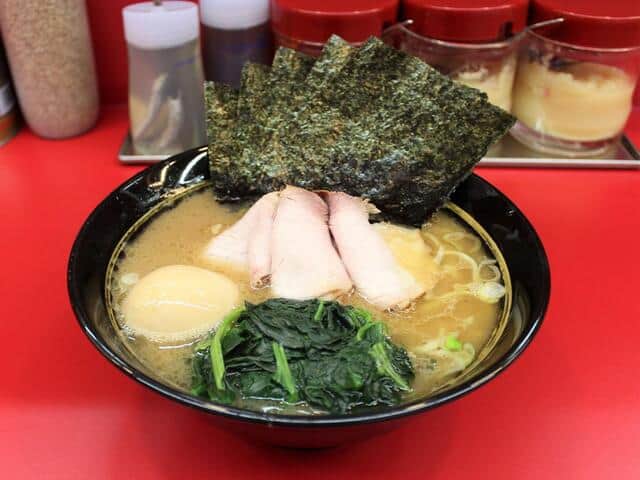
The story starts with one man and a truck. Before Yoshimura Minoru ever cooked professionally, he drove long-haul freight between Kanto and Kyushu.
Those routes shaped everything. In Kyushu he ate creamy pork bone soup, while in Kanto he ate clean chicken and soy sauce soup. Eventually one question stuck with him. Why not combine the two?
He quit driving, learned to cook in a ramen kitchen, and opened Yoshimuraya in 1974. The first shop stood beside an industrial road in Shin-Sugita, in Yokohama’s Isogo ward. Queues formed almost immediately, so it opened as early as five in the morning.
Growth then followed an unusual pattern. Instead of franchising, Yoshimura trained apprentices who opened their own shops under the noren-wake system. Most kept that telltale “ya” in their names, and shops inspired by Yoshimuraya spread the style across Japan.
Yoshimuraya moved to the Yokohama Station area in 1999. Then, in March 2023, it moved again into its own two-story, thirty-seat building across the Okano-cho intersection. Yoshimura still supervises as chairman. Estimates put the national total above a thousand iekei shops.
Why Is Iekei Ramen So Popular?
Several factors explain the following, and none involve marketing budgets.
- You control the bowl. Noodle firmness, salt level, and oil volume are yours to choose.
- It satisfies completely. Fat, salt, and thick noodles hit hard after work or drinking.
- Rice belongs here. Cheap or free rice turns one bowl into a full meal.
- Every shop differs. Apprentices tweak the recipe, so regulars collect favorites.
- The lineage is a story. Fans trace shops back to Yoshimuraya like wine drinkers trace vineyards.
Iekei Ramen vs Hakata Ramen vs Tokyo Shoyu Ramen
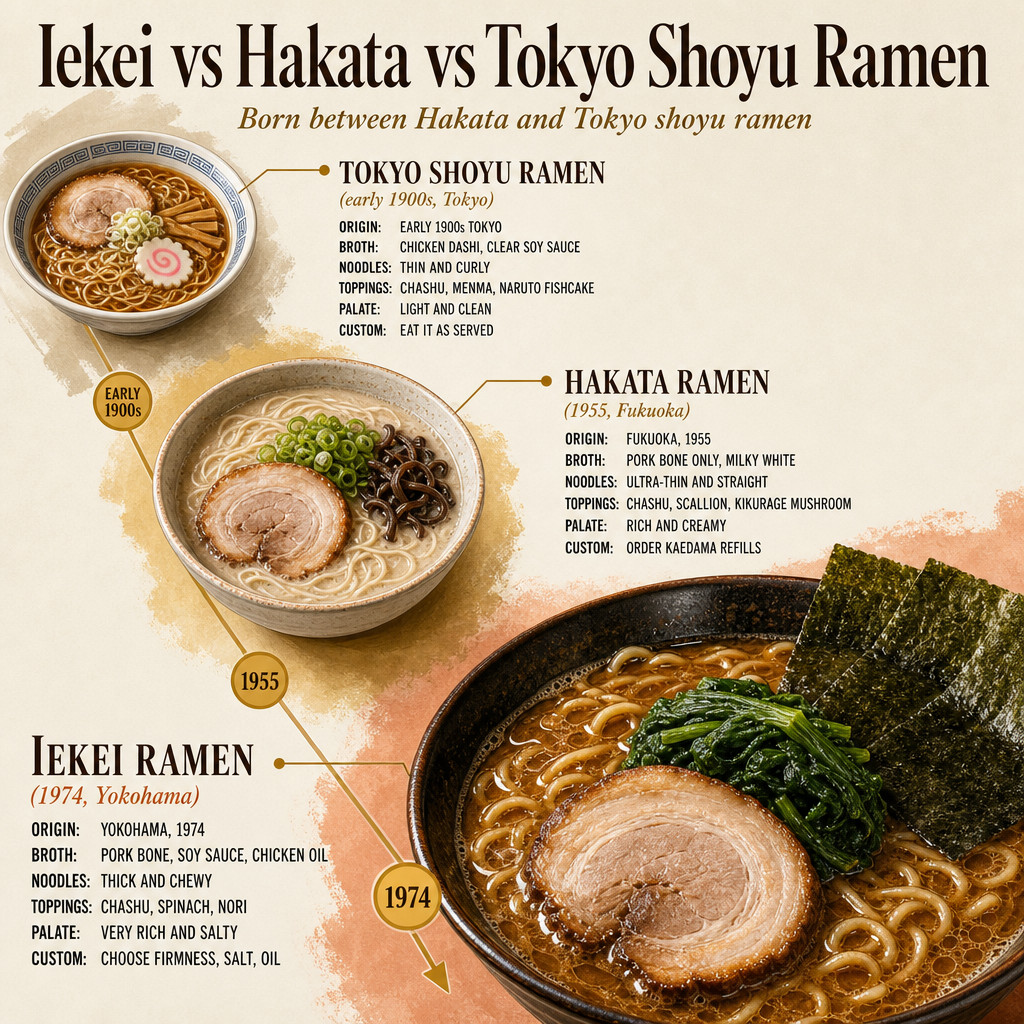
Iekei ramen sits deliberately between two older traditions. Hakata ramen supplied the pork bone idea, whereas Tokyo shoyu ramen supplied the soy sauce and chicken backbone.
| Iekei ramen | Hakata ramen | Tokyo shoyu ramen | |
|---|---|---|---|
| Origin | Yokohama, 1974 | Fukuoka, 1955 | Tokyo, early 1900s |
| Broth | Pork bone and soy sauce, with chicken oil | Pork bone only, milky white | Chicken and dashi, clear soy sauce |
| Noodles | Thick and chewy | Ultra-thin and straight | Thin and curly |
| Standard toppings | Chashu, spinach, nori | Chashu, green onion, kikurage mushroom | Chashu, menma bamboo shoots, naruto fishcake |
| Weight on the palate | Very rich and salty | Rich and creamy | Light and clean |
| Local custom | Choose firmness, salt, and oil | Order kaedama noodle refills | Eat it as served |
Other regional styles blur the lines further. Shirakawa ramen from Fukushima looks similar at a glance, and Wakayama ramen also mixes pork bones with soy sauce.
How to Order Iekei Ramen
Most shops use a ticket machine at the entrance. After you hand over the ticket, staff ask three quick questions. The process intimidates first-timers unnecessarily.
- Noodle firmness: katame (firm), futsuu (normal), or yawame (soft)
- Taste strength: koime (strong), futsuu (normal), or usume (light)
- Oil amount: oome (more), futsuu (normal), or sukuname (less)
Say “zenbu futsuu” on a first visit, meaning everything normal. Regulars often pick firm noodles, since they soften fast in hot broth. If salt or fat worries you, ask for usume and sukuname instead.
How to Eat Iekei Ramen Like a Local
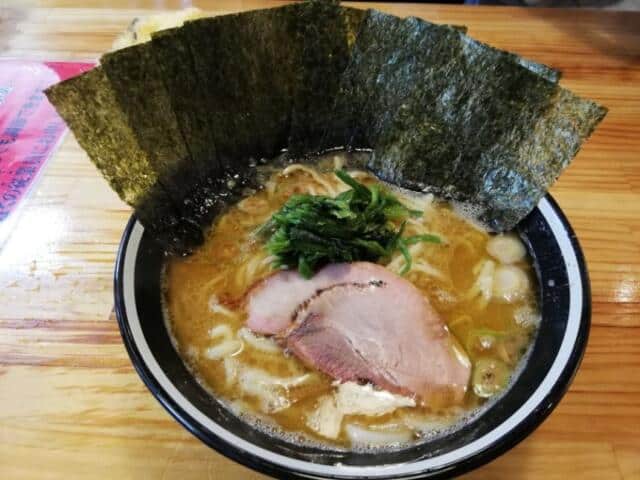
Take one spoonful before touching anything else. This tells you whether the salt level suits you, and how much chicken oil the kitchen used.
Lean the sheets against the rim early, otherwise they dissolve. Later, dip one and wrap a mouthful of rice in it.
Thick noodles keep absorbing broth as you sit there. Because of that, locals attack them in the first few minutes rather than pacing themselves.
Garlic, pickled ginger, vinegar, and doubanjiang chili bean paste sit within reach. Add them halfway through, since vinegar lifts a heavy broth surprisingly well.
Finishing every drop is common, though nobody expects it. Leaving the soup cuts your salt intake noticeably, and rice with nori makes a better ending anyway.
Average Price of Iekei Ramen
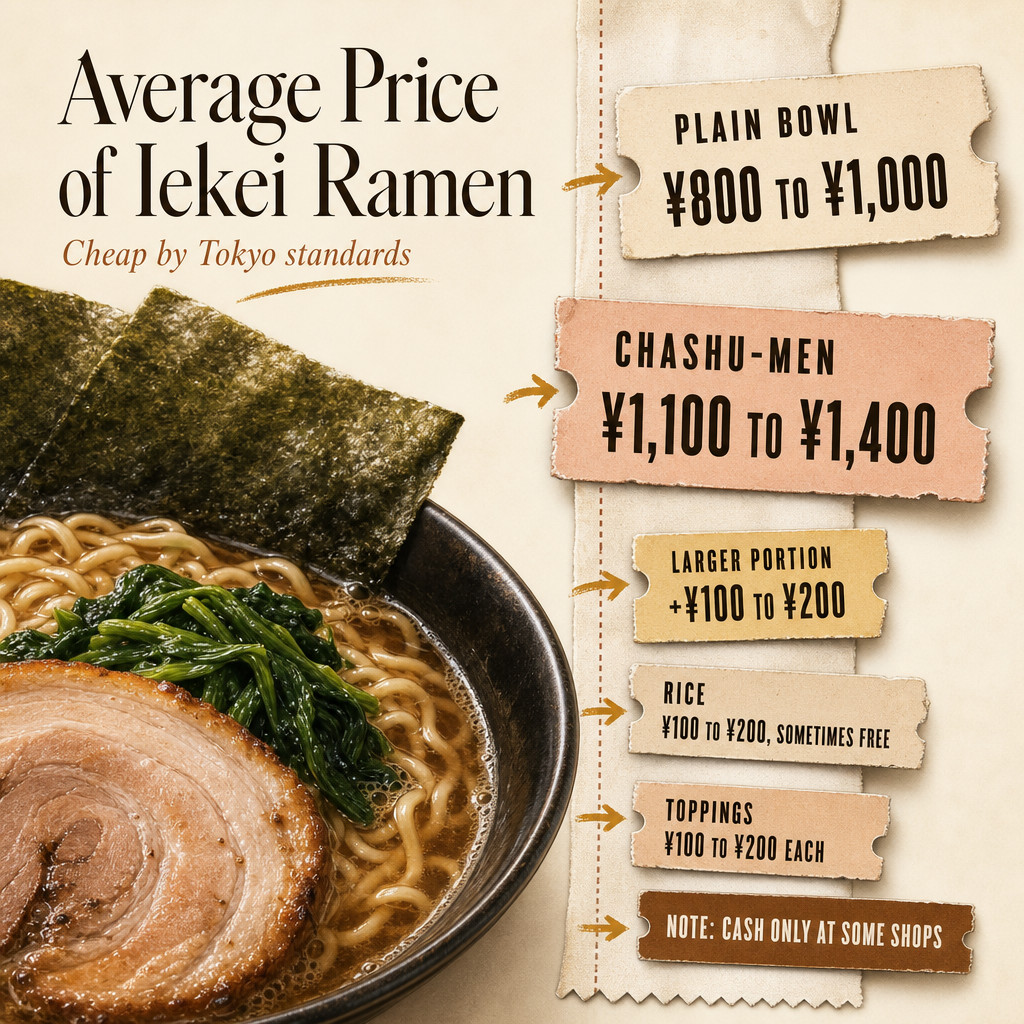
Iekei ramen stays cheap by Tokyo standards. Prices below reflect typical Yokohama shops as of July 2026.
- Plain bowl (nami): roughly ¥800 to ¥1,000
- Chashu-men: roughly ¥1,100 to ¥1,400
- Larger portion: ¥100 to ¥200 extra
- Rice: ¥100 to ¥200, and free at some chains during lunch
- Extra toppings: around ¥100 to ¥200 for egg, nori, or spinach
Some shops still take cash only. Therefore it pays to carry coins near Yokohama Station.
Where to Eat Iekei Ramen in Japan
Shop details below were checked in July 2026, although ramen shops change hours often. Yokohama holds the highest concentration, and three areas cover the classics. The west side of Yokohama Station has the greatest density. Shin-Sugita, in Isogo ward, is where the style began. Hodogaya, meanwhile, hides shops that locals rate above the famous names. Our guide to what to eat in Yokohama covers the wider city.
Yoshimuraya (吉村家)
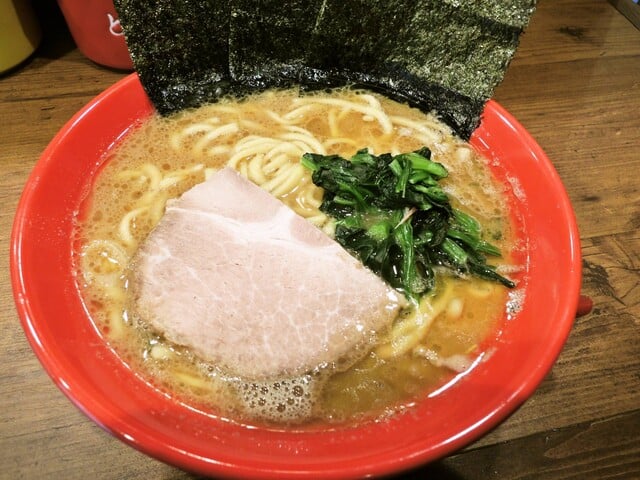
Regulars call this place the sohonzan, or head temple. The menu stays short at ramen and chashu-men, each in three sizes. Roughly 1,500 people pass through daily, yet the counter turns over fast.
Sugitaya (杉田家)
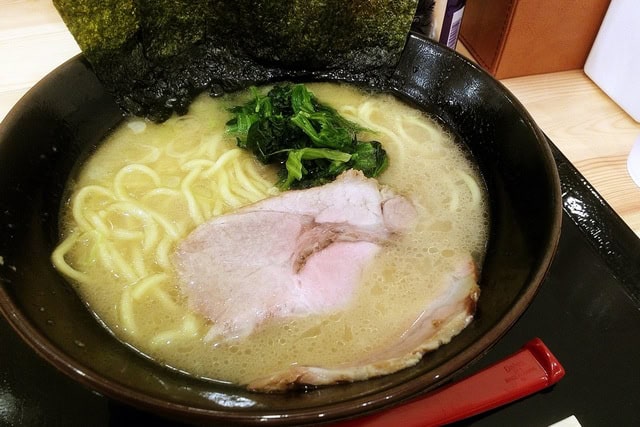
Sugitaya opened in September 1999 as the first officially recognized direct-lineage shop. Better still, it stands in Shin-Sugita, near where Yoshimuraya began.
Suzukiya (寿々㐂家)
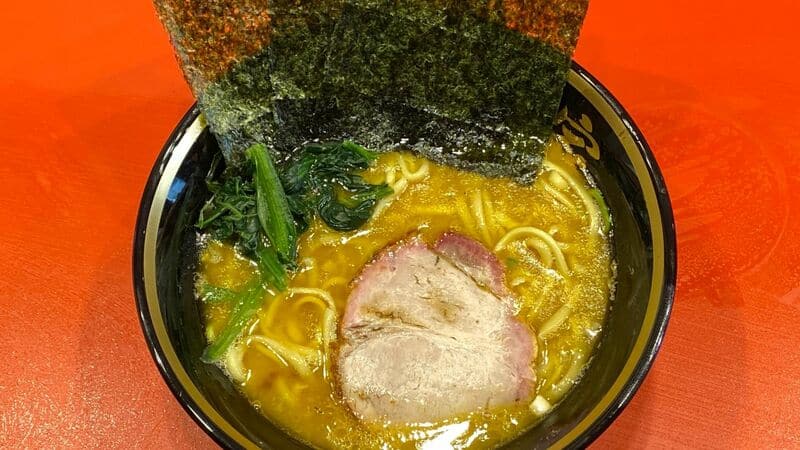
Suzukiya draws a devoted queue in Hodogaya, away from the tourist route. Its broth runs lighter than the head-temple version, yet the flavor holds up.
Outside Yokohama, national chains carry the style into almost every prefecture. Their broth runs gentler, but they open late and welcome beginners.
Iekei Ramen Nutrition and Health Facts
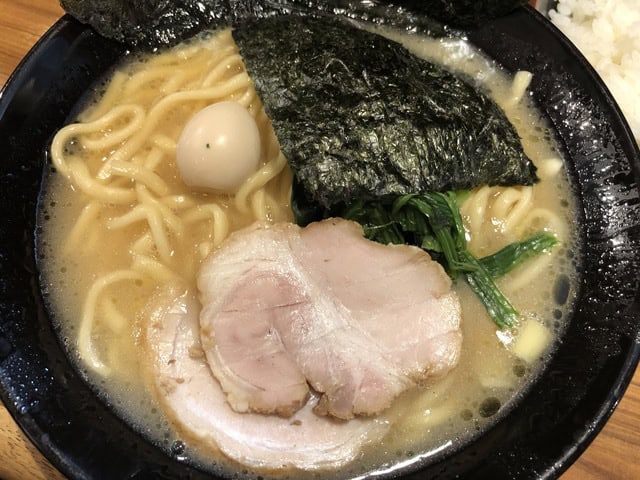
Let us be honest about this bowl. Alongside those 700 to 1,000 kcal sit 30 to 50 grams of fat, and adding rice pushes the carbohydrate load higher still.
Salt deserves the most attention. A 2025 survey of 52 ramen servings in Kyoto measured 6.5 grams of salt per bowl on average. Pork bone broths showed the highest sodium-to-potassium ratio of all types tested. For comparison, the World Health Organization suggests under 5 grams daily.
Fortunately the fix is easy. Roughly half the sodium sits in the soup, so leaving the broth makes a real difference. One randomized trial showed that a perforated spoon cut salt intake from 2.4 to 1.8 grams.
None of this makes the dish unhealthy. Eaten occasionally it fits into a balanced week, whereas eaten daily with the soup finished it delivers more salt and fat than most people need.
Iekei Ramen Recipe: How to Make It at Home
Home cooking takes patience rather than skill. Set aside two days, since the broth needs an overnight rest.
Pre-boil the bones and skim the scum as it rises. Then cool them under running water and scrub off any remaining blood.
Cover the bones with water and pressure cook for one hour. Afterwards, boil hard for two to three hours, topping up water as it evaporates.
Cool the soup and refrigerate it overnight. Resting improves the body, and the fat cap is easier to manage once chilled.
Boil the stock with chicken skin for another hour. Next add cabbage, onion, ginger, garlic, and niboshi dried sardines, simmer one more hour, then strain.
Pour shoyu tare and chicken oil into the bowl first, then add the hot soup. Finally add the noodles, chashu, spinach, green onions, and nori.
Conclusion
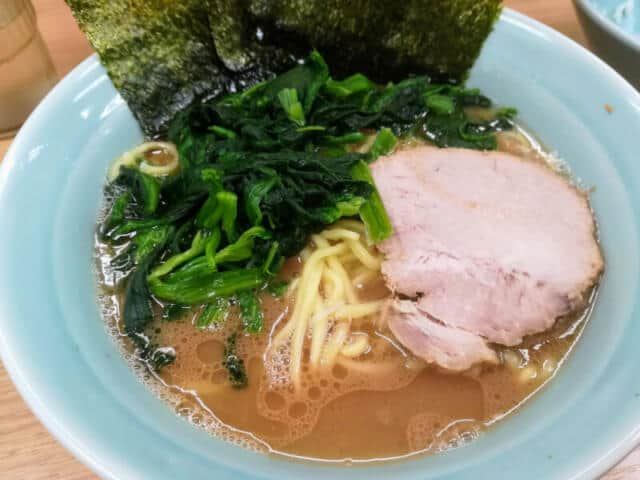
Iekei ramen is Yokohama’s answer to a question nobody else had asked. One truck driver mixed Kyushu pork bone soup with Kanto soy sauce, added chicken oil and thick noodles, and a nationwide lineage followed.
Three things make the style worth seeking out. The broth is unapologetically rich, the customization puts you in charge, and no two shops taste alike. Above all, it stays a working person’s meal at a working person’s price.
So start at a Yokohama counter if you can. Order everything normal, wrap a little rice in the nori, then decide about the soup. Afterwards, explore our Kanagawa food guide or try sanmamen, the other ramen Yokohama invented.
Iekei Ramen FAQ
What is Iekei ramen?
Iekei ramen is a Yokohama ramen style with a tonkotsu shoyu broth, chicken oil, and thick noodles. Standard toppings are chashu pork, spinach, green onions, and nori seaweed. Yoshimuraya created the style in 1974. Roughly a thousand shops across Japan now follow it.
How is Iekei ramen different from Hakata ramen?
Hakata ramen uses pork bone broth alone with ultra-thin noodles. Iekei ramen adds soy sauce tare and chicken oil to the pork bones, then serves thick chewy noodles instead. Hakata shops offer noodle refills, whereas iekei shops let you set firmness, salt, and oil. The two styles also come from opposite ends of Japan.
Where can I eat the best Iekei ramen in Yokohama?
Yoshimuraya near Yokohama Station is the original and still the benchmark. Sugitaya in Shin-Sugita is the first direct-lineage shop, and it stands near the birthplace. Suzukiya in Hodogaya suits anyone who finds the classic broth too heavy. Expect a queue at all three.
Is Iekei ramen healthy?
It is a treat rather than an everyday meal. One bowl runs roughly 700 to 1,000 kcal with 30 to 50 grams of fat, and ramen servings measured in Japan average about 6.5 grams of salt. On the plus side, the bowl delivers protein, iron from spinach, and minerals from nori. Ordering usume and sukuname, then leaving the soup, cuts both salt and fat considerably.
What does Iekei ramen taste like?
Expect a heavy, salty, deeply savory broth with a sweet edge from the soy sauce. Chicken oil coats your mouth and keeps the soup very hot. Thick noodles feel springy rather than delicate. Nori and spinach then cut through the richness, which is exactly why they belong there.
How do I order Iekei ramen if I do not speak Japanese?
Buy a ticket from the machine, then say “zenbu futsuu” for everything normal. Staff will accept that answer without further questions. If you prefer less salt or fat, say “usume” and “sukuname” instead. Pointing at the menu photo works fine too.
Why does Iekei ramen come with rice?
The broth is salty and fatty enough to season plain rice on its own. Locals dip a sheet of nori in the soup, wrap a mouthful of rice, and eat it between noodles. Many shops therefore price rice very low or include it free at lunch. It also turns a single bowl into a filling meal.
Can vegetarians or people avoiding pork eat Iekei ramen?
Unfortunately not, because pork bones form the base of every bowl. The broth, the chashu, and often the tare all contain pork, so no topping change can remove it. Wheat noodles also rule out gluten-free diets. Travelers with these restrictions do better with shojin ryori or a dedicated vegan ramen shop.
References
- Yoshimuraya Official Website – Iekei Sohonzan Yoshimuraya and its direct-lineage shops (Accessed July 2026)
- Ramen Sugitaya Official Website – The first direct-lineage shop of Yoshimuraya (Accessed July 2026)
- Yokohama Keizai Shimbun – Yoshimuraya relocates to a new two-story, 30-seat building, 9 March 2023 (Accessed July 2026)
- Dietetics (MDPI) – Na and K Content and Na/K Ratio of Ramen Dishes Served in Ramen Restaurants in Kyoto City, Japan, 2025 (Accessed July 2026)
- Nutrients (MDPI) – Effects of Using a Perforated Spoon on Salt Reduction When Consuming Ramen Noodles, 2023 (Accessed July 2026)
- Centre for Food Safety, Hong Kong – Japanese Ramen: A High Sodium Trap? (Accessed July 2026)
- Tabelog – Iekei Sohonzan Yoshimuraya, address and opening hours listing (Accessed July 2026)
Related Articles
- Hakata Ramen (博多ラーメン) (Accessed July 2026)
- Sanmamen (サンマーメン) (Accessed July 2026)
- Shirasu (しらす) (Accessed July 2026)
- Jiro Ramen (ラーメン二郎) (Accessed July 2026)
- Shirakawa Ramen (白河ラーメン) (Accessed July 2026)
- What to Eat in Yokohama: 20 Must-Try Foods (Accessed July 2026)
- Kanagawa Food Guide (Accessed July 2026)



Comments