



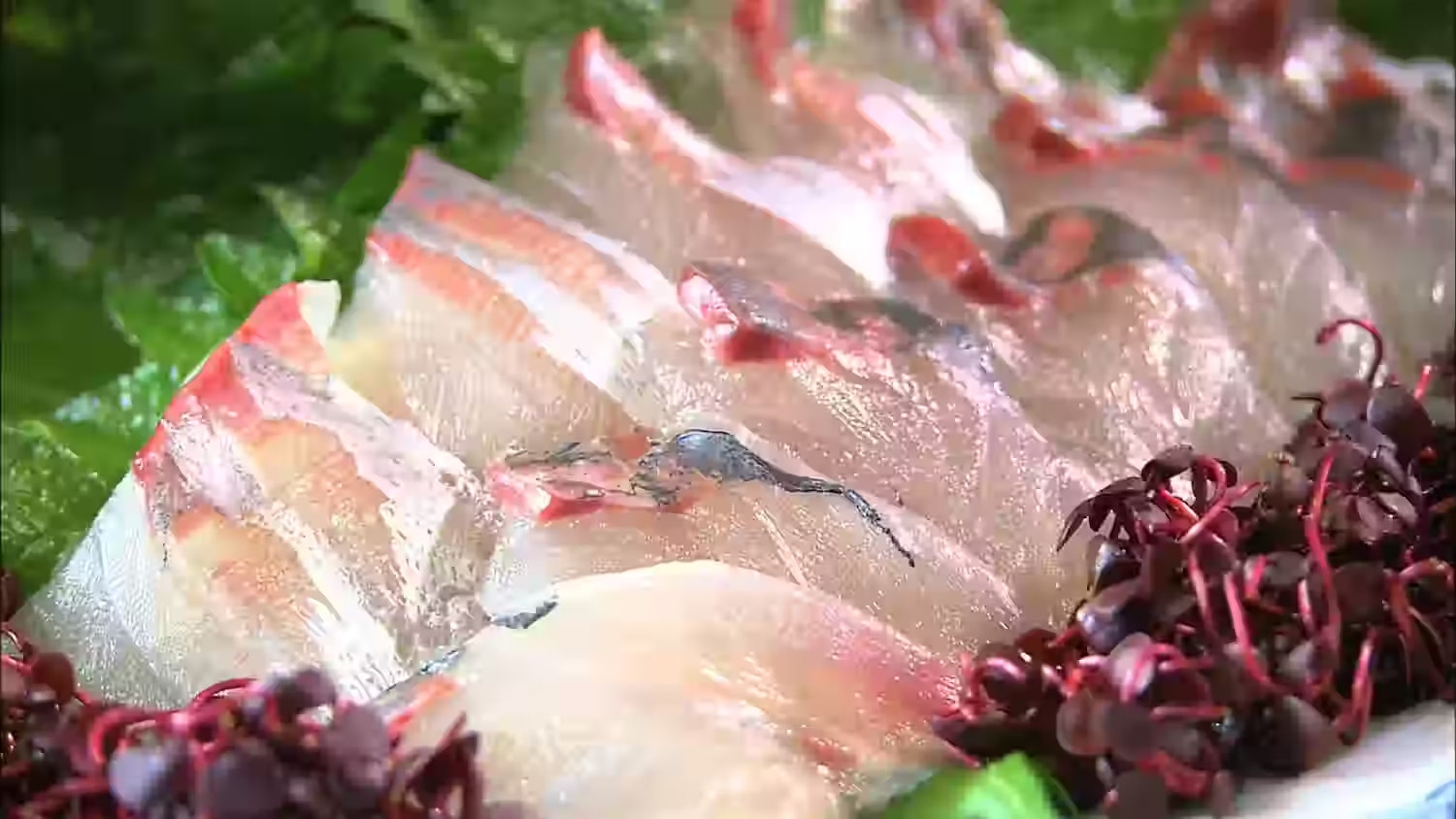

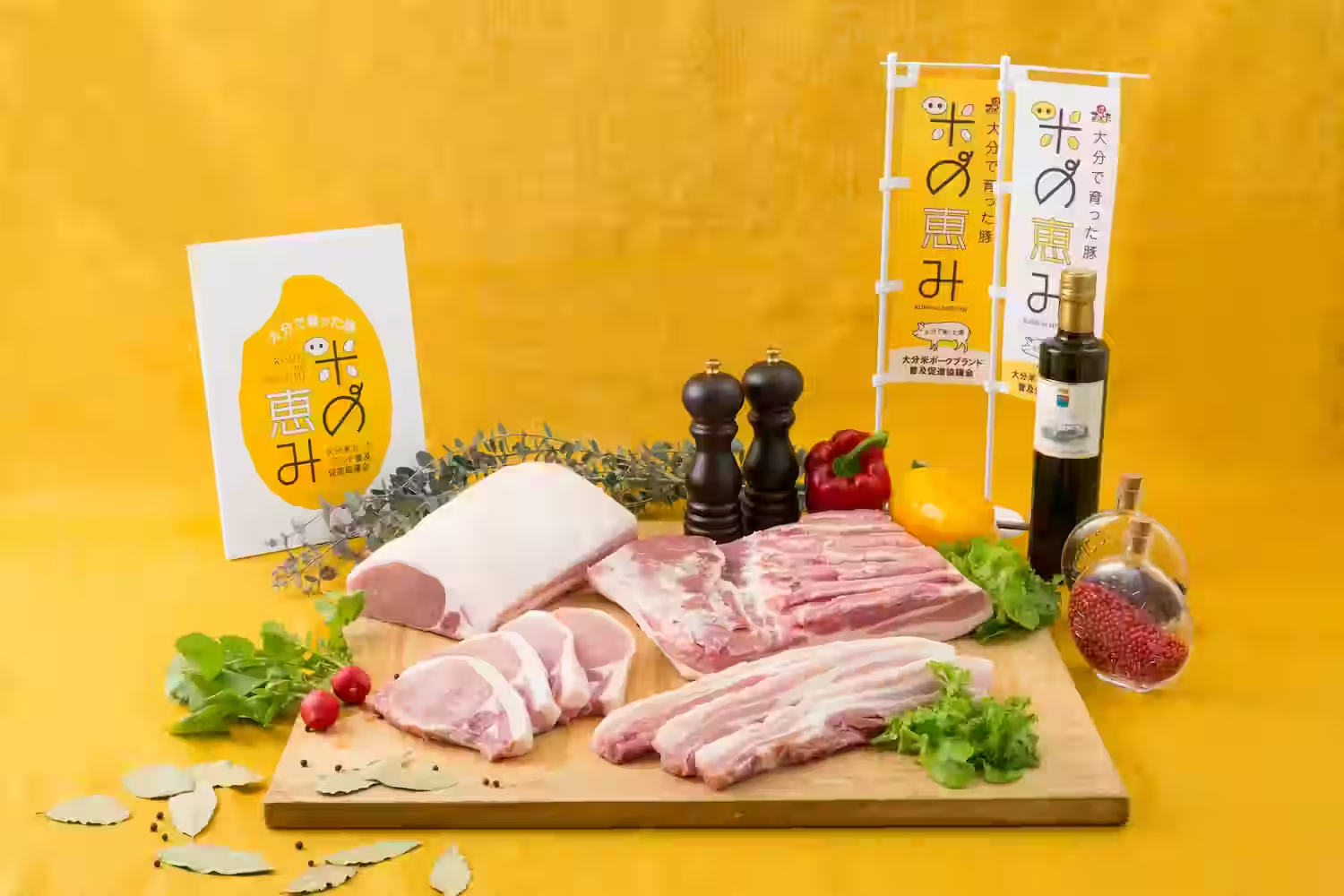

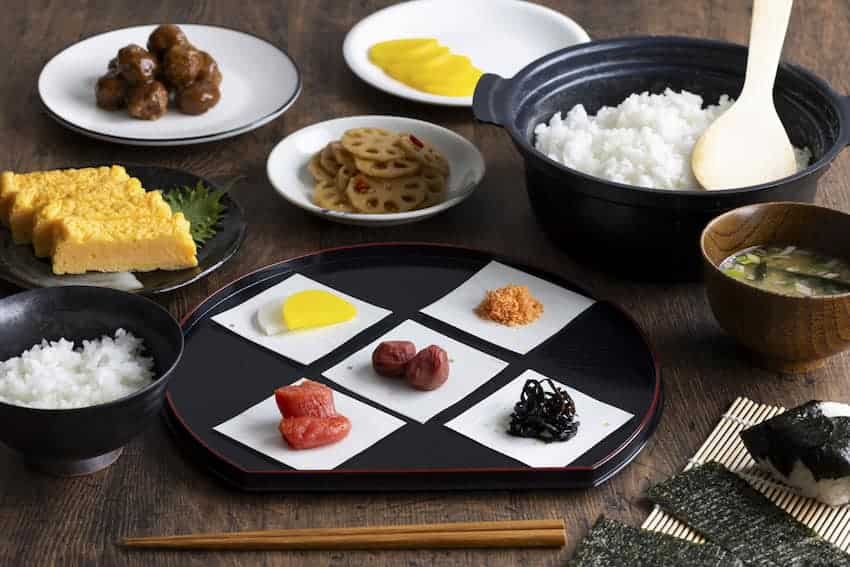
和食 Washoku is Japan’s traditional food culture, recognized by UNESCO as an Intangible Cultural Heritage in 2013. It is not a single cuisine or cooking style. It is a set of values, habits, and social customs surrounding how Japanese people grow, prepare, and share food. Seasonal ingredients, nutritional balance, respect for nature, and connection to annual festivals are all part of what washoku means. Understanding it changes how you see an ordinary Japanese meal.
What is Washoku?
Washoku (和食) consists of two characters: wa (和), meaning Japan or harmony, and shoku (食), meaning food or eating. Together they describe Japan’s complete food culture, not just a cooking technique. In a broad sense, washoku includes all traditional Japanese meals. In a narrower sense, it refers specifically to vegetarian and kaiseki formats, and to dishes tied to seasonal events and annual celebrations.
It is worth distinguishing washoku from the English term “Japanese food.” Japanese food is a wider category that includes ramen, curry rice, and fried chicken, all of which are beloved in Japan but did not originate there. Washoku refers specifically to the traditional cultural practices around food that developed in Japan over centuries. Ramen is Japanese food. Rice, miso soup, and grilled fish are washoku.
Ichiju-Sansai: The Structure of a Washoku Meal
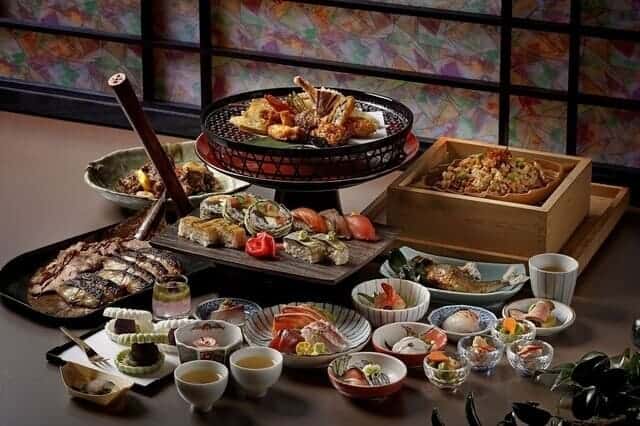
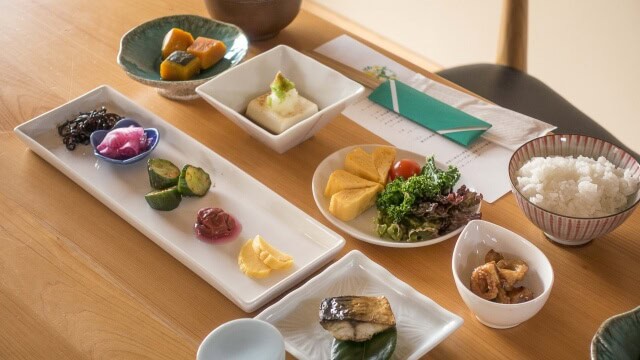
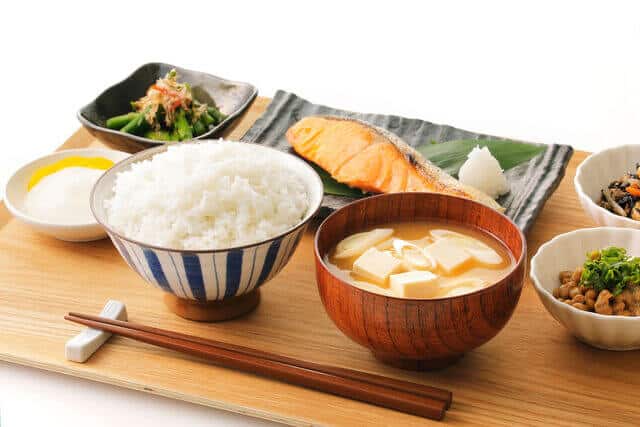
The structural principle of washoku is called ichiju-sansai, which means “one soup, three sides.” A standard washoku meal includes a bowl of steamed rice, one bowl of soup (typically miso soup), and three side dishes: one protein-based main and two vegetable-based accompaniments. Pickled vegetables (tsukemono) often accompany the meal as well.
This structure is not rigid. The number of sides can vary. But the underlying logic remains consistent: rice is the center, soup provides warmth and umami, and the side dishes offer nutritional variety from different food groups. The combination naturally produces a meal that is low in fat, rich in vegetables, and balanced in macronutrients. No single element dominates. The harmony of the whole is the point.
A practical example: a typical home washoku dinner might include steamed white rice, miso soup with tofu and wakame, grilled mackerel, simmered root vegetables, and pickled cucumber. Nothing elaborate. But nutritionally complete, visually varied, and seasonally appropriate.
The Four Core Characteristics of Washoku
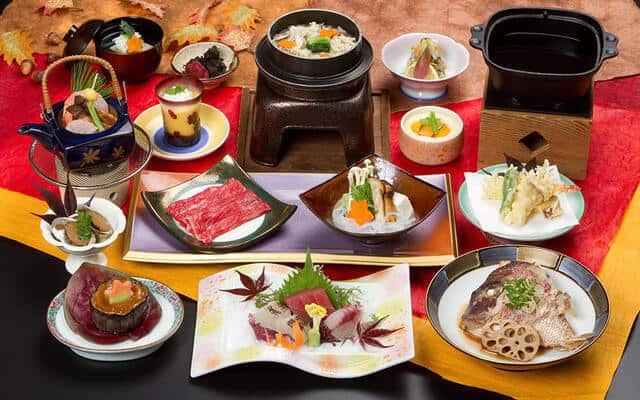
When UNESCO recognized washoku in 2013, the registration cited four specific characteristics. Understanding them helps clarify why washoku is considered a cultural heritage rather than just a cuisine.
1. Fresh, diverse, and seasonal ingredients
Japan’s geography produces an exceptional range of natural ingredients. Mountains, coastlines, rice paddies, and forests all contribute. The concept of “shun” refers to an ingredient at its seasonal peak: the precise window when flavor and nutritional value are highest. A washoku cook works within this calendar rather than against it. Spring brings bamboo shoots and young green vegetables. Summer offers cold tofu and chilled noodles. Autumn centers on mushrooms, chestnuts, and new-harvest rice. Winter calls for simmered root vegetables and hot pot dishes.
2. Nutritional balance that supports a healthy diet
The ichiju-sansai structure naturally produces a nutritionally varied meal. Fermented foods like miso, soy sauce, and pickles contribute probiotics and gut-friendly bacteria. Dashi, the foundational soup stock made from kombu and bonito, is low in calories but high in umami compounds including glutamates and inosinates. The overall diet is low in saturated fat, high in vegetables and fish, and moderate in portions. These structural qualities are why Japanese cuisine is often cited as a model for healthy eating in nutritional research.
3. Expression of natural beauty and the changing seasons
Washoku treats presentation as inseparable from flavor. The choice of bowl, the arrangement of ingredients, the garnish of a single herb or flower: all of these reflect the season and the occasion. Japanese sweets (wagashi) illustrate this most visibly, with each confection shaped after seasonal flowers, leaves, or natural motifs. The practice of expressing the season through food is called saijiki, a concept borrowed from haiku poetry. A dish should evoke the time of year as clearly as its flavor.
4. Deep connection to annual events and social bonds
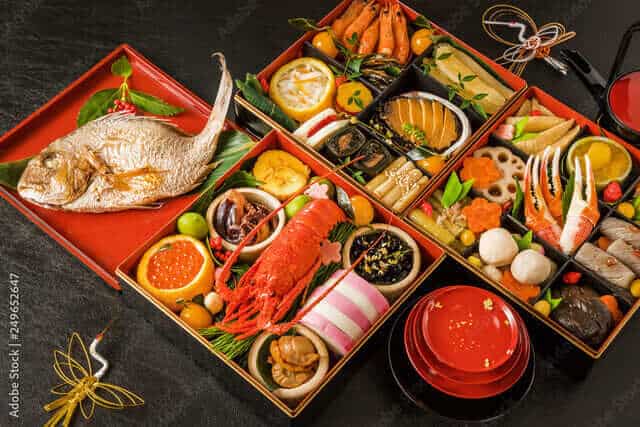
Washoku is inseparable from Japan’s annual cycle of festivals and ceremonies. New Year’s brings osechi, a carefully arranged lacquerware box of symbolic foods. Cherry blossom season calls for hanami dango. The summer solstice involves specific offerings. The autumn harvest is marked with moon-viewing sweets. These are not decorative customs. They are how communities reinforce shared values and give thanks for the natural abundance that sustains them. Food in washoku is a form of communication between people, between generations, and between humans and the natural world.
Washoku vs. Japanese Food: The Difference
The distinction matters and is often misunderstood outside Japan.
Washoku refers to traditional Japanese food culture: the practices, values, and dishes that developed over many centuries in Japan, centered on rice, fish, vegetables, soy, and fermented ingredients. Japanese food (nihon ryori or the broader term “Japanese cuisine”) is a wider category that includes everything people eat in Japan today, including ramen, Japanese-style curry, western-influenced yoshoku dishes, and fusion foods. These are not washoku but are absolutely Japanese food.
The terms shifted meaning over the twentieth century. “Japanese cuisine” originally referred to high-end restaurant cooking. “Washoku” emerged later as the more inclusive term covering both sophisticated kaiseki meals and everyday home cooking. Today, authoritative Japanese dictionaries tend to treat them as overlapping, but washoku carries the deeper cultural connotation and is the term used in the UNESCO registration.
Why is Washoku Considered Healthy?
The health reputation of washoku is grounded in structure rather than any single ingredient. Three elements account for most of it.
First, the diet is naturally low in saturated fat. Most protein comes from fish, tofu, and legumes rather than red meat. Cooking methods favor steaming, simmering, and grilling over frying. Second, fermented foods are central to daily eating. Miso, soy sauce, pickled vegetables, and natto all contain beneficial microorganisms and acids that support digestive health. Third, the ichiju-sansai structure produces portion control by default. Rice is filling and low-glycemic when paired with vegetables and protein. The meal is satisfying without being calorie-dense.
Japan has one of the world’s longest average life expectancies, and nutritionists have pointed to the traditional diet as a significant factor. That does not mean every Japanese meal is healthy. It means the structural principles of washoku, applied consistently, support long-term wellbeing in a way that is difficult to replicate by simply copying individual dishes.
A Brief History of Washoku
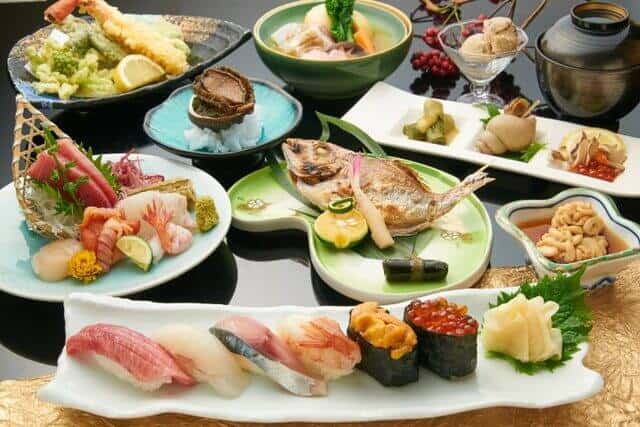
The story of washoku follows three broad stages.
Agricultural roots and rice culture
Rice cultivation arrived in Japan from the Asian continent and gradually became the foundation of Japanese food culture and social organization. The Shinto tradition connected food directly to the gods of nature. Ancient texts including the Kojiki and Nihonshoki contain references to food offerings and sacred meals. From early on, Japanese food culture was embedded in a relationship with the natural world rather than being purely practical.
Buddhist influence and the development of dashi
Emperor Tenmu issued a ban on meat eating in 675 AD, based on Buddhist principles. This decree effectively lasted for around 1,200 years until the Meiji period. The constraint pushed Japanese cooks to develop sophisticated plant-based and seafood-based flavor techniques. The use of kombu and bonito for dashi stock emerged from this period. Zen Buddhism, which arrived from China, contributed shojin ryori, a strict vegetarian temple cuisine that remains influential today. The Heian period saw Japan’s distinct food culture take recognizable shape.
Modernization and global recognition
The Meiji Restoration in the late nineteenth century ended the meat ban and introduced Western food culture to Japan. Yoshoku dishes, Western-influenced Japanese food, emerged during this period. Japanese food culture diversified significantly. But the traditional washoku framework persisted in home cooking, temples, and kaiseki restaurants. In December 2013, UNESCO formally inscribed washoku as an Intangible Cultural Heritage, recognizing it as a living cultural practice rather than a historical artifact.
UNESCO Recognition and Global Appeal
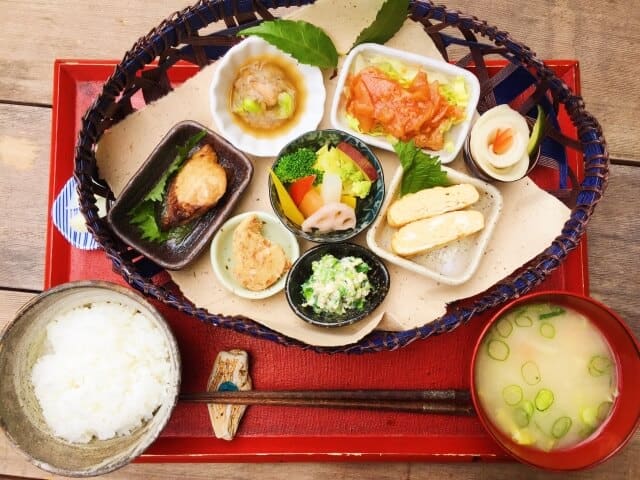
The 2013 UNESCO inscription brought international attention to what Japanese people had long taken for granted. The recognition was not for a specific dish. It was for the entire cultural system: the way ingredients are sourced, prepared, presented, and shared in Japan. The four characteristics described above were central to the application.
Internationally, Japanese restaurants have expanded in nearly every major city in the world. Sushi, ramen, and tempura are among the most recognized foods globally. The Michelin Guide awards more stars to Tokyo than to any other city. This global interest reflects a genuine appreciation for the precision, balance, and flavor philosophy that washoku embodies. The UNESCO inscription accelerated that awareness significantly.
Popular Washoku Dishes
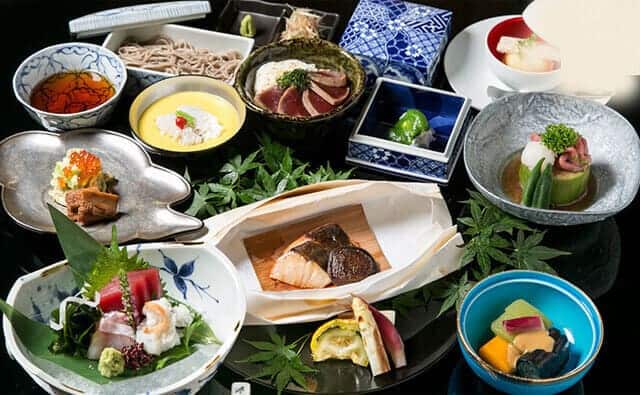
The following dishes represent washoku across different meal contexts and formats.
Sushi
Japan’s most internationally recognized dish. Sushi is rice seasoned with vinegar, topped or wrapped with seafood, vegetables, or egg. The ingredients change with the season, and the skill of the chef is expressed in the simplest presentations. Omakase sushi and conveyor belt restaurants represent opposite ends of the same tradition.
Tempura
Tempura is seafood and vegetables coated in a light batter and fried at high temperature. The technique requires the batter to be barely mixed and kept cold so it shatters rather than soaks. Served with tentsuyu dipping sauce and grated daikon. The choice of ingredients reflects the season: prawns and corn in summer, root vegetables and mushrooms in winter.
Miso Soup
The daily staple of washoku and the soup element in ichiju-sansai. Miso soup is made by dissolving fermented soybean paste into hot dashi stock, then adding tofu, wakame, or seasonal vegetables. Every household has its own preferred miso and ingredient combination. It is both a flavor and a comfort, associated with morning meals and coming home.
Karaage
Japanese fried chicken marinated in soy sauce, ginger, and sake, then coated in potato starch and deep fried. Crispy outside, juicy inside. A fixture at izakayas and in bento boxes. It represents the more casual, everyday face of Japanese home cooking within the washoku tradition.
Udon
Thick wheat noodles in a clear dashi-based broth, served hot or cold depending on season. Regional variations are significant: Sanuki udon from Kagawa is firmer and more chewy, while Osaka-style uses a sweeter, lighter broth. Udon demonstrates how a simple ingredient expresses regional character within the washoku tradition.
Saba no Shioyaki
Mackerel lightly salted and grilled over direct heat until the skin blisters and crisps. One of the clearest examples of the washoku principle of minimal intervention: only the fish and salt. Served with grated daikon, sliced lemon, and soy sauce on the side. A standard item in washoku teishoku set meals.
Recommended Washoku Restaurants in Tokyo
Wadakura (和田倉) — Kaiseki with a Palace View
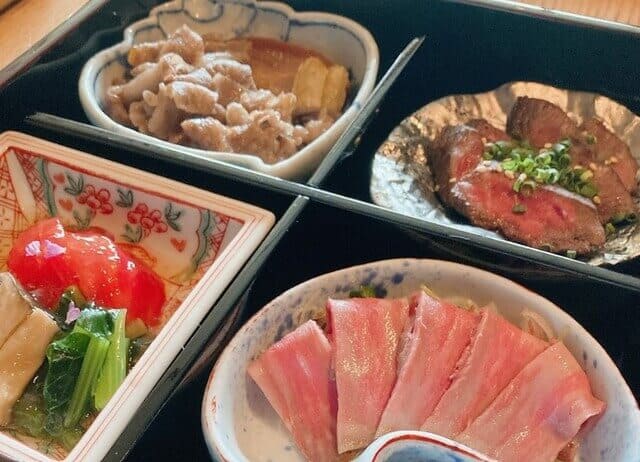
Wadakura has operated within the Palace Hotel Tokyo since the original hotel’s era and serves traditional kaiseki cuisine overlooking the Wadakura Moat. The setting, between the Imperial Palace grounds and central Tokyo, gives the meal a sense of occasion that is hard to replicate elsewhere. It is the right choice for experiencing washoku in a formal, ceremonial context.
Insho-tei (韻松亭) — Historic Bean-Centered Cuisine in Ueno
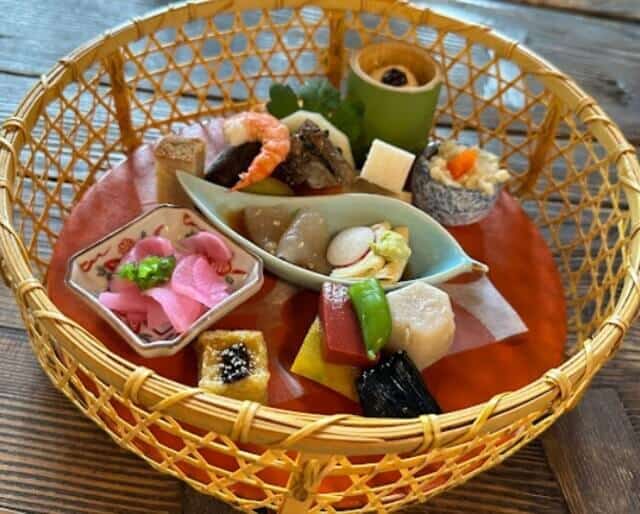
Founded in 1898, Insho-tei has been part of Ueno Park’s history for over a century. The restaurant specializes in legume-forward Japanese cooking, using seasonal beans and plant ingredients as the foundation of each menu. The cooking philosophy emphasizes the washoku principle of not wasting ingredients, using every part of each vegetable and bean in different preparations throughout the meal.
Tofutei / Tofu-tei (渡風亭) — Seasonal Japanese Cuisine in a Garden Hotel
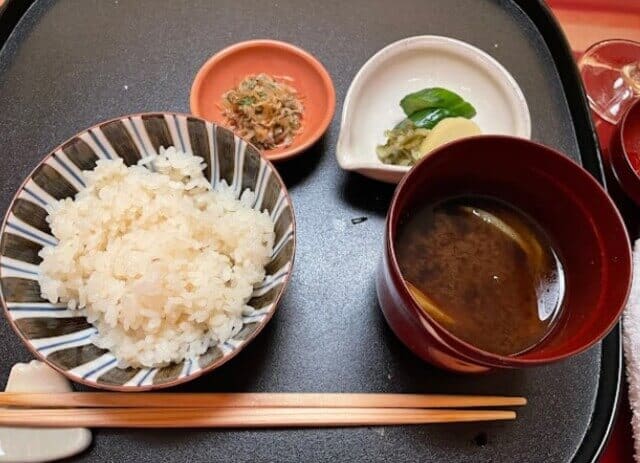
Located within Hotel Gajoen Tokyo in Meguro, this restaurant combines traditional Japanese technique with a modern sensibility. Private rooms preserve the quiet, considered atmosphere that washoku dining requires. Special celebration course menus use seasonal ingredients chosen for auspicious meaning as well as flavor, connecting the meal to the annual event cycle that is central to washoku values.
Final Thoughts
日本の伝統的な食文化 Japanese food culture is one of the most coherent and internally consistent culinary traditions in the world. 和食 Washoku is not a style that can be fully captured by trying any single dish. It is a way of thinking about food, time, nature, and community that expresses itself through thousands of specific practices. Eating a bowl of miso soup or grilled fish with rice on a cold morning is washoku. So is the kaiseki meal served across twelve courses in a Kyoto restaurant. The same values run through both.
If you want to explore specific washoku dishes in more depth, the guides on sushi, tempura, miso soup, and Japanese sweets each cover their subject thoroughly. For regional expressions of washoku, the Kansai and Kanto food guides are good starting points.
Explore the full range of Japanese cuisine on Food in Japan.
Washoku FAQ
What is washoku?
Washoku (和食) is Japan’s traditional food culture, recognized by UNESCO as an Intangible Cultural Heritage in 2013. It is not a single cuisine but a set of practices, values, and social customs surrounding food. Key elements include the use of fresh seasonal ingredients, the ichiju-sansai meal structure (rice, one soup, three sides), nutritional balance, and a deep connection to Japan’s annual festivals and ceremonies.
Why is washoku recognized as a UNESCO heritage?
UNESCO inscribed washoku in 2013 because it represents a living cultural practice that expresses Japanese values around nature, community, and the passing of seasons. The registration cited four characteristics: diverse fresh ingredients, nutritional balance, beautiful seasonal presentation, and close ties to Japan’s annual events and festivals. It was recognized as a cultural heritage because it shapes social behavior and human relationships, not merely because of the food itself.
What is ichiju-sansai?
Ichiju-sansai means “one soup, three sides.” It is the traditional structural principle of a washoku meal: a bowl of steamed rice at the center, one soup (usually miso soup), and three side dishes including a main protein and two vegetable-based accompaniments. The structure produces a naturally balanced meal without requiring deliberate nutritional planning.
Is sushi considered washoku?
Yes. Sushi is one of the most representative washoku dishes internationally. It uses vinegared rice and seasonal seafood, embodies the washoku principles of fresh ingredients, minimal seasoning, and seasonal variation. Omakase sushi at a specialist restaurant represents the formal end of the washoku tradition. Conveyor belt sushi is the casual, everyday version of the same cultural practice.
What is the difference between washoku and Japanese food?
Washoku refers specifically to traditional Japanese food culture, centered on rice, fish, soy, and fermented ingredients, tied to seasonal and ceremonial practices. Japanese food is a broader category that includes everything people eat in Japan today, including ramen, curry rice, and Western-influenced dishes (yoshoku). These are Japanese foods but are not washoku.
Why is washoku considered healthy?
The health qualities of washoku come from its structure. The ichiju-sansai format naturally limits portion size and produces nutritional variety. Most protein comes from fish and legumes rather than red meat. Fermented foods like miso and pickles support gut health. Cooking methods favor steaming, simmering, and grilling. The overall diet is low in saturated fat, rich in vegetables, and moderate in calories.
What are examples of washoku dishes?
Classic examples include sushi, tempura, miso soup, grilled fish (such as saba no shioyaki), simmered vegetables (nimono), rice with pickles (tsukemono), and soba or udon noodles in dashi broth. At the more formal end, kaiseki ryori is the full expression of washoku principles across a multi-course meal. At home, a simple ichiju-sansai set meal is equally valid washoku.
Is washoku vegetarian or vegan?
Traditional washoku is not vegetarian, as it commonly uses fish-based dashi stock, seafood, and sometimes egg. However, shojin ryori, the strict vegetarian temple cuisine that influenced washoku’s development during Japan’s Buddhist period, is fully plant-based. Dedicated shojin ryori restaurants and Buddhist temples throughout Japan serve it. Vegans and vegetarians can also find washoku-style meals at restaurants that specify plant-based dashi.
What is umami and how does it relate to washoku?
Umami is the fifth basic taste, alongside sweet, sour, salty, and bitter. It was first identified by Japanese chemist Kikunae Ikeda in 1908 through his study of kombu seaweed. Umami compounds, including glutamates, inosinates, and guanylates, appear naturally in many washoku ingredients: kombu, bonito, miso, soy sauce, shiitake mushrooms, and aged fish products. Dashi stock is essentially a pure delivery system for umami. The distinctive flavor depth of washoku cooking is largely built on this foundation.
References
- Food in Japan — Japan Food Guide
- UNESCO — Intangible Cultural Heritage: Traditional dietary cultures of the Japanese, called “Washoku” (2013)
- Wadakura — palacehoteltokyo.com/restaurant/wadakura
- Insho-tei — innsyoutei.jp
- Tofutei / Tofu-tei — hotelgajoen-tokyo.com/restaurant/shop/tofutei



Comments