Japan’s summer is no joke. The heat rolls in around late June and rarely lets go until September. In cities like Tokyo and Osaka, temperatures often climb past 35°C. Add heavy humidity on top of that, and eating feels like a whole different challenge.
Japanese summer food (夏の日本の食べ物, natsu no Nihon no tabemono) is the cultural response to all of that. It’s cold, it’s light, and it’s smarter than it looks. These dishes reflect centuries of learning how to stay cool, energized, and healthy through some truly brutal heat.
This guide covers the full picture. You’ll find classic seasonal dishes, real daily eating habits, summer drinks, festival street food, regional specialties, and tips for travelers. Whether you’re curious about Japanese summer cuisine or planning a trip, this is your starting point.
TOC
Why Japanese Summer Food Exists: The Natsubate Culture
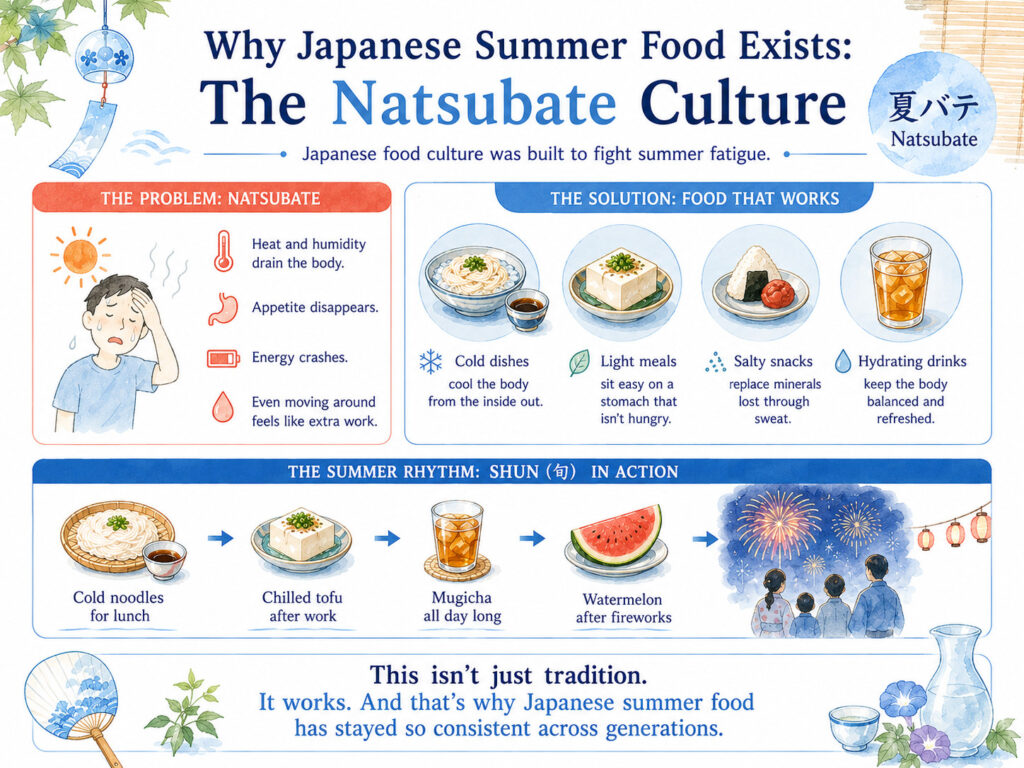
There’s a Japanese word that explains everything: natsubate (夏バテ). It means summer fatigue. The heat and humidity drain the body quickly. Appetite disappears. Energy crashes. Even moving around feels like extra work.
Japanese food culture developed over centuries to fight natsubate directly. Cold dishes cool the body from the inside out. Light meals sit easy on a stomach that isn’t hungry. Salty snacks and hydrating drinks replace minerals lost through sweat.
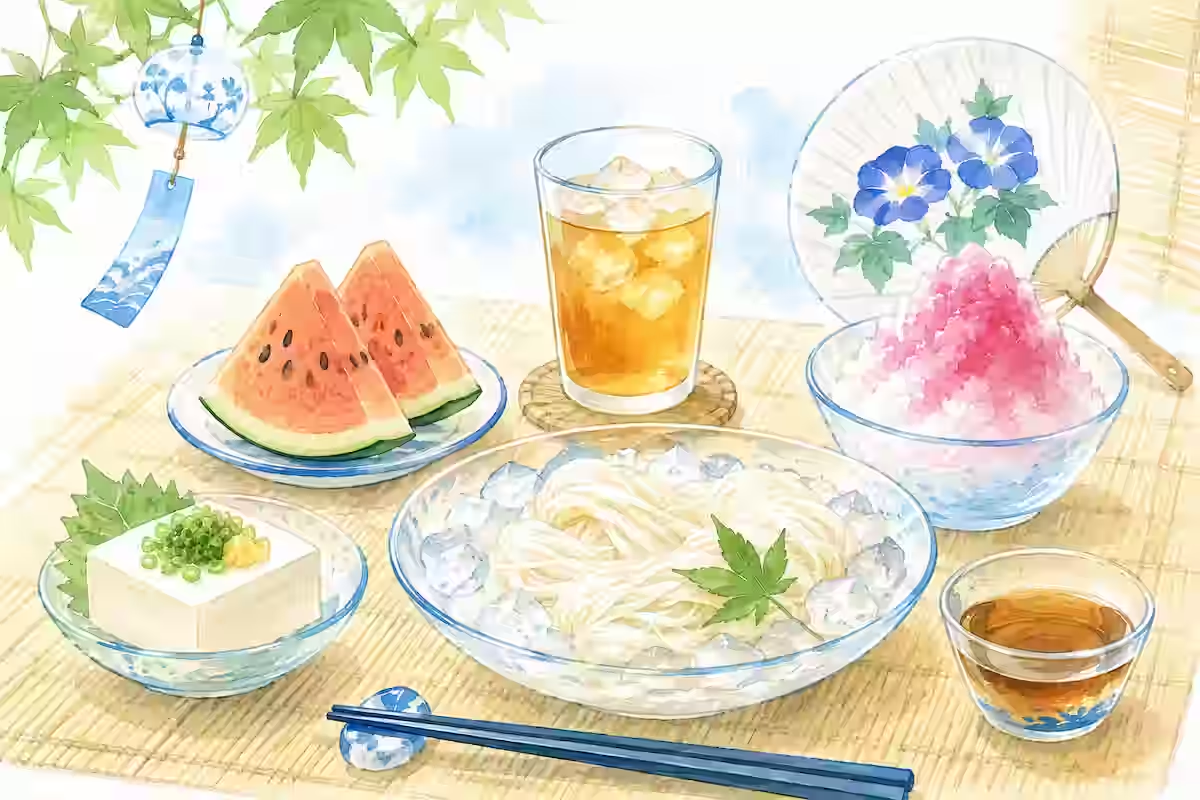
Seasonal eating is taken seriously in Japan. The idea of shun (旬), eating food at its peak season, shapes how people cook and shop throughout the year. Summer brings its own rhythm: cold noodles for lunch, chilled tofu after work, mugicha all day long, watermelon after fireworks at night.
This isn’t just tradition for tradition’s sake. It works. And that’s why Japanese summer food has stayed so consistent across generations.
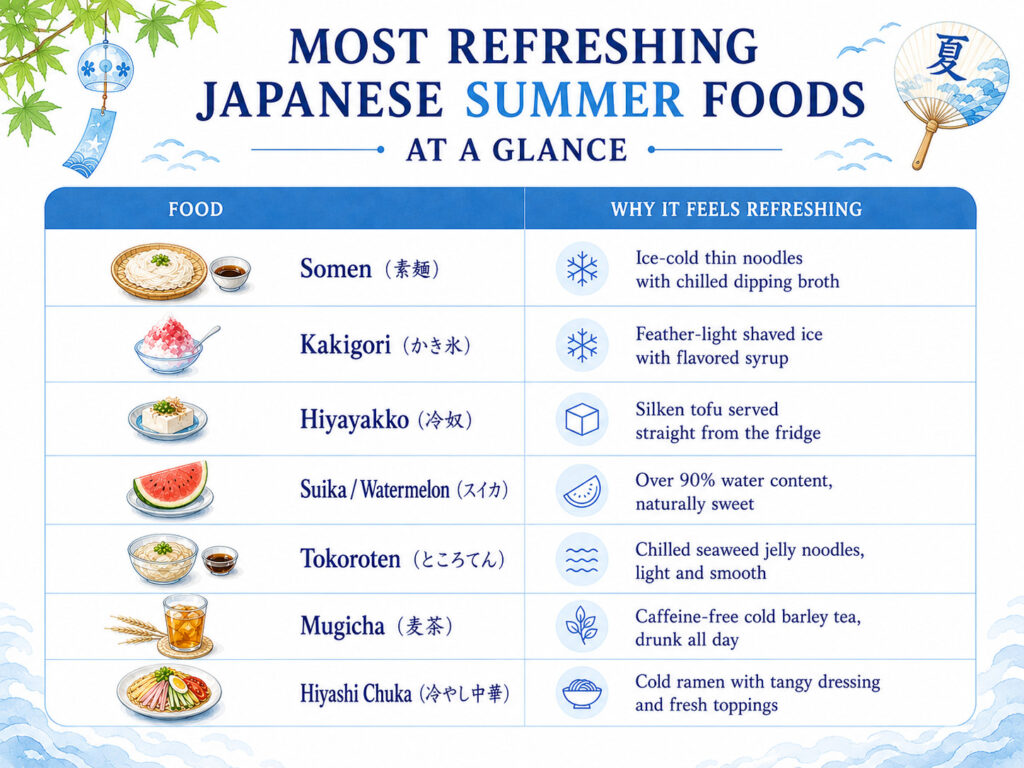
Most Refreshing Japanese Summer Foods at a Glance
Before going deeper, here’s a quick overview of the most cooling and refreshing summer dishes in Japan.
Food
Why It Feels Refreshing
Somen (素麺)
Ice-cold thin noodles with chilled dipping broth
Kakigori (かき氷)
Feather-light shaved ice with flavored syrup
Hiyayakko (冷奴)
Silken tofu served straight from the fridge
Suika / Watermelon (スイカ)
Over 90% water content, naturally sweet
Tokoroten (ところてん)
Chilled seaweed jelly noodles, light and smooth
Mugicha (麦茶)
Caffeine-free cold barley tea, drunk all day
Hiyashi Chuka (冷やし中華)
Cold ramen with tangy dressing and fresh toppings
Cold Noodles in Japan: The Heart of Summer Eating
Ask someone what they eat most in Japanese summer, and cold noodles come up every time. They’re quick to make, easy on the stomach, and genuinely satisfying even when you’re not very hungry. Japan has several distinct cold noodle dishes, each with its own character.
Somen (素麺): Classic Japanese Summer Noodles
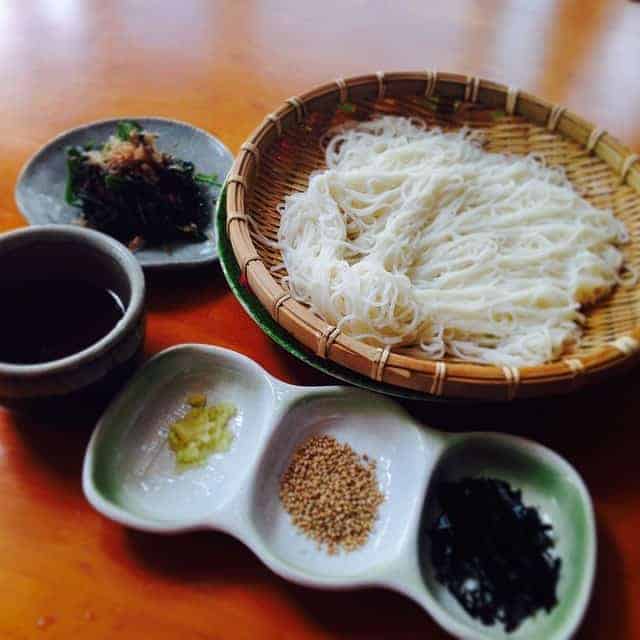
Somen are ultra-thin white wheat noodles. They cook in under two minutes and chill instantly in ice water. You eat them cold, dipping each bundle into a glass of chilled tsuyu broth. A little grated ginger, sliced green onion, and myoga ginger blossom go on the side.
The whole dish comes together in ten minutes. That’s part of why it’s so popular. On a sweltering afternoon, nobody wants to stand over a hot stove for long.
One summer tradition worth knowing is nagashi somen. Noodles flow down a split bamboo chute filled with cold water. You catch them with chopsticks as they float past. It sounds wild. It’s actually one of those food experiences that stays with you.
Hiyashi Chuka (冷やし中華): Cold Ramen with a Summer Twist
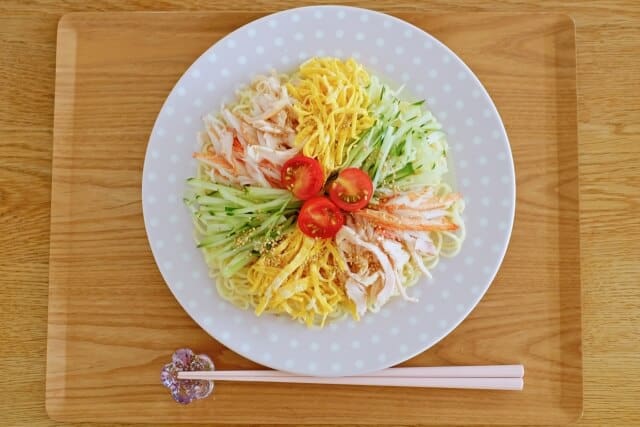
Hiyashi chuka is cold ramen, and it’s one of the most visually striking dishes of the Japanese summer. Chilled wheat noodles sit beneath a spread of colorful toppings: sliced ham, julienned cucumber, egg crepe strips, crab stick, and tomato. A tangy sesame or soy-vinegar dressing pulls everything together.
Restaurants put up a specific sign in summer: “hiyashi chuka hajimemashita” (We’ve started serving hiyashi chuka). Spotting that sign is one of those small seasonal signals that summer has properly arrived. The dish disappears from menus when the heat ends.
Hiyashi Ramen and Reimen: Regional Cold Noodle Styles
Cold noodle culture goes deeper than somen and hiyashi chuka. Hiyashi ramen from Yamagata Prefecture features chilled ramen broth served with ice. It’s a unique local tradition with a surprisingly long history. Meanwhile, Morioka reimen in Iwate Prefecture offers chewy noodles in cold, lightly spicy beef broth with kimchi and cucumber. Both are must-tries for cold noodle fans.
Why Japanese People Eat Unagi in Summer
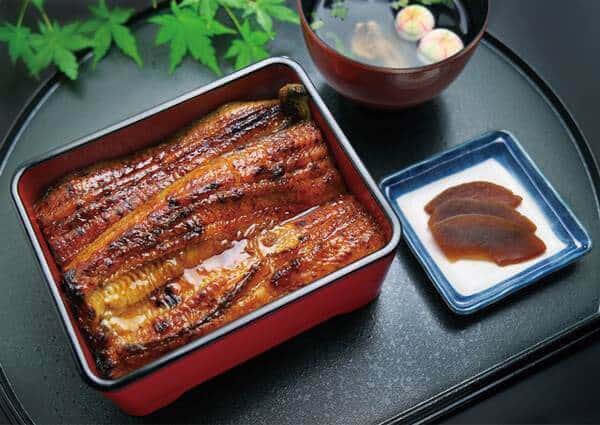
Unajyu: grilled eel over rice
Unagi (鰻, freshwater eel) is Japan’s most famous summer stamina food. But the question worth asking is: why eel, and why specifically in summer?
The tradition centers on Doyo no Ushi no Hi, the Day of the Ox in midsummer. It usually falls in late July. Eating unagi on that day is said to prevent summer fatigue and restore energy for the rest of the season.
The origin story is surprisingly commercial. A merchant named Hiraga Gennai reportedly wrote an advertising slogan for an eel restaurant struggling in the summer slowdown during the Edo period. The idea caught on. It spread across the country and became a tradition that’s lasted over 200 years.
That said, there’s something real behind the folk belief. Eel is rich in protein and vitamins A, B1, and E. These nutrients genuinely help the body recover energy during hot weather. Whether or not you believe the legend, the dish itself is extraordinary. Grilled over charcoal and glazed with sweet tare sauce, unajyu (eel over rice in a lacquer box) is one of Japan’s great seasonal dishes.
Prices spike around Doyo no Ushi no Hi. Booking a table at a good unagi restaurant a week or two ahead is wise if you’re visiting in late July.
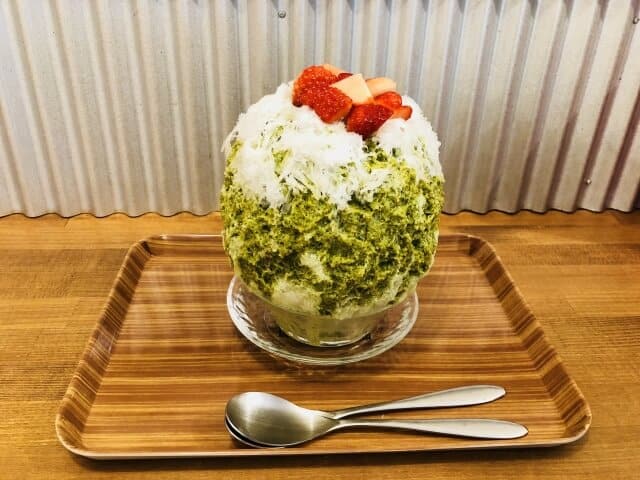
Kakigori is shaved ice. That description undersells it significantly. Good kakigori uses a specialized machine that shaves ice into feather-light, snow-soft layers. The texture melts on your tongue rather than crunching. That’s what separates quality kakigori from ordinary crushed ice.
Syrups come in strawberry, lemon, matcha, blue Hawaii, and many more. High-end kakigori shops layer condensed milk, azuki beans, mochi, and fresh fruit into towering, Instagram-worthy creations. Even the simple convenience store version hits the spot on a hot afternoon.
Festival stalls sell paper cups of kakigori for a few hundred yen. Specialist cafes charge much more for artisanal versions. Both have their place in the summer experience.
Hiyayakko is chilled silken tofu. Pull a block from the fridge and slide it into a bowl. Add grated ginger, bonito flakes, and a splash of soy sauce. That’s it. Thirty seconds, start to finish.
After a hot commute home, this is often the first thing people reach for. It’s light, cooling, and has enough protein to tide you over. Many izakayas list it as a standard summer appetizer. It’s one of those dishes that works precisely because it asks so little of you.
Tokoroten (ところてん): An Ancient Summer Treat
Tokoroten is made from tengusa, a type of red algae. The seaweed sets into a firm jelly, then gets pushed through a wooden press into thin noodle-like strands. Served cold with a soy-vinegar dressing, it has a unique slippery texture and almost no calories.
The dish traces back to the Heian period, over a thousand years ago. It’s not the flashiest summer food, but it has a quiet following among people who want something cool and almost weightless.
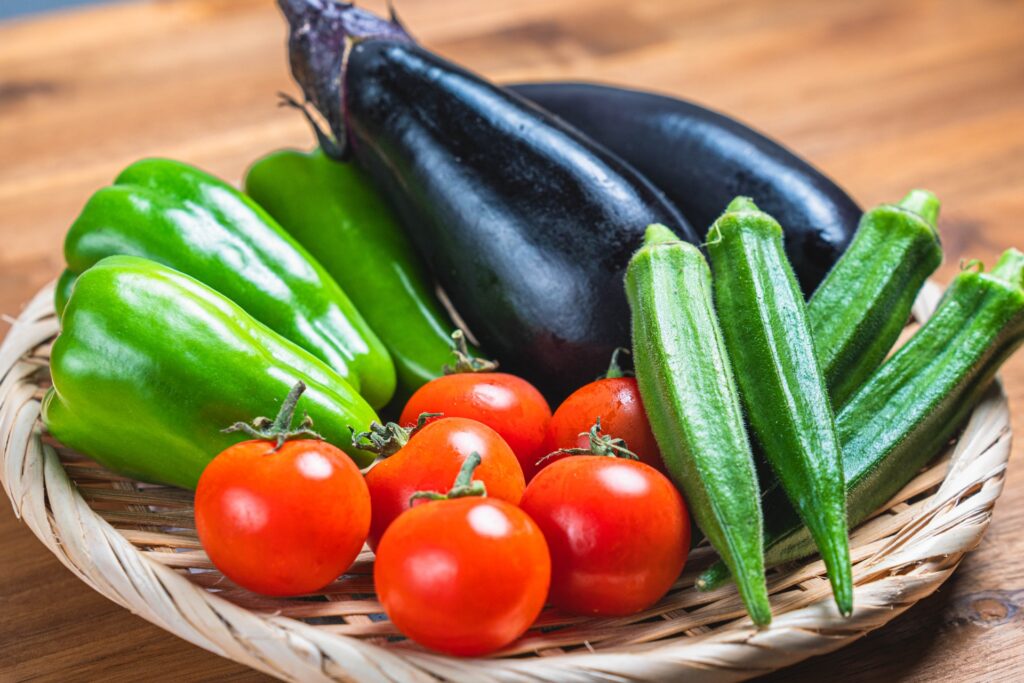
Japan’s summer produce is genuinely exceptional. Markets and supermarkets fill up with natsu yasai (夏野菜), summer vegetables, from late June onward. Cucumbers, tomatoes, eggplant, okra, bitter melon, and corn all hit their seasonal peak in July and August.
Cucumbers show up constantly. Eaten raw with miso paste as a snack, sliced into salads, or chilled in vinegar dressing, they’re a staple of the season. Eggplant goes into miso soup, grilled dishes, and chilled marinated preparations. Okra appears in cold salads and as a topping for chilled soba.
Suika (スイカ, watermelon) is the defining summer fruit. Eating cold watermelon after an evening fireworks show is a ritual that most Japanese people grew up with. Slicing open a chilled watermelon on a hot afternoon feels like a small event. Its water content exceeds 90%, making it one of the most hydrating foods of the season.
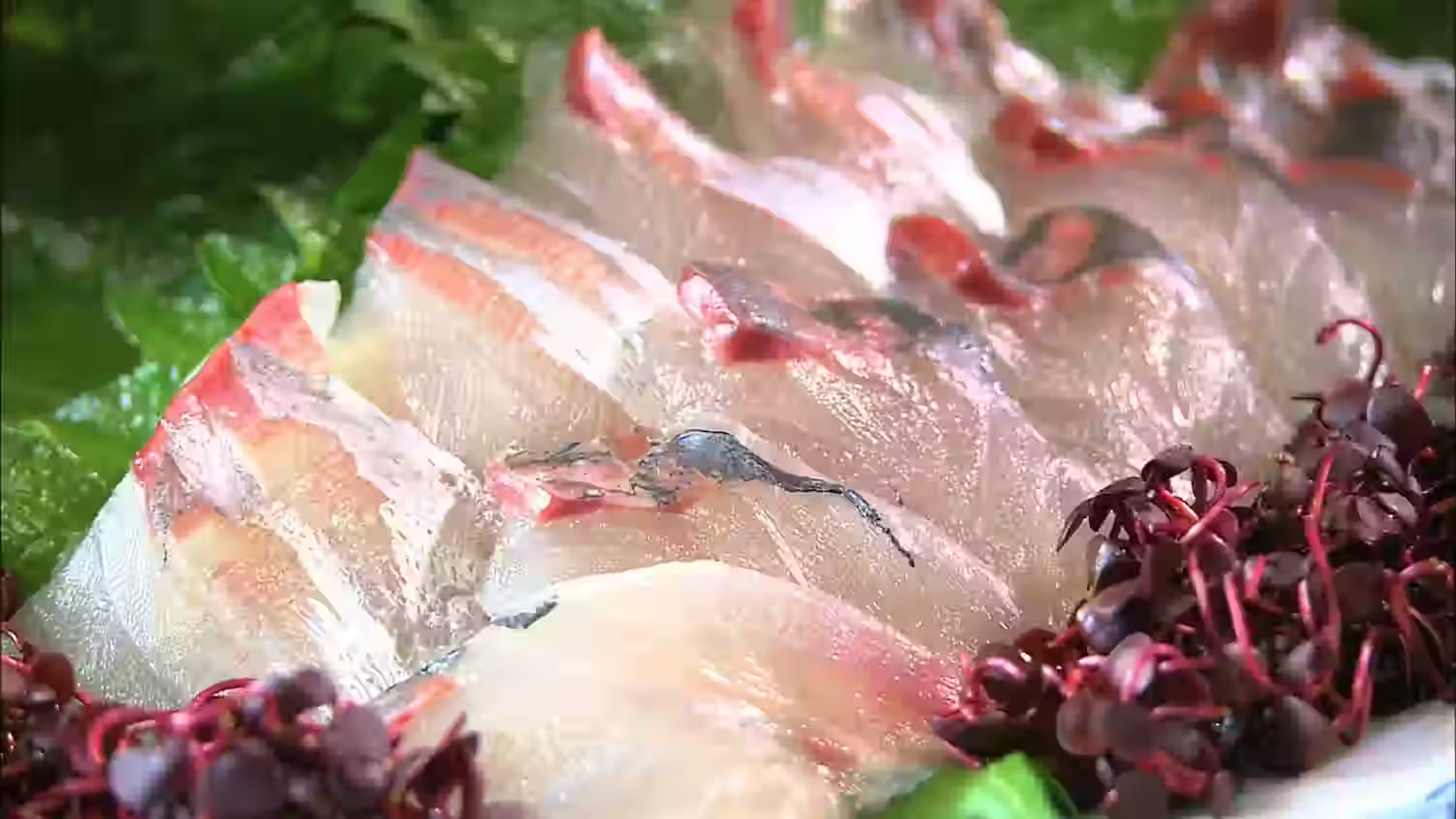
Ayu (鮎, sweetfish) is a highly seasonal river fish that appears in summer. Locals grill it whole with coarse salt, a preparation called shioyaki. The fish has a faint, watermelon-like aroma when fresh, a detail that surprises most people who try it for the first time. Learn more about ayu on Food in Japan.
Edamame (枝豆) are the default summer snack. Boiled soybeans in the pod, salted, eaten with cold beer or mugicha. They appear at beer gardens, izakayas, convenience stores, and home tables across Japan from June to August. Learn more about edamame on Food in Japan.
What Japanese People Actually Eat During Summer
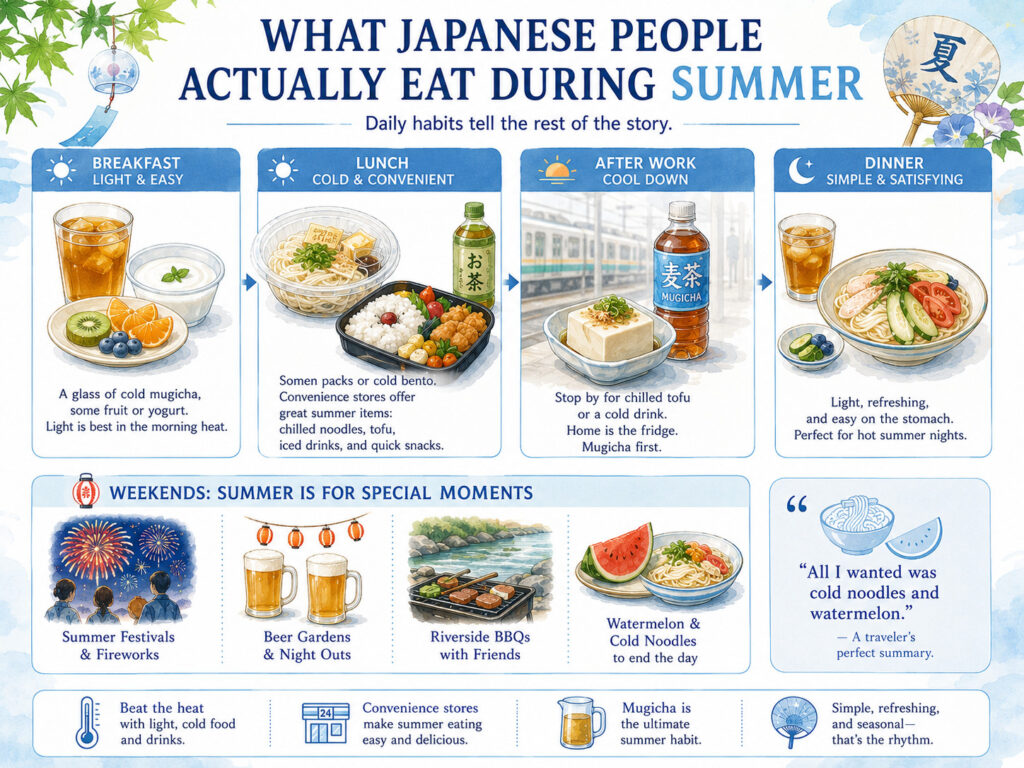
Menus and recipes tell part of the story. Daily habits tell the rest. Summer eating in Japan has a very specific rhythm, and it looks different from the rest of the year.
Breakfast is light. Appetite just isn’t there in the morning heat. A glass of cold mugicha, maybe some fruit or yogurt, and that’s usually enough. Nobody reaches for a heavy breakfast when the day already feels warm before 8 AM.
Lunch might be a convenience store somen pack or a cold bento box. Konbini (convenience stores) stock excellent summer-specific items from June onward: chilled noodle kits, cold tofu, iced drinks, and quick-eat snacks. The cold section expands noticeably when summer hits.
After work, many people stop at the convenience store for chilled tofu or grab a cold drink on the platform. Coming home means heading straight to the fridge. Mugicha first, then figure out dinner from there.
Weekends have their own pattern. Beer gardens, summer festivals, riverside barbecues, and neighborhood matsuri fill the calendar. Fireworks end the evening, followed by watermelon or cold noodles at someone’s house.
Travelers often describe this perfectly. “All I wanted was cold noodles and watermelon,” one visitor wrote online. That’s not a simplified take on Japan’s summer food. That’s basically correct.
Japanese Summer Drinks: Beyond Water
Staying hydrated in Japan’s summer is serious business. Heat, humidity, and constant sweating drain fluid and electrolytes fast. Japanese drink culture has specific answers for this.
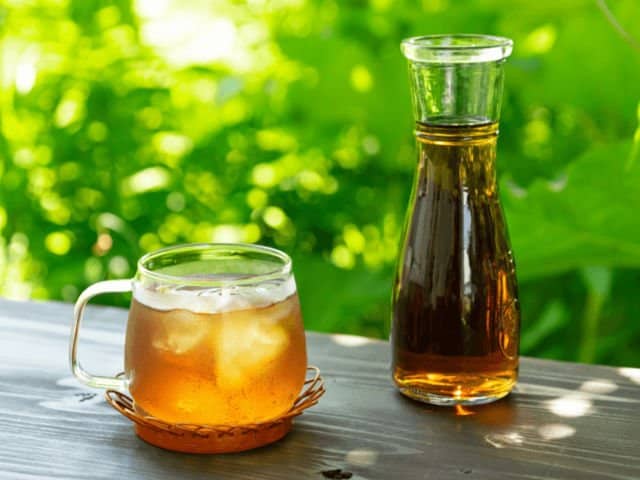
Mugicha (麦茶) is the household staple. Roasted barley tea, brewed cold and drunk throughout the day. No caffeine. No sugar. Just a gentle, nutty flavor that cools the body without spiking energy. Almost every Japanese household keeps a full pitcher in the fridge from May to September. Children drink it. Grandparents drink it. It’s the universal summer drink.
Ramune (ラムネ) is the festival drink. The glass bottle sealed with a marble is as much a part of the experience as the lemon-lime flavor inside. Pressing the marble into the bottle neck is a small ritual that Japanese people of all ages remember from childhood. Foreigners love discovering it.
Pocari Sweat and Aquarius are the practical summer drinks. These electrolyte beverages replace sodium and potassium lost through sweating. You’ll see people drinking them on trains, at construction sites, during outdoor events, and after sports. The category sells massively from June through September.
Calpis (カルピス) is a sweet, milky concentrate mixed with cold water or soda. The flavor is lightly tangy and cooling in a way that’s hard to describe precisely until you try it. Calpis soda is a common summer vending machine find.
Chu-hi (チューハイ, canned cocktails) appear at beer gardens and summer parties. Light, fizzy, and low in alcohol, they’re popular with people who find beer too heavy in the heat.
Summer Festival Food in Japan: The Yatai Experience
Japan’s summer festivals (matsuri) run from July through August across the entire country. Fireworks, bon odori dancing, and traditional games are the main draw. But the food is what many visitors remember most.
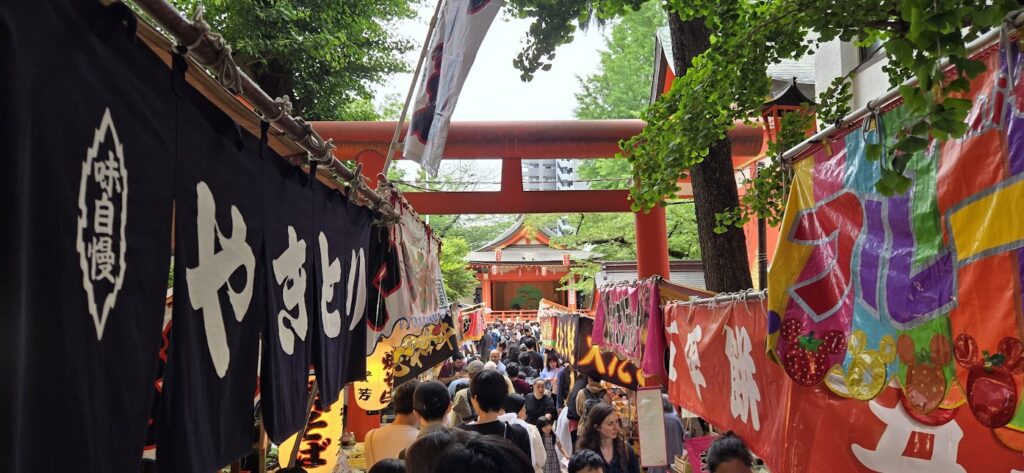
Yatai are the food stalls that line festival grounds. They glow with paper lanterns and hum with noise. The smell of grilling meat and sweet syrup fills the night air. Each stall specializes in something different, and the variety is genuinely impressive.
Here’s what you’ll find at almost every Japanese summer festival:
Yakisoba: stir-fried wheat noodles with pork, cabbage, and a sweet-savory Worcester-style sauce. One of the most popular festival staples across Japan.
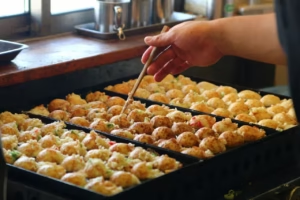
Takoyaki: round octopus dumplings, crispy on the outside and soft inside, topped with sauce, mayo, and dancing bonito flakes. Learn more about takoyaki here.
Kakigori: shaved ice in a cup, eaten fast before it melts. Blue Hawaii, strawberry, and matcha are perennial favorites.
Ikayaki: whole grilled squid on a skewer, brushed repeatedly with soy sauce over the flame. The smell alone draws a crowd.
Corn on the cob (yaki tomorokoshi): grilled or boiled corn, brushed with butter or soy-butter glaze. Hokkaido corn in summer is exceptional.
Ringo ame: candied apples coated in bright red hard sugar. Visually striking and satisfying to bite through.
Baby castella: small, round sponge cakes made to order at the stall. Warm, soft, and slightly sweet.
Ramune: the marble bottle drink that children always want and adults can’t help reaching for too.
Festival food isn’t elegant. It’s messy, handheld, and eaten while walking in a yukata under strings of lantern light. That combination is exactly what makes it so memorable.
Regional Summer Foods in Japan
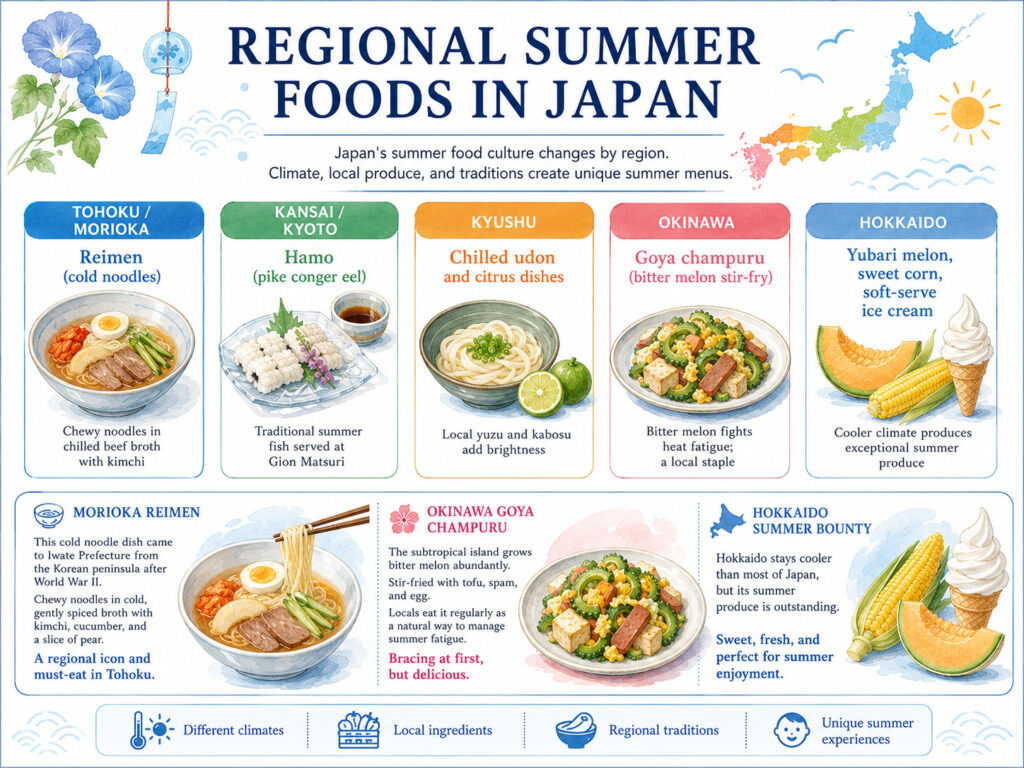
Japan’s summer food culture changes significantly by region. The climate, local produce, and food traditions create distinct summer menus across the country. Here’s a broad overview:
Cooler climate produces exceptional summer produce
Morioka reimen deserves its own moment. This cold noodle dish came to Iwate Prefecture from the Korean peninsula after World War II. Chewy noodles made from cornstarch sit in a cold, gently spiced broth with kimchi, cucumber, and a slice of pear. It’s become a regional icon and a must-eat if you visit Tohoku in summer.
Okinawa handles summer heat differently from anywhere else in Japan. The subtropical island grows bitter melon (goya) abundantly. Goya champuru is a stir-fry of bitter melon, tofu, spam, and egg. Locals eat it regularly as a natural way to manage summer fatigue. The flavor is bracing at first, but it grows on you. Explore Okinawa food here.
Hokkaido stays cooler than most of Japan, but its summer produce is world-class. Yubari melon sells for extraordinary prices as a gift fruit. Sweet corn from Hokkaido farms is considered the best in the country. The lavender soft-serve in Furano has become a tourist icon in its own right.
Best Summer Foods to Try in Japan as a Visitor
Visiting Japan in summer? Don’t let the heat put you off. The food culture at its peak season makes the trip worth every degree of warmth.
Start at a convenience store. 7-Eleven, Lawson, and FamilyMart are all excellent in summer. Cold somen kits, hiyayakko packs, mugicha, and chilled onigiri cost very little and taste surprisingly good. This is how many Japanese people actually eat on busy summer weekdays.
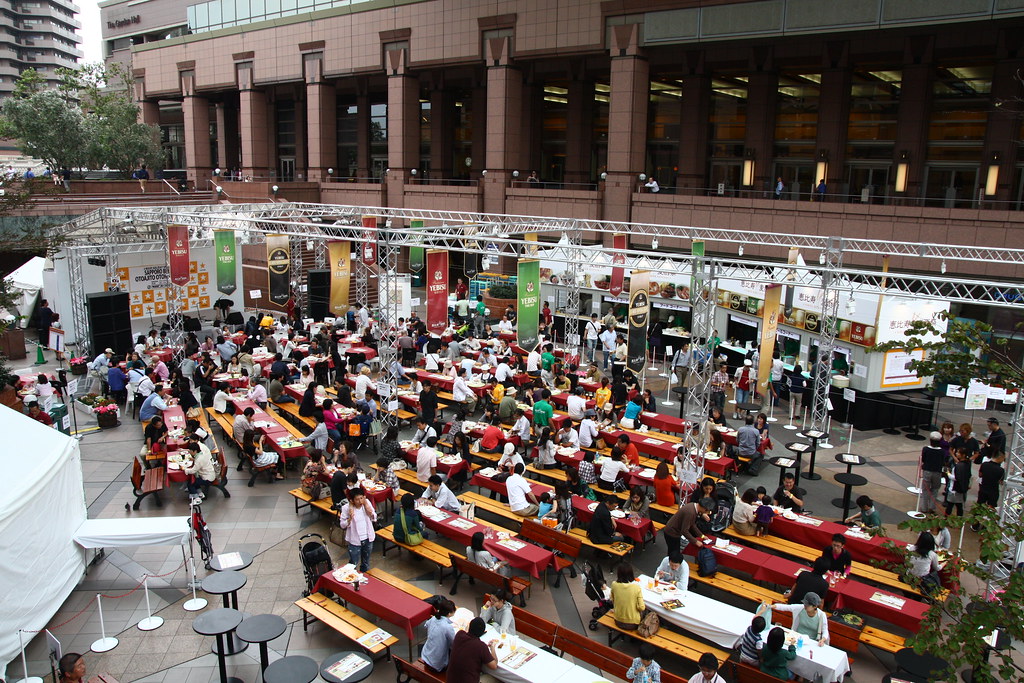
Visit a beer garden. Department store rooftops across Japan transform into outdoor dining spaces from June to August. Cold beer, grilled meats, edamame, and a breeze above the city streets make for a perfect summer evening. Booking ahead is smart, especially on weekends.
Explore depachika. The basement food halls of Japanese department stores stock exceptional ready-to-eat summer food. Chilled somen, hiyayakko, seasonal vegetable dishes, and summer sweets are all there. No cooking required.
Find a local festival. Local tourist offices and hotel concierge desks can point you toward summer matsuri in the area. Even small neighborhood festivals have good yatai food. Major festivals like the Sumidagawa Fireworks in Tokyo or Awa Odori in Tokushima attract thousands of food stalls.
Try something specific to the season. Freshly grilled ayu by a riverside. Artisanal kakigori with house-made syrup. Tokoroten from a specialist shop. These are foods you can’t easily replicate at home, and they’re deeply tied to the Japanese summer experience. For broader seasonal food guidance, check the Japan food guide.
Japanese Summer Food FAQ
What do Japanese people eat in summer?
Families regularly prepare cold noodles like somen and hiyashi chuka as daily household staples. Diners constantly enjoy chilled tofu, edamame, and fresh seasonal vegetables to beat the heat. Festival vendors cook hot yakisoba and takoyaki alongside refreshing shaved ice treats. People also consume massive amounts of juicy watermelon and cold barley tea throughout the season.
What is natsubate?
This term translates directly to summer fatigue in English. Japan’s intense heat and extreme humidity force the body to lose vital fluids and electrolytes rapidly. Consequently, people experience sudden appetite loss, vanishing energy, and severe physical exhaustion. Local chefs developed the country’s hot-weather culinary culture specifically to help citizens prevent and recover from this draining condition.
Why do people eat unagi in summer in Japan?
Citizens strongly link this dining tradition to the Day of the Ox in late July. A clever Edo-period merchant popularized the idea that eating this premium freshwater eel effectively prevents summer fatigue. The ingredient’s exceptionally high protein and rich vitamin content actually support this historic health claim. Families across the country still enthusiastically maintain this stamina-boosting practice centuries later.
What is the most popular summer food in Japan?
Thin wheat noodles easily claim the top spot as the most frequently prepared household meal during July and August. Shaved ice dominates the dessert category as the ultimate iconic sweet treat. Meanwhile, sizzling yakisoba and octopus balls consistently rule the outdoor festival menus. Almost everyone grabs fresh watermelon slices and cold barley tea to survive the sweltering heat daily.
What drinks do people enjoy during Japanese summers?
Cold barley tea serves as the absolute household standard for daily hydration. Festival crowds enthusiastically drink classic carbonated sodas from traditional glass bottles sealed with marbles. Athletes and commuters rely heavily on sports drinks to quickly replace lost electrolytes. Adults also frequently crack open canned fruit cocktails at lively outdoor beer gardens and rooftop parties.
What food do vendors sell at Japanese summer festivals?
Food stall owners proudly cook savory noodles, octopus balls, and smoky grilled squid over hot iron plates. Sweet shops offer colorful shaved ice, candied apples, and fluffy bite-sized sponge cakes. The specific menu changes slightly depending on the local region. However, you will find these classic street snacks at nearly every vibrant neighborhood celebration nationwide.
Do Japanese summer foods help with hydration?
Yes, local chefs design many seasonal dishes specifically to replenish bodily fluids. Fresh watermelon provides an incredible natural water content exceeding ninety percent. Traditional cold barley tea hydrates diners perfectly without adding any unwanted caffeine or sugar. The entire culinary culture takes the vital connection between daily meals and hot-weather survival extremely seriously.
What is Nagashi Somen?
It represents a highly entertaining dining experience unique to the hot season. Diners catch cold, thin wheat noodles with their chopsticks as the strands slide rapidly down a long bamboo water flume. Families and friends enjoy this fun, interactive activity together to stay cool. The flowing ice-cold water keeps the meal incredibly refreshing from start to finish.
What is Hiyayakko?
It is a simple, chilled tofu dish that appears on almost every dinner table from June to September. Home cooks top a block of cold silken tofu with freshly grated ginger, green onions, and dried bonito flakes. Diners simply pour a little soy sauce over the block before eating it. This minimalist recipe provides excellent plant-based protein without heating up the kitchen.
What is Tokoroten?
It is a traditional chilled jelly snack offering excellent heat relief. Dessert makers extract this clear, firm gelatin from red algae seaweeds. Diners in the Kanto region dress it with a savory mix of vinegar and soy sauce, while Kansai residents prefer a sweet black syrup. The slippery texture slides down the throat effortlessly on sweltering afternoons.
Why do people eat Ayu (Sweetfish) in summer?
Locals eagerly anticipate the official opening of the river fishing season in early June. Fishermen catch these delicate freshwater fish using traditional techniques in pristine mountain streams. Chefs simply salt the whole fish and grill them slowly over hot charcoal to perfection. The tender white meat delivers a subtle, sweet aroma reminiscent of fresh melon or cucumber.
What is Rei-shabu?
It is a chilled pork salad that perfectly replaces heavy winter hot pots. Cooks briefly boil thin pork slices, chill them rapidly in ice water, and serve them over crisp seasonal vegetables. Diners dress the refreshing salad generously with sesame sauce or a citrus soy dressing. The chilled meat supplies essential stamina without making the eater sweat profusely.
Ministry of Agriculture, Forestry and Fisheries (MAFF): Seasonal Japanese Food Culture and Shun ingredients (2023) — https://www.maff.go.jp/e/index.html
Unagi Research Foundation Japan: Doyo no Ushi no Hi historical background (2022) — https://www.unagi.or.jp
Ryo Iwa is the founder and editor of foodinjapan.org. Born and raised in Japan, he writes from regional travel, market visits, and Japanese-language primary sources that rarely reach English readers, including brewing institute publications and industry glossaries. Where a figure cannot be traced to a source, the article says so.
He has been a Google Maps Local Guide for over 10 years, with more than 1,800 reviews and over 41,000 photos viewed hundreds of millions of times. He previously spent two decades as an IT consultant in Japan, the US, and the UK.


















Comments