



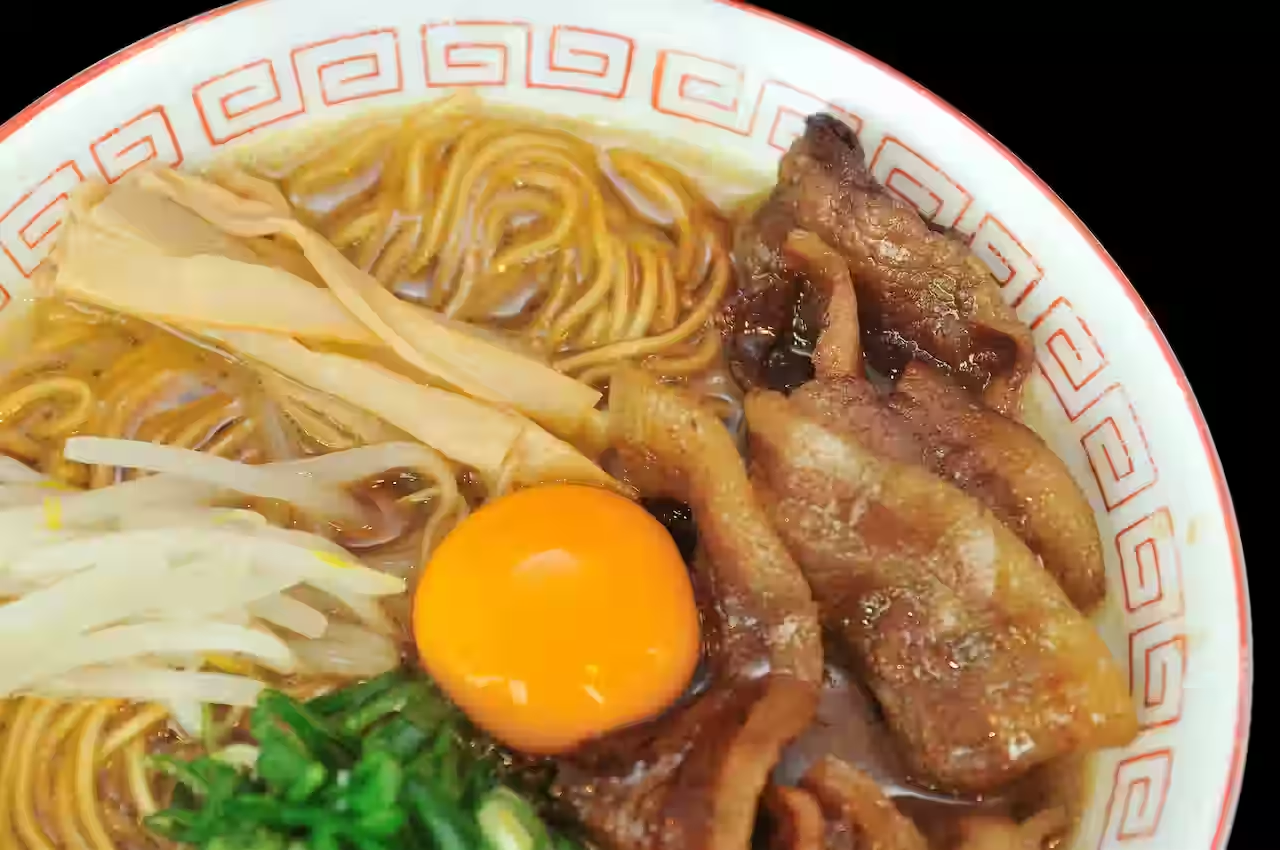
Tokushima ramen is a regional noodle dish from Tokushima Prefecture. It typically combines a rich soy-seasoned broth with thin noodles, sweet-savory pork belly, green onions, bean sprouts, and an optional raw egg. Local bowls generally fall into brown, white, and yellow broth styles.
Locals rarely use that name, though. At the counter they still ask for chuka soba, an older word for the same bowl. So this guide covers the three broth styles, the toppings, the history, a home recipe, and where to eat.
What Is Tokushima Ramen?
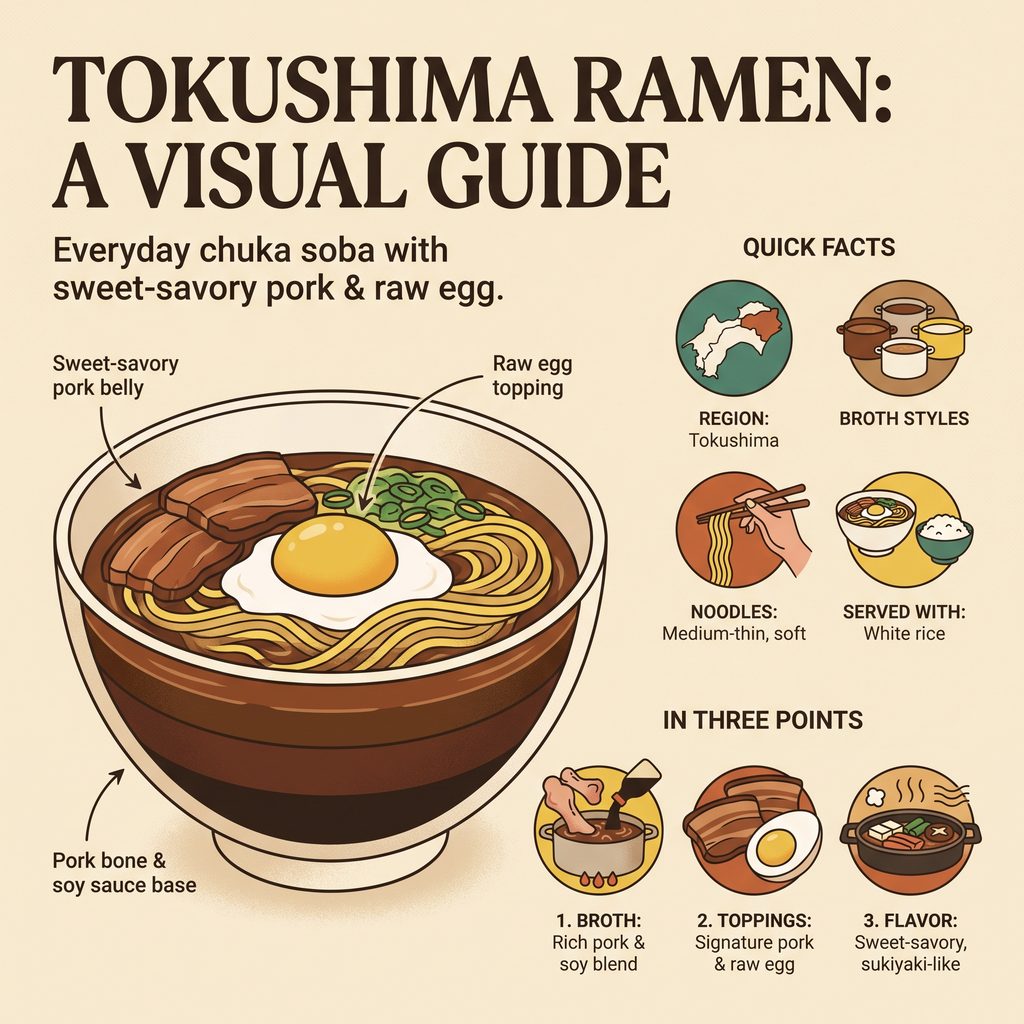
Tokushima ramen is the everyday chuka soba of Tokushima Prefecture, on the eastern edge of Shikoku. Cooks first simmer pork bones for the base, then season the soup with shoyu, the Japanese word for soy sauce. Straight, medium-thin noodles sit underneath. Sweet-savory simmered pork belly, bean sprouts, green onions, and menma bamboo shoots finish the bowl. Usually a raw egg goes on top, too, and most diners order white rice alongside.
Quick Facts
- Japanese name
- 徳島ラーメン (Tokushima ramen)
- Also called
- Chuka soba, shina soba
- Region
- Tokushima Prefecture, Shikoku
- Category
- Regional ramen (gotouchi ramen)
- Broth styles
- Brown, white, yellow
- Noodles
- Straight, medium-thin, usually soft
- Served with
- White rice, plus an optional raw egg
- Typical price
- ¥750 to ¥1,000
Tokushima ramen in three points
- BrothPork bone stock seasoned with soy sauce, in brown, white, or yellow versions.
- ToppingsSweet-savory simmered pork belly, bean sprouts, green onions, menma, and an optional raw egg.
- FlavorSalty and mildly sweet, closer to sukiyaki than to a creamy Kyushu bowl.
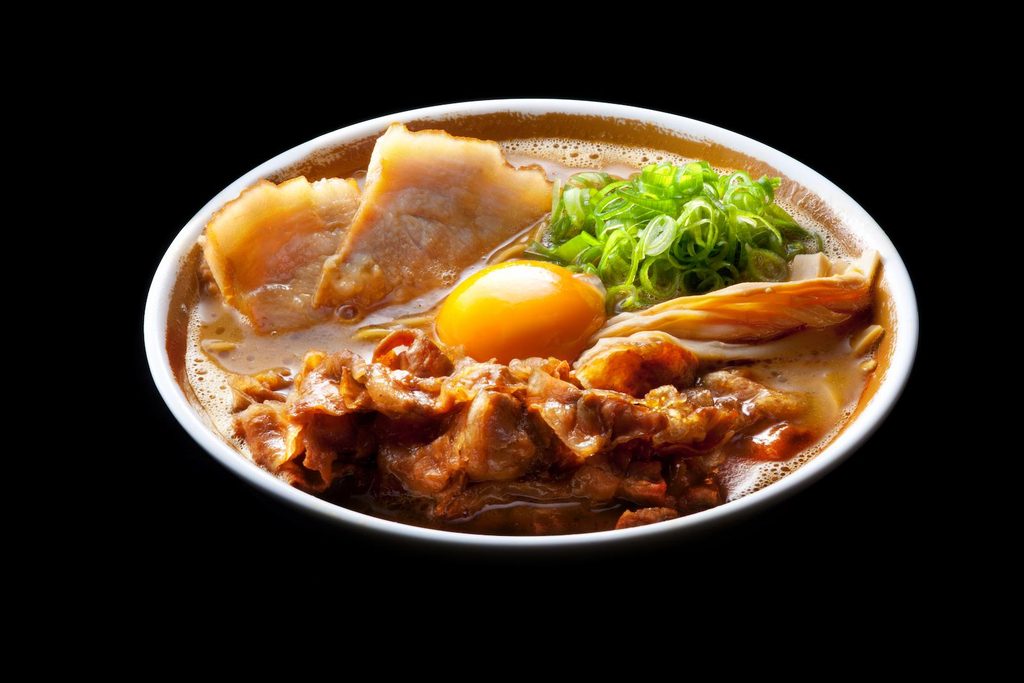
The dish belongs to the wider family of Japanese ramen, yet it stands apart in two clear ways. First, shops top the bowl with simmered pork belly rather than roasted chashu. Second, the egg arrives raw, not boiled and halved.
What Does Tokushima Ramen Taste Like?
The broth reads as deeply savory first, then mildly sweet. Dark soy sauce carries most of that saltiness. Pork bones add body, though without the heavy fat of a Kyushu bowl. Some kitchens also work dried sardines into the stock, which leaves a faint smoky edge.
Then the pork belly arrives. Cooks simmer it in soy sauce, sugar, mirin, and sake, so the slices taste closer to sukiyaki than to roasted chashu. That sweetness is the part newcomers notice most, and it is the reason rice works so well beside it.
Stir the raw yolk in and the whole bowl shifts. The yolk coats the noodles, softens the salt, and rounds the soup out. Plenty of people hesitate at this step, which seems fair enough. Raw egg on hot noodles is not a universal habit, even in Japan.
Texture varies more than most guides admit. Usually shops serve soft, short, straight noodles. Others cook them firmer, especially the newer chains. So ask for katame if you prefer a bite. Portions also run small by ramen standards, and the bowl rarely feels overwhelming.
What Are the Three Types of Tokushima Ramen?
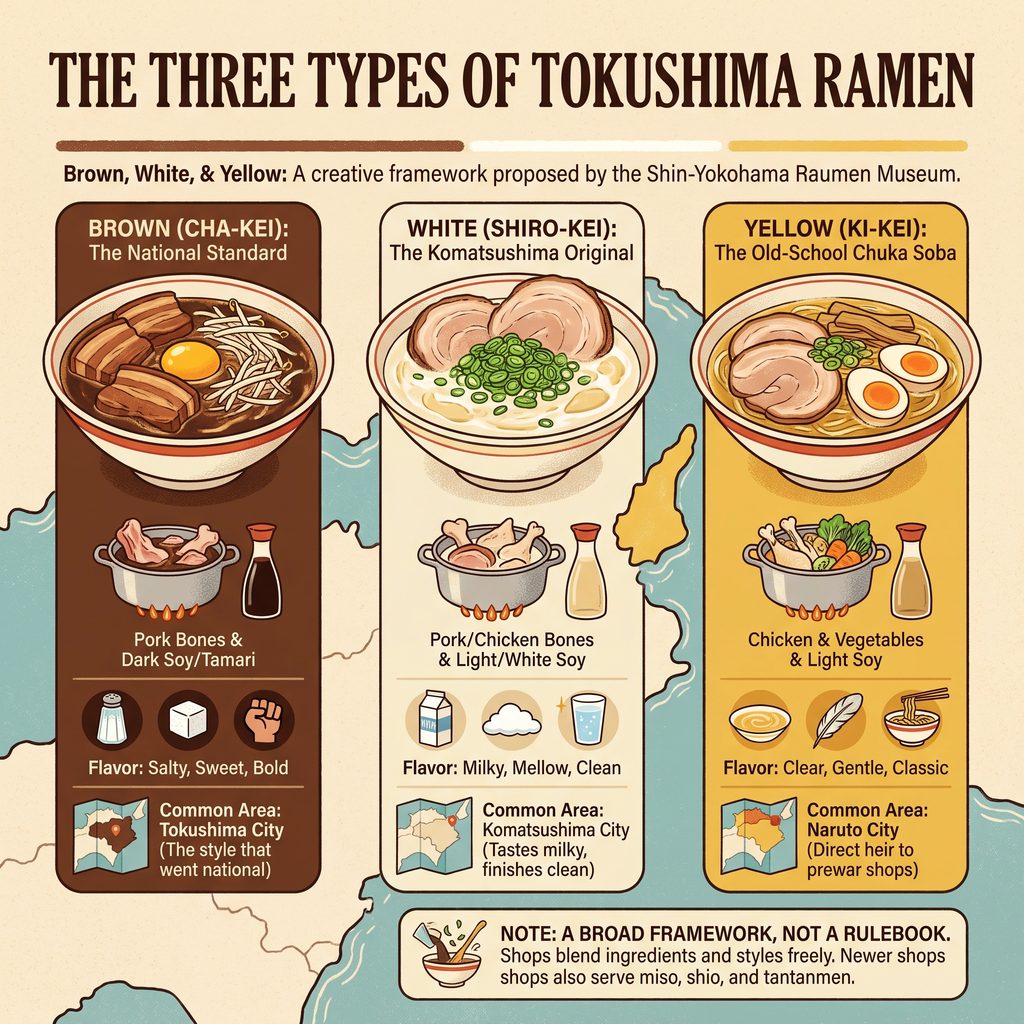
Tokushima ramen comes in brown, white, and yellow. Brown pairs pork bone broth with dark soy sauce. White uses the same pork base, but with light or white soy sauce. Yellow is a clearer chuka soba built on chicken and vegetables, again with light soy sauce. Incidentally, the Shin-Yokohama Raumen Museum proposed this colour framework when it introduced the dish nationally.
| Style | Typical broth | Soy sauce | Flavor | Common area | Signature toppings |
|---|---|---|---|---|---|
| Brown (cha-kei) | Pork bones | Dark, sometimes tamari | Salty, sweet, bold | Tokushima City | Simmered pork belly, raw egg |
| White (shiro-kei) | Pork bones, some chicken | Light or white | Milky, mellow, clean | Komatsushima City | House-made chashu, green onion |
| Yellow (ki-kei) | Chicken and vegetables | Light | Clear, gentle, classic | Naruto City | Chashu, menma, seasoned egg |
Brown: the style that went national
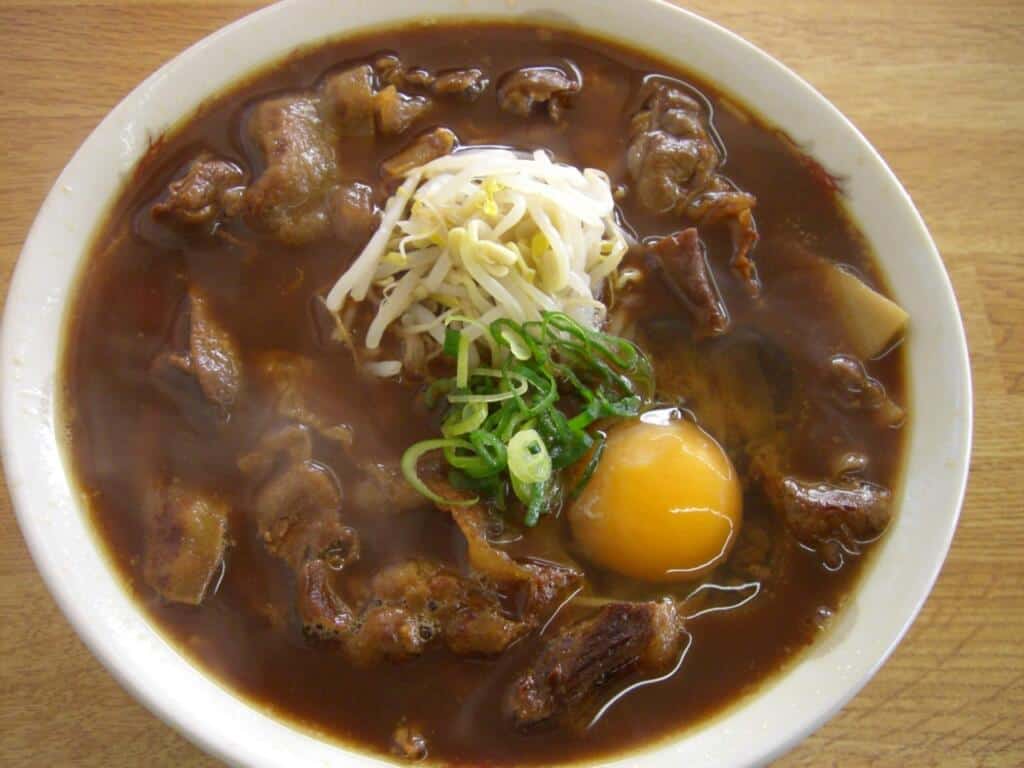
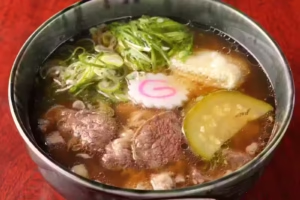
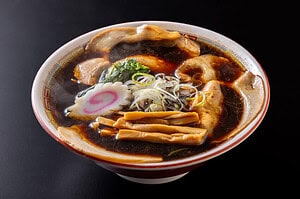
Brown is the version behind almost every photograph of the dish. Shops build a pork bone stock, then add dark soy sauce or tamari. Consequently the surface turns near black, and some menus call it kuro-kei, meaning black. On top go slices of pork belly simmered in a sweet tare, the seasoning base of the bowl. Bean sprouts and green onions follow. A raw egg usually costs about 50 yen extra, though a few shops hand them out free.
White: the Komatsushima original
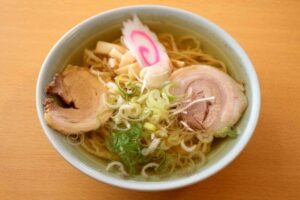
White comes from Komatsushima City, just south of Tokushima City, so locals often call it Komatsushima chuka. The stock still leans on pork bones. Because cooks season it with light or white soy sauce, the soup stays pale. Unlike the salt tonkotsu of Kyushu, however, it tastes milky and rich up front, then clean at the finish. Several Tokushima writers treat this style as the true starting point.
Yellow: the old chuka soba
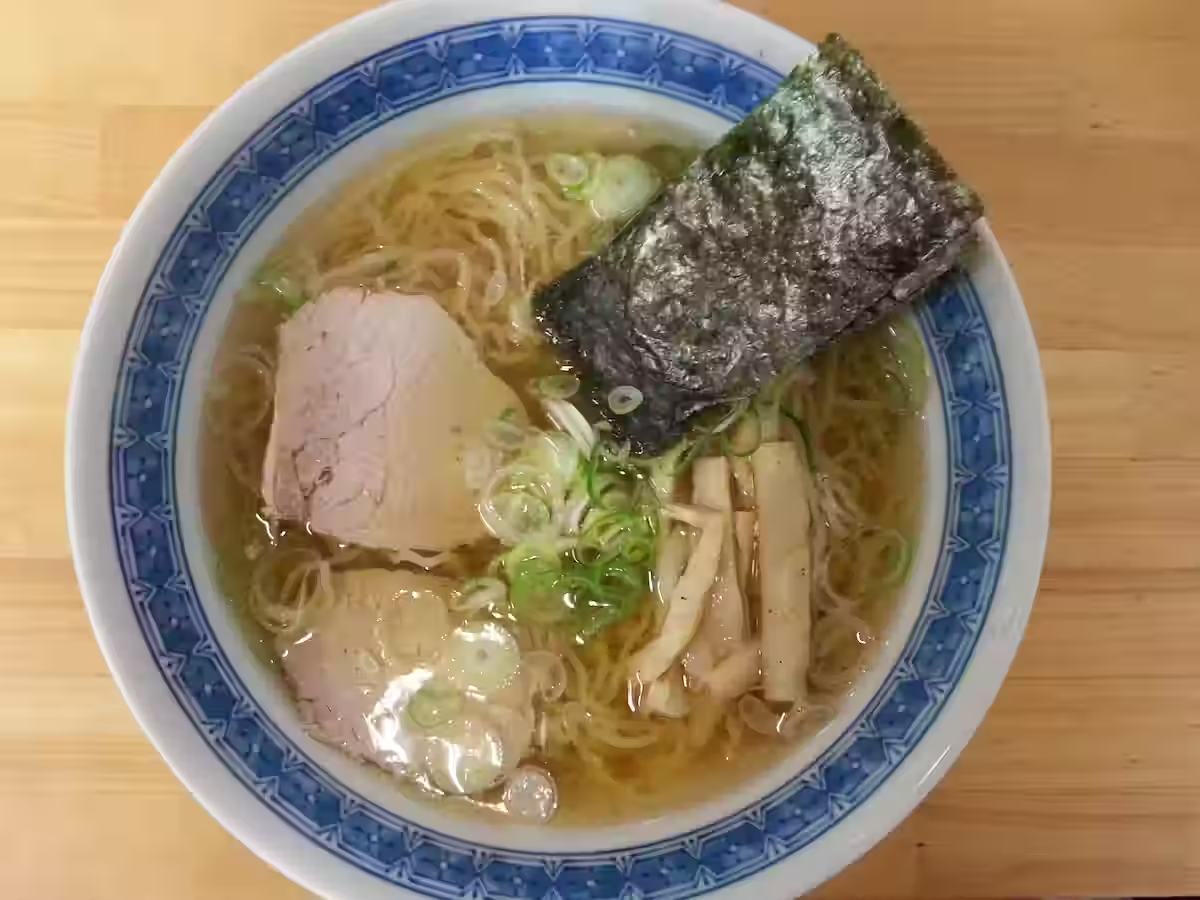
Yellow looks the least dramatic and tastes the gentlest. Chicken bones and vegetables carry the stock, while light soy sauce keeps the colour golden. Shops around Naruto City are the usual home for it. Notably, the Tokushima Prefectural Products Center describes this line as the direct heir of the prewar Chinese-style noodle shops. If the brown bowl feels too rich, start here instead.
Still, treat the three colours as a broad framework rather than a rulebook. Individual shops blend pork, chicken, vegetables, and seafood, and each kitchen picks its own soy sauce. Wanwanken, for instance, boils pork and chicken bones together and finishes the tare with seafood stock. Newer shops also serve miso, shio, and tantanmen.
Tokushima Ramen Ingredients
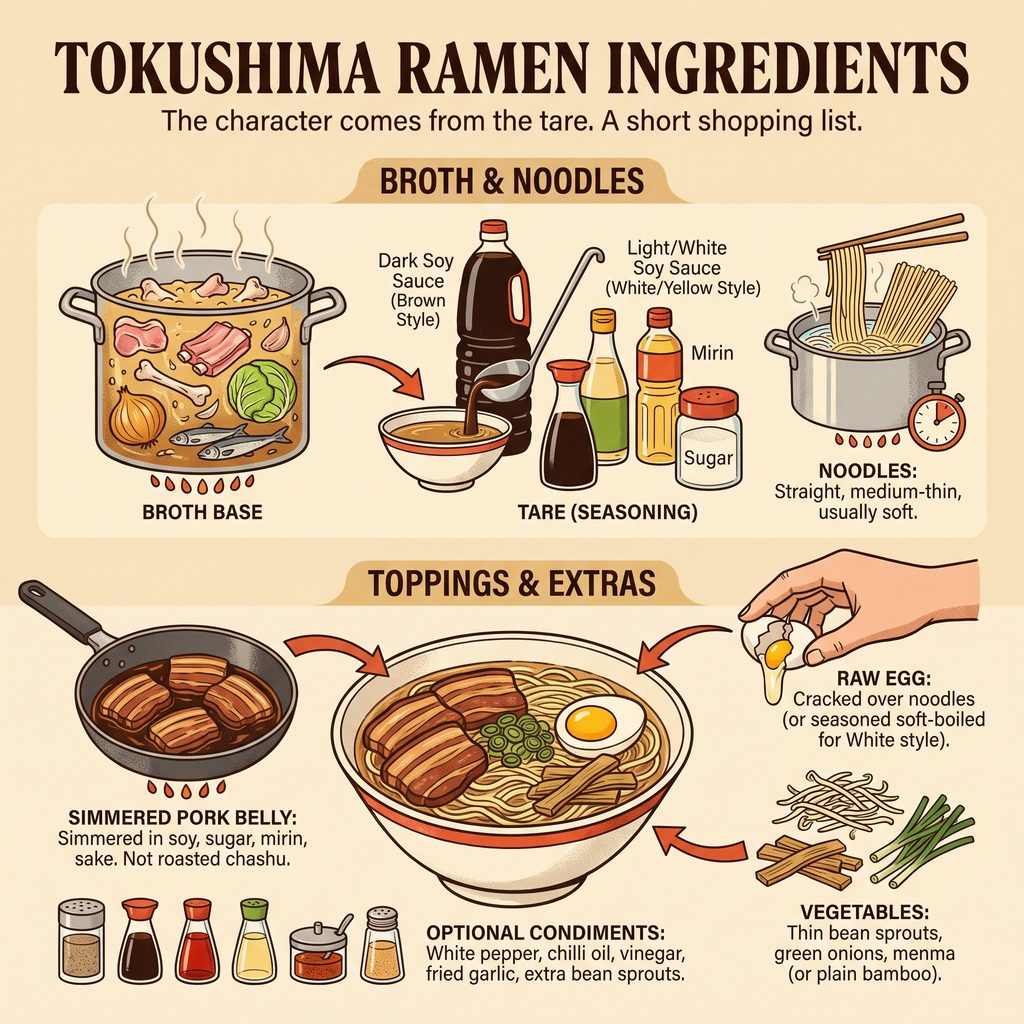
The shopping list stays short. In fact most of the character comes from the tare, which cooks pour into the bowl before the soup.
Broth and noodles
- Broth: pork bones and pork ribs, sometimes chicken bones, occasionally onion or cabbage for sweetness, and dried sardines in a few kitchens.
- Tare: dark soy sauce for the brown style, or light and white soy sauce for the white and yellow styles, plus mirin and sugar.
- Noodles: straight, medium-thin wheat noodles, usually short and boiled soft. Still, firmer versions exist, so shop style matters.
Pork, vegetables, egg, and extras
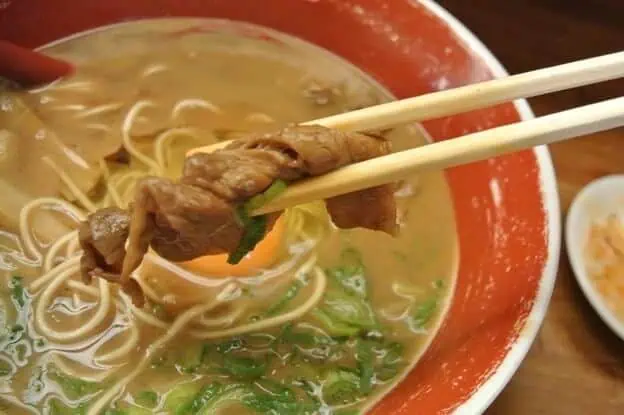
- Pork: thin pork belly simmered in soy sauce, sugar, mirin, and sake. This is not standard roasted chashu, and the difference is easy to taste.
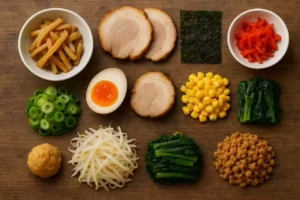
- Vegetables: thin bean sprouts, sliced green onions, and menma bamboo shoots. Some shops swap menma for plain boiled bamboo.
- Egg: one raw egg, cracked over the noodles. Instead, white-style shops sometimes offer a seasoned soft-boiled egg.
- Optional condiments: white pepper, chilli oil, vinegar, fried garlic, and extra bean sprouts.
Curious how these compare with the rest of the country? Our guide to regional ramen toppings sets them side by side.
History of Tokushima Ramen
Postwar stalls at Komatsushima Port
The documented story starts after the war, not in the 1930s. Komatsushima Port ran the passenger ferries to Kansai, so crowds and a black market gathered there. According to the Shin-Yokohama Raumen Museum, a vendor named Hiromu Futaki began pulling a noodle stall around 1949. The museum treats his cloudy pork bone soup as the origin point, while admitting that no single record settles it. Okamoto Chuka, meanwhile, opened in 1951 and still works from that lineage.
Cheap pork bones from a ham factory
Why pork, in an island region famous for udon? Both the museum and the Nikkei point to Tokushima Ham, the predecessor of Nippon Ham. Its Tokushima plant released large volumes of bones and trimmings at low prices. Indeed, the museum quotes a former employee who carried pork bones by bicycle to Okamoto Chuka. Still, treat this as the standard local explanation rather than settled fact, because the sources present it as oral history.
The brown style takes over
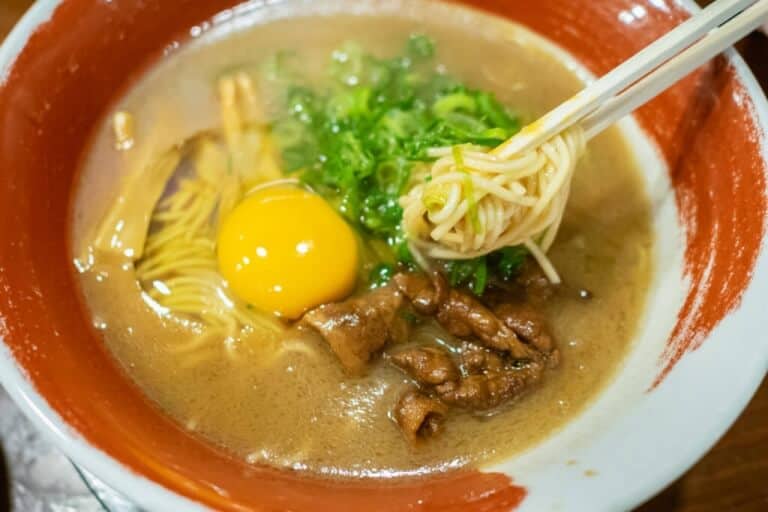
White spread first through Tokushima City during the 1950s. The dark-soy brown style appeared later, around the end of the 1960s. Two shops, Kanton and Inotani, started serving it at roughly the same time. However, the museum admits nobody knows which came first. Both popularised the pork belly and raw egg pairing. Eventually, by 1989, ramen shops in Tokushima City outnumbered udon shops.
National attention, 1998 to 2000
Two dates float around, and both are correct in their own way. In 1998 the Shin-Yokohama Raumen Museum publicised the dish as the last regional ramen of the 20th century. Inotani then ran a limited-time counter inside the museum from September 1999 to May 2000, according to Awa Navi, the prefectural tourism site. So that nine-month run turned a local habit into a national name.
How to Eat Tokushima Ramen
- Taste the broth firstTake a spoonful before touching anything else. Otherwise you miss the soy and pork balance on its own.
- Try a slice of porkNext, eat one piece of pork belly plain. The sweet tare registers clearly here, which explains the sukiyaki comparison.
- Mix in the eggThen break the yolk and fold it through the noodles. Consequently the soup turns milder, rounder, and slightly glossy.
- Finish with riceFinally, spoon broth over the white rice, or dip the rice into the bowl. Locals treat this as the natural ending.
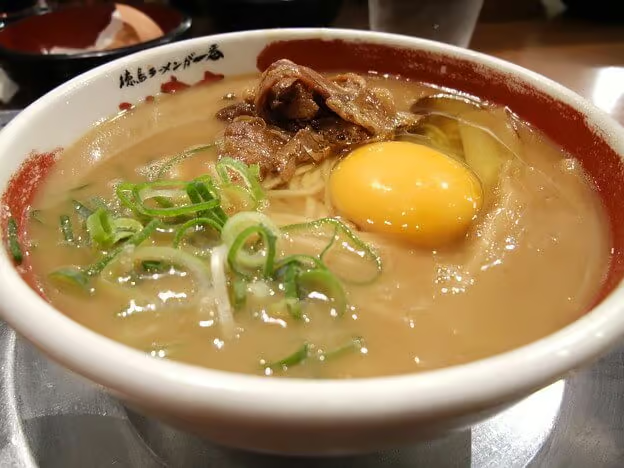
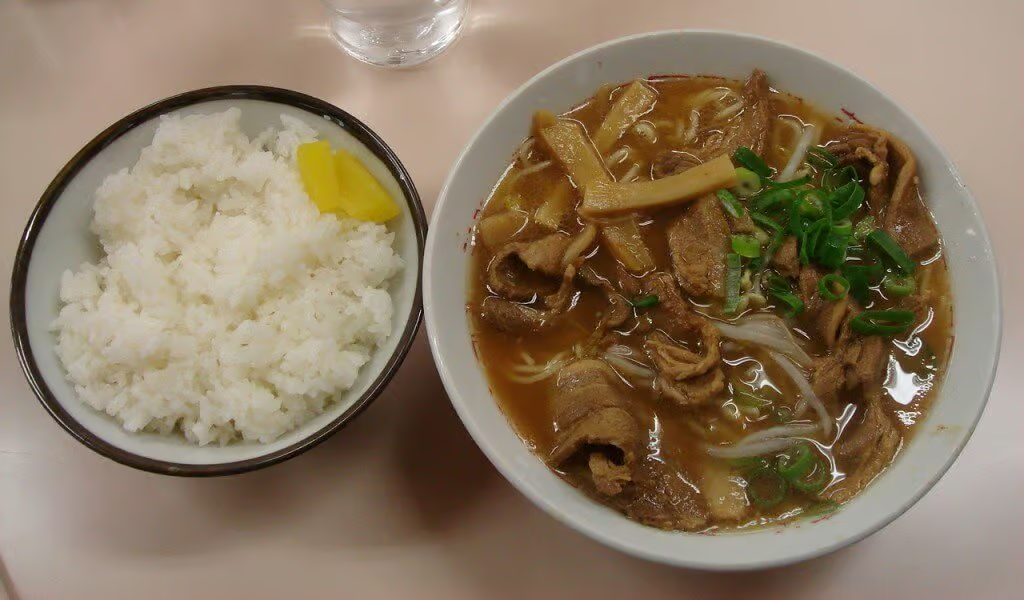
Why locals order rice with their noodles
Ordering noodles with rice sounds like too much starch. In Tokushima, though, it makes sense, because the bowls are small and the seasoning is strong. Plain Japanese rice absorbs the salt and stretches the meal. Ramen Todai even serves rice free at its main shop, with refills. Customs differ by shop, however. Some counters charge for rice, and a few do not offer it at all.
Counter etiquette follows the usual national rules. Our guide on how to eat ramen like a Japanese person covers ticket machines, slurping, and timing.
Tokushima Ramen vs Tonkotsu Ramen
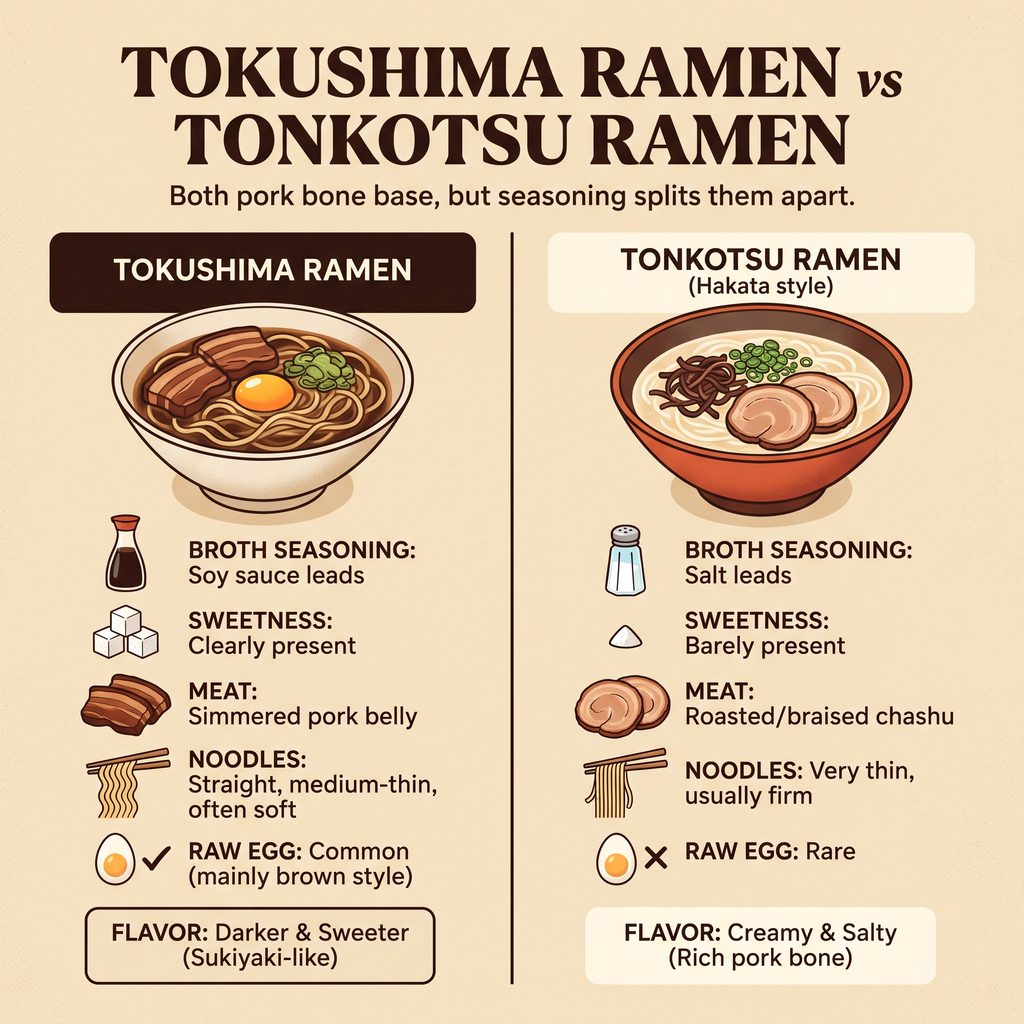
Both start with pork bones, so the confusion is understandable. Basically, the seasoning splits them apart.
| Tokushima ramen | Tonkotsu ramen (Hakata style) | |
|---|---|---|
| Broth seasoning | Soy sauce leads | Salt leads |
| Sweetness | Clearly present | Barely present |
| Meat | Simmered pork belly | Roasted or braised chashu |
| Noodles | Straight, medium-thin, often soft | Very thin, usually firm |
| Raw egg | Common, mainly brown style | Rare |
In short, Hakata ramen tastes creamy and salty, while a Tokushima bowl tastes darker and sweeter. Shikoku has other regional bowls too. Nabeyaki ramen from Kochi, for example, arrives bubbling in a clay pot and sits at the opposite end.
How to Make Tokushima Ramen at Home
This home version follows the brown style. Serves 2. Preparation takes about 25 minutes, while cooking runs roughly 3 hours. Most of that time needs no attention.
Ingredients for two bowls
- Broth: 700 g pork bones, 2 litres water, 1 leek top, 3 slices ginger, 1 garlic clove
- Tare: 4 tbsp dark soy sauce, 1 tbsp mirin, 2 tsp sugar, 1 tbsp sake
- Pork belly: 200 g thinly sliced pork belly, 2 tbsp soy sauce, 1 tbsp sugar, 1 tbsp mirin, 1 tbsp sake, 100 ml water
- Noodles: 2 portions fresh thin straight ramen noodles, about 120 g each
- To finish: 100 g bean sprouts, 2 tbsp sliced green onion, menma to taste, 2 eggs, hot cooked rice
Method, step by step
- Blanch the bonesBoil the pork bones for 5 minutes, drain, and rinse off the scum under cold water.
- Simmer the stockReturn the bones to the pot with 2 litres of water, the leek top, ginger, and garlic. Simmer gently for about 3 hours and top up the water as needed.
- Cook the pork bellySimmer the pork belly with soy sauce, sugar, mirin, sake, and 100 ml water for 15 minutes, until the liquid turns glossy.
- Mix the tareCombine the dark soy sauce, mirin, sugar, and sake. Divide it between two warmed bowls.
- Blanch the sproutsDrop the bean sprouts into boiling water for 30 seconds, then drain them well.
- Boil the noodlesCook the noodles as the package directs. However, aim slightly softer than usual for a local finish.
- Build and servePour 350 ml of hot stock into each bowl, add the noodles, then arrange pork, sprouts, green onion, and menma. Top with a raw egg and serve rice on the side.
Where to Eat Tokushima Ramen in Tokushima
| Shop | Style | Area or station | Signature bowl | Approx. price | Information |
|---|---|---|---|---|---|
| Inotani Honten | Brown | Tokushima City, 15 min from JR Tokushima | Chuka soba with pork | ¥800 to ¥1,000 | Awa Navi |
| Ramen Todai Omichi Honten | Brown | Tokushima City, 12 min from JR Awa-Tomida | Todai ramen | ¥800 to ¥900 | Awa Navi |
| Tokushima Ramen Okuya Honten | Brown | Aizumi Town, Itano District | Chuka soba with pork and egg | ¥850 to ¥950 | Official site |
| Shina Soba Wanwanken Honten | Brown | Aizumi Town, Itano District | Shina soba with pork, large | ¥750 plus ¥50 egg | Closed Thursdays |
| Okamoto Chuka Komatsushima Honten | White | Komatsushima City, 15 min from JR Nakada | Chuka soba with pork | ¥800 to ¥1,000 | Official site |
| Shina Soba Sanpa | Yellow | Naruto City and Tokushima City | Chuka soba | ¥750 to ¥950 | Official site |
Prices, hours, and closing days change often, and popular shops close early once the soup runs out. So check the official pages before you travel.
Chuka Soba Inotani Main Store (中華そば いのたに 本店)
Inotani carried Tokushima ramen to Yokohama, so most itineraries start here. The menu barely fills a line: chuka soba in three sizes, rice, and a raw egg. Staff pull the stock from pork bones and vegetables, then serve it over house-made straight noodles. However, queues build fast at lunch, and the shop closes once the pot empties.
Ramen Todai Omichi Main Store (ラーメン東大 大道本店)
Todai runs the darkest, sweetest bowl of the group, and it stays open until 4 a.m. daily. Raw eggs sit free on the counter, as they have since the shop opened. Moreover, the main store gives rice away with any ramen order, with free refills. Expect a line on weekends, plus a tight car park entrance.
Okamoto Chuka Komatsushima Main Store (岡本中華 小松島本店)
Okamoto opened in 1951 beside Komatsushima Port and now runs under its third owner. The soup arrives milky white and mellow, in fact far lighter than its colour suggests. Chashu comes from domestic pork, and the kitchen makes it in house. One quiet extra: the Komatsushima branch also sells battera pressed sushi.
Shina Soba Wanwanken Main Store (支那そば 王王軒 本店)
Wanwanken boils pork and chicken bones together, then builds the tare with seafood stock. Surprisingly, the result looks heavy yet drinks smooth. The owner aims for a bowl children can finish, which explains that balance. Doors open at 10:15 and close by 18:45, or earlier once the soup goes.
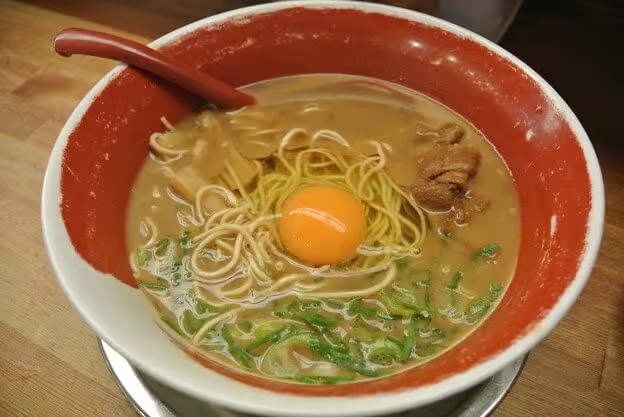
Where to Buy It Outside Tokushima
You do not have to reach Shikoku to try a bowl. Antenna shops and prefectural product stores stock chilled and dried kits, and the Tokushima Prefectural Products Center sells them online. Okamoto Chuka, meanwhile, ships frozen soup sets through its own website. Ramen Todai also runs branches beyond the prefecture, including western Japan.
Stock changes constantly, so treat any list as a starting point rather than a guarantee. Overseas availability is patchier still, since shipping rules for chilled products vary by country.
Dietary Notes and Who the Dish Suits
Travellers who like strong soy flavour, fatty pork, and a slightly sweet finish tend to love it. Conversely, if you prefer clean, light broths, the yellow style suits you better. Anyone avoiding sugar in savoury food may find the pork belly too sweet.
Traditional bowls suit neither vegetarians nor vegans. Standard versions contain pork or chicken stock, pork toppings, egg, wheat noodles, and soy. Some kitchens add fish-derived seasoning to the tare as well. Vegetarian ramen exists in Japan, yet specialist Tokushima shops rarely offer it, so ask before ordering.
Conclusion
Tokushima ramen rewards a little planning. First decide whether you want the bold brown style, the mellow white style from Komatsushima, or the gentle yellow chuka soba near Naruto. Then order pork belly, add the raw egg, and put rice on the tray. That combination is why people here call it soul food. Finally, pair a shop visit with other Tokushima food such as Handa somen and Awaodori chicken, or explore more Shikoku food.
Frequently Asked Questions About Tokushima Ramen
What does Tokushima ramen taste like?
The soup tastes salty and clearly savoury, with a mild sweetness underneath. Dark soy sauce drives the brown style, while pork bones supply the body. Simmered pork belly pushes the sweetness further, so many people compare the bowl to sukiyaki. Finally, stirring in the raw yolk softens everything and rounds the broth out.
What are its three broth styles?
Shops divide the dish into brown, white, and yellow. Brown uses pork bones with dark soy sauce, and it dominates Tokushima City. White uses the same bones but with light or white soy sauce, and Komatsushima City is its home. Yellow, meanwhile, rests on chicken and vegetables with light soy sauce, and Naruto shops serve it most.
Why does it include a raw egg?
The yolk balances a very salty, very sweet broth. Specifically, it coats the noodles, cuts the soy edge, and creates a sukiyaki-like effect. Tokushima shop owners have described the idea as borrowed from tsukimi udon, which also uses a raw egg. Diners generally break the yolk halfway through rather than at the start.
Is it always topped with a raw egg?
No. People associate the raw egg mainly with the brown style, and even there it usually costs extra. Some shops charge about 50 yen, while others hand out eggs free. A few offer a seasoned soft-boiled egg instead. White and yellow shops may not push the raw egg at all, so check the menu.
Is it always made with pork?
Pork bones form the base in the brown and white styles, so the answer is usually yes. Yellow bowls, however, lean on chicken and vegetables. Similarly, some kitchens combine pork and chicken, and a few finish the tare with seafood stock. Because recipes differ shop by shop, ask directly if you avoid specific ingredients.
How do locals eat it?
Most people taste the broth first, then try a slice of pork belly on its own. Next they break the raw egg and mix it through the noodles. Meanwhile white rice sits on the same tray, and diners spoon broth over it or dip the rice in. Portions stay small, so that pairing works.
Where can visitors try it?
Tokushima City holds the greatest concentration of shops, and Inotani sits about 15 minutes on foot from JR Tokushima Station. Ramen Todai, moreover, stays open until 4 a.m., which helps late arrivals. For the white style, head south to Okamoto Chuka in Komatsushima. Naruto City, meanwhile, is the place for the yellow style.
Why do people call it chuka soba?
Chuka soba means Chinese-style noodles, and locals used that word long before the name Tokushima ramen existed. Local newspapers and magazines then popularised the newer name during the late 1990s. Older shops meanwhile kept the original wording on their signs, so menus still read chuka soba or shina soba. Both terms point to the same bowl.
References
- Shin-Yokohama Raumen Museum, Rapedia: Tokushima Ramen, https://www.raumen.co.jp/rapedia/study_japan/study_raumen_tokushima.html (Surveyed: August 2026)
- Awa Navi, Tokushima Prefecture Tourism Information Site, Chuka Soba Inotani Honten, https://www.awanavi.jp/archives/spot/2430 (Surveyed: August 2026)
- Awa Navi, Tokushima Prefecture Tourism Information Site, Ramen Todai Omichi Honten, https://www.awanavi.jp/archives/spot/2418 (Surveyed: August 2026)
- Fun!Fun!Tokushima, Tokushima City, Tokushima Ramen Today, https://funfun-tokushima.jp/enjoy/special/rahmen/ (Surveyed: August 2026)
- East Tokushima Tourism Promotion Organization, Chuka Soba Inotani, https://www.east-tokushima.jp/spot/detail.php?id=21 (Surveyed: August 2026)
- East Tokushima Tourism Promotion Organization, Okamoto Chuka, https://www.east-tokushima.jp/spot/detail.php?id=29 (Surveyed: August 2026)
- Tokushima Prefectural Products Center, Tokushima Ramen, https://tokushima-shop.jp/?mode=cate&cbid=39298&csid=0 (Surveyed: August 2026)
- Okamoto Chuka, Official Website, https://okamoto1951.jp/ (Surveyed: August 2026)
- Tokushima Ramen Okuya, Main Store Information, https://www.okuya.co.jp/honten/index.html (Surveyed: August 2026)
- Shina Soba Sanpa, Official Website, https://www.e-sampa.net/ (Surveyed: August 2026)
- Nihon Keizai Shimbun, Tokushima Ramen: Brown, Yellow and White Broths Win Fans, https://www.nikkei.com/article/DGXKZO25075890W7A221C1NZ1P00/ (Surveyed: August 2026)
- Discover Tokushima, The Soul Food of Tokushima People, https://discovertokushima.net/en/column/tokushima-ramen/ (Surveyed: August 2026)
- Fukudome, N., & Takashima, A. (2024). Transition and Type Classification of Ramen in Japan. Proceedings of the 76th Annual Meeting of the Japan Society of Home Economics, 135. https://doi.org/10.11428/kasei.76.0_135 (Surveyed: August 2026)
- Solt, G. (2014). The Untold History of Ramen: How Political Crisis in Japan Spawned a Global Food Craze. University of California Press. https://www.ucpress.edu/books/the-untold-history-of-ramen/paper (Surveyed: August 2026)
Related Articles
- Japanese Ramen (Surveyed: August 2026)
- Tokushima Food (Surveyed: August 2026)
- Nabeyaki Ramen (鍋焼きラーメン) (Surveyed: August 2026)
- Shikoku Food (Surveyed: August 2026)
- Hakata Ramen (博多ラーメン) (Surveyed: August 2026)
- Shoyu Ramen (醤油ラーメン) (Surveyed: August 2026)
- Top 10 Must-Try Japanese Ramen Toppings Across Regions (Surveyed: August 2026)
- How To Eat Ramen Like A Japanese Person? (Surveyed: August 2026)
- Tokushima Handa Somen (半田そうめん) (Surveyed: August 2026)
- Tokushima Awaodori (阿波尾鶏) (Surveyed: August 2026)



Comments