






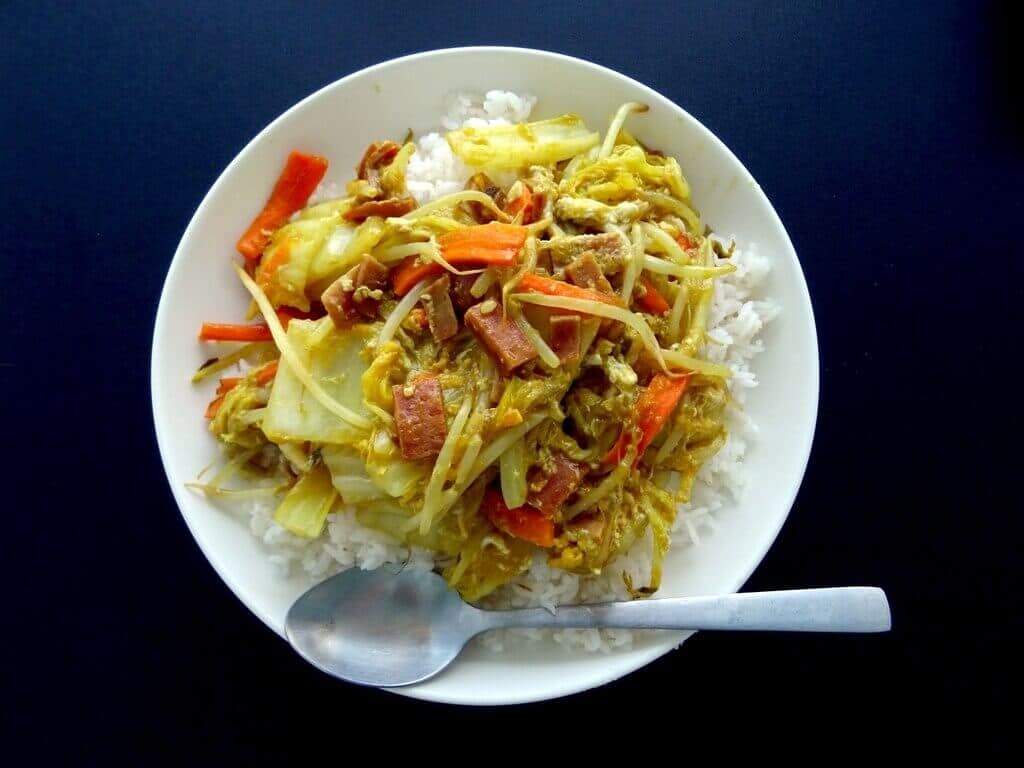
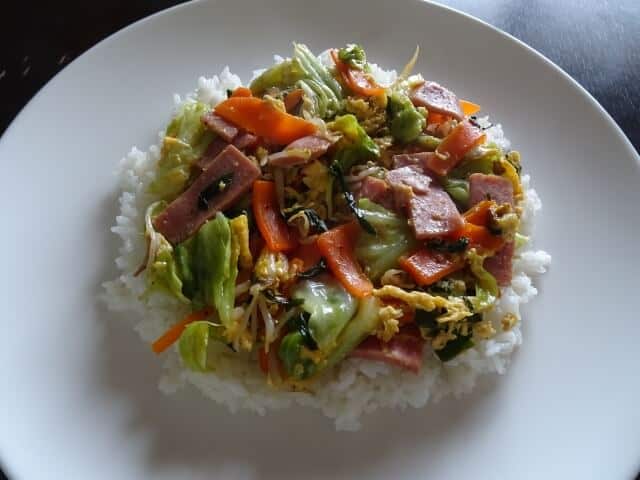
Okinawa champon is a regional rice dish from Okinawa. Cooks stir-fry vegetables with corned beef or luncheon meat, bind them with egg, then serve it all over rice. Despite the name, it contains no noodles at all.
Many people hear “champon” and picture a noodle soup. In Okinawa, though, the story is different. Here it is a hearty plate of rice, eaten with a spoon. So let’s look at what makes this local dish so beloved.
What Is Okinawa Champon?
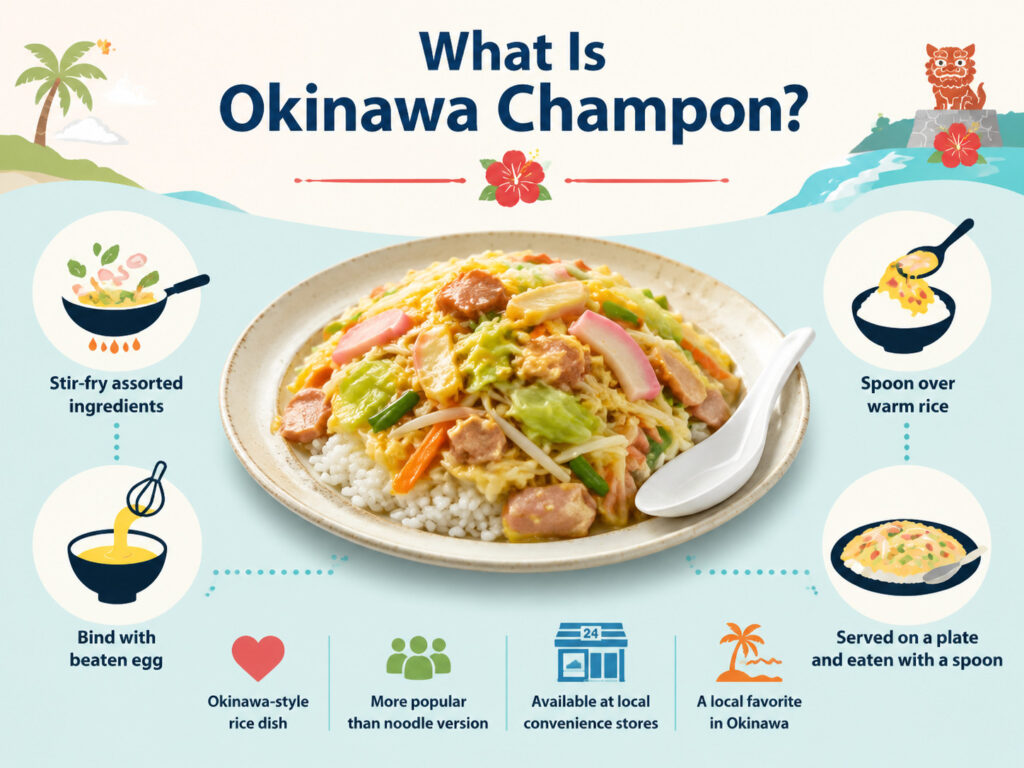
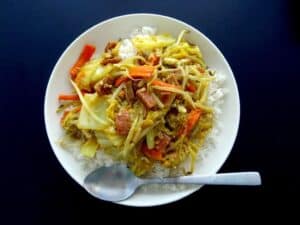
Okinawa champon (沖縄ちゃんぽん) is a rice dish from Okinawa Prefecture. Cooks stir-fry assorted ingredients, bind them with beaten egg, then spoon the mix over warm rice. In Okinawa, this rice version is more popular than the noodle one. You can even find it ready-made at local convenience stores.
The dish resembles a Chinese rice bowl, yet it has its own style. People serve it on a flat plate and eat it with a spoon, much like taco rice. For another island favorite, see our guide to Okinawa taco rice.
Features of Okinawa Champon
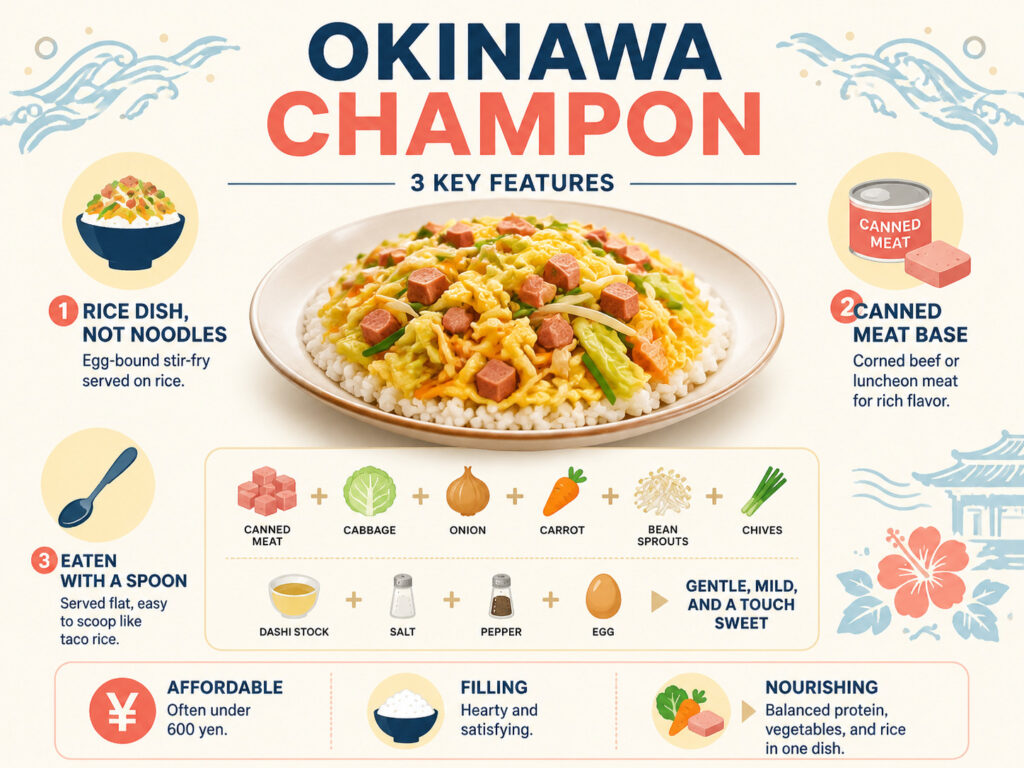
So what defines this dish? A few simple traits set it apart. Here are its three main features.
- A rice dish, not noodles: the egg-bound stir-fry sits on top of rice.
- Canned meat base: cooks use corned beef or luncheon meat for rich flavor.
- Eaten with a spoon: served flat, it scoops up easily like taco rice.
The filling usually starts with canned meat. Then cooks add bite-sized cabbage, onion, carrot, bean sprouts, and chives. They stir-fry everything and season it with salt, pepper, and dashi stock. Finally, a soft egg ties the whole plate together. The taste stays gentle, mild, and a touch sweet.
Cheap, Filling, and Nourishing
Part of the charm is the value. A plate often costs under 600 yen, yet it fills you up fast. It also balances protein, vegetables, and rice in one dish. For many locals, it works as an easy, everyday meal.
History of Okinawa Champon
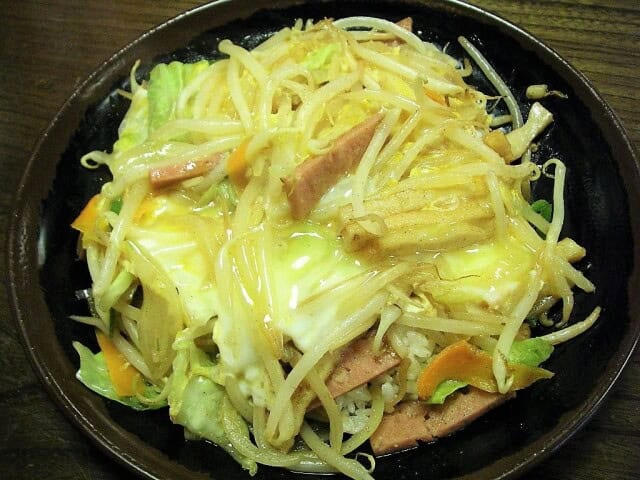
The dish was born at a small shop along National Route 58, near the Kumoji and Matsuyama intersection. The place looks plain and local, lit by fluorescent lights with simple tables. It has that classic Okinawan diner feel, far from any modern restaurant.
Its roots also reflect postwar Okinawa. After the war, American canned goods like corned beef and luncheon meat spread across the islands. Cooks combined these cheap, lasting ingredients with local vegetables and rice. As a result, a filling new home dish took shape. Over time, it grew into a true Okinawan staple.
Honestly, the appeal lies in its simplicity. The egg holds everything together beautifully. A hint of sweet miso adds quiet depth. It is the kind of plate you could happily eat every day.
How to Make Okinawa Champon
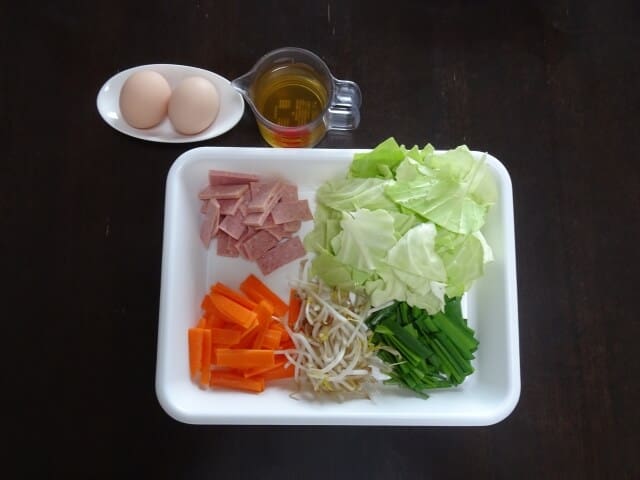
Making it at home is quick and easy. You need only canned meat, a few vegetables, egg, and rice. Here is a simple recipe for two servings.
Ingredients for 2 Servings
| Ingredient | Amount |
|---|---|
| Corned beef | 100 g |
| Carrot | 40 g |
| Onion | 20 g |
| Cabbage | 60 g |
| Egg | 1 large (about 60 g) |
| Warm rice | 400 g |
| Sake | 1 tbsp |
| Mirin | 1 tbsp |
| Soy sauce | 1 tbsp |
| Black pepper | to taste |
Step-by-Step Instructions
Slice the carrot into thin strips. Cut the onion into wedges about 6 to 8 mm wide. Then chop the cabbage into bite-sized pieces.
Heat oil in a frying pan over medium heat. Add the corned beef and stir-fry briefly. Next, add carrot and onion until softened. Finally, toss in the cabbage and stir-fry quickly.
Pour in the sake, mirin, and soy sauce. Stir-fry until the flavors blend. Then add black pepper to taste.
Beat the egg and pour it over the filling. Cover with a lid and lower the heat. Let it cook gently until the egg is half set.
Place warm rice on a flat plate. Spoon the egg-bound filling on top. Serve right away and eat with a spoon.
No corned beef? Luncheon meat, tuna, fish sausage, or bacon all work well too. Use whatever you like.
Okinawa Champon vs Nagasaki Champon
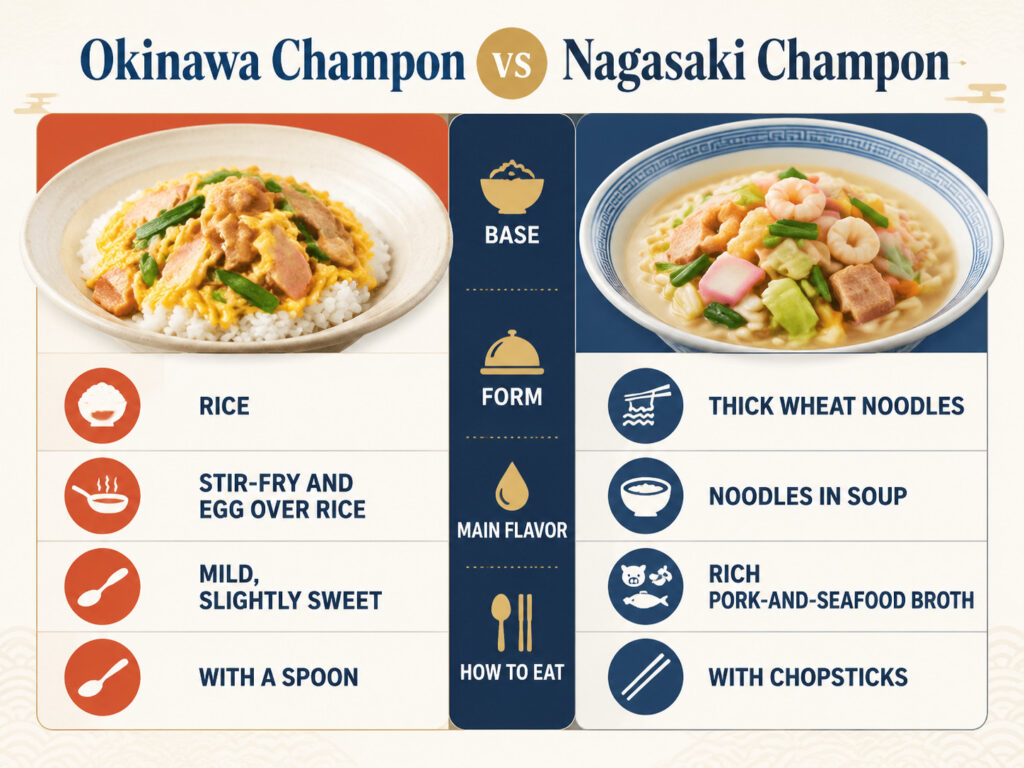
People often confuse the two, yet they differ completely. One is rice, the other is noodles. The table below makes the contrast clear.
| Okinawa Champon | Nagasaki Champon | |
|---|---|---|
| Base | Rice | Thick wheat noodles |
| Form | Stir-fry and egg over rice | Noodles in soup |
| Main flavor | Mild, slightly sweet | Rich pork-and-seafood broth |
| How to eat | With a spoon | With chopsticks |
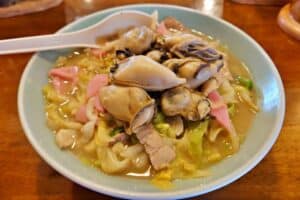
The Okinawa version tastes a bit like oyakodon, thanks to the soft egg. For the noodle original, read our guide to Nagasaki champon.
Other Champon Dishes Across Japan
The Okinawa rice version is unusual, but champon takes many forms. Across Japan, regions add their own twist to the noodle dish.
Takanezawa Champon (Tochigi)
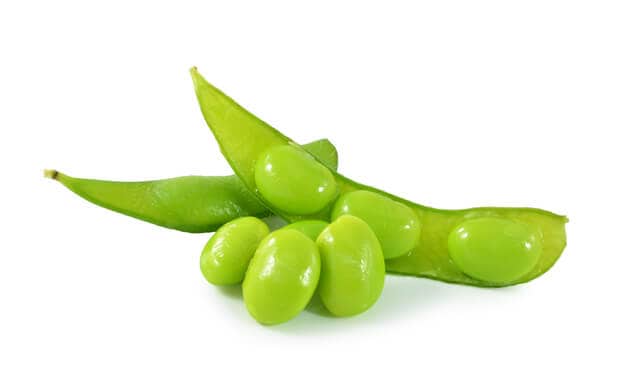
This local dish comes from Takanezawa Town in central Tochigi. The green soup uses komatsuna paste for a gentle, healthy taste. Plenty of vegetables, like edamame, sit on top of the noodles.
Tobata Champon (Fukuoka)
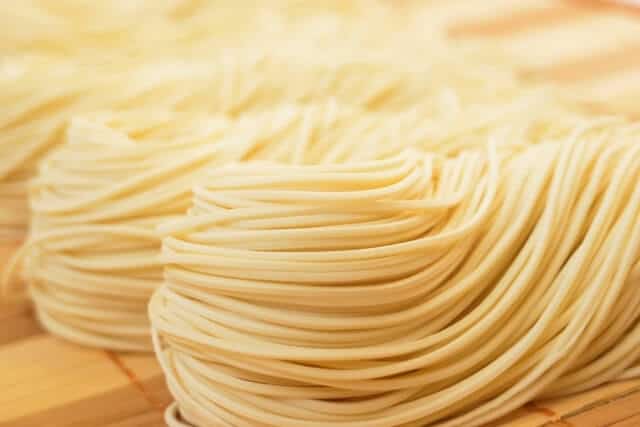
Tobata champon comes from Tobata Ward in Kitakyushu City. It uses thin steamed noodles with a chewy texture. The smooth noodles blend well with a rich pork bone soup.
Amagasaki Ankake Champon (Hyogo)
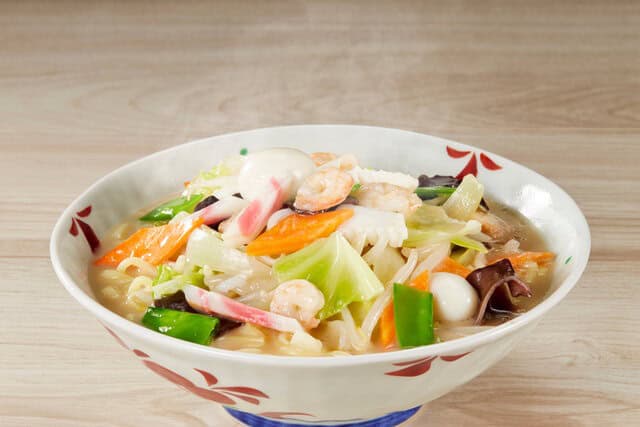
Amagasaki champon stands out for its thick, starchy sauce on top. Workers from Kyushu brought the dish here during the high-growth era. They moved to Amagasaki for group employment and carried their food with them.
Where to Eat Okinawa Champon
Want to taste the real thing? Many Okinawan diners serve it cheaply and generously. These casual spots offer home-style cooking in a relaxed setting. Most even have tatami rooms, so families feel welcome. For more island flavors, browse our Okinawa food guide.
Yanbaru Restaurant
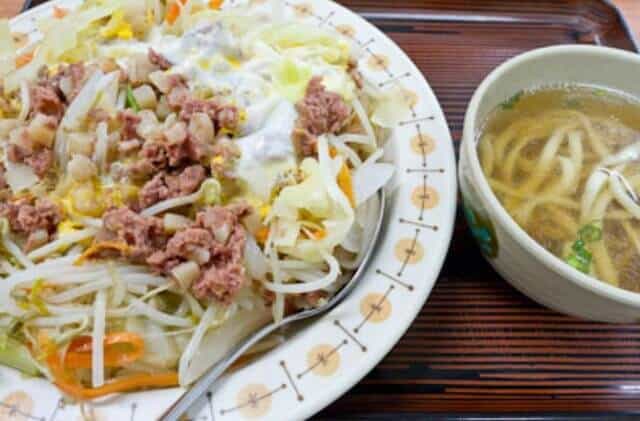
Yanbaru Restaurant stays open 24 hours a day. The menu is huge, so choosing can take a while. Its champon costs 470 yen and uses corned beef hash. Inside you will also find cabbage, bean sprouts, carrot, onion, and egg.
Mikasa Matsuyama
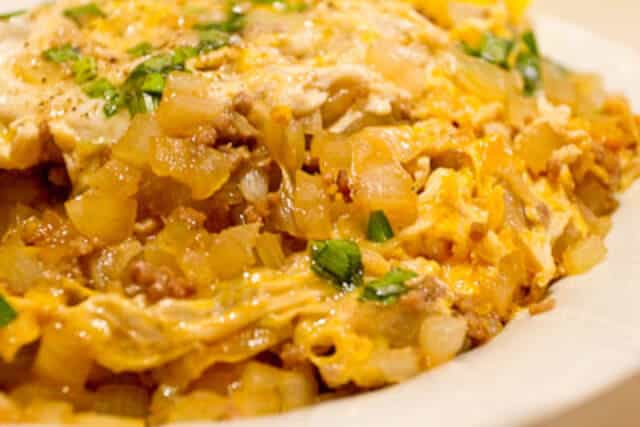
Mikasa sits along National Route 58 in Matsuyama, Naha City. Its champon takes a simpler approach than most. Cooks stir-fry minced meat and onion, then cover it with egg. The result feels like a folded omelet over rice, and it costs 500 yen.
Conclusion
Okinawa champon shows the playful side of island cooking. It borrows a noodle name yet serves a rice plate. It is cheap, filling, and full of gentle, homey flavor.
So if you visit Okinawa, give it a try. Order it at a local diner, or cook it at home tonight. It also pairs well with other island dishes like goya chanpuru and Okinawa soba.
Okinawa Champon FAQ
Does Okinawa champon have noodles?
No, it contains no noodles at all. Despite the name, the dish is built on rice. Cooks pile an egg-bound vegetable stir-fry on top. So it eats more like a rice bowl than a soup.
How is it different from Nagasaki champon?
The two share a name but little else. The Nagasaki version uses thick noodles in a rich broth. The Okinawa one serves stir-fried vegetables and egg over rice. It also tastes milder and slightly sweet, much like oyakodon.
Where can I eat it?
You will find it across Okinawa, especially at casual diners. Many convenience stores also sell ready-made versions. Spots like Yanbaru Restaurant and Mikasa in Naha are popular choices. Prices usually sit between 470 and 600 yen.
What is served alongside it?
Side dishes vary by shop and by taste. Common options include pickles like takuan, plus a bowl of miso soup. Some places add a simple salad or extra toppings. Chili oil and shredded nori also make nice finishes.
Can I make it at home easily?
Yes, it is one of the simplest Okinawan dishes to try. You just stir-fry canned meat with vegetables and bind it with egg. Then you spoon it over warm rice. The whole process takes about 15 minutes.
References
- Wikipedia, Champon, https://en.wikipedia.org/wiki/Champon (Surveyed: June 2026)
- Okinawa Convention & Visitors Bureau, Okinawan Cuisine, https://www.visitokinawa.jp/ (Surveyed: June 2026)
Related Articles
- Okinawa Soba (沖縄そば) (Surveyed: June 2026)
- Goya Chanpuru (ゴーヤチャンプルー) (Surveyed: June 2026)
- Taco Rice (タコライス) (Surveyed: June 2026)
- Soki Soba (ソーキそば) (Surveyed: June 2026)
- Nagasaki Champon (長崎ちゃんぽん) (Surveyed: June 2026)
Comments